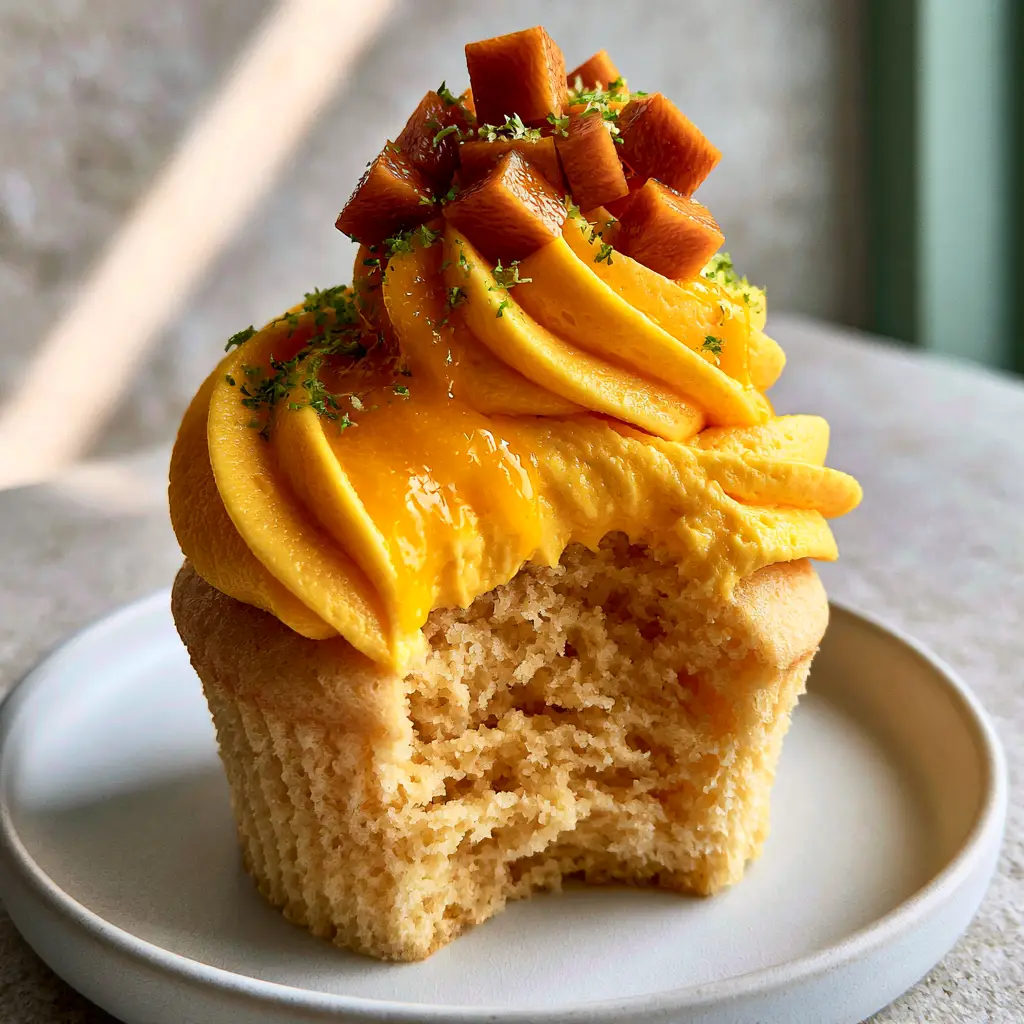
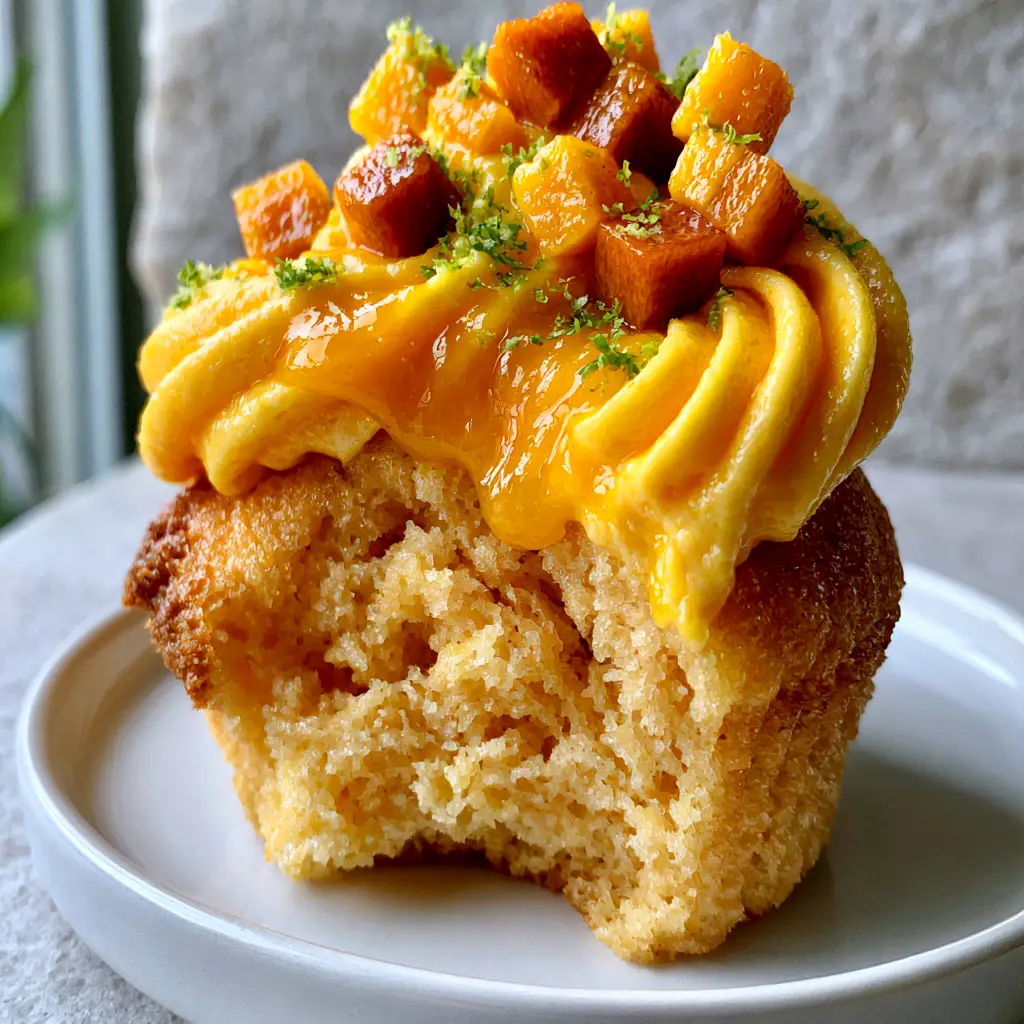
This mango cupcakes recipe creates the ultimate tropical indulgence, featuring a moist, golden sponge cake with an incredibly airy interior crumb. Every bite captures the essence of a sun-drenched orchard, topped with a high, velvety swirl of mango buttercream and a glossy fruit reduction.
If you have been searching for a professional-grade dessert that looks as good as it tastes, this is the recipe for you. We are moving beyond basic box mixes to create a crumb that is light, tender, and structurally sound enough to hold a thick mango puree drizzle.
Designed to mirror the vibrant, unedited beauty of authentic food photography, these cupcakes are finished with precisely diced fresh mango and a fine dusting of lime zest. The result is a sophisticated balance of sweet, creamy, and zesty notes that will impress any guest.
Why This Mango Cupcakes Recipe Stands Out
- Perfectly Golden Sponge: The cake base uses a high-fat creaming method to ensure a moist texture that remains light and airy, never dense or gummy.
- Triple Mango Threat: We incorporate mango into the batter, the silky buttercream, and a concentrated glossy drizzle for maximum flavor impact.
- Textural Harmony: The contrast between the velvety frosting, the soft cake, and the slight crunch of fresh lime zest creates a multi-sensory experience.
- Professional Aesthetics: Designed without wrappers for a minimalist, modern presentation on a white ceramic plate, just like a high-end patisserie.
The Anatomy of a Perfect Tropical Sponge
To achieve the “moist golden sponge” described in our visual blueprint, we must focus on the science of aeration and emulsification. This mango cupcakes recipe relies on high-quality fats and precise temperature control.
Cake Flour (1.5 cups / 185g): We use cake flour rather than all-purpose to ensure a lower protein content, which results in that sought-after fine, airy interior crumb. The finer milling helps the sponge rise evenly.
Unsalted Butter (0.5 cups / 113g): Softened to room temperature (exactly 68°F or 20°C), the butter is beaten with sugar to trap air bubbles. These bubbles expand in the oven, creating the “golden sponge” appearance.
Granulated Sugar (0.75 cups / 150g): Sugar does more than sweeten; it tenderizes the crumb by interfering with gluten development and helps retain moisture over several days.
Large Eggs (2 units): Eggs provide the structure and the “golden” hue. Ensure they are at room temperature to prevent the batter from curdling during the mixing process.
Mango Puree (0.5 cups / 120ml): Use a high-quality Alfonso or Ataulfo mango for the batter. This provides the foundational tropical flavor without weighing down the airy crumb.
Whole Milk (0.25 cups / 60ml): The fat content in whole milk contributes to the richness of the cake and ensures the crumb doesn’t dry out during the baking process.
Baking Powder (1.5 tsp / 7g): This is our primary chemical leavener, responsible for the “airy interior” by releasing carbon dioxide when exposed to heat.
Fine Sea Salt (0.25 tsp / 1.5g): A crucial invisible ingredient that enhances the sweetness of the mango and balances the acidity of the lime zest.
Fresh Lime Zest (1 tsp / 2g): Added directly into the batter, the oils from the lime zest provide a bright aromatic lift that cuts through the richness of the buttercream.
Essential Tools for Bakery-Style Results
Achieving a macro-shot-worthy result requires the right equipment. To get that high, silky swirl of mango buttercream, a heavy-duty stand mixer is highly recommended.
You will need a fine-mesh sieve to aerate the dry ingredients and a microplane for the lime zest. For the “glossy mango puree drizzle,” a small heavy-bottomed saucepan is necessary to reduce the fruit sugars without burning them.
Since these cupcakes are served without wrappers, a high-quality non-stick cupcake tin is essential. You may also want to use a small offset spatula or a piping bag with a large round tip to achieve the professional “velvety” frosting texture.
Crafting the Airy Golden Sponge Batter
Step 1: The Creaming Foundation
Begin by preheating your oven to 350°F (175°C). In the bowl of a stand mixer, combine the softened unsalted butter and granulated sugar. Beat on medium-high speed for at least 5 minutes.
Watch for the color to change from yellow to a pale ivory. The mixture should look fluffy and increased in volume; this is the secret to the airy interior crumb shown in the visual blueprint.
Step 2: Emulsifying the Liquids
Add the eggs one at a time, beating thoroughly after each addition. If the mixture looks broken or curdled, add a tablespoon of your measured flour to help it come back together.
Stir in the 0.5 cups (120ml) of mango puree and the lime zest. The batter will smell incredibly fragrant at this stage. Do not overmix once the fruit is added, as we want to preserve those air bubbles.
Step 3: Folding in the Dry Ingredients
Sift the cake flour, baking powder, and salt together. Alternating with the milk, gently fold the dry ingredients into the wet batter using a silicone spatula. Stop the moment no streaks of flour remain.
Over-mixing at this stage will develop gluten, turning your “airy crumb” into a tough, bread-like texture. We want a delicate, melt-in-your-mouth sponge.
Achieving the Silky Mango Buttercream & Glossy Drizzle
The crowning glory of this mango cupcakes recipe is the high, silky swirl of vibrant orange-yellow buttercream. This isn’t just a standard frosting; it is a stable, flavored emulsion.
The Secret to the Mango Reduction
To create the “thick glossy mango puree drizzle,” take 1 cup (240ml) of mango puree and simmer it in a small saucepan over medium-low heat. Reduce it by half until it becomes a thick, jam-like concentrate.
This reduction intensifies the flavor and removes excess water, which prevents the buttercream from becoming “greasy” or “weeping.” Allow this to cool completely before using.
Piping the Perfect Swirl
Whip 1 cup (226g) of softened butter with 3 cups (360g) of sifted powdered sugar. Slowly incorporate 3 tablespoons of your cooled mango reduction. Beat on high until the texture is “velvety and non-greasy.”
Transfer the frosting to a piping bag. Start in the center of the cupcake, move to the outer edge, and spiral upward to create a high, stable peak that catches the light.
Expert Tips for Visual Perfection
- Temperature Control: Ensure your mango reduction is stone-cold before adding it to the butter. If it’s even slightly warm, it will melt the fat and ruin the “silky” texture.
- The Drizzle Technique: Use a spoon or a small squeeze bottle to apply the glossy drizzle. Let it naturally run down the sides of the buttercream for that “authentic food blog” look.
- Precision Dicing: When cutting the fresh mango cubes for garnish, use a very sharp paring knife. Aim for 1/4-inch (6mm) cubes for a clean, professional finish.
- Zero-Wrapper Release: To ensure the cupcakes release perfectly without wrappers, generously grease the tin with butter and a dusting of flour, or use a professional-grade baking spray.
Pairing Your Tropical Cupcakes
These cupcakes are a standout dessert on their own, but they also pair beautifully with other tropical and savory dishes. For a complete summer menu, consider starting with a refreshing vinegar cucumber salad to cleanse the palate.
If you are hosting a brunch, these cupcakes are a fantastic follow-up to a hearty avocado toast recipe. For those who love mango in all forms, serving these alongside a chilled mango bingsu creates a stunning monochromatic dessert table.
For a savory contrast, the bright lime and mango notes in this mango cupcakes recipe pair excellently with the spices in a coconut chicken recipe.
Common Questions About This Mango Cupcakes Recipe
Yes, you can use frozen mango for the batter and the reduction drizzle. However, for the garnish cubes, fresh mango is recommended to ensure a firm, precisely diced appearance.
The key to an airy crumb is properly creaming the butter and sugar for 5 full minutes and using cake flour, which has a lower protein content than all-purpose flour.
Reducing the mango puree by half concentrates the natural sugars, creating a thick, light-reflecting syrup. For extra shine, you can add a teaspoon of light corn syrup or honey.
Greasy buttercream usually occurs if the mango reduction was added while still warm or if the butter was too soft. Ensure your reduction is completely cold before mixing.
The Ultimate Mango Cupcakes Recipe
Mango Cupcakes Recipe with Silky Mango Buttercream and Lime Zest
Ingredients
Equipment
Method
- Cream softened butter and granulated sugar in a stand mixer for 5 minutes until pale and fluffy to ensure an airy interior crumb.
- Beat in eggs one at a time, followed by 0.5 cups (120ml) mango puree and 1 tsp lime zest.
- Sift in cake flour, baking powder, and salt. Alternating with milk, fold gently until just combined. Do not overmix.
- Divide batter into a greased cupcake tin and bake at 350°F (175°C) for 18-20 minutes until golden and a toothpick comes out clean.
- Simmer 1 cup (240ml) mango puree in a saucepan until reduced by half. Let cool to create a thick glossy mango puree drizzle.
- Beat 1 cup (226g) butter and powdered sugar until silky. Add 3 tbsp of the cooled mango reduction and whip until velvety.
- Pipe a high swirl of buttercream onto cooled cupcakes. Drizzle with remaining mango reduction, garnish with diced mango cubes and lime zest.
Notes
Reduce the mango puree thoroughly to avoid a greasy or runny frosting texture.
Mastering the Mango Cupcake
Creating these mango cupcakes is an exercise in culinary precision and artistic flair. By focusing on the aeration of the sponge and the reduction of the mango puree, you create a dessert that is as structurally sound as it is visually stunning.
The combination of the moist golden crumb and the vibrant, lime-scented garnish makes this recipe a staple for summer celebrations or sophisticated dinner parties. We hope you enjoy the process of building these beautiful treats as much as the first bite!
If you loved this recipe, please leave a comment below and share your results! Don’t forget to follow us on Pinterest for more culinary inspiration and recipe blueprints. Tag us in your photos—we love to see your “bite taken out” macro shots!