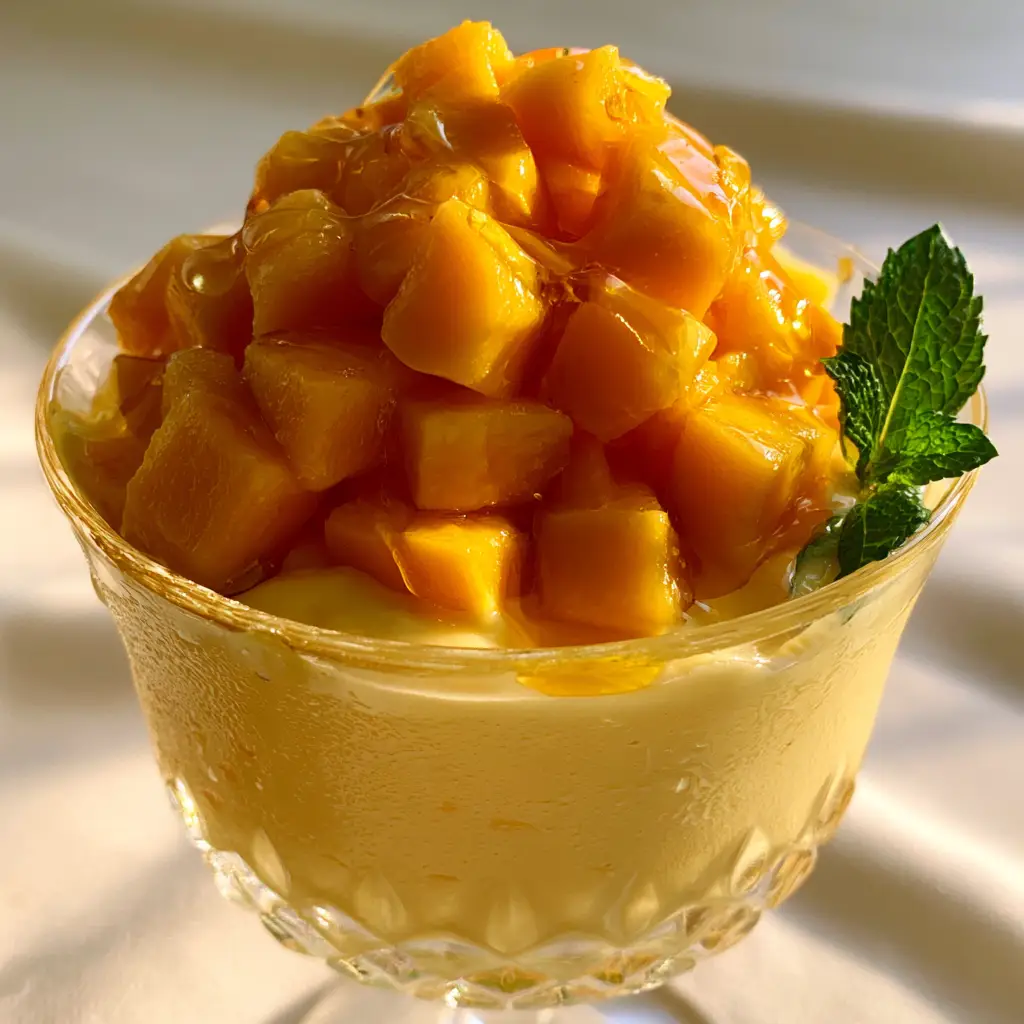
There is nothing quite like the sensory explosion of a perfectly ripe, sun-drenched Alphonso mango. This Mango dessert recipe captures that fleeting summer essence and transforms it into a decadent, velvety smooth mousse that looks as stunning as it tastes. Imagine a chilled crystal glass, its exterior slick with tiny beads of cold condensation, holding a cloud-like mango cream that serves as the foundation for a mountain of juicy, vibrant orange fruit.
Creating this masterpiece is less about complex technique and more about respecting the integrity of high-quality ingredients. Whether you are hosting an elegant dinner party or simply craving a tropical escape in your own kitchen, this recipe delivers a professional-grade result. The interplay between the thick coconut cream and the concentrated mango puree creates a mouthfeel that is both light and incredibly rich.
As the soft morning sunlight hits your kitchen counter, you will see the golden honey drizzle glinting off the diced fruit. This is more than just a sweet treat; it is a celebration of texture and color. Let’s dive into how you can recreate this restaurant-quality dessert at home with simple, scientific precision.
Why This Mango Masterpiece Is the Ultimate Summer Treat
- Unrivaled Texture: By combining whipped mango puree with stabilized coconut cream, we achieve a “velvety smooth” consistency that holds its shape under a heavy mountain of fresh fruit.
- Natural Vibrancy: We rely on the deep orange hues of Alphonso mangoes, ensuring a brilliant visual impact without any artificial dyes or colorings.
- Balanced Sweetness: The addition of a golden honey drizzle provides a floral note that cuts through the richness of the cream rather than just adding sugar.
- Visual Sophistication: Tucking a single bright green mint sprig into the side creates a professional contrast that makes this Mango dessert recipe worthy of any high-end food blog.
The Essential Components for a Tropical Flavor Explosion
To achieve the exact visual and structural results seen in our professional photography, you will need a mix of vibrant primary ingredients and foundational stabilizers. Each element plays a crucial role in the final architecture of the dish.
Fresh Alphonso Mangoes: You will need 3 large (approx. 900g) ripe mangoes. Alphonso is preferred for its lack of fiber and intense, nectar-like flavor which is essential for that “mountain of cubes” top layer.
Heavy Coconut Cream: Use 1.5 cups (360ml) of chilled, full-fat coconut cream. This provides the “thick, velvety smooth” base that carries the mango flavor across the palate without feeling oily.
Raw Golden Honey: 3 tbsp (45ml) of high-quality honey is required for the drizzle. Honey acts as a humectant, keeping the fruit looking glossy and “glinting in the light” for longer periods.
Unflavored Gelatin (The Invisible Architect): 1.5 tsp (7g) of gelatin powder dissolved in 2 tbsp (30ml) of water. This is the “culinary science” secret that ensures your mousse doesn’t collapse under the weight of the fresh mango garnish.
Fresh Mint Leaves: One small, bright green sprig per glass. This isn’t just a garnish; the aromatic oils provide a refreshing olfactory contrast to the dense tropical fruit.
Granulated Sugar (Optional): 2 tbsp (25g), depending on the natural sweetness of your fruit. Always taste your mango puree first before adding extra sweetener.
Tools Required for Culinary Precision
To recreate the macro-shot perfection of this Mango dessert recipe, a few specific tools will make your life significantly easier. Precision in aeration and dicing is the key to the final aesthetic.
A high-speed blender or food processor is non-negotiable for achieving that “silky” puree texture. You want to eliminate every single fiber to ensure the mousse feels like velvet on the tongue. A balloon whisk or electric hand mixer is also vital for aerating the coconut cream to the perfect “soft peak” stage.
For the presentation, use chilled crystal glasses. The heavy lead or glass base helps maintain the temperature, creating those beautiful beads of condensation. Finally, a sharp chef’s knife is required to create “perfectly diced” 1cm (0.4 inch) cubes of mango that won’t bruise or leak juice prematurely.
Step-by-Step Guide to the Perfect Mango Mousse
Step 1: Preparing the Concentrated Mango Essence
Begin by peeling two of your mangoes, ensuring you remove all the skin without wasting the vibrant flesh. Dice the flesh and place it into your blender, processing until it is a liquid gold consistency.
Pass this puree through a fine-mesh sieve into a bowl. This ensures the “silky” texture described in our visual prompt. If you want a more savory meal before dessert, consider preparing a fresh vegetable stir fry to keep the palate light.
Step 2: Activating the Structural Foundation
Sprinkle your gelatin over 2 tbsp (30ml) of cold water in a small heat-proof bowl. Let it “bloom” for 5 minutes until it looks like a thick sponge.
Gently microwave the bloomed gelatin for 10-15 seconds until it is completely liquid and clear. Stir 1/4 cup (60ml) of your mango puree into the warm gelatin to temper it, then fold this mixture back into the main bowl of puree. This prevents “gelatin strings” from forming.
Step 3: Whipping the Velvety Coconut Base
Open your chilled can of coconut cream and scoop out only the thick, white solids from the top. Discard the watery liquid or save it for a refreshing fruit smoothie.
Whip the coconut solids with your electric mixer on medium-high speed. Watch for the sensory cue: you are looking for the cream to double in volume and hold “soft curls” when the whisk is lifted. This is the “thick mango cream” base that provides the structure.
Step 4: The Art of the Fold
Gently pour the mango-gelatin mixture into the whipped coconut cream. Using a rubber spatula, use a “cut and fold” motion. This preserves the air bubbles we just created.
Stop folding the moment the color is a uniform, vibrant orange. Over-mixing will deflate the mousse and turn it into a dense pudding rather than the silky mousse we are aiming for.
Step 5: Chilling and Setting
Carefully spoon the mixture into your chilled crystal glasses. Leave about 2 inches (5cm) of space at the top for the fruit mountain.
Refrigerate for at least 4 hours. You will know it is ready when the surface feels resilient to a light touch and the glass has developed those signature beads of condensation on the outside.
Step 6: Constructing the Mango Mountain
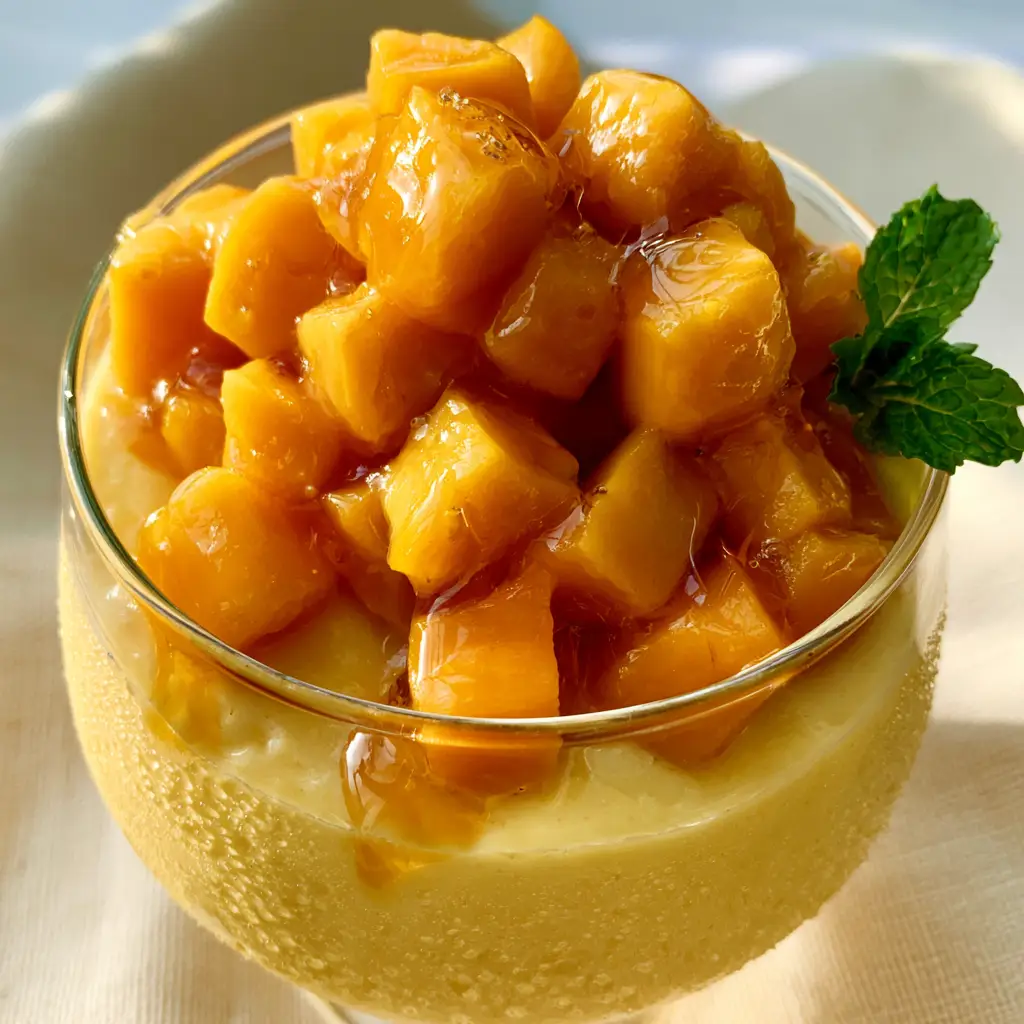
While the mousse sets, dice your remaining Alphonso mango into uniform cubes. Just before serving, pile the cubes high in the center of the glass.
Drizzle the golden honey over the cubes so it glints under your dining room lights. Finally, tuck one bright green mint sprig into the side for that pop of color. This completes the Mango dessert recipe visual architecture.
Pro Tips for Restaurant-Quality Results
- Temperature Control: Always chill your glass before assembly. The temperature differential is what creates the “tiny beads of condensation” seen in professional food photography.
- The Ripeness Test: A perfect Alphonso mango should smell intensely floral at the stem and give slightly under gentle thumb pressure. Avoid fruit with soft black spots.
- Honey Consistency: If your honey is too thick to drizzle, warm it for 5 seconds in the microwave. It should flow like liquid gold to get that “glinting” effect.
- Stabilization Secret: If you are making this vegan, ensure your gelatin is a seaweed-based agar-agar substitute, though the texture may be slightly firmer.
Flavor Pairings and Serving Suggestions
This Mango dessert recipe is incredibly versatile. If you are serving this as part of a larger feast, it pairs beautifully with other vibrant dishes. For a light lunch beforehand, an authentic zesty salad provides a crisp contrast to the creamy dessert.
If you prefer a more substantial meal, consider a main course of perfectly seared trout or even a comforting rice casserole. To wash it all down, a sparkling butterfly fizz echoes the honey notes in the mousse and makes for a cohesive dining experience.
Frequently Asked Questions
Absolutely! Heavy whipping cream (36% fat or higher) will work perfectly and provide a similar silky texture, though the flavor will be less tropical.
Yes, you can use frozen mangoes for the puree base, but for the ‘mountain’ of cubes on top, fresh Alphonso or Kent mangoes are highly recommended for the best texture and visual appeal.
To make this vegan, replace the gelatin with 1 teaspoon of agar-agar powder and ensure your honey is substituted with agave nectar or maple syrup.
This mousse is best enjoyed within 24 hours of assembly, as the fresh mango cubes may start to release juices, but the mousse itself will stay fresh for up to 3 days if covered.
This usually happens if the gelatin wasn’t bloomed correctly or if the coconut cream didn’t have enough fat content. Ensure you use ‘full-fat’ coconut cream for structural integrity.
The Perfect Silky Mango Mousse Recipe
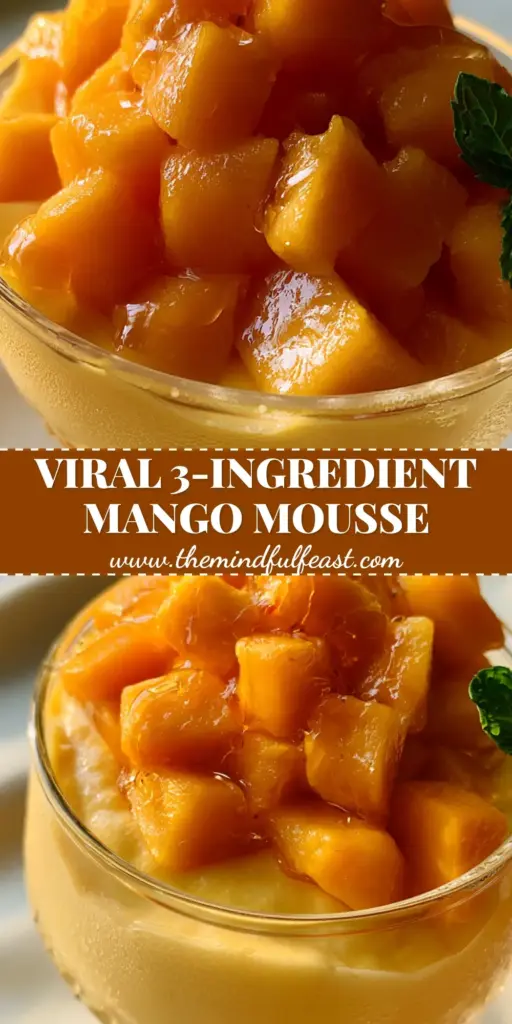
Mango dessert recipe: The Ultimate Silky Alphonso Mango Mousse
Ingredients
Equipment
Method
- Blend the flesh of 2 mangoes until silky smooth and pass through a fine sieve.
- Sprinkle gelatin over water, let sit for 5 mins, then melt and stir into the mango puree.
- Whip the thick coconut solids until soft peaks form.
- Gently fold the mango puree into the coconut cream until uniform.
- Pour into glasses and refrigerate for 4 hours until set.
- Top with diced mango cubes, a honey drizzle, and a mint sprig.
Notes
Use Alphonso mangoes for the best color and fiber-free texture.
Final Thoughts on This Tropical Delight
Mastering this Mango dessert recipe is about more than just following steps; it is about embracing the textures and colors of summer. From the velvety smooth cream to the glinting honey, every element is designed to provide a moment of pure culinary bliss. We hope this recipe brings a bit of tropical sunshine to your table!
Did you try this recipe? We would love to see your “mango mountains”! Leave a comment below or share your photos on Pinterest to inspire other home cooks. Don’t forget to sign up for our newsletter for more elite culinary blueprints.