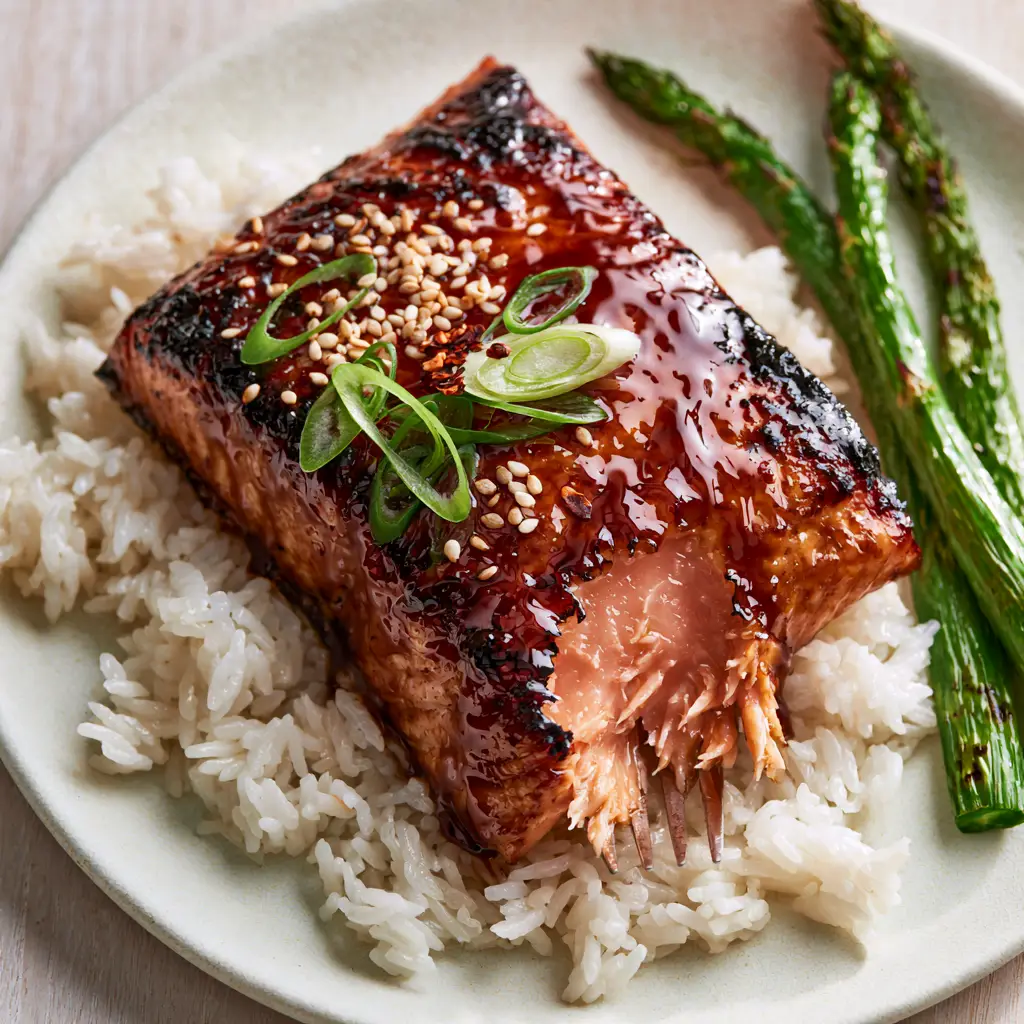
Maple Glazed Salmon is the ultimate marriage of sweet, savory, and smoky flavors, creating a restaurant-quality meal in the comfort of your own kitchen. This recipe focuses on achieving that elusive, glass-like amber coating that clings perfectly to every flake of fish.
The magic of this dish lies in the contrast between the deeply caramelized, charred edges of the salmon and the moist, tender pink interior. When paired with vibrant roasted asparagus and a bed of aromatic jasmine rice, it becomes a complete nutritional powerhouse that looks as good as it tastes.
In this guide, we will break down the culinary science of the Maillard reaction to ensure your glaze thickens into a glistening masterpiece rather than a watery sauce. Whether you are a seasoned home cook or a beginner, these visual and sensory cues will lead you to success.
Why This Pan-Seared Masterpiece Works Every Time
- Visual Texture: The thick amber maple glaze creates a reflective, glistening surface that catches the light and invites the first bite.
- Perfect Contrast: You get a satisfying crunch from the caramelized edges while the center remains buttery and opaque pink.
- Balanced Aromatics: Toasted white sesame seeds and fresh scallions add layers of nuttiness and brightness to the rich maple profile.
- Structural Integrity: Using the proper searing technique ensures the salmon flakes easily with a fork without falling apart in the pan.
The Essential Components for a Glistening Maple Glaze
Fresh Salmon Fillets (6 oz / 170g each): Look for thick-cut fillets with vibrant color and firm flesh to ensure they hold up to the high heat of the sear. The thickness allows for a heavy crust without overcooking the delicate center.
Pure Maple Syrup (1/4 cup / 60ml): Always use Grade A dark maple syrup for the most intense flavor and best caramelization properties. Avoid “pancake syrup,” which is primarily corn syrup and will not produce the same amber depth.
Soy Sauce (2 tbsp / 30ml): This provides the salt and umami needed to balance the sugar, while also contributing to the dark, reflective color of the finished glaze. For a different profile, you could even try this with a maple bourbon glazed salmon base.
Fresh Garlic and Ginger (1 tsp / 5g each): Grated finely, these aromatics infuse the oil and glaze with a subtle heat that cuts through the sweetness of the syrup. They are the “invisible” ingredients that elevate the dish from simple to gourmet.
Cornstarch (1/2 tsp / 2g): A tiny amount of cornstarch slurry ensures the glaze reaches that heavy, reflective thickness described in our visual blueprint. It acts as the binder that helps the glaze cling to the fish.
Neutral Oil (1 tbsp / 15ml): High-smoke point oils like avocado or grapeseed are essential for achieving those charred edges without the oil breaking down and smoking out your kitchen.
The Chef’s Toolkit for Flawless Caramelization
To achieve the professional results shown in our photography, you will need a heavy-bottomed stainless steel or cast-iron skillet. These materials retain heat efficiently, which is the secret to creating a quick, even crust on the fish.
A fish spatula is another crucial tool, featuring a thin, flexible metal blade that slides easily under the salmon without damaging the caramelized skin or edges. Finally, a microplane is best for grating the garlic and ginger into a fine paste that melts into the sauce.
Step 1: Preparing the Fluffy Jasmine Rice Foundation
Begin by rinsing 1 cup (185g) of jasmine rice under cold water until the water runs clear. This removes excess surface starch, ensuring the grains remain individual and fluffy rather than gummy.
Combine the rice with 1.5 cups (350ml) of water and a pinch of salt in a small saucepan. Bring to a boil, then reduce heat to low, cover, and simmer for 15 minutes before fluffing with a fork and letting it sit, covered, until serving.
Step 2: Roasting Asparagus to Vibrant Perfection
Preheat your oven to 400°F (200°C). Toss 1 lb (450g) of trimmed green asparagus with 1 tbsp (15ml) of olive oil, salt, and black pepper on a sheet pan.
Roast for 10-12 minutes until the tips are slightly crispy and the stalks have light char marks, just like in our visual prompt. If you prefer a stovetop method, you can try sauteed asparagus for a similar tender-crisp result.
Step 3: Mastering the Pan-Sear and Glaze Application
Developing the Perfect Crust
Pat the salmon fillets completely dry with paper towels; moisture is the enemy of a good sear. Season the flesh side generously with salt and a tiny pinch of red chili flakes.
Heat your skillet over medium-high heat with the neutral oil. Once the oil is shimmering and just starting to wisps of smoke, place the salmon flesh-side down. Sear undisturbed for 3-4 minutes until a deep golden-brown, charred crust forms on the edges.
The Amber Reduction Process
Flip the salmon carefully. In a small bowl, whisk the maple syrup, soy sauce, garlic, ginger, and cornstarch. Pour the mixture directly into the pan around the salmon fillets.
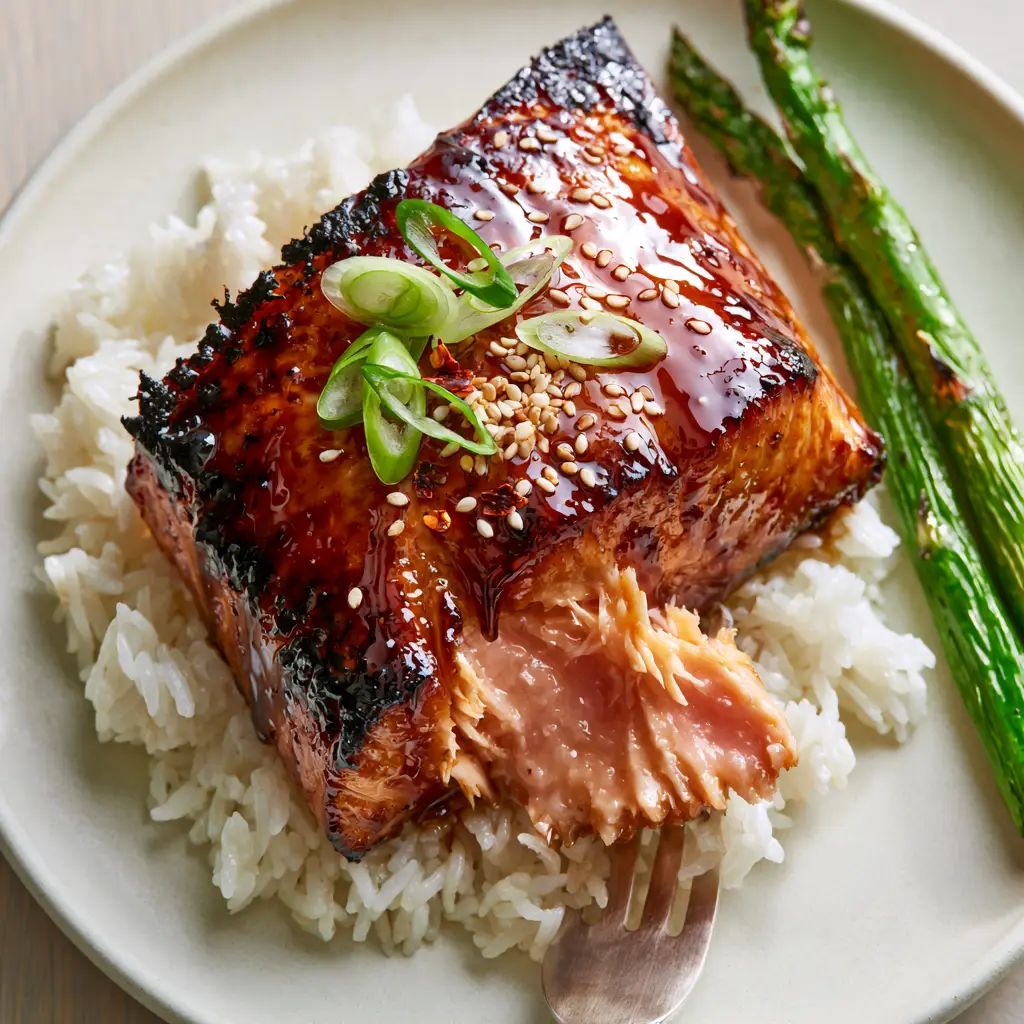
As the liquid bubbles, it will begin to reduce and thicken rapidly. Use a spoon to continuously baste the top of the salmon with the darkening liquid. You are looking for a thick, reflective, dark amber glaze that coats the back of a spoon.
Achieving the Flaky Pink Interior
Cook for another 2-3 minutes, or until the internal temperature reaches 125°F (52°C) for medium-rare or 130°F (54°C) for medium. The interior should be moist, pink, and opaque, flaking easily when pressed gently with a fork.
Remove from heat immediately to prevent the sugars in the glaze from burning. The residual heat will finish the cooking process while you plate the components.
Expert Tips for Success
- Room Temperature: Take your salmon out of the fridge 15-20 minutes before cooking to ensure it cooks evenly from edge to center.
- Don’t Overcrowd: If cooking for a crowd, sear the salmon in batches to maintain high pan temperature and prevent steaming.
- Watch the Sugar: Because maple syrup has a high sugar content, it can go from caramelized to burnt quickly. Keep the glaze moving and adjust heat as necessary.
- The Fork Test: A perfect Maple Glazed Salmon should offer slight resistance on the crust but yield to a fork with zero effort in the center.
Storing, Reheating, and Meal Prep
Leftover salmon can be stored in an airtight container in the refrigerator for up to 2 days. To maintain the texture, avoid the microwave, which can make the fish rubbery.
Instead, reheat the salmon in a pan over low heat with a splash of water and a lid, or enjoy it cold over a salad. If you find yourself with extra salmon often, consider exploring canned salmon recipes for quick lunch alternatives during the week.
What to Serve With Your Glazed Salmon
While jasmine rice and roasted asparagus are the classic pairings, this salmon also pairs beautifully with a refreshing asian cucumber salad to provide a cool, vinegary contrast to the sweet glaze.
If you are looking for more healthy dinner ideas, try serving the salmon alongside some roasted sweet potatoes or a light quinoa pilaf. The versatility of the maple-soy profile makes it a star in any balanced meal plan.
Frequently Asked Questions
Yes, but ensure they are completely thawed and patted bone-dry with paper towels before searing. Any excess moisture will prevent the charred edges from forming and will steam the fish instead.
Honey is a great substitute and will still caramelize beautifully, though the flavor profile will be more floral and less smoky than the traditional maple amber glaze.
The sugars in maple syrup caramelize quickly. Add the glaze only after flipping the salmon, and keep the liquid moving with a spoon. If it thickens too fast, add a teaspoon of water or lower the heat.
You can use either skin-on or skinless. If using skin-on, sear the skin side last to get it extra crispy, though for this specific glazed presentation, searing the flesh side first creates the most visual ‘charred edge’ appeal.
For a moist, flaky interior, aim for 125°F (52°C) for medium-rare or 130°F (54°C) for medium. The salmon will continue to cook slightly due to residual heat after being removed from the pan.
The Ultimate Maple Glazed Salmon Recipe
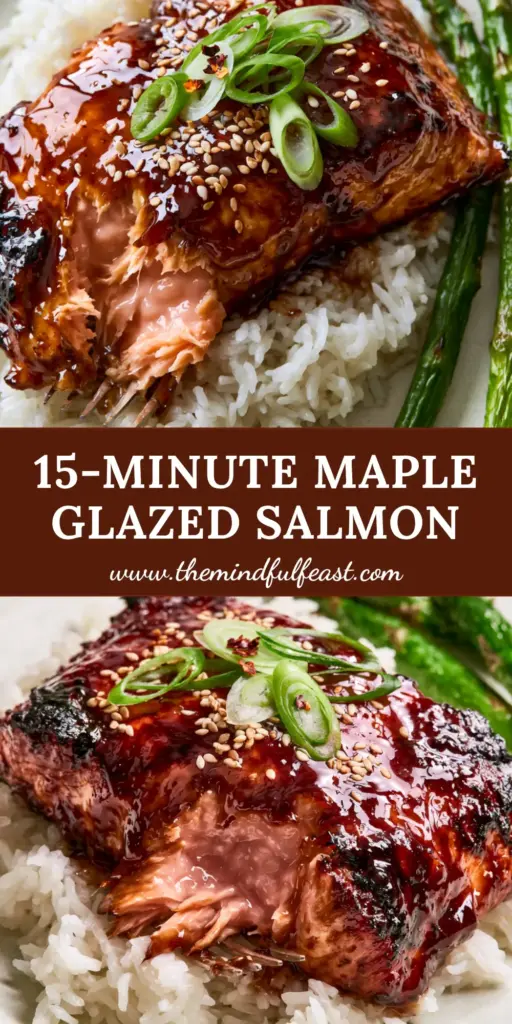
Maple Glazed Salmon With Charred Edges and Roasted Asparagus
Ingredients
Equipment
Method
- Rinse jasmine rice. Combine 1 cup (185g) rice with 1.5 cups (350ml) water. Boil, then simmer covered for 15 minutes.
- Toss asparagus with oil and salt. Roast at 400°F (200°C) for 10-12 minutes until slightly charred.
- Pat salmon dry. Sear flesh-side down in hot oil for 3-4 minutes until charred edges form.
- Flip salmon. Add maple, soy, garlic, ginger, and cornstarch mixture to the pan. Baste until glaze is thick and amber. Cook to 130°F (54°C).
Notes
Watch the glaze carefully in the final minutes as the high sugar content can burn quickly.
Closing Thoughts and Joining Our Culinary Community
This Maple Glazed Salmon is more than just a meal; it is a masterclass in balancing textures and flavors. We hope the glistening amber glaze and charred edges become a staple in your weeknight rotation.
If you enjoyed this recipe, please leave a comment below and share your results! You can also follow us on Pinterest for more visual recipe inspiration and daily cooking tips. Happy searing!