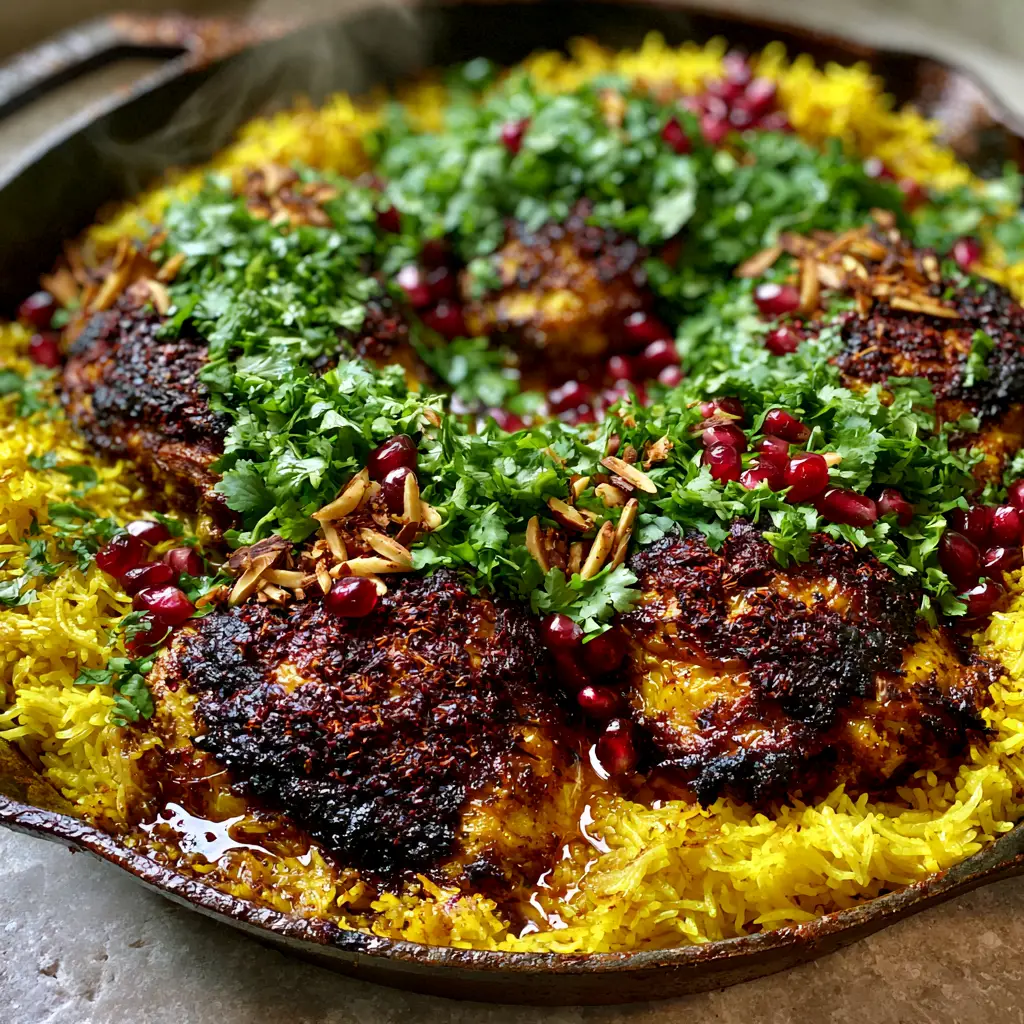
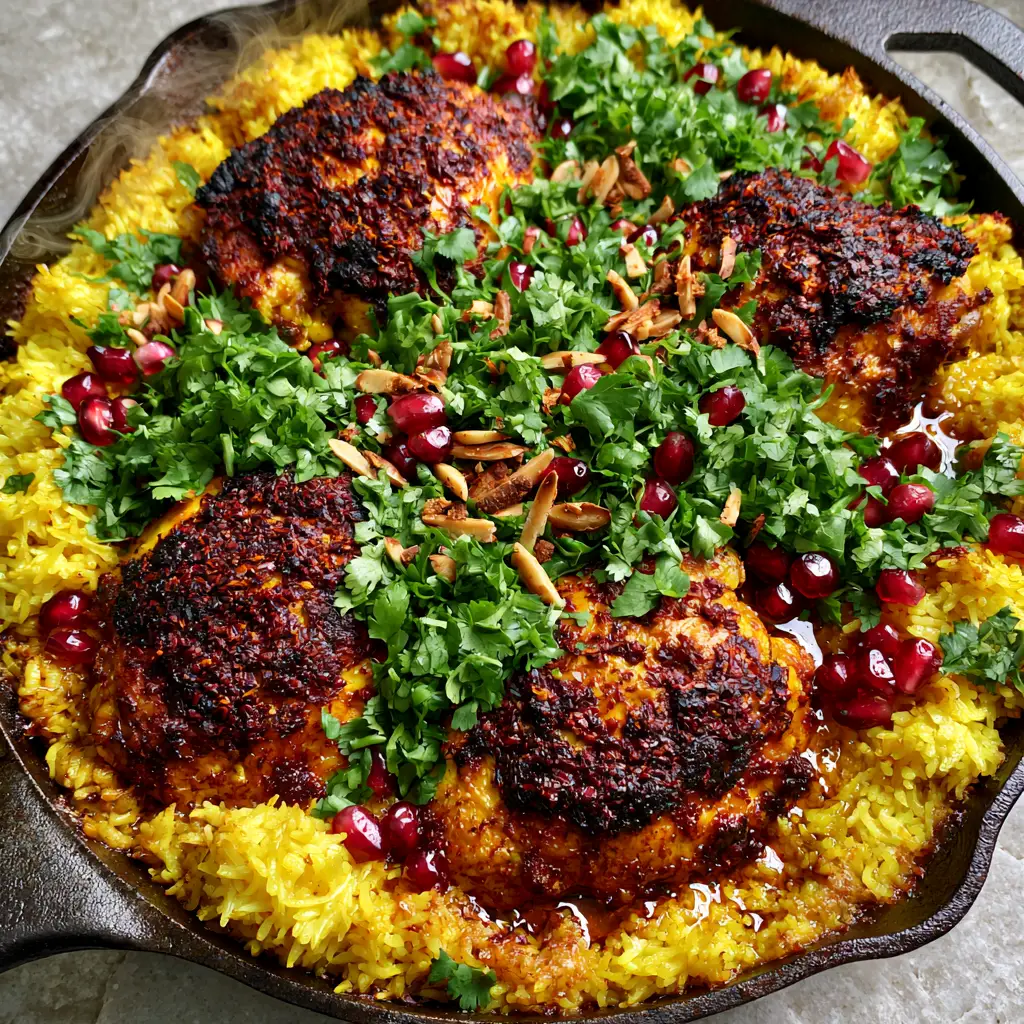
There is nothing quite as satisfying as the sight of a rustic cast iron skillet arriving at the center of the table, still releasing gentle wisps of fragrant steam. This Moroccan Chicken & Rice is a masterclass in textures: deeply charred, crispy chicken skin meets the vibrant, fluffy landscape of golden-yellow turmeric basmati rice. Each grain of rice is perfectly separated and infused with the aromatic warmth of North African spices.
The visual appeal of this dish is undeniable, characterized by the striking contrast between the dark red Ras El Hanout rub and the bright green scatter of fresh cilantro. Topped with glowing red pomegranate seeds and the satisfying crunch of toasted slivered almonds, it is as much a feast for the eyes as it is for the palate. Whether you are cooking for a weeknight family dinner or hosting an elegant gathering, this one-pot wonder delivers high-impact flavor with minimal cleanup.
Inspired by the bustling spice markets of Marrakech, this recipe utilizes authentic techniques to ensure your chicken remains succulent while the skin achieves that coveted “shatter-crisp” texture. By searing the thighs directly in the skillet before nesting them into the rice, we build a foundation of flavor that permeates every single bite. Let’s dive into the science and soul of this vibrant Moroccan staple.
Why This Moroccan Chicken & Rice Technique Is a Game Changer
- Unmatched Textural Contrast: We prioritize the “crisp-to-fluff” ratio, ensuring the chicken skin is deeply charred while the basmati rice remains light and airy.
- Foundational Flavor Layering: By using the rendered chicken fat (schmaltz) to toast the turmeric and rice grains, we create a depth of flavor that water or broth alone cannot achieve.
- Visual Gourmet Finish: The final dusting of ground cumin and paprika, combined with the jewel-toned pomegranate arils, creates a professional “smartphone-ready” aesthetic.
- One-Skillet Efficiency: This entire Moroccan Chicken & Rice meal is prepared in a single 12-inch cast iron skillet, preserving all those delicious browned bits (the fond) for the rice to absorb.
The Anatomy of Flavor: Essential Ingredients and Substitutions
Bone-In, Skin-On Chicken Thighs: Thighs are biologically superior for this dish because they contain enough connective tissue and fat to stay succulent during the rice-steaming process. The skin is non-negotiable for achieving the charred, dark red appearance dictated by the Ras El Hanout seasoning.
Basmati Rice: We specifically use extra-long grain basmati for its ability to stay individual and “fluffy” rather than clumping. If you find yourself enjoying this grain, you might also love our zesty Mexican rice casserole for a different flavor profile.
Ras El Hanout: This “head of the shop” spice blend usually contains over a dozen spices including cinnamon, cloves, and coriander. It is responsible for the deep, complex mahogany color on the chicken skin.
Turmeric Powder: This provides the signature golden-yellow hue to the rice grains. Often used in vibrant Indian cuisine, turmeric adds a subtle earthy bitterness that balances the rich chicken juices.
Pomegranate Seeds & Slivered Almonds: These are your “jewelry” ingredients. The pomegranates provide a bright acidity that cuts through the fat, while the toasted almonds add a necessary structural crunch.
Fresh Cilantro: A heavy scatter of bright green herbs provides the necessary freshness to lift the warm spice notes. If you are a fan of herb-heavy dishes, consider trying our fresh zucchini stir fry as a light side option.
The Essential Kitchen Tools for Success
To achieve the authentic, rustic look of this Moroccan Chicken & Rice, a 12-inch (30cm) cast iron skillet is your best friend. The heavy bottom provides even heat distribution, which is critical for rendering the chicken fat and creating that crispy skin without burning it.
You will also need a fine-mesh strainer to rinse your basmati rice thoroughly. Removing excess surface starch is the “secret” to ensuring the grains are visible and distinct, as seen in the high-quality photos. A tight-fitting lid or heavy-duty aluminum foil is also required to trap the steam and fully hydrate the rice grains.
Mastering the Sear: Step-By-Step Moroccan Chicken & Rice
Phase 1: Preparing the Chicken and Spices
Pat the chicken thighs extremely dry with paper towels; moisture is the enemy of a good char. Rub the skin and underside generously with Ras El Hanout, salt, and a touch of olive oil to help the spices adhere. Let the chicken sit at room temperature for 15 minutes to ensure an even cook.
Phase 2: Achieving the Perfect Char
Place the skillet over medium-high heat with a tablespoon (15ml) of neutral oil. Lay the chicken thighs skin-side down and do not move them for 6-8 minutes. You are looking for a sensory cue: a deep, sizzling sound and a dark red, almost blackened crust that releases easily from the pan.
Phase 3: Building the Turmeric Rice Base
Remove the chicken (it won’t be fully cooked yet) and set aside. In the remaining fat, sauté diced onions and minced garlic until translucent. Stir in the turmeric and the rinsed basmati rice, toasting the grains for 2 minutes until they smell nutty and appear translucent at the edges.
Phase 4: The Gentle Simmer and Steam
Pour in your chicken stock (600ml), scraping the bottom of the pan to release the flavor-packed fond. Nestled the chicken thighs back into the rice, keeping the skin above the liquid line to maintain crispiness. Cover tightly and reduce the heat to the lowest setting for 18-20 minutes.
Phase 5: The Floral Finish
Once the liquid is absorbed and the rice is tender, remove from heat and let it rest for 5 minutes. Use a fork to fluff the rice gently around the chicken. Finish with a heavy scatter of cilantro, toasted slivered almonds, and pomegranate seeds. Finally, add a light dusting of ground cumin and paprika for that final aromatic punch.
Expert Tips for the Most Authentic Result
- The Resting Rule: Never skip the 5-minute rest after turning off the heat. This allows the moisture to redistribute, ensuring the rice doesn’t stick to the bottom of the skillet.
- Rinse Until Clear: Rinse your rice in cold water at least 3-4 times. If the water is cloudy, your rice will be gummy.
- Skin Protection: When adding the stock, pour it around the chicken, not over it. If you soak the skin, you lose the “charred” texture we worked so hard to build.
- Toasting Almonds: Toast your slivered almonds in a dry pan for just 60 seconds until they turn a light tan. They burn quickly, so stay vigilant!
Optimal Storage and Smarter Reheating
Moroccan Chicken & Rice stores beautifully in the refrigerator for up to 4 days. Store it in an airtight glass container to prevent the turmeric from staining your plastic-ware.
To reheat, avoid the microwave if possible, as it will soften the chicken skin. Instead, place the chicken and rice back in a skillet with a splash of water, cover, and warm over medium-low heat. This mimics the original steaming process and helps revive the fluffiness of the basmati rice.
What to Serve with Moroccan Chicken & Rice
Since this is a rich and aromatic dish, it pairs perfectly with cold, crisp sides. We highly recommend serving it alongside a traditional Arabic salad to provide a refreshing cucumber and tomato crunch that balances the warm spices.
If you are looking for a beverage to cut through the Ras El Hanout, a Honey Lemon Butterfly Fizz offers a botanical sweetness that complements the cumin and paprika notes. For a multicourse North African feast, you could even start the meal with crispy beef flautas as a fun, fusion-style appetizer.
Common Questions About One-Pot Moroccan Meals
If pomegranates aren’t in season, dried cranberries or golden raisins offer a similar sweet-tart profile that complements the Moroccan spice palette.
While possible, breasts are prone to drying out during the 20-minute rice steaming phase. If using breasts, we recommend keeping them in larger pieces and monitoring the internal temperature carefully.
Ras El Hanout is generally aromatic and warm rather than ‘hot’ like cayenne. It focuses on depth of flavor with cinnamon, ginger, and cardamom, making it family-friendly.
You can use any heavy-bottomed oven-proof skillet or a Dutch oven. The key is even heat distribution to ensure the chicken skin chars without burning the rice underneath.
Mushy rice is usually caused by too much starch or too much liquid. Ensure you rinse the rice until the water is completely clear and stick to the 1:1.5 rice-to-liquid ratio.
The Final Recipe: Authentic Moroccan Chicken & Rice
Moroccan Chicken & Rice: One-Pot Crispy Thighs and Golden Turmeric Grains
Ingredients
Equipment
Method
- Rub chicken thighs with oil, salt, and 1.5 tbsp of Ras El Hanout.
- Sear skin-side down in a cast iron skillet over medium-high heat for 8 minutes until charred and crispy. Flip and cook 2 minutes, then remove from pan.
- Sauté onion and garlic in the chicken fat until soft. Stir in turmeric and rice, toasting for 2 minutes.
- Add stock and remaining spices. Nest chicken back in, cover, and simmer on low for 18-20 minutes.
- Rest for 5 minutes. Fluff rice and top with cilantro, almonds, pomegranate seeds, and a dusting of cumin and paprika.
Notes
Use a tight-fitting lid to ensure the steam wisps stay trapped during the cooking process.
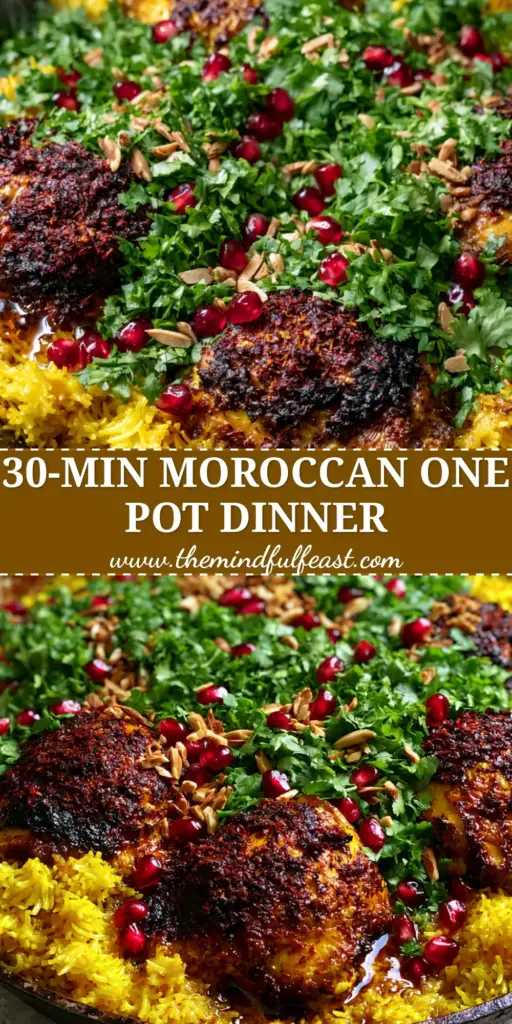
This Moroccan Chicken & Rice represents the pinnacle of one-pot cooking. It combines professional culinary techniques—like proper spice toasting and fat rendering—with the ease of a home-cooked meal. The result is a dish that looks like a professional food photograph and tastes like an authentic journey through the flavors of North Africa.
The combination of succulent, charred chicken and vibrant, turmeric-infused grains is a testament to how simple ingredients can be transformed through heat and timing. Don’t forget to capture your own “steam wisp” photo before the family digs in!
If you enjoyed this recipe, please leave a comment below and share your results! For more visually stunning recipe inspiration, follow us on Pinterest and save this to your favorite dinner boards.