When it comes to the most iconic Nigerian lunch recipes, one dish stands undisputed at the top of the culinary hierarchy: Smoky Jollof Rice. This isn’t just a meal; it is a cultural phenomenon, a centerpiece of celebrations, and a masterclass in balancing heat, acidity, and deep, umami-rich flavors.
The secret to a truly authentic Nigerian Jollof lies in the “smoky” profile, often referred to as “party-style” rice. This characteristic flavor doesn’t come from liquid smoke or artificial additives, but from a controlled, deliberate singeing of the rice at the bottom of the pot.
In this guide, we will explore the forensic details of crafting the perfect bowl. We are looking for vibrant orange-red grains that remain separate and fluffy, accented by the sweet contrast of caramelized plantains and the sharp bite of raw red onions.
The Sensory Science of Party-Style Nigerian Lunch Recipes
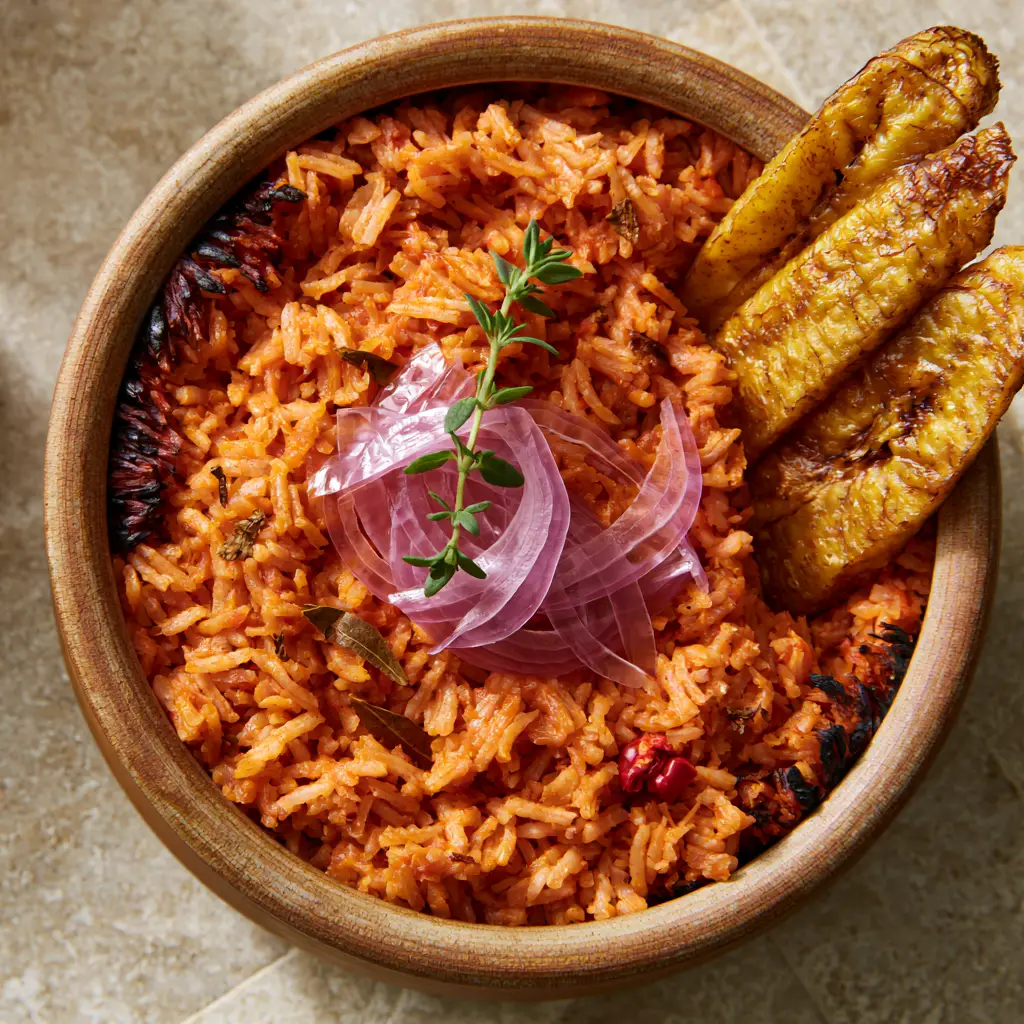
Authentic Jollof is a multi-sensory experience that begins long before the first bite. The visual appeal is paramount, defined by a deep, concentrated hue that suggests hours of slow-cooked pepper reduction.
Our goal today is to replicate the exact result seen in high-end Nigerian kitchens. You should expect the following sensory hallmarks from this recipe:
- The Visual: Long-grain parboiled rice, each grain distinct and glinting under the light, coated in a thick, brick-red tomato and bell pepper emulsion.
- The Texture: A firm, “al dente” bite to the rice, contrasted with the soft, jammy interior of diagonally sliced, golden-brown fried plantains.
- The Aroma: A heady mixture of toasted thyme, steamed bay leaves, and that unmistakable “burnt” bottom-pot scent that signals deep smokiness.
- The Heat: Visible flecks of red Scotch bonnet pepper provide a creeping heat that warms the palate without overwhelming the delicate spices.
If you are exploring other vibrant world cuisines, you might also enjoy our guide to Mozambique-inspired dishes or perhaps some classic Indian dinner recipes to expand your global palate.
Essential Components for Authentic Nigerian Rice
To achieve the result described in our visual blueprint, you cannot cut corners with ingredients. Every element serves a structural or flavor-driven purpose.
Long-Grain Parboiled Rice: 3 cups (600g). Parboiled rice is essential because the grains are pre-processed to withstand long steaming without breaking or becoming mushy.
Red Bell Peppers (Tatashe): 3 large (approx. 450g). These provide the bulk of the “Obu-Ata” (pepper sauce) and give the rice its signature vibrant red-orange color.
Roma Tomatoes: 5 medium (approx. 500g). Tomatoes add necessary acidity and moisture to the concentrated sauce base, balancing the sweetness of the peppers.
Scotch Bonnet Peppers (Ata Rodo): 2-3 peppers. These are chopped finely so that small red flecks are visible throughout the finished dish, providing localized bursts of heat.
Red Onions: 2 large. One onion is blended into the base, while the other is sliced into paper-thin raw rings for a sharp, fresh garnish that cuts through the richness.
Overripe Plantains: 2 large. Look for yellow skins with heavy black spotting; these contain the high sugar content needed for those diagonal, caramelized edges.
Vegetable Oil: 1/2 cup (120ml). This foundational fat is used to fry the tomato paste and peppers until the oil “floats,” which signifies the removal of raw vegetable flavors.
Seasoning Trio: Curry powder, dried thyme, and crushed bay leaves. These “invisible” ingredients provide the aromatic backbone that supports the smoky top notes.
The Culinary Architecture of the “Smoky” Pot
While many Nigerian lunch recipes are straightforward, Jollof requires a specific technical approach to the steaming process. You are not “boiling” the rice; you are steaming it in a concentrated flavorful broth.
To achieve the “charred bits” mentioned in our blueprint, we use a heavy-bottomed pot. This allows the bottom layer of rice to catch and caramelize without burning the entire batch, infusing the steam with a toasted aroma.
If you prefer a lighter side to balance this hearty meal, consider pairing it with a crisp vinegar cucumber salad or some simple sautéed vegetables to add a fresh element to your plate.
Mastering the Concentrated Pepper Base
Step 1: The “Obu-Ata” Reduction
In a high-speed blender, combine your red bell peppers, tomatoes, scotch bonnets, and one red onion. Blend until smooth, then pour the mixture into a large pot over medium-high heat.
Boil this mixture until the water has evaporated, leaving behind a thick, concentrated paste. This step is non-negotiable for achieving the “deep orange-red” color described in our visual prompt.
Step 2: Frying the Aromatics
Heat your vegetable oil in a heavy Dutch oven. Add 2 tablespoons (30g) of tomato paste and fry for 3-5 minutes until it begins to darken; this removes the metallic tin flavor.
Add your reduced pepper mix to the oil along with curry powder, dried thyme, and 3-4 crushed bay leaves. Fry until the oil separates from the sauce and rises to the top—this is the sensory cue that your base is ready.
Step 3: The Parboiling Technique
Wash your long-grain rice thoroughly until the water runs clear, removing excess starch. Parboil the rice in salted water for 5-7 minutes until it is halfway cooked, then drain.
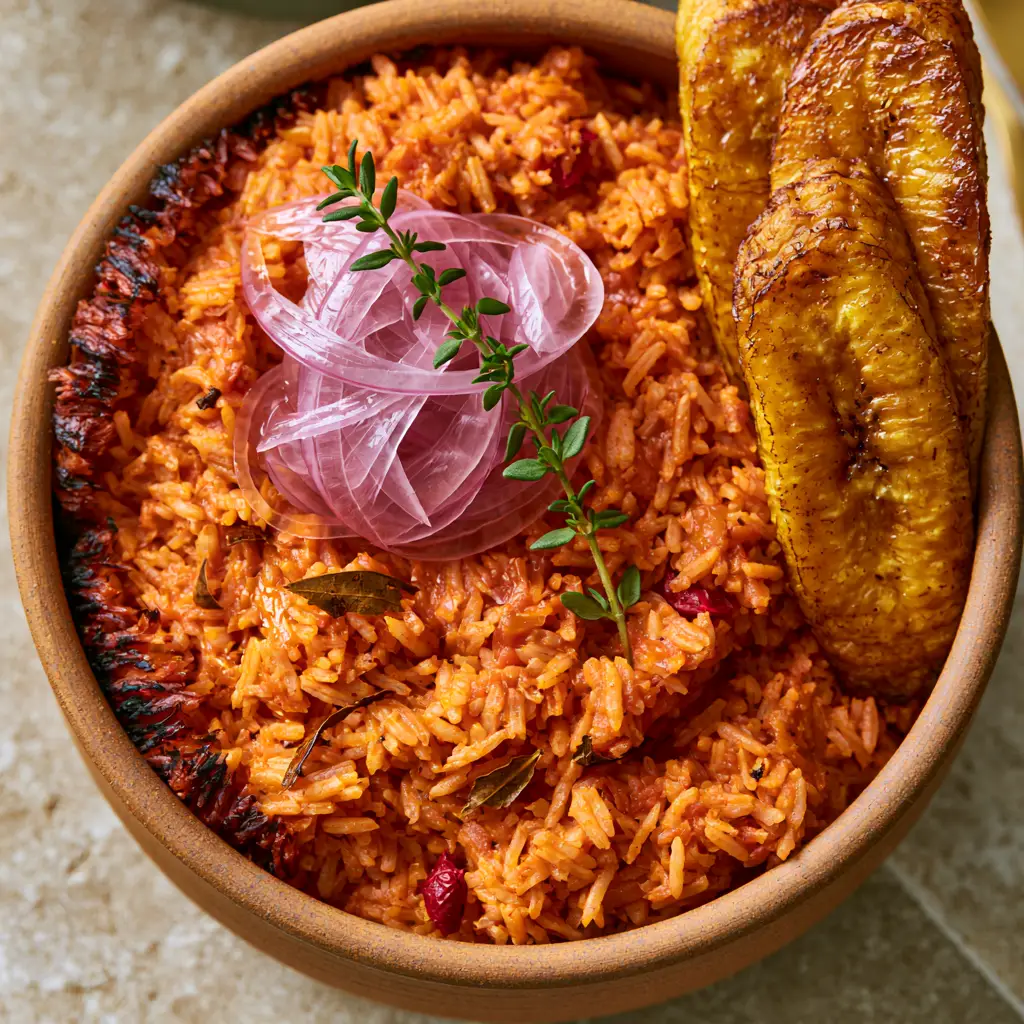
This ensures the rice remains “separate” as seen in our close-up photo, preventing the grains from clumping together into a porridge-like consistency.
The Art of the Jollof Steam and the “Burn”
The Steaming Process
Add the parboiled rice to your fried pepper base. Pour in enough chicken or beef stock to just barely cover the rice—about 2 cups (480ml).
Cover the pot tightly with a layer of aluminum foil before placing the lid on top. This traps the steam inside, forcing the rice to absorb the flavors of the concentrated sauce.
Achieving the Party-Style Smoke
Turn the heat to medium-low and let the rice steam for 20-25 minutes. Do not peek! Once the liquid is absorbed, turn the heat up to medium-high for the final 3-5 minutes.
You should start to hear a faint crackling sound and smell a toasted aroma. This creates the “charred, slightly darkened rice grains at the edges” that define elite Nigerian lunch recipes.
Perfectly Caramelized Diagonal Plantains
While the rice is steaming, prepare your Dodo (fried plantains). Peel the overripe plantains and slice them on a sharp diagonal, approximately 1/2 inch (1.25cm) thick.
Heat oil in a skillet and fry the slices until the edges are golden-brown and slightly tacky. This caramelization provides the perfect sweet counterpoint to the spicy, smoky rice.
For more inspiration on using fruit in savory or sweet contexts, check out our peach cobbler cinnamon rolls for a different take on caramelized fruit flavors.
Plating for Visual Impact
To recreate the “Extreme close-up POV” look, scoop the steaming rice into a rustic ceramic bowl. Ensure some of the charred bits are visible near the top to showcase the smoky technique.
Place three diagonal slices of the golden plantains on the side. Garnish with a handful of your translucent, thin-sliced red onion rings and a single sprig of fresh green thyme for a pop of color.
Finally, sprinkle a few extra flecks of red scotch bonnet and crushed bay leaf bits over the top. The “visible steam” should rise naturally, carrying the scent of a traditional Nigerian celebration.
Expert Tips for Jollof Perfection
- The Pot Matters: Use a cast-iron Dutch oven or a heavy-gauge aluminum pot. Thin pots will burn the rice too quickly before the centers are cooked.
- Foil is Key: The aluminum foil seal is the difference between mushy rice and perfectly steamed, separate grains.
- Rinse Well: If your rice is sticky, you didn’t wash enough starch off. Rinse until the water is crystal clear.
- Don’t Stir: Once the rice is in the pot with the stock, leave it alone. Stirring breaks the grains and releases starch.
Frequently Asked Questions
The ‘burn’ is what provides the authentic smoky flavor. However, if you prefer a cleaner taste, you can skip the final high-heat step, though you will lose that traditional party-style aroma.
The color comes from the ratio of red bell peppers (Tatashe) to tomatoes. Using more peppers and frying the tomato paste until it darkens ensures a deep, vibrant orange-red hue.
Yes, Jollof rice is naturally gluten-free. Just ensure that your stock (chicken or beef) does not contain any added gluten-based thickeners or yeast extracts.
Long-grain parboiled rice is the gold standard. It has a lower starch content than jasmine or basmati, allowing the grains to stay separate and firm throughout the long steaming process.
Mushy rice usually happens if you use too much water or don’t rinse the starch out properly. Stick to the parboiling method and ensure you use a tight foil seal to steam rather than boil the grains.
What to Serve With Nigerian Jollof Rice
While this dish is a powerhouse on its own, many Nigerian lunch recipes feature side proteins. A side of grilled chicken or peppered beef is traditional.
If you’re looking for a meat-free accompaniment, these smashed baby potatoes offer a great textural contrast, or you could serve a small portion of Nigerian egg stew for a truly authentic breakfast-for-lunch experience.
How to Store and Reheat Your Leftovers
Jollof rice actually tastes better the next day as the spices have more time to meld. Store it in an airtight container in the refrigerator for up to 4 days.
To reheat, add a tablespoon of water or stock to the rice and microwave it covered, or steam it on the stovetop. This restores the moisture without losing the fluffy texture of the grains.
Authentic Smoky Nigerian Jollof Rice Recipe
Nigerian Lunch Recipes: The Ultimate Smoky Jollof Rice with Fried Plantains
Ingredients
Equipment
Method
- Blend red bell peppers, tomatoes, one onion, and scotch bonnets. Boil in a pot until the water evaporates and you have a thick paste.
- Heat oil in a Dutch oven. Fry tomato paste for 3 minutes, then add the reduced pepper mix, curry, thyme, and bay leaves. Fry until oil separates.
- Parboil washed rice for 7 minutes, drain, and add to the fried sauce. Stir well to coat every grain in the deep red oil.
- Add stock, cover with aluminum foil and a lid. Steam on low heat for 25 minutes until the rice is tender and separate.
- Turn heat to medium-high for 3-5 minutes at the end to slightly char the bottom layer for that smoky party flavor.
- Fry diagonal plantain slices in oil until golden-brown and caramelized. Slice remaining red onion into thin rings.
Notes
The 'burn' at the bottom is intentional—it provides the smoky flavor without ruining the dish.
[PinImage_2]
Final Thoughts on Mastering Nigerian Lunch Recipes
Mastering Smoky Jollof Rice is a badge of honor for any home cook. By focusing on the “Obu-Ata” reduction and the specific steaming method, you can bring the vibrant flavors of West Africa into your own kitchen.
We hope this deep dive helps you achieve that perfect, glinting orange-red finish and the smoky depth that makes Nigerian lunch recipes so beloved globally.
If you enjoyed this recipe, please leave a comment below and share your results! Don’t forget to follow us on Pinterest for more culinary inspiration.
[PinImage_3]