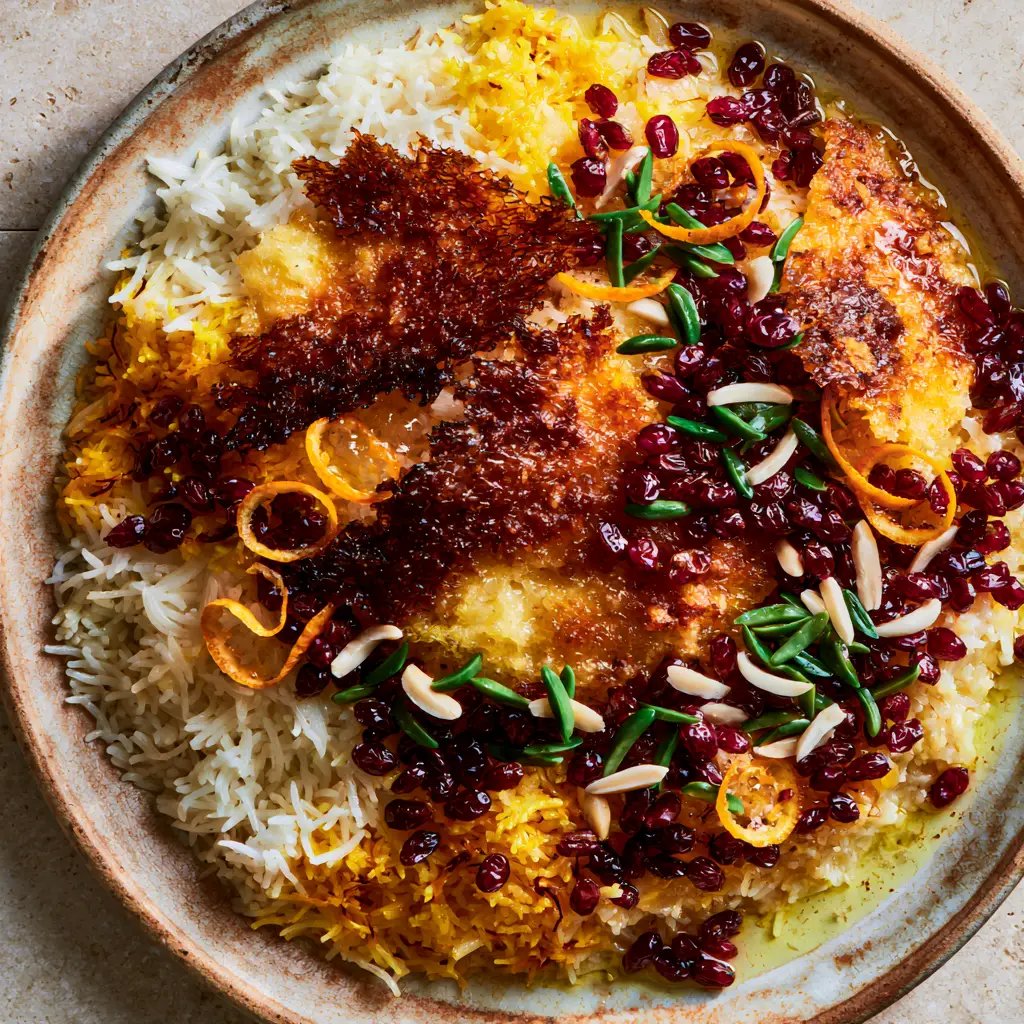
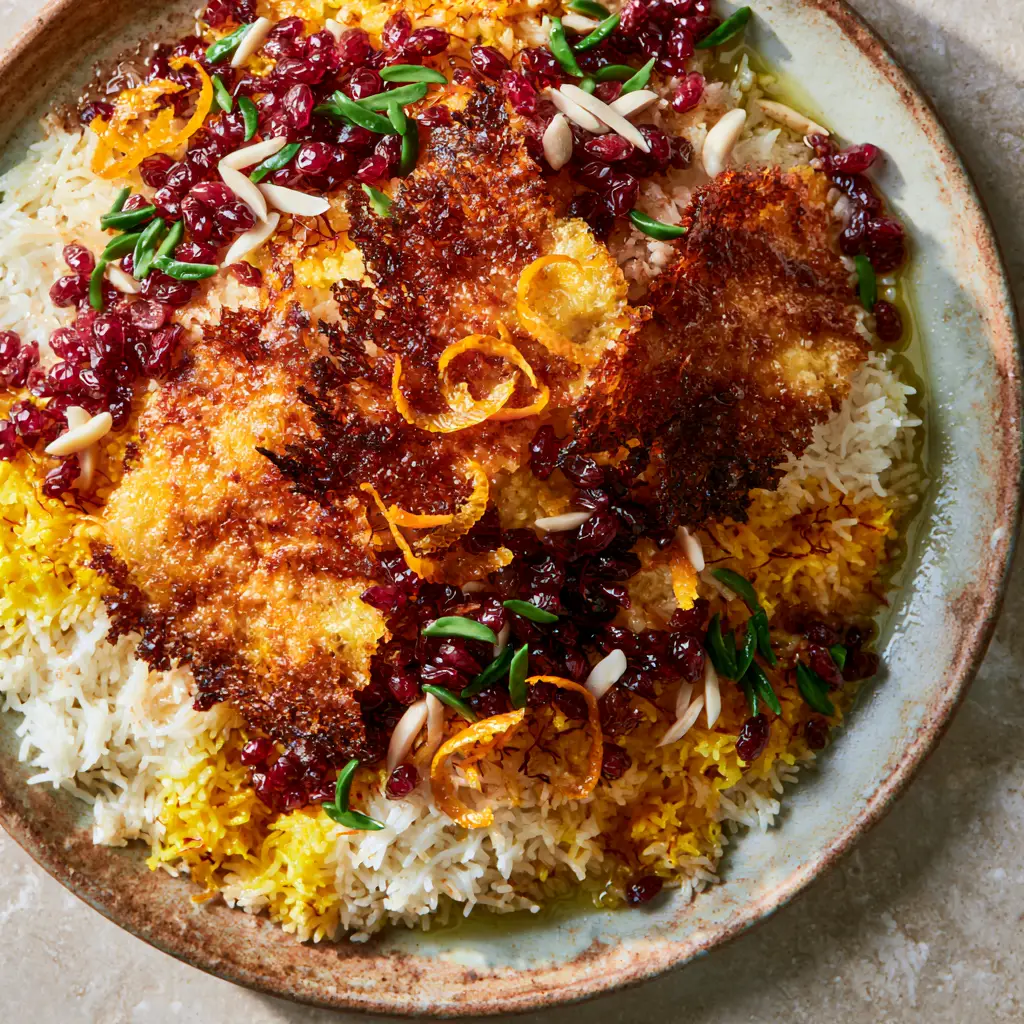
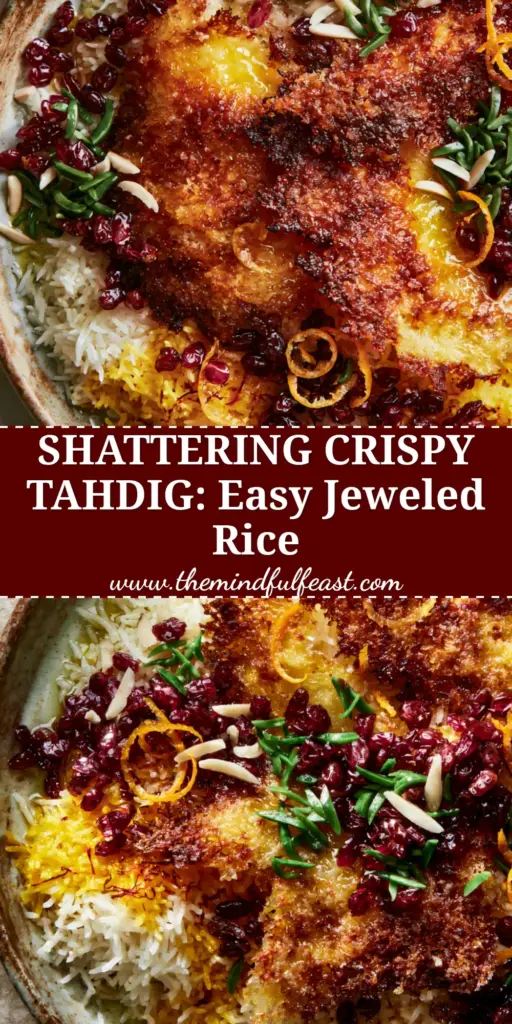
Persian Jeweled Rice is a masterpiece of culinary art, often reserved for weddings and grand celebrations where it serves as a stunning centerpiece. This vibrant dish, also known as Javaher Polo, is a sensory explosion featuring a foundation of snowy white and saffron-yellow long-grain basmati rice. The visual appeal is unparalleled, characterized by jagged shards of deep golden-brown, buttery, crispy Tahdig and a scattering of glistening ruby-red barberries, emerald-green pistachios, and curled strips of candied orange zest.
To achieve the authentic look captured in our high-end photography, we focus on the contrast of colors and the delicate glisten of a melted butter glaze. Whether you are hosting a festive dinner or simply want to elevate your weekend meal, this recipe provides the forensic detail needed to master the balance of sweet, tart, and savory notes that define Persian cuisine.
Why This Authentic Javaher Polo is a Showstopper
- Textural Contrast: You will achieve the perfect balance between the fluffy, individual grains of steamed basmati and the shatteringly crisp, jagged shards of golden Tahdig.
- Vibrant Visuals: The “jewels”—ruby barberries, green pistachios, and white almonds—create a mosaic of color that mirrors the morning light hitting a rustic ceramic platter.
- Complex Flavor Profile: The bitterness of orange zest is transformed into a sweet aromatic, perfectly complementing the tartness of sautéed barberries and the floral notes of saffron-infused rice.
- Professional Technique: This recipe utilizes the traditional parboiling and steaming method to ensure grains never clump, resulting in a result far superior to standard garlic butter rice.
The Anatomy of the Persian Jewel: Essential Ingredients
Long-Grain Basmati Rice: Use 3 cups (600g) of high-quality aged basmati. The extra-long grains are essential for the “snowy white” appearance and the structural integrity required for a fluffy pile.
Saffron Threads: 1/2 tsp (1g) of high-grade saffron provides the vibrant yellow grains. When bloomed in hot water, it creates a floral aroma that permeates the entire platter.
Barberries (Zereshk): 1/2 cup (60g) of these tiny ruby-red berries provide the signature tartness. They must be sautéed briefly to achieve that glistening, moist look seen in the blueprint.
The Nut Crunch: 1/2 cup (60g) of raw slivered green pistachios and 1/2 cup (60g) of blanched almond slivers. These provide the “emerald” and “pearl” elements of the jeweled rice.
Orange Zest Strips: 2 large oranges (zested into thin, curled strips). Candying these in a light syrup removes bitterness and adds a sweet, citrusy fragrance to the rice.
Fat for the Crust: 1/2 cup (115g) unsalted butter and 2 tbsp (30ml) neutral oil. The oil increases the smoke point, ensuring the Tahdig reaches a deep golden-brown without burning, while the butter provides the rich, decadent flavor.
Professional Culinary Tools for the Perfect Tahdig
To achieve the “jagged shards” of Tahdig described in our visual prompt, you need a heavy-bottomed non-stick pot or a well-seasoned cast-iron Dutch oven. A tight-fitting lid is crucial to trap steam, and a clean kitchen towel (damkoni) wrapped around the lid will absorb excess moisture, preventing the rice from becoming mushy. Finally, a rustic ceramic platter is the best vessel for presentation, allowing the light to highlight the delicate shadows and textures of the grains.
Step-by-Step Guide to Mastering Persian Jeweled Rice
1. Preparing the Saffron and Jeweled Accents
Grind your saffron threads with a pinch of sugar and steep in 3 tbsp (45ml) of hot water. While the saffron blooms, soak the barberries in cold water for 10 minutes to clean them, then drain thoroughly.
In a small skillet, melt 1 tbsp (15g) of butter and sauté the barberries with a teaspoon of sugar for 2 minutes until they glisten. In the same pan, lightly toast the slivered almonds and pistachios for 60 seconds just until fragrant—do not brown them, as we want to keep the emerald green and white colors vibrant.
2. Candying the Curled Orange Zest
Peel the oranges into thin strips using a vegetable peeler, avoiding the white pith. Boil the strips in water for 5 minutes, then drain; repeat this twice to remove bitterness. Finally, simmer the strips in a mixture of 1/4 cup (50g) sugar and 1/4 cup (60ml) water for 10 minutes until they become translucent and curled, similar to the visual recipe blueprint.
3. Parboiling the Basmati Grains
Wash the rice in cold water until the water runs clear. Bring a large pot of salted water to a rolling boil. Add the rice and cook for 5-7 minutes. You are looking for a specific sensory cue: the grain should be soft on the outside but still have a firm, “al dente” bite in the center.
4. Building the Golden Tahdig Crust
Drain the rice. In your non-stick pot, melt 3 tbsp (45g) of butter with 2 tbsp (30ml) of oil and 1 tbsp (15ml) of the saffron water. Spread a thin, even layer of the parboiled rice across the bottom of the pot, pressing down slightly. This layer will become the deep golden-brown crust.
5. The Steaming Process
Mound the remaining rice into a pyramid shape over the bottom layer. Use the handle of a wooden spoon to poke 5-6 holes through the rice to the bottom of the pot to allow steam to escape. Drizzle the remaining melted butter glaze and saffron water over the top. Wrap the lid in a towel and cook on low heat for 45-50 minutes. You will hear a faint crackling sound when the Tahdig is perfectly crisp.
Expert Tips for a Flawless Presentation
- Listen to the Pot: A “sizzling” sound indicates the water is evaporating and the crust is frying; if you hear nothing, the heat is too low.
- The Ice Trick: If the Tahdig feels stuck, place the bottom of the hot pot in a sink of cold water for 30 seconds to help release the crust.
- Avoid Over-Mixing: When assembling the platter, gently fold in the saffron rice to keep the snowy white and vibrant yellow sections distinct.
- Moisture Control: If your rice looks dry, a light drizzle of warm water and butter during the last 10 minutes of steaming will add that faint glisten of oil seen in high-end photography.
How to Store and Revive Your Rice
Persian Jeweled Rice is best served immediately to preserve the crunch of the Tahdig. However, leftovers can be stored in an airtight container in the refrigerator for up to 3 days. To reheat, place the rice in a pan with a splash of water and a knob of butter, covering it tightly to steam. Note that the Tahdig will lose its “jagged shard” crispness upon reheating, becoming more like a soft easy fried rice texture.
What to Serve with Javaher Polo
This rice is so flavorful it can stand alone, but it traditionally pairs beautifully with roasted saffron chicken or lamb shank. If you are looking for a lighter accompaniment, consider a chickpea tuna salad or even a refreshing hähnchensalat-rezept. The tart barberries also cut through the richness of a pork shoulder steak if you are deviating from traditional Persian pairings.
Frequently Asked Questions
Yes, dried cranberries can be used as a substitute, but since they are sweeter, you should omit the sugar when sautéing them to maintain the necessary tartness.
You must blanch the zest multiple times to remove the bitterness, then simmer it in sugar syrup until it becomes translucent and curls into decorative strips.
Yes, this recipe is naturally gluten-free as it uses rice, nuts, fruit, and natural fats without any wheat-based additives.
The key is a combination of oil and butter in a non-stick pot, combined with low, steady heat and a towel-wrapped lid to prevent steam from softening the crust.
Parboiling ensures the rice grains remain long, individual, and fluffy. If you skip this, the starch will make the rice clumpy rather than the ‘snowy’ texture required.
The Ultimate Persian Jeweled Rice Recipe Card
Persian Jeweled Rice (Javaher Polo) with Crispy Saffron Tahdig
Ingredients
Equipment
Method
- Grind saffron with a pinch of sugar and steep in 3 tbsp hot water.
- Boil orange strips twice to remove bitterness, then simmer in sugar syrup until curled and translucent.
- Boil rice in salted water for 5-7 minutes until soft outside but firm inside. Drain.
- Add oil, butter, and saffron water to the pot. Press a layer of rice into the bottom.
- Mound remaining rice, poke steam holes, cover with towel-wrapped lid, and cook on low for 45-50 mins until a golden-brown crust forms.
- Sauté barberries and nuts. Mix a portion of rice with saffron. Platter the white rice, top with saffron rice, jagged tahdig shards, and the jeweled fruits and nuts.
Notes
Ensure the orange zest is thoroughly blanched to prevent bitterness.
Bring the Colors of Persia to Your Table
We hope this guide helps you create a Persian Jeweled Rice that looks as spectacular as it tastes. The combination of aromatic saffron, crunchy nuts, and that iconic golden Tahdig is truly a celebration of flavor. If you enjoyed this recipe, please leave a comment below and share your photos with us! Don’t forget to follow us on Pinterest for more authentic culinary inspirations.