There is a specific kind of culinary magic that happens when the natural sugars of a ripe plantain meet the savory, earthy heat of a turmeric-stained gravy. This plantain curry is not just a meal; it is a visual and sensory masterpiece that brings tropical warmth directly to your dinner table. If you have been searching for a dish that balances sweetness with a complex spice profile, you have arrived at the definitive recipe.
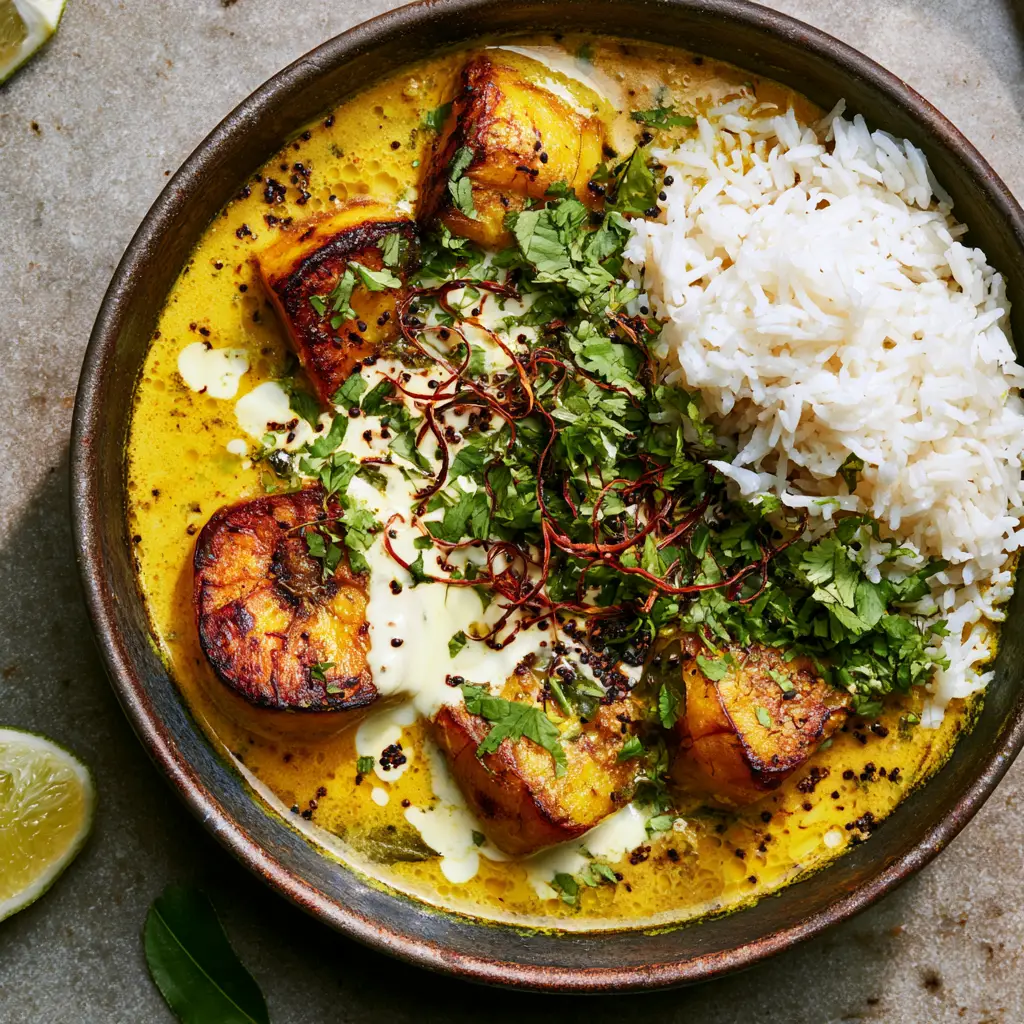
Every element of this dish is designed to create a harmonious contrast. You will experience the soft, jammy interior of the plantains against their caramelized, pan-seared crust. The thick coconut milk sauce provides a rich, velvety backdrop for the popping texture of toasted black mustard seeds and the aromatic crunch of fried curry leaves. It is a vibrant, golden-yellow bowl of comfort that looks as professional as a high-end restaurant plating.
In this guide, we will break down the science of achieving that perfect golden-brown sear without turning the fruit into mush. We will also explore the “tadka” technique—a traditional method of tempering spices in hot oil—to ensure your plantain curry has layers of flavor that reveal themselves with every bite. Let’s dive into the techniques required to master this stunning plantain curry.
Why You Will Absolutely Crave This Vibrant Plantain Curry
- Perfect Textural Contrast: The pan-seared ripe plantain chunks offer a crispy, caramelized exterior that protects a tender, sweet interior, preventing the fruit from dissolving into the sauce.
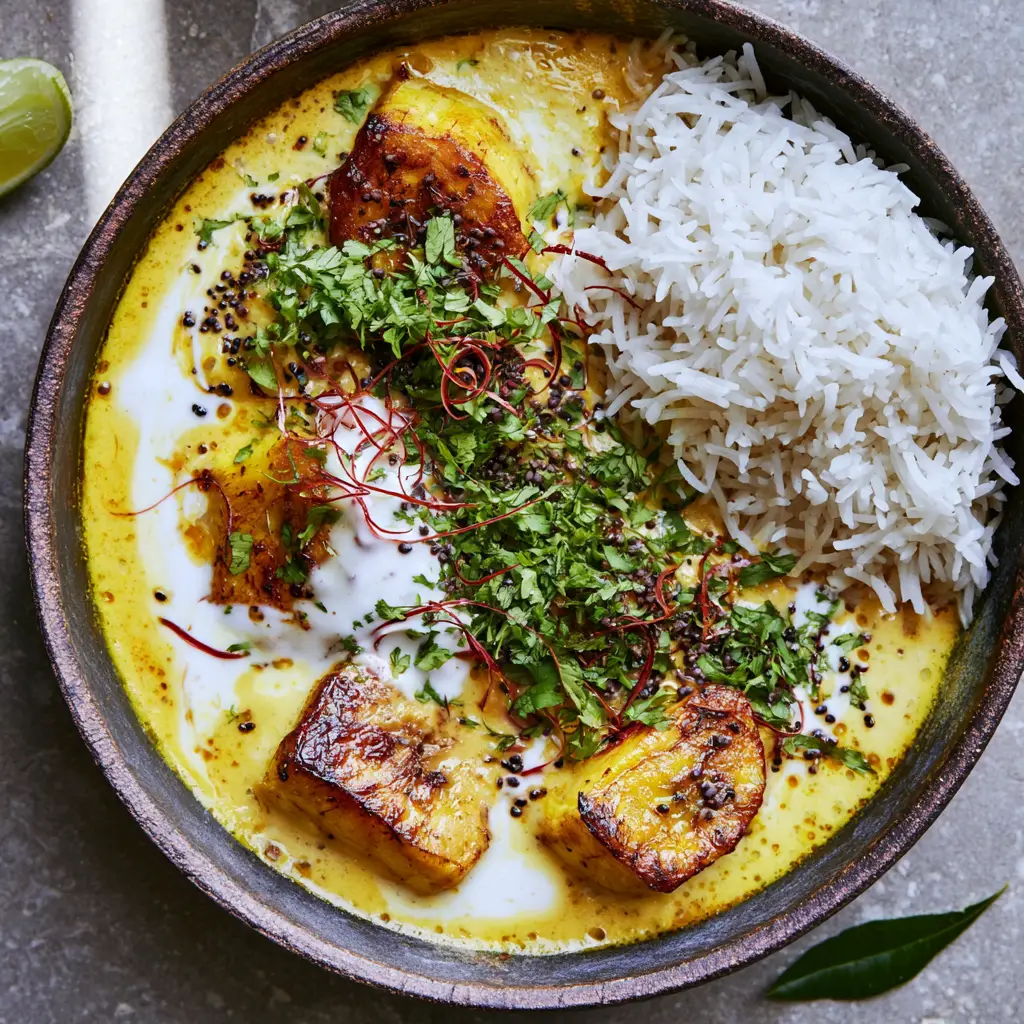
- Visually Stunning Presentation: With a turmeric-stained sauce and a bright white swirl of coconut cream, this dish is a powerhouse of color, further accented by thin red chili threads and fresh green cilantro.
- Aromatic Depth: The combination of toasted black mustard seeds and fried curry leaves provides an authentic, nutty undertone that balances the natural sweetness of the plantains.
- Complete Comfort: Served alongside a mountain of fluffy steamed basmati rice, this curry is a nutritionally dense and satisfying meal that feels both light and indulgent.
Achieving this level of flavor requires more than just throwing ingredients into a pot. It requires an understanding of how starch and sugar react under heat. If you enjoy recipes that focus on bold aromatics and satisfying textures, you might also find yourself reaching for a hearty traditional Egusi soup or even a savory Honey Garlic Beef Rice Bowl on your busier weeknights.
The Essential Elements for a Vibrant Golden Curry
Ripe Plantains: You need three large plantains that are yellow with significant black spots. This ensures the starch has converted to sugar, allowing for the caramelized golden-brown edges seen in the visual blueprint.
Full-Fat Coconut Milk: 1 can (400ml) provides the thick coconut milk gravy that serves as the base. The high fat content is essential for that luxurious “napé” consistency that coats the back of a spoon.
Ground Turmeric: 1 tsp (5g) of high-quality turmeric is responsible for the signature turmeric-stained sauce. It provides both the vibrant yellow hue and a subtle earthy bitterness to balance the coconut.
Basmati Rice: 1.5 cups (280g) of long-grain basmati are steamed to create a mountain of fluffy rice. This specific grain stays separate and light, perfect for soaking up the thick gravy.
Aromatic Base: A combination of 1 finely diced yellow onion, 3 cloves of minced garlic, and 1 tbsp (15g) of fresh grated ginger creates the foundational flavor profile.
Black Mustard Seeds and Curry Leaves: These are the “finishing” spices. The 1 tsp (5g) of mustard seeds and 10-12 fresh curry leaves are fried in oil to release their volatile oils, providing a smoky, herbal finish.
Garnish Components: Fresh chopped cilantro, 1 red chili (slivered into thin threads), and an extra 2 tbsp (30ml) of thick coconut cream for the final swirl. These provide the high-contrast highlights that make the dish pop visually.
Invisible Essentials: You will need 3 tbsp (45ml) of neutral oil (like avocado or coconut oil) for searing and tempering, plus 1 tsp (6g) of sea salt to brighten all the other flavors.
Professional Tools for the Perfect Sear
To achieve the “pan-seared” look described in our Midjourney prompt, a heavy-bottomed skillet is non-negotiable. A cast-iron pan or a high-quality stainless steel skillet will provide the even heat distribution necessary to caramelize the plantain sugars without scorching the fruit.
You will also need a separate small tempering pan (or a small saucepan) for the mustard seeds and curry leaves. This allows you to control the heat precisely so the seeds pop without burning. Finally, a fine-mesh sieve is helpful for rinsing your basmati rice to remove excess surface starch, ensuring the grains remain fluffy and distinct rather than clumpy.
The Master Method for Perfectly Caramelized Plantains
Step 1: Preparing the Fluffy Basmati Rice
Begin by rinsing 1.5 cups (280g) of basmati rice under cold water until the water runs clear. This is the secret to the “fluffy” texture mentioned in the visual recipe blueprint. In a medium pot, combine the rice with 2.25 cups (540ml) of water and a pinch of salt.
Bring the water to a boil, then immediately reduce the heat to the lowest setting and cover with a tight-fitting lid. Let the rice steam for 15 minutes. Once finished, remove from heat and let it sit, covered, for 5 more minutes before fluffing with a fork.
Step 2: Searing the Plantain Chunks
Peel your ripe plantains and cut them into large, diagonal chunks (about 1-inch thick). Heat 2 tbsp (30ml) of neutral oil in your large skillet over medium-high heat. Place the plantain chunks in the pan, ensuring they are not crowded.
Sear the plantains for 2-3 minutes per side. You are looking for a deep mahogany, caramelized golden-brown edge. The sugars should bubble slightly, creating a crust. Once seared, remove the plantains from the pan and set them aside on a plate; do not add them to the liquid yet, or they will lose their texture.
Step 3: Building the Turmeric-Stained Sauce
In the same skillet, add another tablespoon of oil if needed. Sauté your diced onion until translucent, then add the garlic, ginger, and 1 tsp (5g) of turmeric. Stir constantly for 60 seconds until the turmeric “blooms” and the aromatics turn a bright, vibrant yellow.
Pour in the 1 can (400ml) of thick coconut milk. Stir well to incorporate the turmeric and aromatics. Bring the mixture to a gentle simmer. You should see visible simmer bubbles forming across the surface of the thick coconut milk gravy.
Step 4: The Final Simmer and Integration
Gently fold the pan-seared plantain chunks back into the coconut gravy. Simmer for only 5 minutes. This allows the plantains to absorb the spice without becoming overly soft. Taste the sauce and add 1 tsp (6g) of sea salt, adjusting to your preference. The sauce should be thick enough to coat a spoon heavily.
Step 5: The “Tadka” Tempering
In a small saucepan, heat 1 tbsp (15g) of oil over high heat. Once the oil is shimmering, add 1 tsp (5g) of black mustard seeds. Wait for the “effervescent popping” sound. Immediately add the 10-12 curry leaves and the red chili threads. They will sizzle and become fragrant within 10 seconds. Remove from heat immediately.
Expert Tips for a Professional Result
- Don’t Rush the Sear: If you flip the plantains too early, they will stick to the pan and tear. Wait until they naturally release from the surface, which indicates a solid crust has formed.
- Control the Turmeric: Too much turmeric can make a dish taste soapy or bitter. Stick to the measurement provided to ensure the “turmeric-stained” look without compromising flavor.
- The Swirl Technique: To get the perfect white coconut cream swirl, use the thick fat from the top of a new can of coconut milk. Drizzle it in a circular motion just before serving while the curry is still hot.
- Rice Texture: If your rice feels too wet, you can place a clean kitchen towel under the lid during the 5-minute resting period to absorb excess steam. This ensures a “mountain of fluffy rice” every time.
If you enjoy these kinds of refined cooking techniques, you might also like mastering the art of fluffy pancakes for a weekend brunch or a crisp cucumber and onion salad to serve as a cooling side to this spicy curry.
The Best Way to Store and Reheat Your Curry
This plantain curry actually develops deeper flavor the next day as the spices continue to meld. Store any leftovers in an airtight container in the refrigerator for up to 3 days. When reheating, do so gently on the stovetop over low heat.
Because the coconut milk may thicken significantly when cold, add 1-2 tbsp (15-30ml) of water or vegetable stock to loosen the gravy. Avoid high heat during reheating, as this can cause the coconut milk to separate or the plantains to break down further.
Creative Pairings for a Full Tropical Feast
While this curry is a complete meal on its own, adding a few sides can elevate the experience. A simple side of oven-roasted asparagus provides a nice green contrast to the golden curry. Alternatively, a side of roasted zucchini and squash complements the soft texture of the plantains perfectly.
For those who want a bit more protein on the side, a small serving of barbecue pork offers a smoky sweetness that plays well with the coconut base. Always remember to serve with an extra lime wedge to provide the bright acidity needed to cut through the rich coconut cream.
Frequently Asked Questions
While you can use green plantains, the flavor profile will be completely different. Green plantains are starchy like potatoes and lack the natural sugars needed for the caramelized golden-brown edges seen in this recipe. For this specific ‘sweet and savory’ balance, ripe yellow plantains are essential.
The secret is the two-step cooking process: first, pan-sear the chunks to create a protective caramelized crust, then add them to the liquid only for the final 5 minutes of simmering. Overcooking them in the coconut milk will cause them to break down.
The curry itself is mild and fragrant due to the turmeric and aromatics. The heat comes primarily from the red chili threads used as a garnish. You can easily adjust the heat by increasing or decreasing the amount of chili added during the tempering stage.
Toasted black mustard seeds provide a nutty, slightly peppery pop of texture. When fried in oil (tempering), they release an aromatic depth that cuts through the sweetness of the fruit and the richness of the coconut milk.
The Definitive Plantain Curry Recipe
Plantain Curry with Pan-Seared Ripe Plantains and Creamy Coconut Milk
Ingredients
Equipment
Method
- Rinse the basmati rice. Combine with 2.25 cups water and salt in a pot. Boil, then simmer covered for 15 minutes. Let rest 5 minutes.
- Heat oil in a skillet. Sear plantain chunks until deep golden-brown with caramelized edges. Remove and set aside.
- Sauté onion, garlic, and ginger. Add turmeric and bloom for 60 seconds. Pour in coconut milk and bring to a simmer with visible bubbles.
- Fold plantains into the sauce. Simmer for 5 minutes until thick. Season with salt.
- In a small pan, fry mustard seeds until they pop. Add curry leaves and chili threads for 10 seconds. Pour over the curry.
Notes
Don't skip rinsing the rice or it will be gummy rather than fluffy.

Join the Community and Share Your Creations!
We hope this plantain curry brings a burst of golden sunshine to your kitchen! The combination of caramelized fruit and aromatic spices is truly a transformative culinary experience. If you made this dish, we would love to hear how your pan-sear turned out and if you enjoyed the pop of those toasted mustard seeds.
Please leave a comment below and rate the recipe to help other home cooks. Don’t forget to snap a photo of your vibrant bowl and tag us! For more visual inspiration and to save this recipe for later, follow us on Pinterest. Your support helps us continue to develop these deep-dive culinary guides!