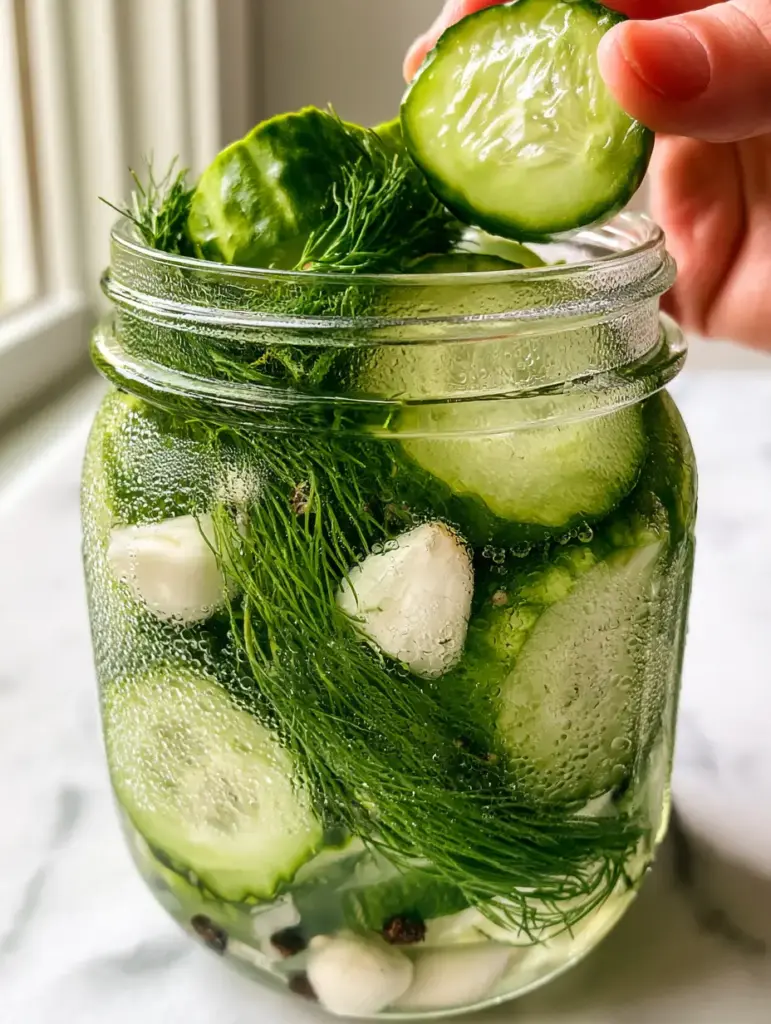
There is nothing quite as satisfying as the audible snap of a perfectly chilled refrigerator pickle. Imagine reaching into a cold fridge, pulling out a glass mason jar beaded with delicate condensation, and lifting out a thick, glistening, crinkle-cut slice. These Refrigerator pickles are the gold standard of snacking—vibrant green, incredibly crisp, and suspended in a crystal-clear brine flecked with yellow mustard seeds and feathery dill.
Unlike traditional canning methods that can result in soft, mushy vegetables, this cold-process method preserves the structural integrity of the cucumber. By utilizing a specific vinegar-to-water ratio and the power of refrigeration, we create a snack that is both visually stunning and packed with a sharp, garlicky punch. Whether you are piling them onto a creamy chicken salad sandwich or eating them straight from the jar, these pickles are a kitchen essential.
The beauty of this recipe lies in its visual transparency; you can literally see the smashed garlic cloves and black peppercorns mingling with the thick-cut ridges. It is a handheld masterpiece of home preservation that requires zero specialized canning equipment. If you appreciate the freshness of an easy cucumber salad, you are going to be obsessed with the concentrated flavor profile of these quick-pickled beauties.
The Secret to That Signature Crinkle-Cut Crunch
- Unrivaled Texture: The thick-cut, crinkle-cut ridges aren’t just for looks; they increase the surface area for the brine to penetrate while maintaining a translucent, firm interior.
- Aromatic Depth: Using fresh, feathery dill sprigs and whole smashed garlic cloves ensures a botanical fragrance that store-bought jars simply cannot replicate.
- Crystal Clear Brine: A precise balance of distilled white vinegar and filtered water keeps the liquid transparent, allowing the vibrant green cucumbers to pop visually.
- Immediate Gratification: Skip the weeks of fermentation; these pickles are ready to eat in just 24 hours, though they reach peak flavor by day three.
Essential Components for a Clear and Zesty Brine
To achieve the visual and textural perfection seen in professional food photography, we must select our ingredients with forensic precision. Every element in the jar serves both a visual and a culinary purpose.
Kirby or Persian Cucumbers: You need a low-moisture, thin-skinned variety to ensure the “snap.” We will be using 2 lbs (907g) of firm cucumbers to yield those iconic thick-cut slices.
Distilled White Vinegar: This provides the sharp, clean acidity required for a clear brine. Use 2 cups (480ml) to ensure the pH level is high enough to preserve the crunch without clouding the liquid.
Filtered Water: Tap water often contains minerals that can discolor the garlic or cloud the brine. 2 cups (480ml) of pure water is the foundation of our transparent suspension.
Kosher Salt: Avoid table salt with iodine, which can turn the pickles dark. 2 tbsp (30g) of Kosher salt provides the essential seasoning and draws out excess moisture for a firmer bite.
Granulated Sugar: A subtle 1 tbsp (12g) is not meant to make them “sweet,” but to balance the harshness of the vinegar and enhance the natural cucumber flavor.
Fresh Feathery Dill: One large bunch of fresh dill sprigs provides the essential oils that define the “dill pickle” profile. The feathery texture also adds beautiful visual movement inside the jar.
Whole Garlic Cloves: 4 to 6 whole cloves, smashed with the flat side of a knife. Smashing breaks the cell walls, releasing the pungent allicin while keeping the cloves intact for a clean look.
Whole Black Peppercorns: 1 tsp (5g) of whole peppercorns adds a slow-building heat and a classic aesthetic. Do not use ground pepper, as it will settle at the bottom and look muddy.
Yellow Mustard Seeds: 1 tsp (5g) adds a subtle nutty, floral note. These tiny yellow spheres look like floating gems within the brine and are a hallmark of artisanal Refrigerator pickles.
Tools Required for Professional Results
While this is an easy recipe, specific tools bridge the gap between “homemade” and “gourmet.” To get those perfect ridges, a crinkle cutter is non-negotiable.
You will also need a wide-mouth quart-sized (946ml) glass mason jar. The wide mouth allows you to pack the dill and garlic tightly against the glass for that “overflowing” look. A small stainless steel saucepan is required to dissolve the salt and sugar into the brine, and a sharp chef’s knife is essential for smashing the garlic cloves correctly.
Mastering the Cold-Brine Technique
Preparing the Signature Crinkle Slices
Begin by washing your cucumbers in ice-cold water to firm up the skins. Using a crinkle-cutter tool, slice the cucumbers into 1/4-inch (6mm) thick rounds. You want them thick enough to maintain a glistening, translucent interior even after they have been submerged in the acidic brine. If the slices are too thin, they will lose their structural integrity and become limp.
Infusing the Aromatics
Take your 4 to 6 garlic cloves and place them on a cutting board. Using the heel of your hand and the flat side of a chef’s knife, press down firmly until the clove cracks and flattens. Place these smashed cloves at the bottom of your clean mason jar. Follow this with half of the fresh dill sprigs, pushing them down so they wrap around the sides of the glass.
The Brine Science
In a small saucepan, combine the 2 cups (480ml) of white vinegar, 2 cups (480ml) of filtered water, salt, and sugar. Heat over medium-high heat just until the salt and sugar have completely dissolved. You do not need to bring this to a rolling boil—just enough heat to create a stable solution. Remove from heat and let the liquid cool to room temperature. Pouring boiling brine directly over the cucumbers will cook them, destroying the “fresh” snap we are looking for.
Packing the Jar for Maximum Appeal
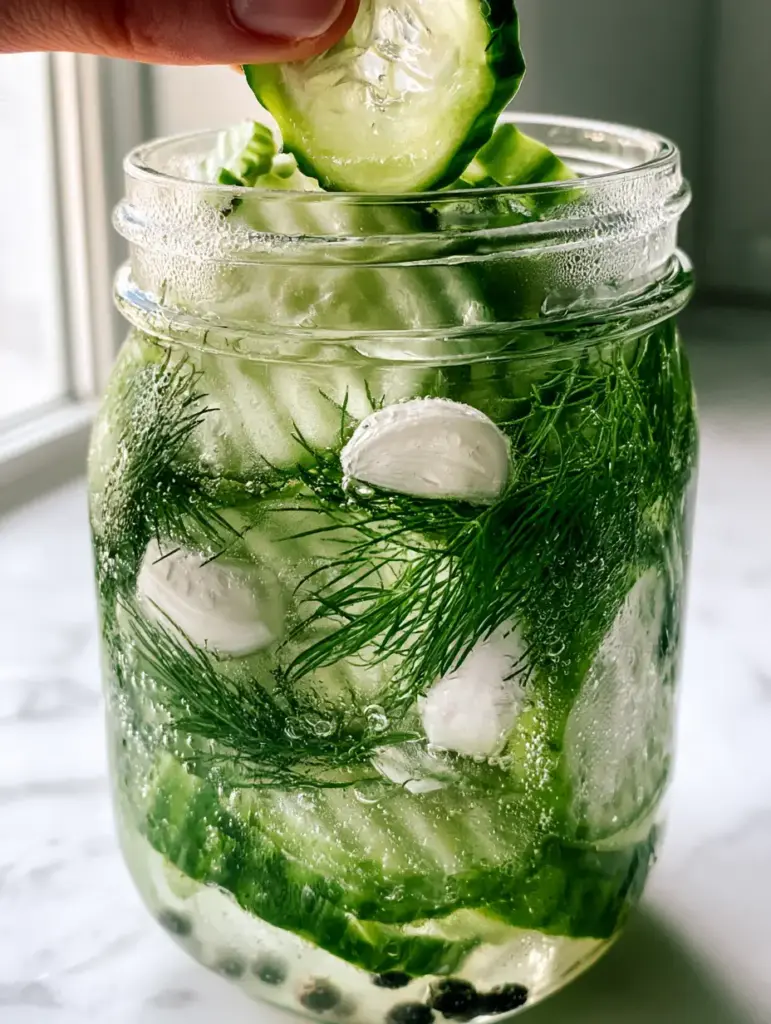
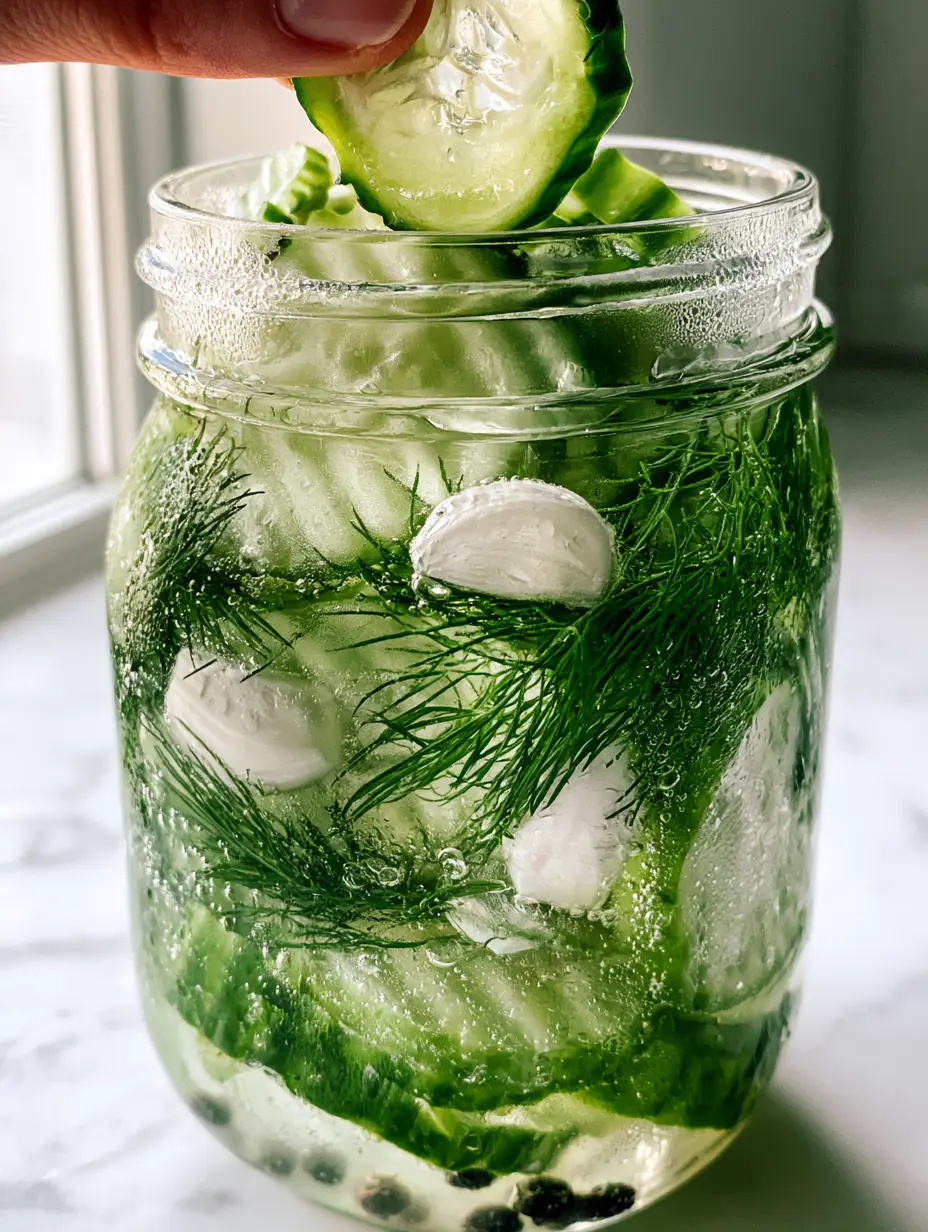
Pack the crinkle-cut cucumber slices into the jar tightly. As you reach the halfway point, sprinkle in the black peppercorns and yellow mustard seeds. Tuck the remaining dill sprigs into the gaps. Continue packing the slices until the jar is full, then pour the cooled brine over the top until the cucumbers are completely submerged. You should see tiny oxygen bubbles suspended in the liquid, just like in the visual blueprint.
Expert Tips for the Ultimate Snap
- The Ice Bath Trick: Before slicing, soak your whole cucumbers in a bowl of ice water for 30 minutes. This hydrates the cells, ensuring the most crisp result possible.
- Mind the Temperature: Always wait for the brine to cool to at least lukewarm before pouring. If the brine is too hot, the cucumbers will turn a dull olive green rather than staying vibrant and bright.
- Garlic Blue-ing: Sometimes garlic turns blue or green in a vinegar brine. This is a natural reaction to trace minerals and is completely safe to eat, though using filtered water reduces the chance of this happening.
- Storage Matters: Store the jar in the back of the refrigerator where it is coldest. The sudden drop in temperature helps the salt and vinegar “set” the texture of the cucumber.
Shelf Life and Storage Guidelines
Because these are Refrigerator pickles and have not been heat-processed in a water bath, they must be kept refrigerated at all times. They will remain safe to eat for up to 4 weeks. However, for the best culinary experience, consume them within the first 14 days.
Over time, the cucumbers will continue to absorb the brine, eventually losing some of their crispness and becoming more intensely salty. Never use your fingers to pull a pickle from the jar, as this introduces bacteria; always use a clean fork or tongs to ensure the brine remains clear and uncontaminated.
Creative Ways to Serve Your Crispy Pickles
These pickles are more than just a side dish; they are a versatile ingredient that adds acidity and texture to various meals. Pair them with a garlic butter steak to cut through the richness of the meat. They are also a mandatory addition to any quick chicken dinner.
For a lighter option, serve them alongside balanced snacks like cheese cubes and nuts. The sharp vinegar profile also works wonders when chopped up and stirred into a zucchini pesto chicken salad, providing a much-needed crunch against the creamy dressing.
Frequently Asked Questions
It is not recommended to reuse the brine for another batch of pickles because the water content from the first batch of cucumbers dilutes the acidity, which could compromise safety and flavor. Use leftover brine for marinating chicken instead!
No, for refrigerator pickles, the skin provides essential structural support and ‘snap.’ Kirby cucumbers have thin, bumpy skins that are perfect for pickling without peeling.
While you can eat them after 6 hours, they truly need 24 to 48 hours in the refrigerator for the salt, garlic, and vinegar to fully penetrate the thick crinkle-cut slices.
Soft pickles usually result from pouring hot brine over the cucumbers, which ‘cooks’ them. To keep them crunchy, let the brine cool to room temperature before adding it to the jar, and always use firm Kirby or Persian varieties.
Garlic contains enzymes and amino acids that can react with the acetic acid in vinegar, occasionally turning them blue or green. It is completely safe to eat and does not affect the flavor.
The Official Extra-Crunchy Refrigerator Pickles Recipe
Refrigerator Pickles: The Ultimate Guide to Extra-Crunchy Crinkle-Cut Slices
Ingredients
Equipment
Method
- Wash cucumbers in ice-cold water. Use a crinkle cutter to create 1/4-inch thick slices. The slices should look glistening and firm.
- Smash garlic cloves with the flat of a knife to release oils while keeping them whole.
- Combine vinegar, water, salt, and sugar in a saucepan. Heat until dissolved, then cool to room temperature to keep the pickles crisp.
- Layer garlic and dill at the bottom of the jar. Pack cucumber slices tightly, scattering peppercorns and mustard seeds throughout. Pour brine over the top, ensuring all slices are submerged and tiny bubbles are visible.
Notes
Wait at least 24 hours before eating for the best flavor penetration.

Final Thoughts on the Perfect Quick Pickle
Mastering Refrigerator pickles is a rite of passage for any home cook who values fresh, bold flavors. The combination of the crinkle-cut texture, the feathery dill, and the pungent smashed garlic creates a sensory experience that far exceeds anything found on a grocery store shelf. When you see those cold condensation droplets on the jar, you know you are moments away from a world-class snack.
We would love to see your beautiful jars! Tag us in your photos and share your results. For more kitchen inspiration and to save this recipe for later, follow us on Pinterest and join our community of enthusiastic home cooks. Don’t forget to leave a comment below telling us your favorite way to eat a pickle!