If you have ever ordered Spanakorizo at a seaside taverna in Greece, you know that the magic lies in the contrast. You are looking for those pearlescent, individual grains of rice nestled against vibrant, deep-green ribbons of wilted spinach. It is a dish that defines the Mediterranean diet: humble, healthy, and incredibly aromatic.
Most home-cooked versions of this dish unfortunately turn into a dense, mushy porridge. Our Spanakorizo recipe changes that narrative by focusing on professional culinary techniques that preserve the integrity of every grain. By the time you reach the bottom of your matte black skillet, you will understand why this is the ultimate comfort food.
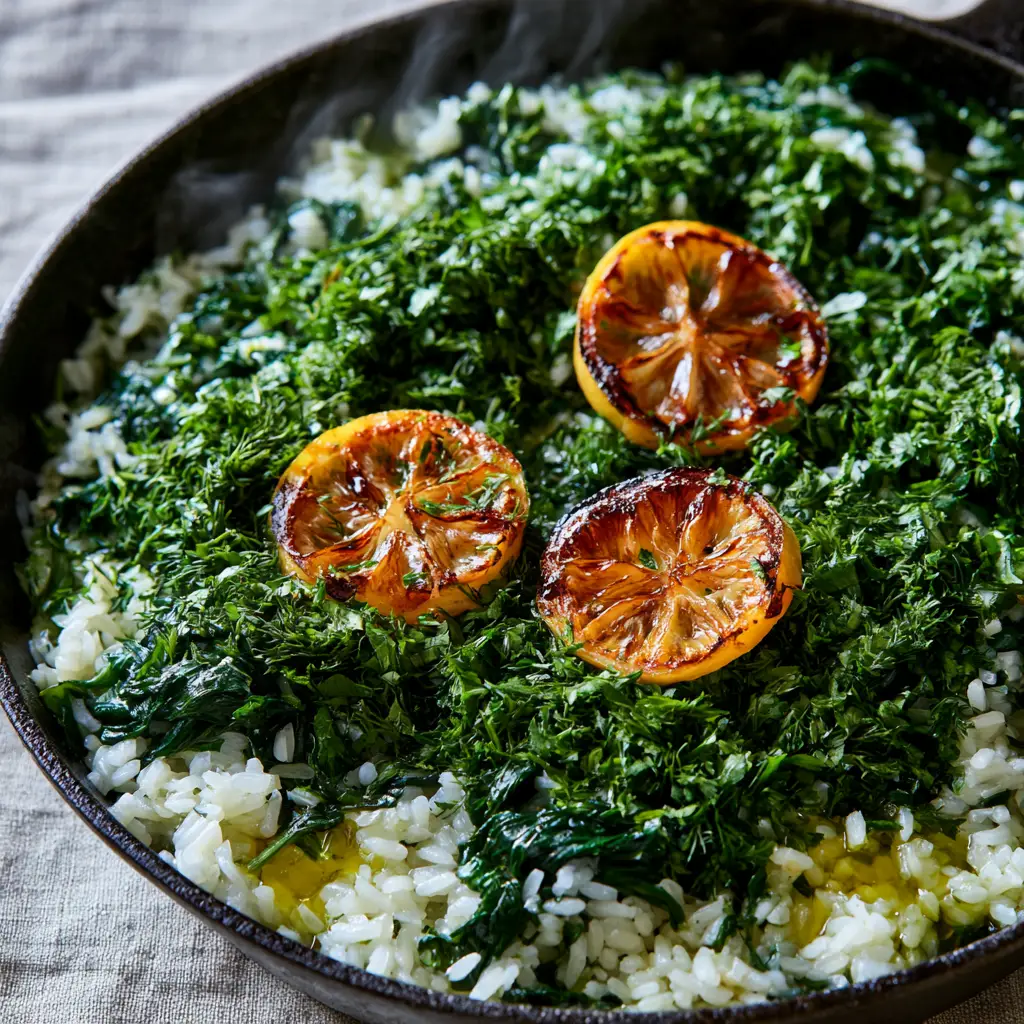
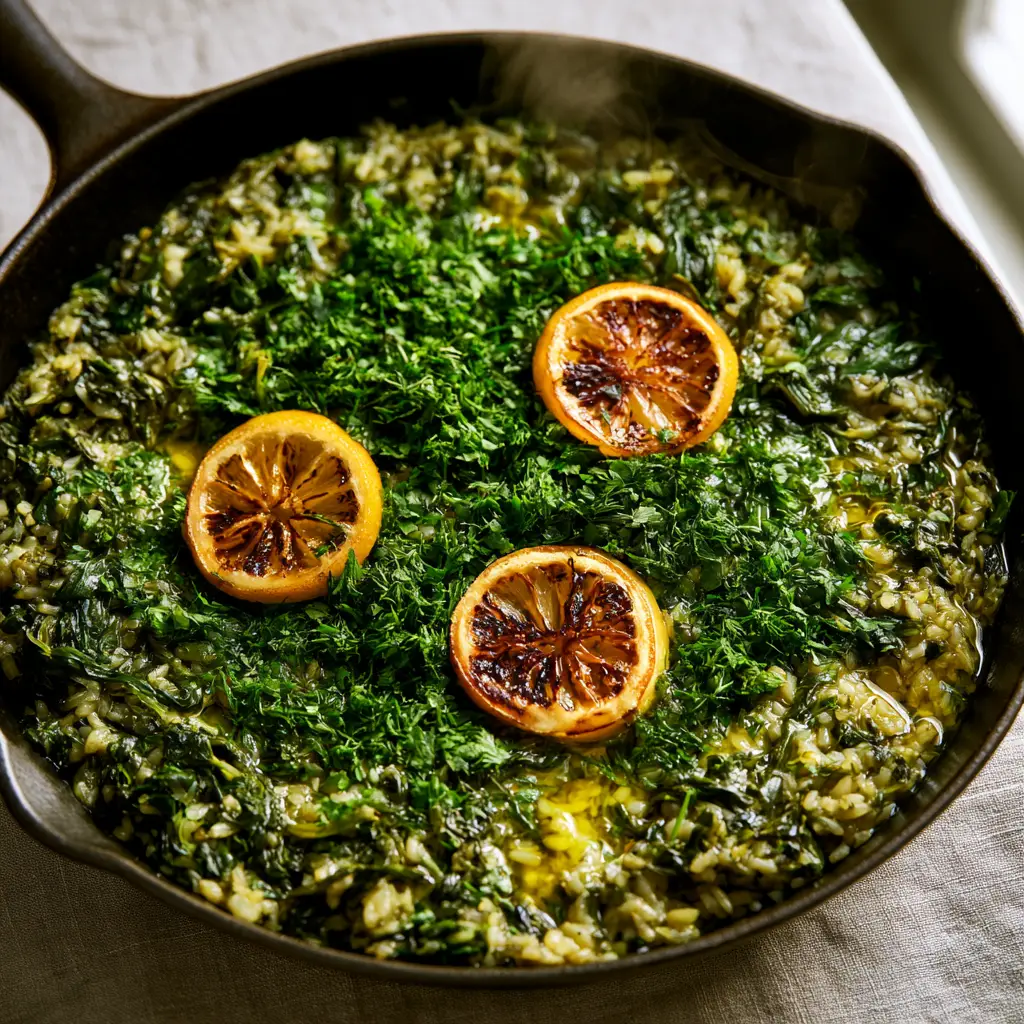
This particular version is inspired by the macro-photography of authentic village cooking. Imagine a rustic skillet filled with fluffy long-grain rice, topped with caramel-edged charred lemon rounds and a heavy dusting of neon-green fresh dill. The visible drizzle of golden extra virgin olive oil pooling in the crevices isn’t just for show—it provides the silkiness that defines a perfect Greek pilaf.
Why This No-Mush Spanakorizo Recipe Works
- Individual Grain Definition: We use a specific rinsing and sautéing method to ensure the rice stays fluffy and pearlescent, never clumping together.
- Vibrant Visual Contrast: By adding the spinach in stages, we maintain that deep-green color that pops against the light rice.
- Caramelized Citrus Note: Searing the lemon rounds directly in the skillet adds a smoky, bright acidity that lifts the earthy greens.
- Herb-Forward Profile: A dense layer of fresh dill and flat-leaf parsley added at the very end provides a “neon-green” freshness that cooked herbs can’t match.
Pantry Essentials for Authentic Greek Spinach Rice
Long-Grain Rice: 1.5 cups (300g) of high-quality long-grain rice is essential. This variety contains less starch than short-grain rice, which is the secret to achieving those distinct, separated grains seen in a professional traditional rice pilaf.
Fresh Baby Spinach: 1 lb (450g) of fresh, vibrant spinach. While frozen works in a pinch, fresh leaves create those beautiful “deep-green ribbons” that provide the structural elegance described in our visual blueprint.
Extra Virgin Olive Oil: 1/2 cup (120ml) total. Greek cooking is not the place to be shy with oil; it acts as a flavor carrier and creates that glossy, golden sheen on the finished dish.
Green Onions (Scallions): 6-8 stalks (100g), finely chopped. Sautéing the white and light green parts provides a mellow, sweet base that is less aggressive than standard yellow onions.
Fresh Dill & Parsley: 1/2 cup (25g) each, finely chopped. These herbs are the soul of the dish, providing the aromatic punch and the neon-green garnish that sits atop the rice.
Lemons: 2 whole lemons. One will be sliced into thin rounds for charring, and the other will be juiced to provide the necessary acid to cut through the rich olive oil.
Vegetable Broth or Water: 3 cups (710ml). Using a high-quality broth adds a foundational savory note that makes the Spanakorizo taste like it’s been simmering for hours.
Sea Salt Flakes & Cracked Black Pepper: 1 tsp (6g) salt and 1/2 tsp (2g) pepper. These minerals enhance the natural sweetness of the sautéed greens and the nuttiness of the toasted rice.
Essential Tools for the Perfect Skillet Pilaf
To achieve the look of our visual prompt, a shallow matte black cast iron skillet is the preferred vessel. The heavy bottom ensures even heat distribution, preventing the rice from sticking to the bottom and burning while the top steams.
You will also need a fine-mesh strainer for rinsing the rice. Rinsing until the water runs clear is a non-negotiable step to remove surface starch. Finally, a sharp chef’s knife is required to get that “finely chopped” texture for the dill and parsley garnish.
Mastering the Art of Fluffy Spanakorizo
The Foundation: Sautéing and Charring
Start by heating 2 tbsp (30ml) of olive oil in your skillet over medium-high heat. Place your thin lemon rounds in the pan and sear them for 2-3 minutes per side until you see those beautiful caramel-edged borders. Remove them and set aside; these are your crown jewels for the final presentation.
In the same oil, add the chopped green onions. Sauté them until they are soft and translucent, which should take about 4 minutes. You are looking for a gentle sizzle—not a hard brown sear—to keep the flavors delicate.
Toasting the Grains
Add the rinsed and drained rice to the skillet with the onions. Stir the grains constantly for 2 minutes. This “toasting” phase coats every grain in oil, creating a barrier that prevents them from releasing starch and turning mushy during the simmering process.
You will notice the rice turning from translucent to a bright, pearlescent white. This is your visual cue that the rice is ready for the liquid. If you enjoy this technique, you’ll find similar methods used in our Mediterranean stuffed peppers.
The Gentle Wilt
Add the spinach in large handfuls. It will look like an overwhelming amount of greens, but it will wilt down significantly. Stir until the spinach has collapsed into vibrant green ribbons, then pour in the 3 cups (710ml) of broth and the lemon juice.
Bring the mixture to a gentle boil, then immediately reduce the heat to the lowest setting. Cover the skillet with a tight-fitting lid. This trapped steam is what cooks the rice into individual, fluffy grains.
The Final Flourish
After 15-18 minutes, the liquid should be fully absorbed. Turn off the heat but leave the lid on for an additional 5 minutes. This “resting” period allows the moisture to redistribute, ensuring the rice is tender all the way through.
Remove the lid and fluff the Spanakorizo with a fork. Now, add the dense layer of finely chopped dill and parsley. Drizzle the remaining golden extra virgin olive oil over the top, letting it pool slightly in the crevices. Top with your charred lemon rounds, a sprinkle of sea salt flakes, and a generous crack of black pepper.
Expert Tips for Success
- The Rice Rinse: Do not skip rinsing the rice. Swirl it in a bowl of cold water, drain, and repeat until the water is no longer cloudy. This is the #1 way to avoid mushy Spanakorizo.
- Heat Control: Once the lid goes on, keep the heat as low as possible. If the heat is too high, the liquid will evaporate before the rice is tender.
- Fresh Over Frozen: While frozen spinach is convenient, it releases more water and can lead to a soggier texture. If you must use frozen, squeeze every drop of liquid out of it first.
- The Resting Period: Five minutes of resting with the lid on is the difference between “good” rice and “restaurant-quality” rice.
Storage, Reheating & Freezing
Spanakorizo keeps beautifully in the refrigerator for up to 4 days. Store it in an airtight container to prevent the rice from drying out. When reheating, add a tablespoon of water or broth to the bowl and cover it to help re-steam the grains in the microwave.
While you can freeze this dish, the texture of the spinach may become slightly softer upon thawing. It will last in the freezer for up to 2 months. For the best experience, we recommend serving it fresh to enjoy the vibrant “neon-green” herbs.
What to Serve With This Greek Classic
This dish is incredibly versatile. It works perfectly as a standalone vegan main course, but it also shines alongside other Mediterranean favorites. Try pairing it with Greek chicken recipes for a high-protein dinner that feels like a trip to Athens.
For a vegetarian feast, serve it with crispy zucchini fritters or a refreshing cucumber salad. The acidity of the salad complements the earthy rice perfectly. If you are looking for more vegetable-forward sides, our baked zucchini casserole is another crowd-pleaser.
Frequently Asked Questions About Spanakorizo
Yes, you can use frozen spinach, but ensure it is completely thawed and squeezed dry of all excess moisture. This prevents the dish from becoming watery and keeps the rice fluffy.
The secret is adding half of your herbs during the last minute of cooking and the other half as a fresh garnish just before serving. This preserves the bright color and volatile oils of the dill and parsley.
It is traditionally served warm or at room temperature. In Greece, it is often enjoyed at room temperature during the summer months to let the flavors of the olive oil and herbs shine.
Long-grain white rice or Basmati is best for a fluffy, ‘no-mush’ result. Short-grain or medium-grain rice contains more starch and is more likely to create a creamy, porridge-like texture.
Mushy Spanakorizo is usually caused by excess starch or too much liquid. Ensure you rinse the rice until the water runs clear and stick to the 1:2 rice-to-liquid ratio. Toasting the rice in oil before adding liquid also helps keep grains separate.
The Authentic Spanakorizo Recipe Card
Spanakorizo: The Secret to Fluffy, Authentic Greek Spinach Rice
Ingredients
Equipment
Method
- Heat 2 tbsp of olive oil in a skillet over medium-high heat. Sear lemon rounds for 2-3 minutes per side until caramel-edged. Remove and set aside.
- In the same skillet, sauté green onions until soft and translucent (about 4 minutes).
- Add rinsed rice to the skillet. Stir constantly for 2 minutes until grains are pearlescent and coated in oil.
- Add spinach in batches until wilted. Pour in broth and lemon juice. Bring to a boil, then reduce heat to low, cover, and simmer for 15-18 minutes.
- Turn off heat. Let the skillet sit covered for 5 minutes to allow the rice to finish steaming perfectly.
- Fluff with a fork. Top with a dense layer of chopped dill and parsley. Drizzle with remaining olive oil and top with charred lemons, sea salt, and pepper.
Notes
Use fresh dill and parsley at the very end to maintain their vibrant neon-green color and potent aroma.
Closing & Call to Action
Authentic Spanakorizo is a masterclass in how simple ingredients can create a luxurious, restaurant-quality meal. By focusing on the fluffiness of the grains and the vibrancy of the fresh herbs, you have created a dish that is as beautiful as it is delicious. The charred lemon and glossy olive oil finish make this a centerpiece-worthy skillet meal.
Did your rice turn out perfectly pearlescent? We want to hear about it! Leave a comment below and let us know how your Spanakorizo turned out. If you loved this recipe, please share it with your friends and save it to your favorite boards on Pinterest!