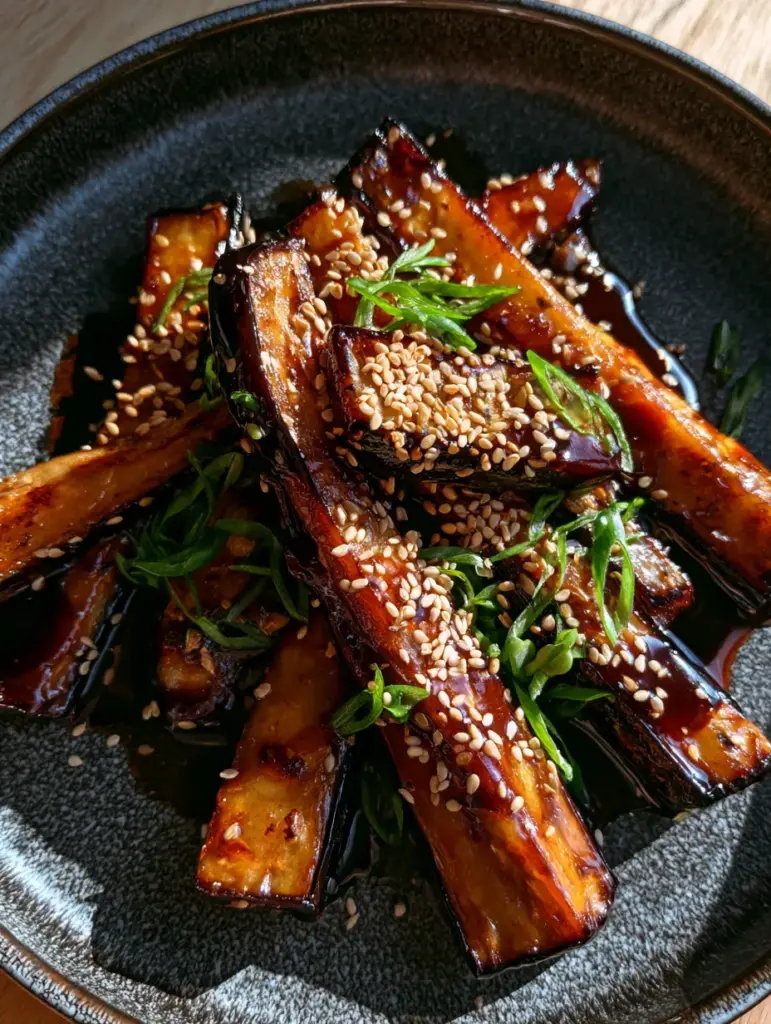
Sticky Soy Garlic Japanese Eggplant is more than just a side dish; it is a masterclass in texture and flavor contrast. Imagine tender, buttery eggplant batons that have been pan-seared to achieve deeply charred, caramelized edges, then drenched in a high-gloss glaze that catches the light like dark liquid glass.
This recipe transforms the humble Japanese eggplant into a restaurant-quality centerpiece using professional searing techniques and a balanced umami reduction. Whether you are looking for a quick weeknight addition or a sophisticated vegan option for your next dinner party, these glossy batons deliver a punch of savory sweetness that lingers on the palate.
Every bite offers a transition from the crispy, salt-kissed exterior to the creamy, custard-like interior of the eggplant. Garnished with a heavy scattering of toasted white sesame seeds and vibrant green scallions, this dish is as visually stunning as it is addictive.
Why You Will Crave This Glossy Japanese Eggplant
- Perfect Texture Contrast: By using high-heat searing, we achieve those coveted crispy edges without the need for deep frying.
- The High-Gloss Finish: Our specific reduction technique creates a thick, syrupy glaze that coats every millimeter of the vegetable for a reflective, “saucy” finish.
- Umami Explosion: The combination of fermented soy, aromatic garlic, and toasted sesame oil creates a complex flavor profile that rivals any sticky orange beef you’ve had at a high-end bistro.
- Visually Stunning Presentation: The contrast of the dark, reflective sauce against a matte black ceramic plate makes this dish a true showstopper.
The Essential Elements for an Umami-Rich Glaze
To achieve the “dark umami” look described in our visual blueprint, we must select ingredients that offer both depth of color and structural body. Each component serves a specific culinary purpose in the pan.
Japanese Eggplant: Unlike globe eggplants, Japanese varieties are thinner, have fewer seeds, and a much more delicate skin. This allows the batons to hold their shape during a high-heat sear while the interior turns to velvet.
Low-Sodium Soy Sauce (60ml): This provides the salt and the deep, dark base color for our glaze. Using low-sodium allows us to reduce the sauce significantly without it becoming overly salty.
Mirin or Honey (30ml): Sugar is the key to that high-gloss, syrupy reflection. It also aids in the caramelization process, helping those edges turn from golden to deep charred brown.
Fresh Garlic (3-4 cloves): We finely mince the garlic so it infuses the oil and the sauce. It provides the pungent backbone that balances the sweetness of the mirin.
Cornstarch Slurry (5g cornstarch + 15ml water): This is the secret to the “thick, high-gloss” texture. It binds the sauce ingredients together, ensuring the glaze clings to the eggplant rather than pooling at the bottom of the plate.
Toasted Sesame Oil (5ml): Added at the very end, this “invisible” ingredient provides the aromatic nuttiness and a final layer of fat for maximum sheen.
Professional Gear for the Perfect Sear
To replicate the “macro photography” quality of this dish, your choice of pan is vital. A heavy-bottomed carbon steel skillet or a well-seasoned cast-iron pan is preferred for their superior heat retention.
These pans allow you to maintain the high temperatures needed to char the eggplant batons quickly. If the pan temperature drops, the eggplant will steam rather than sear, resulting in a mushy texture rather than the crispy edges we are aiming for.
Additionally, you will need a sharp Chef’s knife to ensure clean, uniform batons. Uniformity is not just about aesthetics; it ensures every piece of eggplant cooks at the same rate, preventing some pieces from falling apart while others remain firm.
How to Master the Sticky Soy Garlic Japanese Eggplant
Step 1: Preparing the Eggplant Batons
Start by trimming the ends of 3-4 Japanese eggplants. Slice them into 3-inch (7.5cm) lengths, then quarter those segments lengthwise into uniform batons. Aim for a thickness of about 1/2 inch (1.25cm).
Place the batons in a large bowl and toss with 1 tsp (5g) of kosher salt. Let them sit for 10 minutes; this draws out excess moisture and “seasons” the interior of the vegetable, ensuring a creamier texture once cooked.
Step 2: Achieving the Charred Caramelized Edges
Heat 2 tbsp (30ml) of neutral oil in your skillet over medium-high heat until shimmering. Pat the eggplant batons dry with a paper towel—moisture is the enemy of the sear.
Arrange the batons in a single layer, ensuring they aren’t crowded. Sear for 3-4 minutes per side. Look for the visual cue: the edges should be deeply browned and slightly “blistered” or charred, exactly like the macro photography description.
Step 3: Creating the Syrupy Soy-Garlic Glaze
Reduce the heat to medium and push the eggplant to the edges of the pan. In the center, add another teaspoon of oil and your minced garlic. Sauté for 30 seconds until fragrant but not burnt.
Whisk together your soy sauce, mirin, and water, then pour it over the eggplant. The liquid should bubble vigorously immediately. This is the “reduction” phase where the flavors concentrate.
Step 4: The Final Glossy Coating
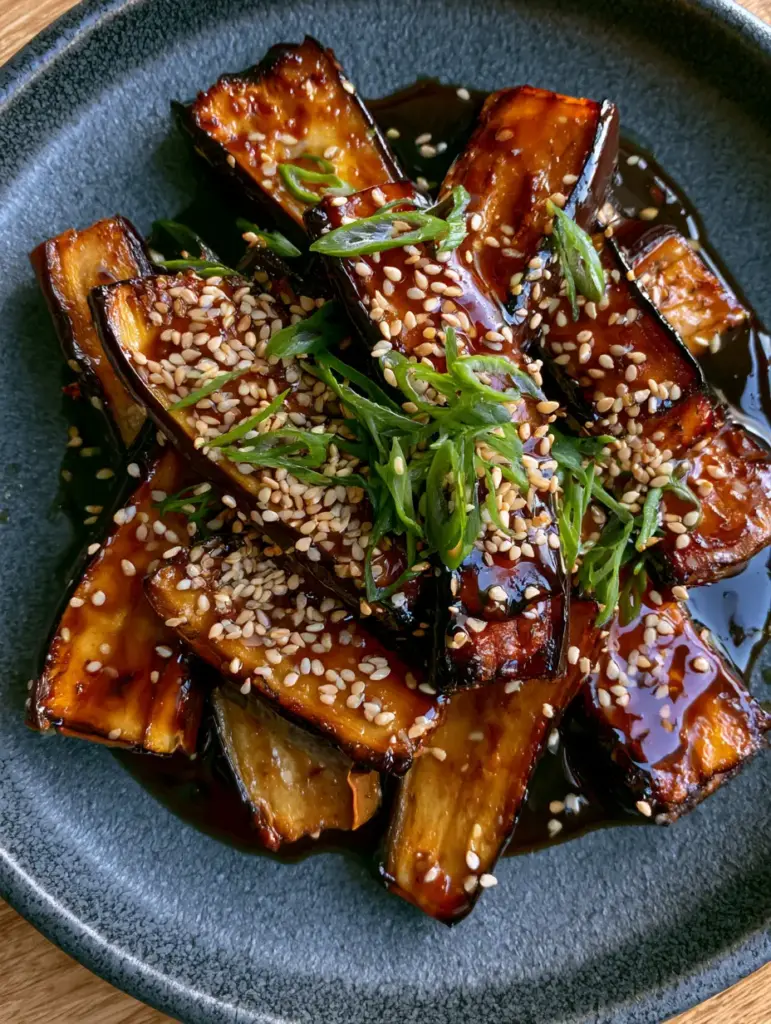
Slowly drizzle in your cornstarch slurry while gently tossing the eggplant batons. Within 60 seconds, the sauce will transform from a thin liquid into a thick, high-gloss glaze that is syrupy and reflective.
Turn off the heat and fold in your toasted sesame oil. The eggplant should look drenched and lustrous. Transfer immediately to a matte black ceramic plate to create that striking color contrast.
Expert Tips for Success
- Don’t Overcrowd the Pan: If you put too many batons in at once, the temperature will drop, and you’ll lose those crispy charred edges. Work in batches if necessary.
- The “Dry Pat” Rule: After salting, always pat the eggplant dry. Any surface water will create steam, which prevents the Maillard reaction from occurring.
- Balance the Heat: If your glaze becomes too thick or “tacky,” simply add a tablespoon of water to loosen it back into a syrupy consistency.
- Use Fresh Aromatics: While garlic powder is convenient, only fresh minced garlic provides the punchy flavor needed to stand up to the dark soy glaze.
Storage, Reheating, and Make-Ahead Advice
Sticky Soy Garlic Japanese Eggplant is best enjoyed immediately while the glaze is at its most reflective and the edges are at their crispiest. However, if you have leftovers, they can be stored in an airtight container in the refrigerator for up to 3 days.
To reheat, avoid the microwave, as it will make the eggplant mushy. Instead, place them back in a hot skillet with a splash of water to loosen the glaze. Toss gently until warmed through and the sauce regains its glossy sheen.
For meal prep, we recommend preparing the sauce in advance, but searing the eggplant fresh just before serving to maintain the structural integrity of the vegetable.
What to Serve With This Umami Feast
This dish is incredibly versatile. For a complete Asian-inspired meal, serve these batons alongside a bowl of garlic butter shrimp and rice. The creaminess of the eggplant complements the snap of the shrimp perfectly.
If you are keeping things vegetarian, consider pairing it with a light Korean zucchini fritters or even a rustic baked ratatouille for a fusion of garden-fresh flavors. The “dark umami” profile also works surprisingly well as a side to a zesty lemon zucchini pasta for a bright contrast.
Frequently Asked Questions
Yes, you can air fry the batons at 400°F (200°C) for 10-12 minutes until charred, then toss them in the prepared sauce reduction in a pan to achieve the sticky glaze.
While technically possible, Japanese eggplant is preferred because its thinner skin and lower seed count allow it to hold its shape as batons and achieve a creamier ‘custard-like’ interior during searing.
The secret is the cornstarch slurry combined with a sugar source (like mirin). As the sauce reduces, the starch gelatinizes, creating that thick, syrupy, and highly reflective finish.
To make this recipe 100% gluten-free, simply swap the soy sauce for Tamari or coconut aminos. All other ingredients are naturally gluten-free.
Mushy eggplant usually results from overcrowding the pan or not patting the batons dry after salting. Excess moisture creates steam, which prevents the edges from charring and crisping.
The Complete Sticky Soy Garlic Japanese Eggplant Recipe
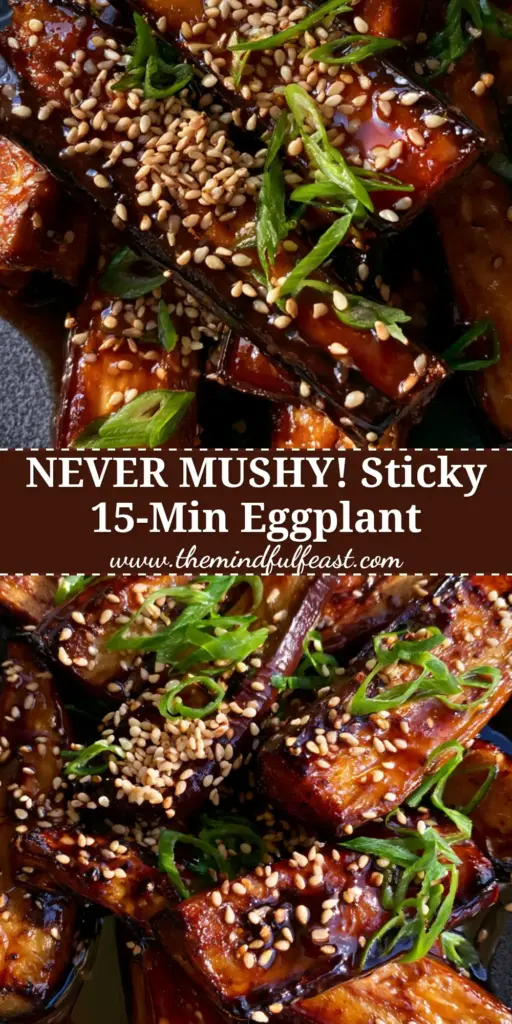
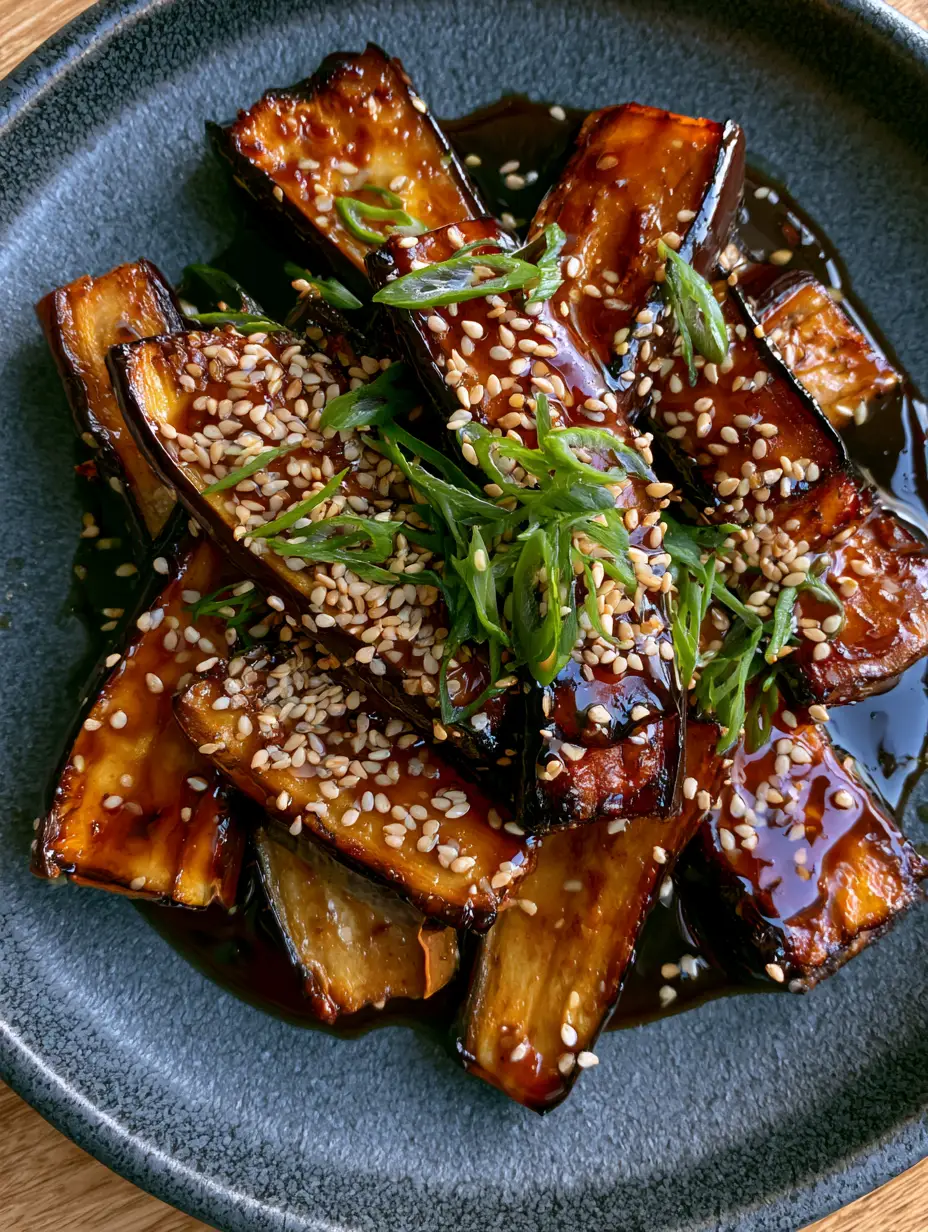
Sticky Soy Garlic Japanese Eggplant: The Ultimate Umami-Packed Side Dish
Ingredients
Equipment
Method
- Toss eggplant batons with salt and let sit for 10 minutes. Pat completely dry with paper towels before cooking.
- In a small bowl, whisk together soy sauce, mirin, and garlic.
- Heat oil in a skillet over medium-high. Add eggplant in a single layer and sear until edges are charred and caramelized, about 3-4 minutes per side.
- Add the soy-garlic mixture to the pan. Let bubble for 2 minutes. Stir in the cornstarch slurry and toss until the sauce is high-gloss and syrupy.
- Remove from heat, drizzle with sesame oil, and top with a heavy scattering of sesame seeds and scallions.
Notes
Use a matte black plate for the most professional, high-contrast presentation.
Closing & Call to Action
Mastering the balance of “sticky” and “savory” is the secret to this legendary Japanese eggplant dish. By focusing on the high-heat sear and the cornstarch-thickened reduction, you can recreate the high-gloss, charred results found in our visual blueprint at home.
We would love to see your results! If you make this dish, please leave a comment below or share your photos. Don’t forget to follow us and pin this recipe to your favorite boards on Pinterest so you never lose this umami-packed favorite.