There is nothing quite like the aroma of a slow-cooked beef roast wafting through the house to define the perfect weekend. When searching for the best Sunday dinner recipes, home cooks are often looking for that specific balance of deep, complex flavors and a texture so tender it practically melts at the touch of a fork. This recipe delivers exactly that, transforming a humble chuck roast into a masterpiece of culinary comfort.
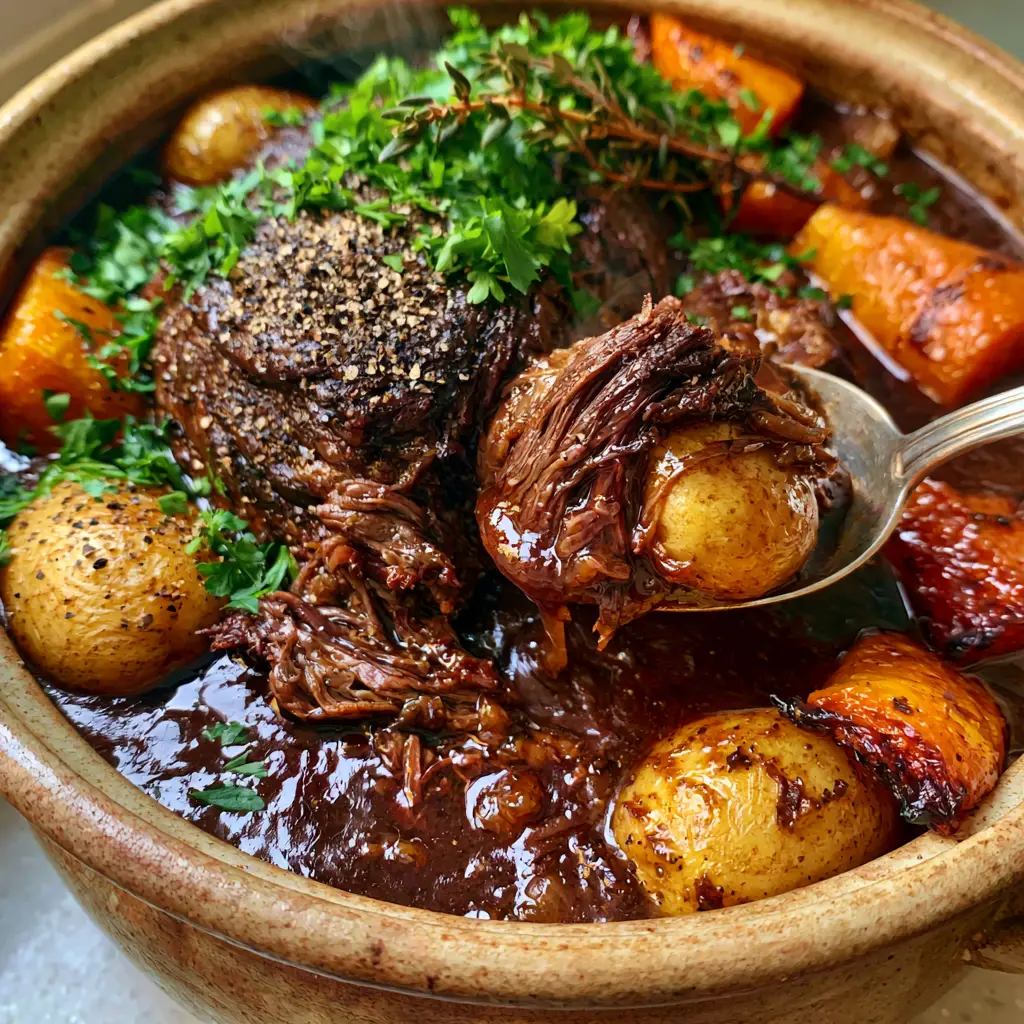
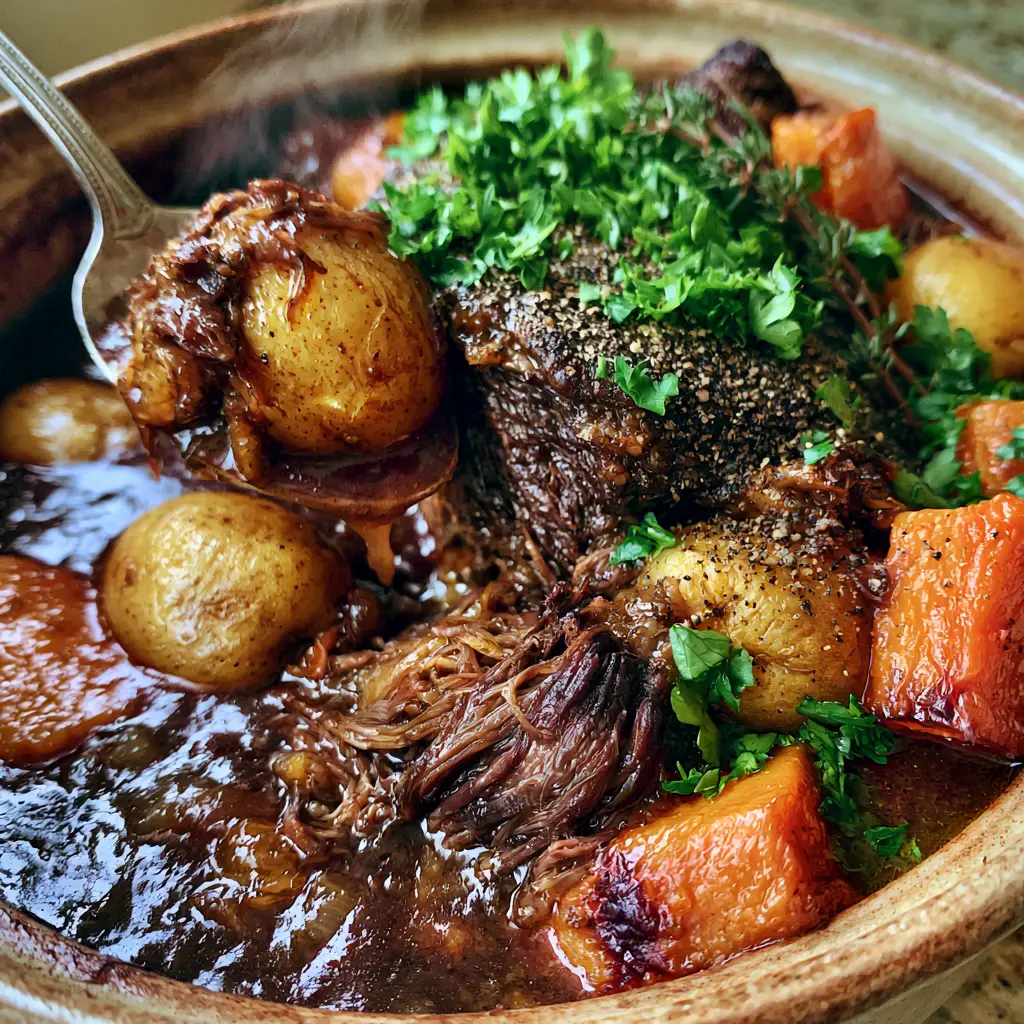
Imagine a rustic ceramic pot placed in the center of your table, wisps of rising steam carrying the scents of earthy thyme and rich red wine. The beef is the star, braised until the fibers naturally shred into a thick, glossy, dark mahogany-colored onion gravy. Surrounded by glistening baby gold potatoes and chunky carrots with caramelized, blistered edges, this dish is a visual and sensory triumph.
Whether you are hosting a formal gathering or looking for easy family dinner recipes to end the week on a high note, this pot roast is the gold standard. Every element, from the heavy dusting of coarse-cracked black pepper to the bright pop of fresh parsley, is designed to create a meal that feels both timeless and professional. Let’s dive into the science of the perfect braise.
Why This Braised Beef Roast Defines Comfort Cooking
- Unrivaled Texture: By using a slow-braising technique, we break down tough connective tissues into gelatin, resulting in moist, fibrous meat that shreds with a silver spoon.
- The Mahogany Gravy: A combination of caramelized onions, tomato paste, and a full-bodied red wine creates a glossy, dark mahogany sauce that puts standard brown gravy to shame.
- Visual Contrast: The vibrant orange of caramelized carrots and the bright green of fresh minced parsley provide a stunning contrast against the deep tones of the beef.
- One-Pot Excellence: Using a single rustic ceramic pot ensures that every drop of flavor from the searing process is captured and infused back into the vegetables and meat.
The Essential Components for a Rich Beef Braise
Success in Sunday dinner recipes starts with selecting the right building blocks. Each ingredient here serves a structural or flavor-focused purpose to ensure your roast looks exactly like the professional results pictured above.
Beef Chuck Roast: 3 lbs (1.36kg) of well-marbled chuck roast is essential. This cut contains the intramuscular fat and collagen necessary to achieve that shredded, moist fiber texture after hours of low-temperature cooking.
Baby Gold Potatoes: 1.5 lbs (680g) of whole, skin-on potatoes provide a creamy interior and a rustic aesthetic. Keeping the skin on prevents them from disintegrating into the gravy during the long braise.
Chunky Carrots: 4 large carrots (approx. 400g), peeled and cut into 2-inch chunks. These are hearty enough to withstand the cooking time while developing those sought-after caramelized, blistered edges.
Yellow Onions: 2 large onions (500g), thinly sliced. These are the foundation of your gravy, melting down into a sweet, savory base that thickens the sauce naturally.
Dry Red Wine: 1 cup (240ml) of Cabernet Sauvignon or Merlot. The acidity in the wine cuts through the richness of the beef while providing the deep pigment for the dark mahogany finish.
Beef Bone Broth: 2 cups (480ml) of high-quality stock. This provides the liquid volume for the braise and adds layers of umami that water simply cannot offer.
Foundational Aromatics: 4 cloves of garlic, 6 sprigs of fresh thyme, and 2 bay leaves. These “invisible” ingredients infuse the meat and vegetables with a woody, herbaceous backbone.
Finishing Garnishes: A generous handful of fresh minced parsley (approx. 15g) and 1 tbsp (6g) of coarse cracked black pepper. These add the final textural and flavor heights that make the dish “pop” visually.
Required Tools for the Perfect Roast
To achieve the results seen in our “Visual Recipe Blueprint,” you need equipment that manages heat effectively. A heavy-bottomed rustic ceramic pot or a cast-iron Dutch oven is non-negotiable for even heat distribution.
You will also need a pair of sturdy kitchen tongs for searing the meat, a sharp chef’s knife for prepping those chunky carrots, and a large silver spoon for serving and basting. If you enjoy diverse textures in your weekly rotation, consider exploring asian noodle recipes for different culinary techniques, but for today, the Dutch oven is your best friend.
The Step-by-Step Path to Fall-Apart Perfection
Achieving the Perfect Maillard Sear
Pat the beef chuck roast completely dry with paper towels. Season aggressively with salt and a portion of the coarse cracked black pepper on all sides.
Heat 2 tbsp (30ml) of high-smoke-point oil in your pot over medium-high heat. Sear the beef for 5-7 minutes per side until a deep, dark brown crust forms; this is the key to a rich color in your Sunday dinner recipes.
Building the Mahogany Base
Remove the meat and set it aside. Add the sliced onions to the remaining beef fat, stirring frequently until they are soft and golden-brown.
Stir in 1 tbsp (15g) of tomato paste and cook for 2 minutes until it turns a rusty brick color. Deglaze the pot with the red wine, scraping the bottom to release every bit of fond (the browned bits), which creates the mahogany gravy base.
The Low and Slow Braise
Return the beef to the pot and pour in the beef broth until the meat is roughly two-thirds submerged. Add the garlic, thyme sprigs, and bay leaves.
Cover the pot tightly and transfer to a preheated oven at 300°F (150°C). Allow the beef to braise undisturbed for 2.5 hours, letting the heat slowly transform the connective tissues.
Caramelizing the Root Vegetables
After 2.5 hours, nestle the whole baby gold potatoes and chunky carrots around the beef. Ensure the carrots are partially exposed to the top heat to encourage those caramelized, blistered edges.
Continue cooking for another 60-90 minutes. The beef is ready when it begins to naturally shred when pressed with a silver spoon, and the potatoes are fork-tender.
Expert Tips for Sunday Dinner Success
- Don’t Rush the Sear: The deep color of your gravy comes almost entirely from the initial sear and the caramelization of the onions. If the meat looks grey, the gravy will be pale.
- Quality of Wine Matters: Never cook with a wine you wouldn’t drink. A cheap, bitter wine will result in a bitter sauce once reduced.
- The Steam Factor: To capture the “rising steam” effect for your own photos, serve the dish immediately while the ceramic pot still holds its residual oven heat.
- Gravy Thickness: If your gravy is too thin after cooking, remove the lid and simmer on the stovetop for 10 minutes to reduce and intensify the mahogany color.
Pairing Your Roast with Other Favorites
While this pot roast is a complete meal on its own, it pairs beautifully with a crisp side. Try a tomato burrata salad for a fresh, creamy contrast to the heavy beef.
If you are planning a weekend of diverse cooking, you might also look into chicken dinner recipes for your Monday meal prep. For a lighter accompaniment, a bright arabic salad provides the acidity needed to cleanse the palate between bites of rich gravy.
Storage, Reheating, and Make-Ahead Advice
Like many Sunday dinner recipes, this braise actually tastes better the next day. Store leftovers in an airtight container in the refrigerator for up to 4 days.
To reheat, place the beef and vegetables back in a pot with a splash of water or broth. Cover and heat on low until the gravy is bubbling and the meat is heated through; this preserves the fibrous texture without drying it out.
Frequently Asked Questions
Yes, but you should still sear the meat and sauté the onions in a pan first. Cook on low for 8 hours, adding the vegetables in the last 3-4 hours.
The color comes from a deep initial sear on the beef, caramelizing the onions until golden-brown, and using a dry red wine to deglaze the pot.
While you can substitute with extra beef broth and a splash of balsamic vinegar, the red wine provides the specific acidity and deep mahogany pigment described.
Beef chuck roast is the gold standard because of its high collagen and fat content, which breaks down into a tender, shredded texture during a long braise.
This usually happens if they are added too early. For the best texture, add the potatoes and chunky carrots during the final 60-90 minutes of braising.
The Ultimate Braised Sunday Pot Roast Recipe
Sunday Dinner Recipes: The Ultimate Red Wine Braised Pot Roast with Mahogany Onion Gravy
Ingredients
Equipment
Method
- Season the beef with salt and pepper. In a ceramic pot, heat oil over medium-high heat and sear the beef for 5-7 minutes per side until a deep mahogany crust forms.
- Remove beef. Add onions to the pot, sautéing until soft and golden. Stir in tomato paste and cook for 2 minutes.
- Add red wine to deglaze, then add beef broth and aromatics. Return beef to the pot, cover, and bake at 300°F (150°C) for 2.5 hours.
- Nestle potatoes and carrots around the beef. Braise uncovered for the last 30 minutes to blister the carrots. Garnish with parsley and extra pepper.
Notes
Use a high-quality bone broth for the richest mahogany gravy finish.
Bring the Family Together with This Classic Braise
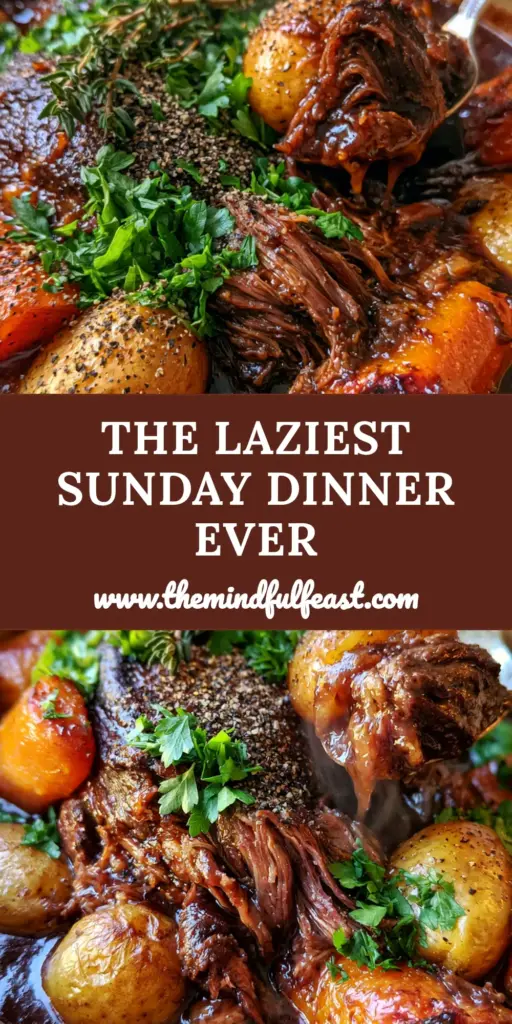
Mastering Sunday dinner recipes is about more than just food; it is about creating a centerpiece for connection. This red wine braised beef, with its glossy gravy and tender vegetables, is guaranteed to become a requested favorite in your household.
If you enjoyed this recipe, please leave a comment below and let us know how your braise turned out! Don’t forget to share your beautiful ceramic pot photos on Pinterest and tag us so we can see your caramelized carrots and rising steam in action.