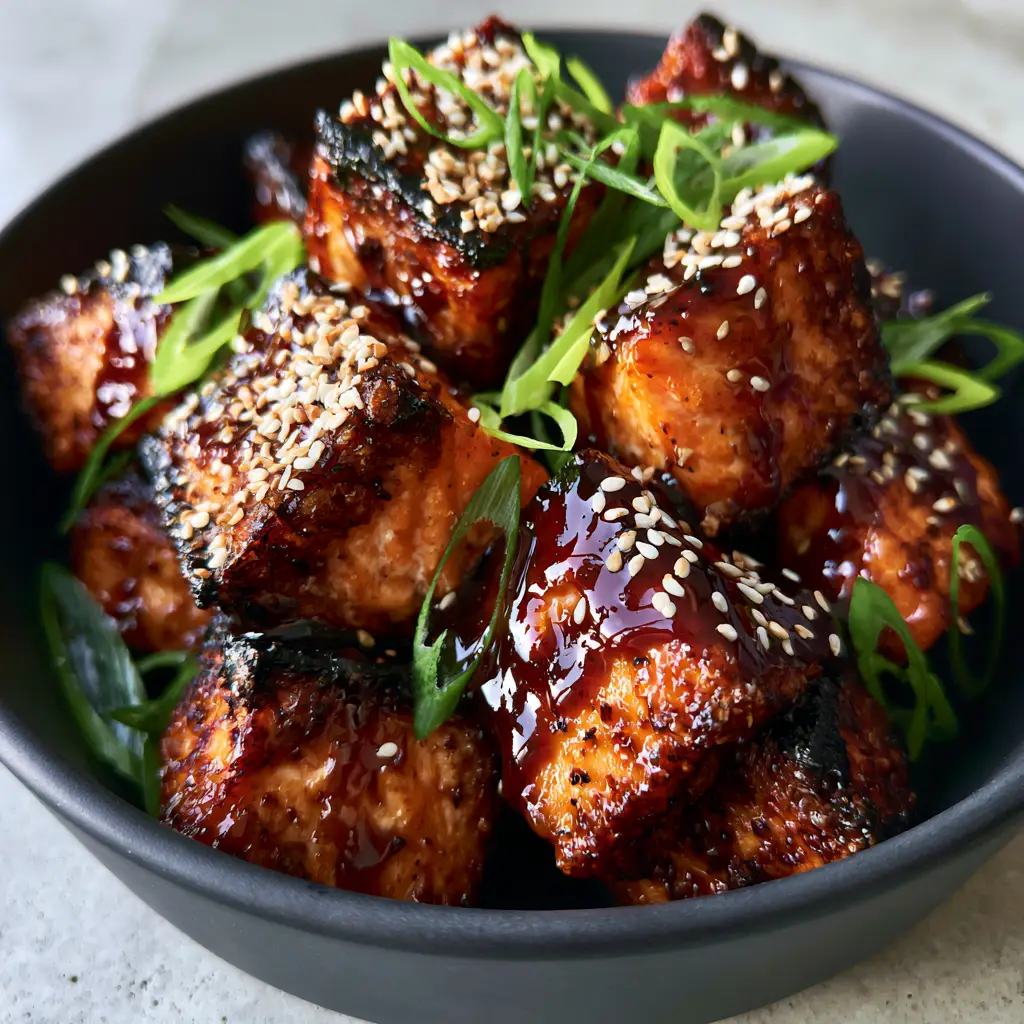
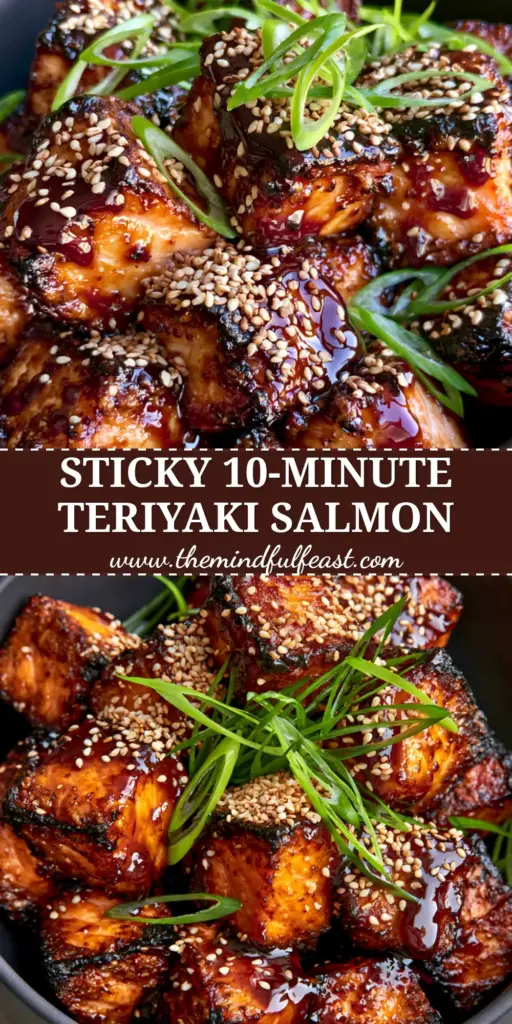
Imagine a dish that bridges the gap between high-end sushi-grade flavor and the comforting crunch of a home-cooked meal. These teriyaki salmon bites are designed to be that exact bridge, featuring air-fried Atlantic salmon cubes that boast deeply caramelized, slightly charred crispy edges and a moist, flaky orange interior. Every single bite is drenched in a thick, viscous, glistening dark mahogany teriyaki glaze that captures the light and promises an explosion of umami.
Whether you are looking for a quick weeknight dinner or a sophisticated appetizer for your next gathering, this recipe delivers on every sensory level. The precise dusting of toasted white sesame seeds and the vibrant scatter of neon-green scallions provide a fresh contrast to the rich, salty-sweet glaze. This isn’t just a meal; it is a masterclass in texture and visual food styling brought to your kitchen.
Why These Glazed Salmon Cubes Will Revolutionize Your Weeknights
- Unrivaled Texture Contrast: The air fryer creates a “shatter-crisp” exterior while the high-fat content of the Atlantic salmon keeps the center buttery and tender.
- Mahogany Glaze Mastery: Unlike thin, watery sauces, this reduction is thick enough to coat every cube in a glistening, viscous layer that clings to the salmon.
- Nutrient-Dense Efficiency: High in Omega-3 fatty acids and protein, these bites cook in under 10 minutes, making them faster than takeout.
- Visual Perfection: With the bright neon scallions and toasted seeds, this dish looks like it was plated by a professional stylist for a high-end editorial.
The Anatomy of Flavor: Ingredients for Success
Selecting the right components is the first step in achieving the professional result seen in our visual blueprint. Quality ingredients ensure the structural integrity of the salmon cubes and the deep color of the glaze.
Fresh Atlantic Salmon Fillets: You will need 1.5 lbs (680g) of skinless Atlantic salmon, chosen for its higher fat content which ensures the interior remains moist during the high-heat air frying process. Cut these into precise 1-inch (2.5cm) cubes to ensure even cooking and maximum surface area for caramelization.
Low-Sodium Soy Sauce: Use 1/2 cup (120ml) of quality soy sauce as the foundational salty base for your dark mahogany glaze. The low-sodium variety allows you to control the seasoning without the sauce becoming overbearingly salty as it reduces.
Dark Brown Sugar: 1/4 cup (50g) of packed dark brown sugar provides the molasses notes required to achieve that specific charred, crispy edge. The sugars undergo the Maillard reaction quickly under the air fryer’s convection heat.
Rice Vinegar and Mirin: 1 tbsp (15ml) of rice vinegar and 2 tbsp (30ml) of mirin provide the necessary acidity and subtle sweetness. This balance cuts through the richness of the salmon fat, similar to the flavor profiles found in our teriyaki salmon bowls.
Fresh Ginger and Garlic: 1 tbsp (6g) of freshly grated ginger and 2 cloves (10g) of minced garlic add aromatic depth. These invisible ingredients are scientifically essential for creating a complex flavor profile that isn’t just one-dimensional sweetness.
Cornstarch Slurry: 1 tsp (3g) of cornstarch mixed with 1 tsp (5ml) of cold water is the secret to the glistening sauce droplets. This thickener provides the viscosity needed for the glaze to catch the light and cling to the fish.
Toasted White Sesame Seeds: A generous 1 tbsp (9g) provides a nutty crunch and visual contrast against the dark glaze. These should be lightly toasted to release their essential oils just before serving.
Neon-Green Scallions: 2 whole scallions (15g), very thinly sliced on a bias, provide the final bright pop of color. The sharpness of the fresh greens balances the deep umami of the cooked fish.
Neutral Oil: 1 tbsp (15ml) of avocado or grapeseed oil is used to coat the salmon cubes. This acts as a heat conductor, ensuring the edges blister and char rather than just steaming.
Essential Tools for Precision Cooking
To achieve the hyper-realistic textures described in our culinary blueprint, the right equipment is non-negotiable. A standard oven often lacks the concentrated airflow needed for this specific result.
A high-powered Air Fryer is the primary tool, utilizing rapid air technology to mimic a deep fry without the excess oil. This is how we achieve the slightly charred crispy edges without overcooking the orange interior. You will also need a Small Saucepan for reducing the glaze to its viscous, mahogany state.
A Sharp Chef’s Knife is critical for cubing the salmon into uniform sizes and achieving those paper-thin, neon-green scallion slices. Finally, use a Silicone Basting Brush to apply the final layer of glaze, ensuring every glistening droplet is perfectly placed for visual impact.
The Culinary Blueprint: Step-by-Step Instructions
Phase 1: Preparing the Salmon Foundation
Start by patting your 1.5 lbs (680g) of Atlantic salmon completely dry with paper towels. Any surface moisture will create steam, preventing the edges from reaching that deeply caramelized, crispy state we are aiming for. Slice the salmon into uniform 1-inch (2.5cm) cubes.
In a medium bowl, toss the salmon cubes with 1 tbsp (15ml) of neutral oil and a pinch of kosher salt. Unlike a seared salmon recipe that might use a heavy spice rub, we want the natural fats and the glaze to do the heavy lifting here. Pre-heat your air fryer to 400°F (200°C) for at least 5 minutes to ensure an immediate sear.
Phase 2: Achieving the Perfect Air-Fried Char
Arrange the salmon cubes in a single layer in the air fryer basket, ensuring they are not touching. This allows the hot air to circulate around all sides, creating the charred crispy edges on every cube. Cook at 400°F (200°C) for 7-9 minutes.
At the 4-minute mark, gently shake the basket. You are looking for a visual cue: the edges should be turning a dark golden brown and beginning to blister. The interior should still look vibrant orange and moist. Do not overcook, or you will lose the flaky texture that makes this dish elite.
Phase 3: Crafting the Mahogany Teriyaki Glaze
While the salmon is air-frying, combine the soy sauce, dark brown sugar, mirin, vinegar, ginger, and garlic in a small saucepan over medium heat. Bring to a simmer, stirring until the sugar is fully dissolved. This base is similar to the sauce used in our ground turkey teriyaki rice bowls but reduced further for intensity.
Whisk in the cornstarch slurry and continue to simmer for 2-3 minutes. Watch for the sensory cue: the sauce will transform from a thin liquid into a thick, dark mahogany glaze that coats the back of a spoon. It should be glistening and highly viscous.
Phase 4: The Final Glaze and Garnish Plating
Transfer the hot salmon cubes into a matte black bowl. Pour the thickened glaze over the salmon and toss gently until every cube is dripping in sauce. The heat from the salmon will help the glaze set into those iconic glistening sauce droplets.
Immediately sprinkle with the toasted white sesame seeds and a heavy scatter of the thinly sliced neon-green scallions. The contrast between the dark mahogany fish and the bright green onions is the hallmark of professional food styling. Serve immediately while the edges are at their crispiest.
Expert Tips for Success
- The Dryness Rule: Never skip patting the salmon dry. Professional chefs know that moisture is the enemy of the Maillard reaction. If the salmon is wet, it will boil rather than blister.
- Glaze Timing: Only toss the salmon in the glaze right before serving. If it sits too long, the crispy edges will absorb the moisture and soften.
- Salmon Temperature: For the flakiest interior, let the salmon sit at room temperature for 15 minutes before cooking. This ensures the center warms through without the exterior burning.
- Internal Consistency: If you enjoy this flavor profile, consider applying these techniques to other proteins, like in a stuffed salmon recipe or even a honey sriracha salmon bowls variation.
Preserving Texture: Storage and Reheating
Teriyaki salmon bites are best enjoyed fresh to maintain the contrast between the crispy exterior and moist interior. However, you can store leftovers in an airtight container in the refrigerator for up to 2 days. The glaze will thicken further when cold.
To reheat, avoid the microwave as it will make the salmon rubbery. Instead, place the bites back into the air fryer at 350°F (175°C) for 3-4 minutes. This will revive the charred edges and loosen the glaze. We do not recommend freezing this dish, as the delicate texture of the Atlantic salmon will degrade upon thawing.
Creative Pairings: Building a Complete Meal
While these bites are a powerhouse on their own, pairing them with the right sides creates a balanced plate. Serve them over a bed of fluffy jasmine rice or with a side of steamed bok choy to soak up the extra mahogany glaze. The salty-sweet profile also works beautifully alongside a crisp cucumber salad.
For those looking for more variety, these bites can be transformed into a vibrant salad, much like a Japanese-inspired hähnchensalat-rezept. The versatility of the teriyaki profile means you can also serve these as the protein component in a refreshing grain bowl.
Frequently Asked Questions
Yes, you can bake them at 425°F (220°C) for 10-12 minutes, but you may not achieve the same deeply charred edges as the air fryer’s convection heat provides.
The secret is the cornstarch slurry and reducing the sauce until it reaches a dark mahogany color and coats the back of a spoon.
Yes, Atlantic salmon is preferred because its higher fat content prevents the cubes from drying out during the high-heat air frying process.
For these specific bites, it is best to remove the skin so the glaze can fully coat every side of the salmon cube for maximum flavor.
Reheat in the air fryer at 350°F (175°C) for 3 minutes to restore the crispy texture without overcooking the fish.
The Ultimate Teriyaki Salmon Bites Recipe Card
Teriyaki Salmon Bites: The Ultimate Crispy Air Fryer Recipe
Ingredients
Equipment
Method
- Pat salmon cubes completely dry with paper towels. Toss with oil and a pinch of salt.
- Cook in a single layer at 400°F (200°C) for 7-9 minutes, shaking halfway, until edges are charred and crispy.
- Combine soy sauce, sugar, mirin, vinegar, ginger, and garlic in a pan. Simmer until sugar dissolves.
- Whisk in cornstarch slurry and simmer 2-3 minutes until dark, viscous, and glistening.
- Toss hot salmon bites in the glaze. Plate in a bowl and top with sesame seeds and sliced scallions.
Notes
Toss with glaze immediately before serving to keep the salmon crispy.
Experience the Fusion of Crunch and Glaze
Mastering these teriyaki salmon bites is about more than just following steps; it is about understanding the science of the air fryer and the beauty of a perfectly reduced glaze. The result is a dish that looks as incredible as it tastes, featuring textures that satisfy every craving. From the first crunch of the charred edge to the buttery finish of the Atlantic salmon, this recipe is a guaranteed favorite.
We invite you to share your culinary creations with us! If you enjoyed this recipe, please leave a comment below and let us know how your mahogany glaze turned out. Don’t forget to follow us and save this recipe to your boards on Pinterest for your next meal prep session!