When searching for elevated tuna recipes, most home cooks are met with heavy mayonnaises and muted flavors that mask the delicate nature of the fish. This Mediterranean Albacore Salad breaks that cycle, offering a vibrant, protein-packed experience that feels like a coastal escape in every bite.
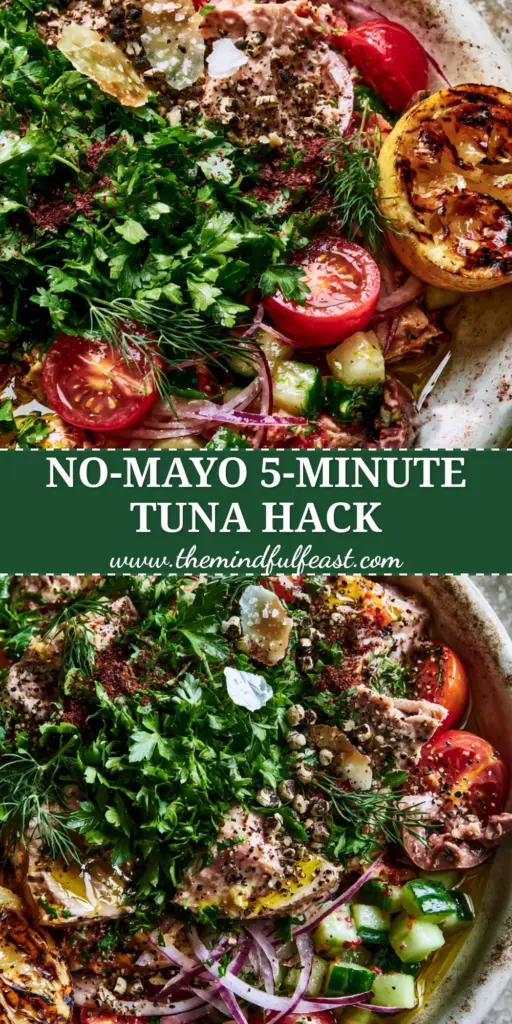
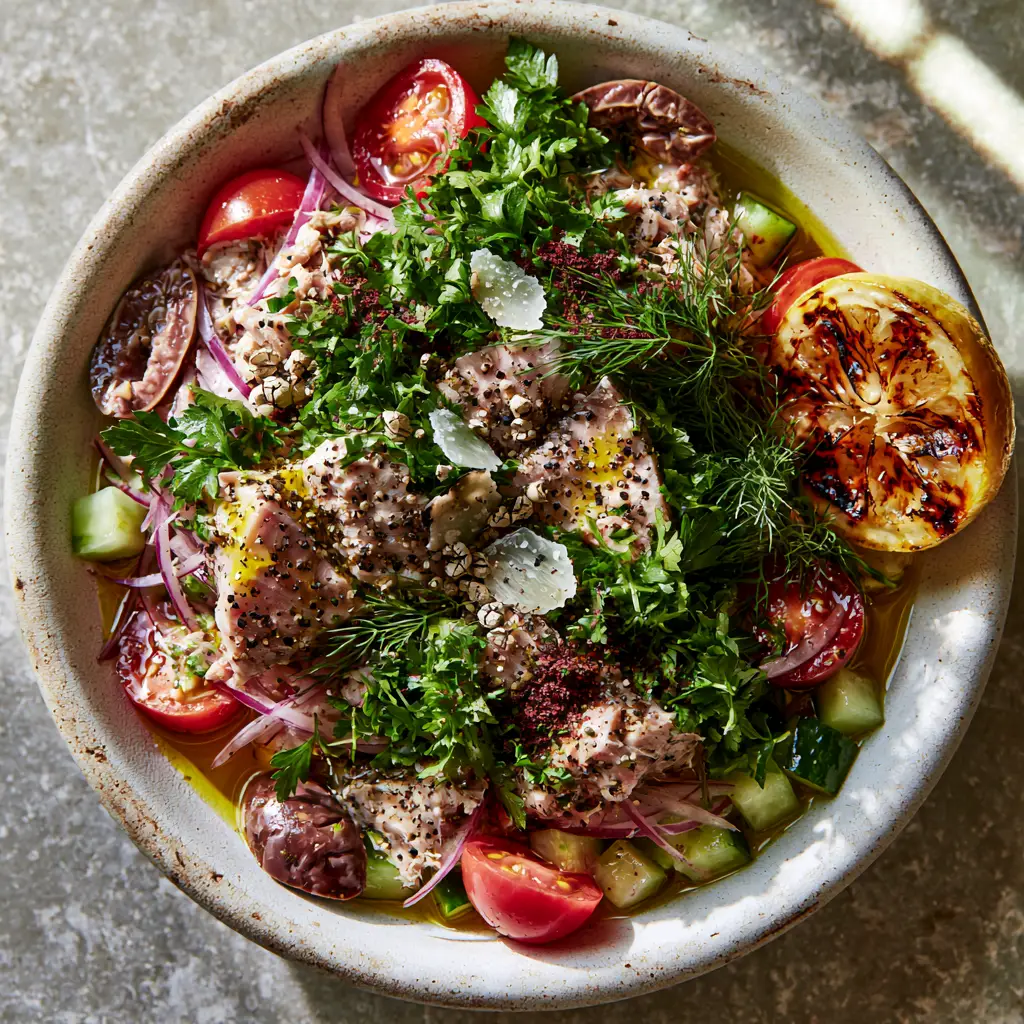
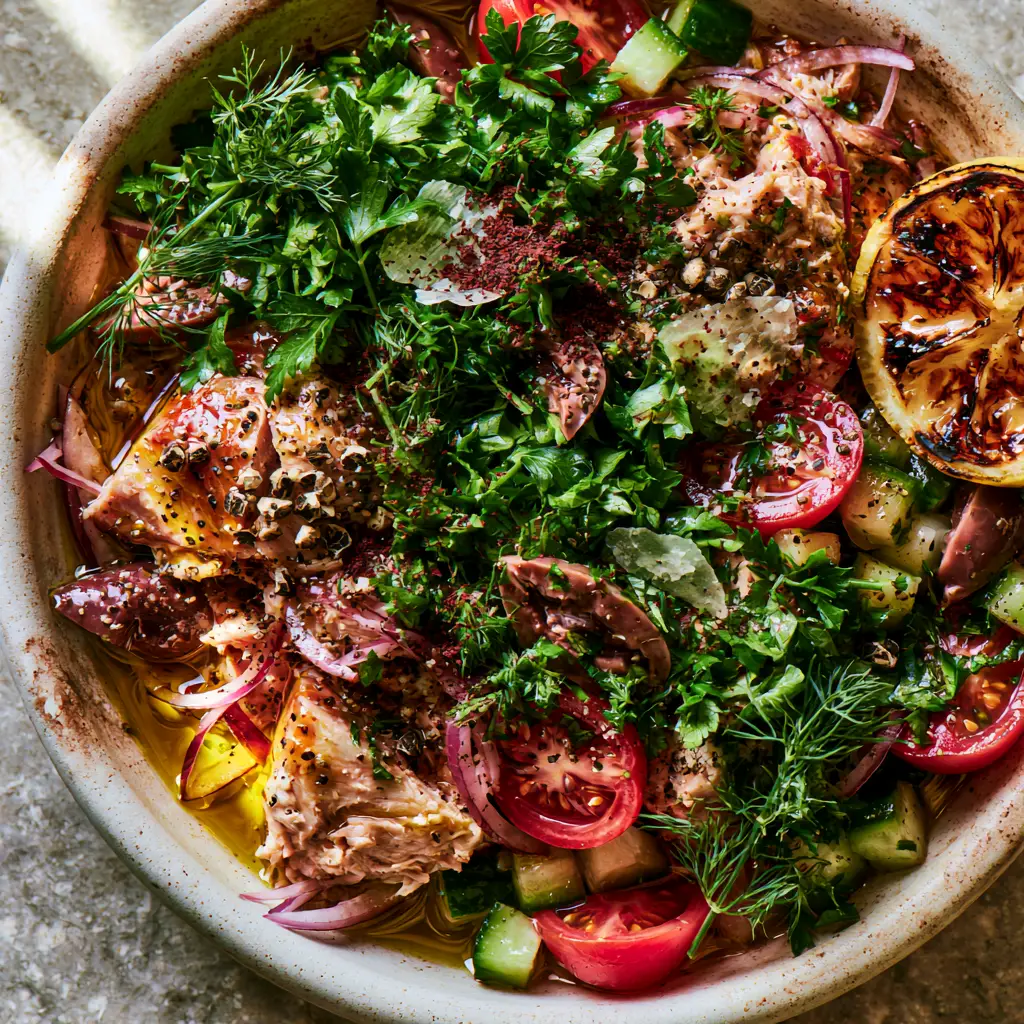
The visual appeal of this dish is undeniable, characterized by large, moist flakes of premium albacore that glisten under a coating of high-quality extra virgin olive oil. We move away from the “mashed” texture of traditional salads to focus on structural integrity and fresh, crisp textures.
By incorporating the bright, acidic punch of sumac and the smoky depth of a charred lemon, we transform simple pantry staples into a gourmet meal. This recipe is designed for those who appreciate the intersection of health, speed, and sophisticated flavor profiles.
Why This Refreshing Take on Tuna Recipes Will Change Your Lunch Game
This isn’t your average deli-style tuna salad; it is a meticulously layered dish that balances salt, fat, acid, and heat. The combination of crisp Persian cucumbers and juicy cherry tomatoes provides a cooling contrast to the rich, oil-packed fish.
- Textural Harmony: Large albacore flakes paired with the “snap” of fresh vegetables and the buttery finish of Kalamata olives.
- Gourmet Aromatics: A “forest” of freshly chopped flat-leaf parsley and dill creates a botanical backbone that lifts the entire dish.
- Visual Sophistication: The inclusion of sumac and charred citrus adds a restaurant-quality finish that makes this dish perfect for hosting.
- Omega-3 Powerhouse: A nutrient-dense meal that aligns with the Mediterranean diet, focusing on heart-healthy fats and lean proteins.
If you enjoy the convenience of canned fish but crave the elegance of easy seafood recipes, this preparation is the gold standard for your weekly rotation.
Essential Components for the Perfect Mediterranean Albacore Base
To achieve the specific visual result of glistening, premium flakes, your choice of tuna is paramount. Look for “Solid White Albacore” packed in olive oil or spring water to ensure the muscle fibers remain intact during the flaking process.
Premium Flaked Albacore Tuna: 2 cans (142g each) of high-quality albacore. The “solid” variety is essential here, as “chunk” light tuna tends to be too soft and will turn into a paste rather than the beautiful flakes we desire.
Extra Virgin Olive Oil (EVOO): 3 tbsp (45ml) of cold-pressed oil. This acts as the primary dressing, providing a peppery finish and that signature “glisten” seen in professional food photography.
Persian Cucumbers: 2 small (approx 150g), finely diced. We use Persian cucumbers specifically for their thin skin and low seed count, ensuring the salad stays crisp and doesn’t become watery.
Cherry Tomatoes: 1 cup (150g), halved. These provide “juicy” bursts of sweetness that balance the saltiness of the olives; look for vibrant red or heirloom varieties for maximum visual impact.
Red Onion: 1/4 small onion (30g), sliced into paper-thin slivers. Soaking these in cold water for 5 minutes before adding to the salad can remove the harsh “bite” while retaining the crunch.
Kalamata Olives: 1/2 cup (75g), quartered. These provide the essential “salty” punch; ensure they are pitted and hand-torn or quartered to distribute their flavor evenly.
Fresh Herb Forest: 1/2 cup (15g) chopped flat-leaf parsley and 2 tbsp (5g) fresh dill. These herbs should be treated as a vegetable component, not just a garnish, providing a massive hit of chlorophyll and freshness.
The Acid Elements: 1 large lemon (half charred, half juiced) and 1/2 tsp (2g) sumac. The sumac adds a unique Middle Eastern tartness often found in authentic arabian recipes, while the charred lemon adds a caramelized depth.
Foundational Seasonings: 1 tsp (5g) Maldon sea salt and 1/2 tsp (2g) cracked black pepper. Large salt flakes provide a sensory crunch, while freshly cracked pepper offers a floral heat that pre-ground pepper lacks.
Professional Equipment for Culinary Success
While this is one of our more accessible tuna recipes, using the right tools ensures the textures remain distinct. You want to avoid over-processing the ingredients to maintain the “macro shot” aesthetic.
A cast-iron skillet is highly recommended for charring the lemon; the heavy heat retention creates those beautiful black grill marks and caramelizes the fruit’s sugars. You will also need a sharp chef’s knife for “thin slivers” of onion and a rustic ceramic bowl for serving.
Using a wide-bottomed bowl allows you to layer the ingredients rather than tossing them into a heap. This preserves the “moist flakes” of tuna on top, preventing them from being crushed by the heavier vegetables at the bottom.
Mastering the Art of the Charred Lemon and Sumac Finish
Step 1: Preparing the Albacore Foundation
Drain the albacore tuna thoroughly if using water-packed varieties. Using two forks, gently “pry” the tuna apart into large, 1-inch (2.5cm) flakes rather than stirring them into a mash.
Place the flakes in your rustic white bowl and drizzle immediately with 1 tbsp (15ml) of the extra virgin olive oil. This ensures the fish stays moist and begins to develop that glistening highlight under the light.
Step 2: The High-Heat Lemon Sear
Slice your lemon in half and remove any visible seeds. Heat a small skillet over medium-high heat with a drop of oil until it begins to shimmer.
Place the lemon half cut-side down into the hot pan. Press down slightly and sear for 3-4 minutes without moving it, until a deep, dark brown caramelization forms. You will smell a sweet, smoky citrus aroma when it is ready.
Step 3: Precision Vegetable Layering
Layer the paper-thin red onion slivers and diced Persian cucumbers over the tuna. Add the halved cherry tomatoes and Kalamata olive quarters, ensuring a balanced distribution of color across the bowl.
This layering technique is a secret used in homemade chicken salad and premium seafood dishes to keep the ingredients from bruising each other.
Step 4: Creating the “Herb Forest” and Final Garnish
Roughly chop the flat-leaf parsley and dill. Scatter them liberally over the top—you want it to look like a lush green canopy over the colorful vegetables below.
Dust the entire dish with the ground sumac, followed by a generous scattering of Maldon sea salt flakes and cracked black pepper. Place the charred lemon half on the edge of the bowl, ready to be squeezed over just before serving.
Expert Tips for the Most Vibrant Tuna Recipes
- The Temperature Factor: For the best flavor, allow the tuna and vegetables to sit at room temperature for 10 minutes before eating. Cold temperatures can mute the subtle notes of the olive oil and sumac.
- Avoiding the “Sog”: Only add the salt and lemon juice immediately before serving. Salt draws moisture out of cucumbers and tomatoes, which can turn your salad into a soup if left for too long.
- Sumac Substitutions: If you cannot find sumac, a pinch of lemon zest mixed with a tiny amount of citric acid can mimic the tartness, though the earthy red color will be missing.
- The Oil Quality: Since there is no heavy dressing, use your “good” olive oil here—the kind with a harvest date and a spicy, grassy finish.
How to Store and Prep Ahead
Because this recipe relies on the “crisp” and “moist” textures of fresh produce, it is best enjoyed immediately. However, you can prep the components separately to save time during a busy work week.
Store the chopped cucumbers, onions, and halved tomatoes in an airtight container for up to 2 days. Keep the flaked tuna in a separate container submerged in a little olive oil to prevent it from drying out.
Do not freeze this salad. The cell walls of the cucumbers and tomatoes will collapse upon thawing, resulting in a loss of the “macro shot” structural integrity that makes this dish so appealing.
Perfect Pairings and Serving Suggestions
This Mediterranean tuna salad is incredibly versatile. For a light lunch, serve it alongside a crisp glass of white wine or one of our easy mixed drink recipes for a weekend brunch.
If you need a heartier meal, this salad serves as an incredible “topper” for quick pasta recipes. Simply toss the entire salad with warm penne or fusilli; the residual heat will slightly soften the tomatoes and create a light oil-based sauce.
You can also serve this inside pita pockets or atop crusty sourdough bread for a sophisticated twist on a tuna sandwich. The sumac and charred lemon notes pair beautifully with hummus or a side of feta cheese.
Common Questions About Premium Tuna Recipes
You can prep the ingredients separately, but for the best texture, do not mix them or add the salt and lemon juice until you are ready to eat. This prevents the vegetables from losing their crispness.
Yes, but you will need to add extra virgin olive oil to the salad to achieve the moist, glistening texture shown in the visuals. Oil-packed tuna naturally carries more flavor and a richer mouthfeel.
Use a very hot, dry skillet (or with just a tiny drop of oil). Place the lemon cut-side down and do not move it for at least 3 minutes. The goal is to caramelize the sugars to a deep brown, not to cook the lemon through.
Sumac is a Middle Eastern spice with a bright, citrusy tartness. It is less sharp than lemon and adds an earthy depth. You can find it in the spice aisle of most well-stocked grocery stores or international markets.
Solid White Albacore is the gold standard. It provides large, firm flakes that maintain their structure, unlike ‘chunk light’ tuna which is often too soft and turns into a paste when mixed.
The Ultimate Mediterranean Albacore Salad Recipe
Tuna Recipes: The Ultimate Mediterranean Albacore Salad with Charred Lemon
Ingredients
Equipment
Method
- Drain the albacore and use two forks to gently pry it into large, moist flakes in a rustic white ceramic bowl.
- Place a lemon half cut-side down in a hot skillet for 3-5 minutes until deep caramelization and grill marks appear.
- Add the diced cucumbers, halved cherry tomatoes, sliced red onions, and quartered olives over the tuna flakes.
- Top with a forest of chopped parsley and dill. Sprinkle with sumac, Maldon salt, and cracked pepper. Drizzle with extra virgin olive oil.
Notes
Add salt and lemon juice only at the very last second to keep vegetables crisp.
This Mediterranean Albacore Salad represents the pinnacle of what tuna recipes can be: fresh, vibrant, and incredibly flavorful. By focusing on high-quality ingredients like sumac and charred lemon, you elevate a simple pantry staple into a meal that nourishes the body and delights the senses.
We would love to see your recreations! Please leave a comment below with your favorite way to customize this salad, and don’t forget to share your photos and pin this recipe to Pinterest to save it for your next healthy meal prep session.