There is a specific kind of magic that happens when high-quality poultry meets the vibrant, earthy depths of red palm oil. Chicken Muamba, or Muamba de Galinha, isn’t just a meal; it is a sensory journey through the heart of Angola. This dish is celebrated for its thick, glossy red sauce and its ability to turn humble ingredients into a five-star culinary experience.
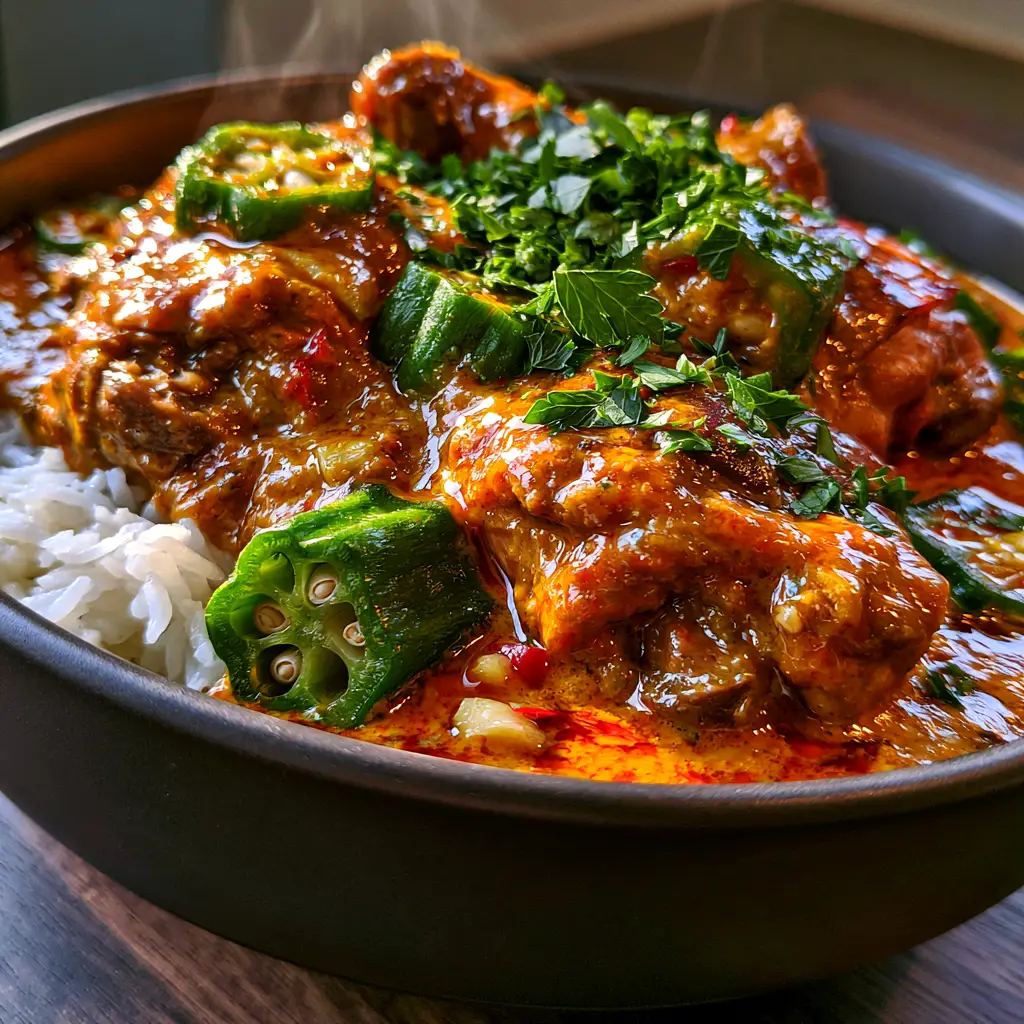
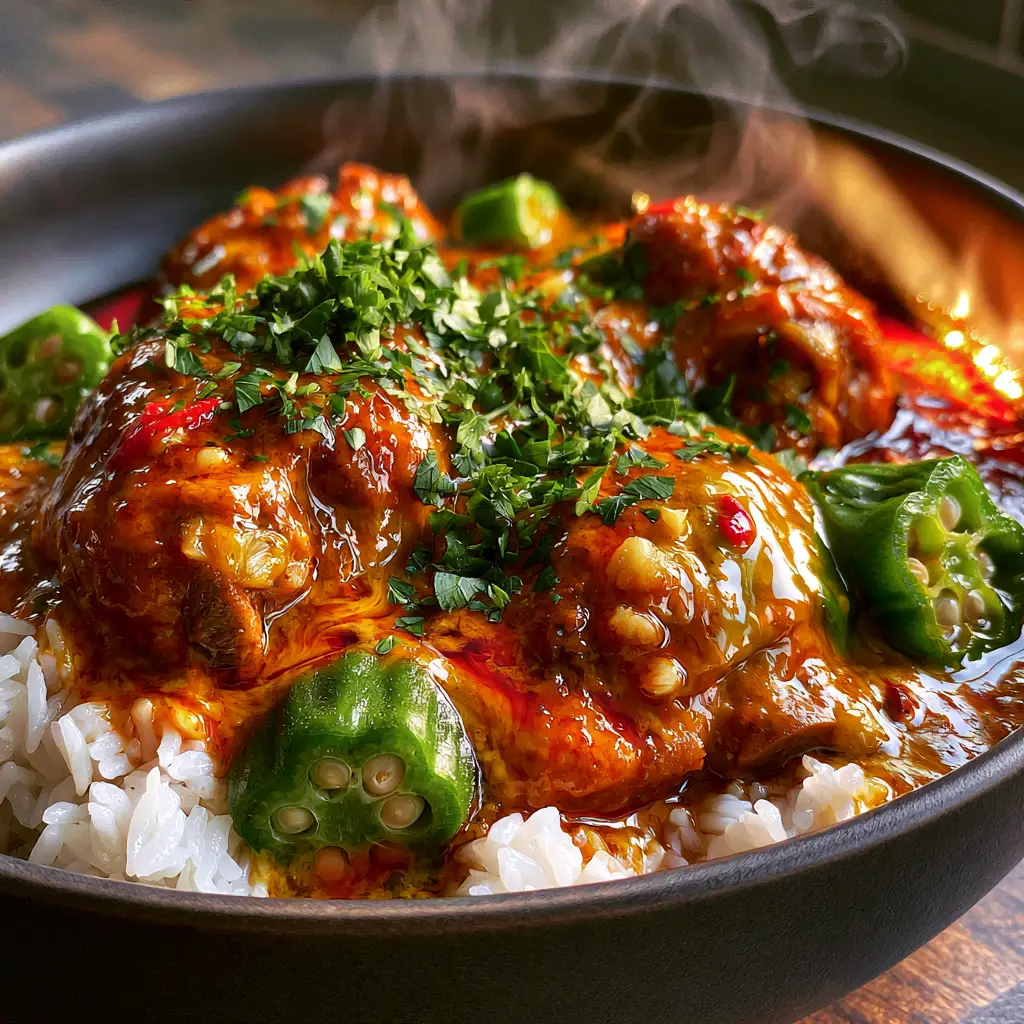
Imagine pulling a heavy ceramic bowl toward you, the rising steam carrying notes of toasted garlic and warm chilies. The first thing you notice is the visual contrast: succulent green okra slices nestled against chicken thighs so tender they practically fall apart at the suggestion of a fork. The sauce itself is a masterpiece of emulsification, glowing with a deep-orange and red sheen that coats every grain of fluffy jasmine rice.
In this guide, we are going to dive deep into the techniques required to achieve that professional, “macro-photo” finish. Whether you are an experienced cook or looking for a new weeknight chicken dinner, this recipe provides the structural foundation and flavor profile to impress anyone at your table.
Why This Authentic Muamba de Galinha Stands Out
- Unmatched Texture: We use a slow-simmering technique to ensure the chicken thighs are fork-tender while the okra maintains a succulent, bright-green snap.
- The “Glossy Sheen” Secret: By carefully emulsifying the red palm oil with chicken stock, we create a thick, vibrant sauce that mirrors the high-specular highlights of a professional food photograph.
- Aromatic Balance: The combination of fresh minced garlic and red chili flakes provides a heat that glows rather than burns, perfectly complemented by the floral scent of jasmine rice.
- Visual Brilliance: This dish is a color-theory dream, contrasting deep reds and oranges with the pops of fresh green parsley and white rice.
The Essential Pantry for Authentic Chicken Muamba
To achieve the specific flavor and visual profile of a traditional Chicken Muamba, certain ingredients are non-negotiable. Here is what you will need for your shopping list.
Bone-in, Skinless Chicken Thighs (approx. 2 lbs / 907g): Thighs provide the necessary fat content and collagen to keep the meat “glistening” and moist during the simmering process. Removing the skin allows the red palm oil sauce to penetrate the meat directly.
Red Palm Oil (1/2 cup / 120ml): This is the soul of the dish. It provides the signature deep-orange color and a unique, nutty flavor that cannot be replicated by vegetable oils. Look for sustainably sourced “Dendê” oil.
Fresh Okra (1/2 lb / 225g): Sliced into thick rounds, these add a succulent texture. The inner seeds become visible in the sauce, adding to the rustic, authentic aesthetic described in our visual blueprint.
Minced Garlic (4 cloves): A foundational aromatic that provides a sharp, savory backbone to the rich oil. It should be finely minced so it integrates into the “silky sheen” of the sauce.
Red Chili Flakes (1 tsp / 5g): These provide those tiny red flecks visible within the sauce, offering gentle heat and visual texture.
Chicken Stock (2 cups / 480ml): Use a high-quality stock to provide the liquid base for the sauce. This helps thin the palm oil into a pourable, emulsified gravy.
Fresh Flat-Leaf Parsley (1/4 cup / 15g): Coarsely chopped for garnish. The freshness cuts through the richness of the oil and adds a final “pop” of color.
Jasmine Rice (2 cups / 400g dry): The perfect floral, fluffy base to soak up the vibrant muamba sauce. If you enjoy this pairing, you might also like a Moroccan chicken and rice approach for future meals.
Necessary Culinary Tools for Visual Perfection
To recreate the macro-photo results, you don’t need a professional kitchen, but you do need the right heat conductors. A heavy-bottomed pot or a dark matte ceramic Dutch oven is ideal for maintaining the consistent low temperature required for fork-tender poultry.
A sharp chef’s knife is essential for the “minced” garlic and “coarsely chopped” parsley. To get those clean, succulent slices of okra, ensure your blade is honed so you don’t crush the delicate vegetable walls. Lastly, a fine-mesh strainer for your jasmine rice ensures every grain stays separate and fluffy, avoiding a gummy texture.
Building the Flavor: Step-by-Step Instructions
Phase 1: Searing for Depth
Start by seasoning your chicken thighs with salt and pepper. In your heavy pot, heat 2 tablespoons (30ml) of the red palm oil over medium-high heat. Place the chicken in the pot and sear until a light golden crust forms on both sides—about 5 minutes per side. This step is crucial for “locking in” the juices that make the meat fork-tender later.
Phase 2: Developing the Aromatic Base
Remove the chicken and set aside. Lower the heat to medium and add the remaining red palm oil. Add finely diced onions (1 large) and cook until translucent. Stir in the minced garlic and red chili flakes. You will notice the oil turning a deeper, more vibrant red as it toasts the aromatics. This is the “sensory cue” that your flavor base is ready.
Phase 3: The Long Simmer
Return the chicken to the pot. Pour in the chicken stock and, if desired, 2 tablespoons (30g) of tomato paste to deepen the color further. Bring to a gentle boil, then reduce to a low simmer. Cover the pot. This slow cook (about 40-50 minutes) is what creates the “thick glossy” texture as the oil and stock emulsify together.
Phase 4: Succulent Okra Integration
About 10 minutes before the chicken is finished, gently fold in the sliced okra. We add them late to ensure they stay “bright green” and “succulent” rather than turning brown or overly soft. The okra will release a small amount of natural thickener, contributing to the “silky sheen” of the sauce.
Phase 5: The Final Presentation
Fluff your jasmine rice and place a mound in a dark matte bowl. Carefully arrange the chicken thighs on top, spooning a generous amount of the deep-orange sauce over the meat. Garnish with the coarsely chopped parsley. Look for the “rising steam” as a signal that the dish is ready for the table.
Expert Tips for High-RPM Results
- Emulsification is Key: If your sauce looks “broken” (oil floating on top), vigorously whisk a small amount of the warm liquid in a separate bowl with a teaspoon of cornstarch before adding it back to the pot. This ensures that “glossy, silky sheen.”
- Okra Management: To keep okra slices succulent and not “slimy,” avoid over-stirring once they are in the pot. Let them sit nestled in the sauce.
- The Rice Trick: For the fluffiest jasmine rice, rinse it under cold water until the water runs clear. This removes excess starch, ensuring it doesn’t clump under the heavy Muamba sauce.
- Heat Control: If the sauce reduces too much before the chicken is tender, add 1/4 cup (60ml) of water or stock. You want the sauce to be thick enough to coat a spoon but liquid enough to soak into the rice.
What to Serve with Chicken Muamba
While jasmine rice is the traditional pairing, this dish thrives alongside other vibrant flavors. If you are looking for a lighter side, a Greek-inspired side salad provides a bright acidic contrast to the rich palm oil.
Alternatively, if you’re hosting a feast, consider adding a French-style mustard dish or even a Chicken Yassa to show off the breadth of global chicken preparations. For those who love a spicy kick, a side of jalapeño popper salad can act as a modern, creamy appetizer before the main event.
Storage and Reheating Guidelines
To Store: Chicken Muamba actually tastes better the next day as the flavors continue to meld. Store in an airtight container in the refrigerator for up to 3 days. The palm oil may solidify; this is normal.
To Reheat: Gently warm the stew in a saucepan over low heat. Add a splash of water to help re-emulsify the sauce and bring back that glossy sheen. Avoid the microwave if possible, as it can make the chicken rubbery.
Freezing: This dish freezes well for up to 2 months. Thaw overnight in the fridge before reheating according to the instructions above.
Frequently Asked Questions
While you can use breast meat, chicken thighs are highly recommended. Thighs stay fork-tender during the long simmer and provide the collagen necessary to create that thick, glossy sauce sheen.
The secret is timing and minimal agitation. Add the okra in the last 10 minutes of cooking and avoid over-stirring. The high heat of the sauce will cook them through while maintaining their succulent structure.
This recipe is moderately spicy. The red chili flakes provide a warm glow, but the richness of the palm oil and the neutral jasmine rice balance the heat perfectly. You can adjust the flakes to your preference.
Red palm oil has a rich, earthy, and slightly nutty flavor with a floral aroma. It provides a unique savoriness and a silky mouthfeel that distinguishes Muamba de Galinha from standard tomato-based stews.
The primary difference is the use of red palm oil (Dendê) and okra. These ingredients create a specific emulsified texture and a deep orange-red color that you won’t find in traditional Western or tomato-heavy stews.
The Ultimate Chicken Muamba Recipe Card
Chicken Muamba: Authentic Angolan Muamba de Galinha Recipe
Ingredients
Equipment
Method
- Season chicken with salt and pepper. Heat 2 tbsp (30ml) palm oil in a Dutch oven over medium-high heat. Sear thighs until golden, about 5 minutes per side. Remove and set aside.
- Add remaining palm oil to the pot. Sauté diced onion until soft. Add minced garlic and red chili flakes, stirring until the oil is a vibrant red.
- Return chicken to the pot. Add chicken stock. Bring to a boil, then reduce to a low simmer. Cover and cook for 40-45 minutes until chicken is fork-tender.
- Gently fold in the sliced okra rounds. Simmer uncovered for 10 more minutes until okra is succulent and bright green.
- Serve over fluffy jasmine rice, garnishing with fresh parsley and ensuring a thick layer of glossy sauce coats the plate.
Notes
Add okra at the very end to prevent them from becoming too soft.
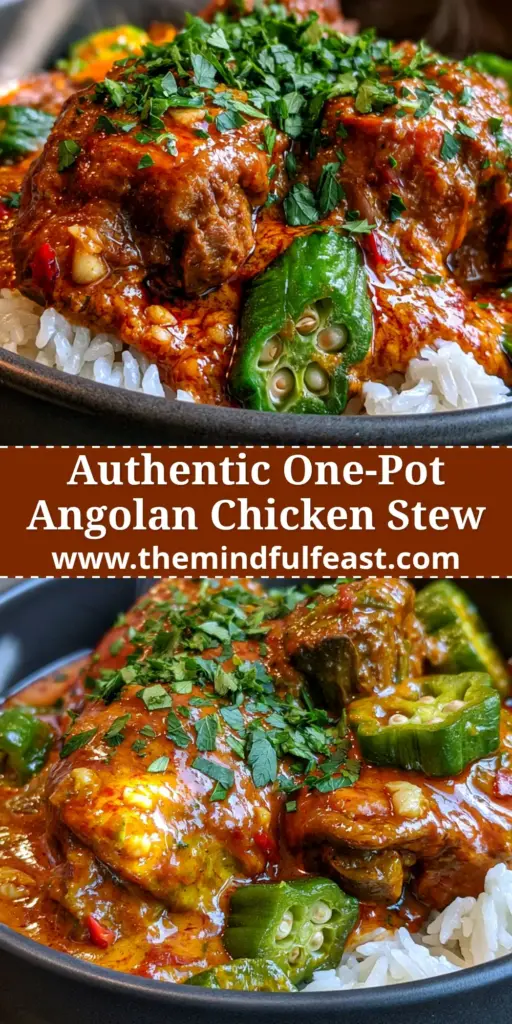
Bringing Angola to Your Kitchen
The beauty of Chicken Muamba lies in its ability to be both comforting and exotic. By following these forensic culinary steps—focusing on the emulsification of the palm oil and the timing of the okra—you’ve created a dish that is as visually stunning as it is delicious. The fork-tender thighs and vibrant sauce are a testament to your skill as a home cook.
If you enjoyed this recipe, please leave a comment below and share your results! Don’t forget to follow us on Pinterest for more authentic flavor finds and visual recipe inspiration. Happy cooking!