There is a specific culinary magic that happens when high-heat flames meet a yogurt-based Greek chicken marinade. The result is a glistening, tender protein that boasts deep, caramelized grill marks and a flavor profile that transports you straight to a seaside taverna in Mykonos. If you have been searching for the definitive way to achieve succulent slices of chicken that stay moist even after hitting the grates, you have arrived at the right place.
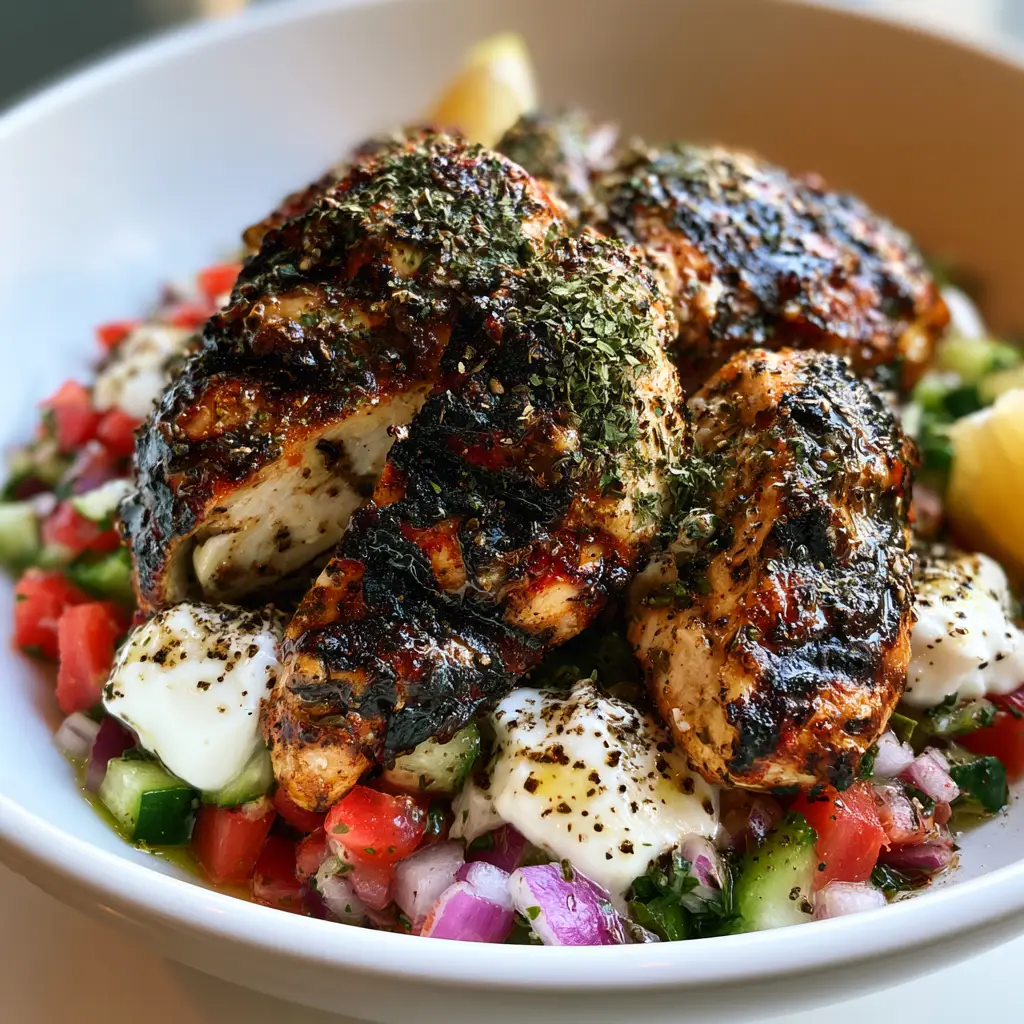
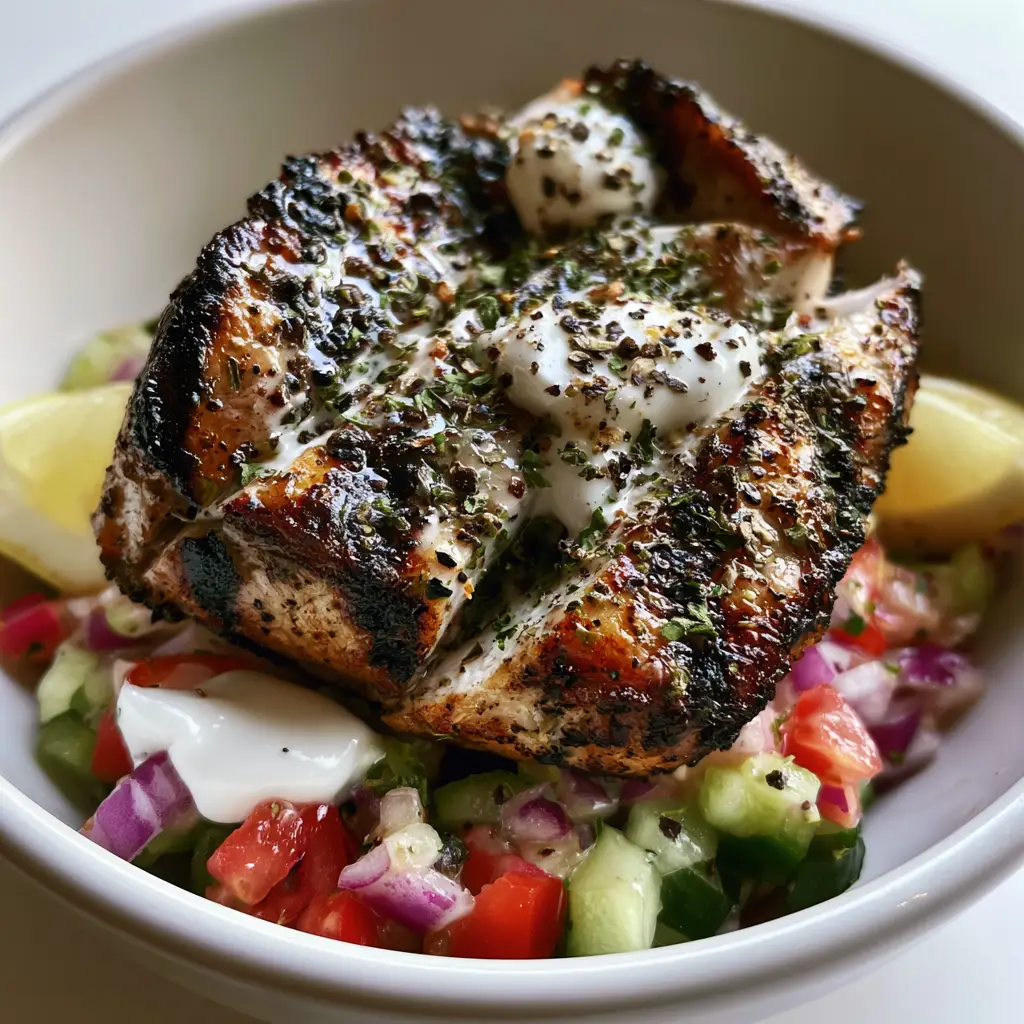
This recipe isn’t just about flavor; it is about forensic visual accuracy. We are recreating a macro-level masterpiece: thick, juicy slices of chicken breast resting on a vibrant bed of Mediterranean salad, finished with dollops of cool tzatziki and a heavy dusting of dried oregano. Every element, from the glistening lemon-herb coating to the crisp Persian cucumbers, serves a structural and sensory purpose in this elite weeknight dinner.
Why This Yogurt-Infused Greek Chicken Marinade Outperforms Vinaigrettes
Many home cooks rely on oil-and-vinegar bases, but an elite Greek chicken marinade leverages the power of dairy. The lactic acid in Greek yogurt tenderizes the chicken fibers more gently than harsh acetic acid (vinegar), ensuring the meat never becomes “mealy” or tough. Furthermore, the sugars and proteins in the yogurt create a thick coating that caramelizes into those iconic dark grill marks while insulating the interior juices.
- Unmatched Moisture Retention: The Greek yogurt creates a protective barrier, preventing the internal juices of the chicken breast from evaporating over high heat.
- Superior Maillard Reaction: The combination of lemon sugars and yogurt solids produces a deep, mahogany char that oil-based marinades simply cannot replicate.
- Visual Vibrancy: The marinade acts as a primer for garnishes, allowing dried oregano flakes and cracked black pepper to adhere beautifully to every succulent slice.
- Balanced Acidity: Using fresh-squeezed lemon juice provides a bright, citrusy lift that cuts through the richness of the garlic and yogurt.
The Anatomy of a Visually Stunning Mediterranean Plate
To achieve the “macro shot” aesthetic described in our culinary blueprint, we must focus on the contrast of textures and colors. A clean, minimalist white ceramic bowl serves as the canvas for our vibrant ingredients. The deep purple of minced red onions, the bright red of vine-ripened tomatoes, and the cool green of Persian cucumbers create a mosaic of freshness underneath the warm, grilled chicken.
This dish is a testament to the beauty of Greek food dishes, where simple ingredients are elevated through precision prep. By dicing your vegetables into uniform, small pieces, you ensure that every forkful contains a perfect balance of crunch, acid, and savory protein. This approach is similar to how one might assemble a Greek chicken souvlaki grazing board for entertaining guests.
Essential Ingredients for the Ultimate Greek Chicken Marinade
To replicate the succulent, glistening texture seen in professional food photography, we need a mix of high-impact aromatics and foundational fats. Each ingredient in this list has been scientifically selected to ensure the chicken remains moist while achieving a high-contrast sear.
The Succulent Chicken & Marinade Base
1.5 lbs (680g) Boneless Skinless Chicken Breasts: We choose breast meat for this recipe to showcase the “thick, succulent slices” mentioned in the visual prompt. Ensure they are pounded to an even thickness for uniform cooking.
1/2 cup (120g) Full-Fat Greek Yogurt: This provides the creamy coating and the lactic acid needed for tenderizing. Do not use non-fat; the fat is essential for heat transfer and mouthfeel.
3 tbsp (45ml) Extra Virgin Olive Oil: Olive oil carries the fat-soluble flavors of the herbs deep into the meat and helps facilitate those dark grill marks.
3 tbsp (45ml) Fresh Lemon Juice: The primary acid source that brightens the entire flavor profile and works in tandem with the yogurt to soften the protein structure.
The Aromatic & Visual Garnishes
3 cloves Garlic, minced: Garlic provides the pungent backbone of the marinade, which becomes sweet and mellow once grilled. These small bits will caramelize onto the surface of the chicken.
1 tbsp (3g) Dried Oregano Flakes: Oregano is the soul of this Greek chicken marinade. We use dried flakes here as they provide a more concentrated earthy flavor that stands up to the heat of the grill.
1 tsp (6g) Sea Salt Flakes & 1/2 tsp (1g) Fresh Cracked Black Pepper: These seasoning agents are not just for taste; the coarse texture of the sea salt flakes adds a visual “glistening” effect under soft daylight.
The Mediterranean Salad Bed
1 cup (150g) Vine-Ripened Tomatoes, diced: These provide a juicy, acidic contrast to the savory chicken. Ensure they are at room temperature for maximum flavor expression.
1 cup (100g) Persian Cucumbers, diced: Persian cucumbers are preferred for their thin skin and lack of seeds, providing a “crisp green” texture that doesn’t get soggy.
1/4 cup (40g) Red Onion, minced: The sharp, purple red onion adds a necessary bite and a pop of color to the salad base.
1/4 cup (15g) Fresh Flat-Leaf Parsley, chopped: Fresh herbs add a layer of brightness and visual “lift” to the bowl.
Professional Equipment for the Perfect Sear
Achieving “dark, caramelized grill marks” requires more than just a good Greek chicken marinade; it requires the right tools. To mimic the handheld smartphone photo aesthetic of a high-end kitchen, you need equipment that manages heat effectively.
- Cast Iron Grill Pan or Outdoor Grill: To get those distinct, linear charred marks, a heavy-bottomed cast iron pan is the best indoor substitute for an open-flame grill.
- Chef’s Knife: A sharp blade is required to achieve the “finely diced” Mediterranean salad and the clean, “succulent slices” of chicken.
- Instant-Read Meat Thermometer: The only way to ensure the chicken remains “succulent” and “moist” is to pull it off the heat at exactly 165°F (74°C).
- Minimalist White Ceramic Bowls: The neutral background makes the bright reds and greens of the Mediterranean ingredients pop.
Step-by-Step Instructions to Culinary Excellence
1. Whisking the Creamy Marinade
In a large glass bowl, combine the Greek yogurt, olive oil, lemon juice, minced garlic, half of the dried oregano, and the black pepper. Whisk vigorously until the marinade is emulsified and smooth. The mixture should be thick enough to coat the back of a spoon—this is what creates that glistening “creamy yogurt coating” on the final dish.
2. The Marinating Phase
Submerge the chicken breasts into the yogurt mixture, ensuring every inch is covered. Cover the bowl and refrigerate for at least 30 minutes, though 2 to 4 hours is ideal. Avoid marinating for more than 8 hours, as the lemon juice will eventually begin to “cook” the chicken, changing its texture from succulent to rubbery. This is a great addition to your weeknight chicken dinner rotation.
3. Preparing the Mediterranean Salad Bed
While the chicken marinades, prepare your salad. Dice the vine-ripened tomatoes and Persian cucumbers into uniform 1/2-inch (1cm) cubes. Mince the red onion finely to ensure its flavor is distributed without being overpowering. Toss the vegetables with the chopped fresh flat-leaf parsley and a pinch of sea salt. Set aside to let the flavors meld at room temperature.
4. Achieving the Perfect Char
Heat your grill or cast iron pan over medium-high heat. Lightly brush the grates with a high-smoke point oil. Remove the chicken from the marinade, allowing the excess to drip off, but leaving a visible coating. Place the chicken on the hot surface. Do not move it for 5-6 minutes. This stillness is what creates the “dark, caramelized grill marks.” Flip and cook for another 5-6 minutes until the internal temperature reaches 165°F (74°C).
5. Resting and Slicing
This is the most critical step for forensic accuracy. Let the chicken rest for at least 5 minutes before slicing. This allows the juices to redistribute, ensuring the meat looks “succulent” and “moist” when sliced into thick pieces. If you slice too soon, the juices will run out, leaving the meat looking dry and dull.
Expert Tips for Success
- The “Sizzle” Test: Never place your marinated chicken on a cold pan. You should hear a loud, aggressive sizzle the moment the yogurt coating hits the metal; this ensures the sugars caramelize instantly.
- Patting the Vegetables: After dicing the tomatoes, let them sit on a paper towel for 2 minutes. This prevents excess moisture from pooling at the bottom of your ceramic bowl, keeping the salad crisp.
- Tzatziki Placement: Use two small spoons to create “thick white dollops” of tzatziki rather than spreading it. This creates a high-contrast visual against the charred chicken.
- Final Seasoning: Always finish the dish with a final sprinkle of dried oregano and sea salt flakes from a height. This ensures an even distribution that looks professional and intentional.
What to Serve With This Greek Chicken Marinade
This dish is incredibly versatile and fits perfectly into a variety of greek-inspired recipes. To keep the meal light and refreshing, serve it alongside a crisp greek salad recipe or some golden-brown greek-zucchini-fritters.
If you are looking for a heartier meal, you might consider pairing these succulent chicken slices with moroccan-chicken-rice for a Mediterranean-Middle Eastern fusion. The creamy yogurt marinade also works beautifully as a base for a healthy-chicken-salad the next day.
Storage, Reheating, and Freezing Advice
Storage: Store the grilled chicken slices and the Mediterranean salad in separate airtight containers in the refrigerator for up to 3 days. Keeping them separate prevents the vegetables from wilting and the chicken from becoming soggy.
Reheating: To maintain the succulent texture, reheat the chicken in a pan over low heat with a splash of water or chicken broth, covered with a lid. Avoid the microwave if possible, as it can toughen the yogurt-coated exterior.
Freezing: You can freeze the raw chicken in the marinade for up to 3 months. Thaw overnight in the refrigerator before grilling. Do not freeze the Mediterranean salad, as the cucumbers and tomatoes will lose their structural integrity.
Frequently Asked Questions
You can, but the marinade will be thinner and may not create the same thick, glistening coating on the chicken. If using plain yogurt, reduce the lemon juice by 1 teaspoon to compensate for the higher moisture content.
Yes, you can bake the chicken at 400°F (200°C). However, to achieve the charred grill marks described, you should finish the chicken under the broiler for 2-3 minutes.
For optimal results, marinate the chicken for at least 30 minutes. Ideally, leave it for 2-4 hours to allow the lactic acid in the yogurt to tenderize the meat without making it mushy.
Sticking usually occurs if the grill isn’t hot enough or if the grates weren’t properly oiled. Ensure the pan is preheated until it sizzles and use a high-smoke point oil like avocado or grapeseed oil.
The Ultimate Greek Chicken Marinade Recipe Card
Greek Chicken Marinade: The Secret to Succulent, Char-Grilled Perfection
Ingredients
Equipment
Method
- Whisk together yogurt, olive oil, lemon juice, garlic, 1/2 tbsp oregano, salt, and pepper.
- Coat chicken in the marinade and refrigerate for at least 30 minutes.
- Sear chicken on a hot grill for 5-6 minutes per side until charred grill marks appear and internal temp is 165°F (74°C).
- Allow the chicken to rest for 5 minutes before slicing into thick, succulent pieces.
- Place diced tomatoes, cucumbers, and onions in a bowl. Top with chicken slices, tzatziki dollops, lemon wedges, and remaining oregano.
Notes
Don't skip the resting time, or you will lose the succulence.
A Taste of the Mediterranean in Your Kitchen
This Greek chicken marinade is more than just a recipe; it’s a reliable method for achieving professional-grade results at home. By focusing on the science of yogurt tenderization and the visual contrast of fresh Mediterranean ingredients, you can create a meal that is as beautiful as it is delicious. We would love to see your recreations! Please leave a comment below and share your photos with us by tagging authenticflavorfinds on Pinterest.