When the sun begins to dip and the evening rush settles in, there is nothing quite as comforting as a weeknight chicken dinner that practically cooks itself on a single sheet pan. This isn’t just a meal; it’s a sensory experience that transforms humble ingredients into a rustic masterpiece through the power of high-heat roasting.
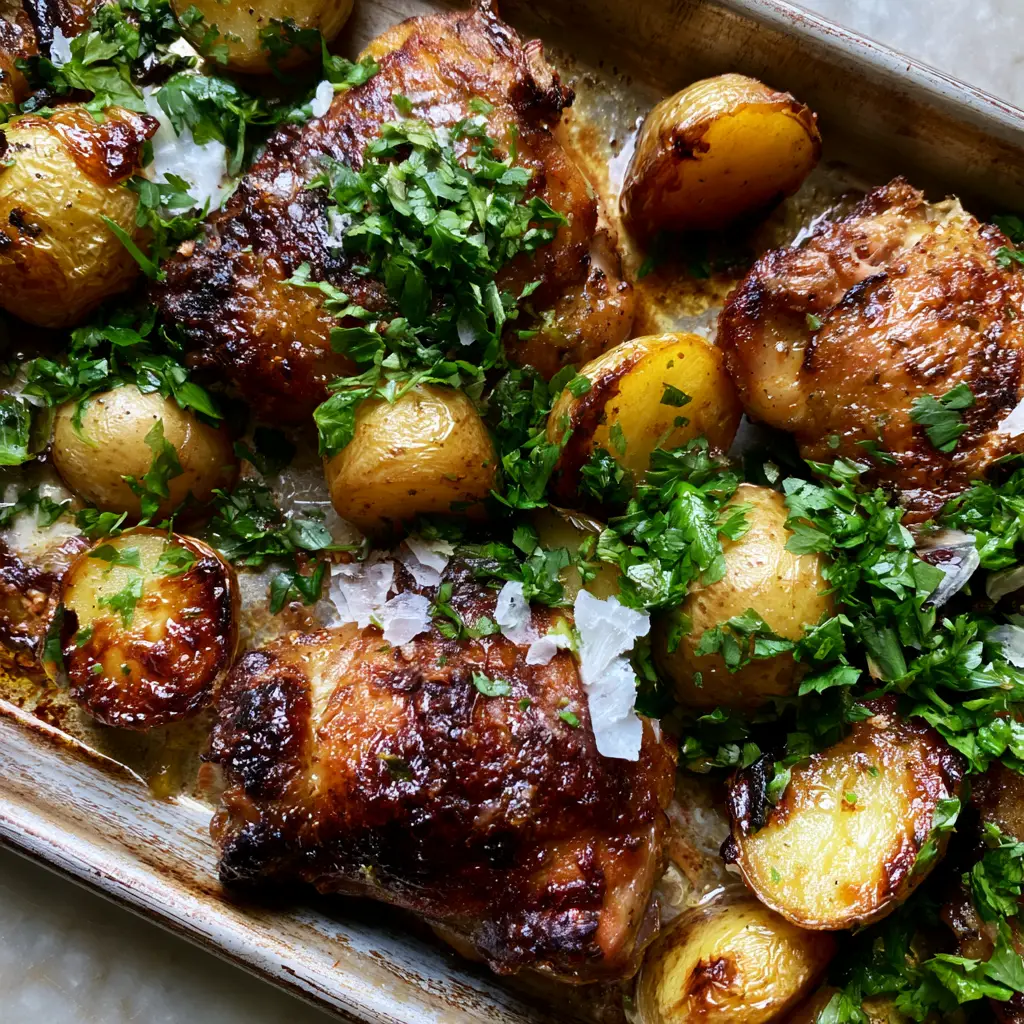
Imagine a seasoned metallic pan emerging from the oven, heavy with the weight of golden-brown chicken thighs and potatoes that have achieved a level of caramelization usually reserved for high-end bistros. The skin is deeply blistered and audibly crispy, while the baby gold potatoes boast deeply browned, buttery undersides that have soaked up every drop of natural roasting juices.
The beauty of this weeknight chicken dinner lies in its simplicity and its visual drama. As you scatter a handful of bright green flat-leaf parsley and a final pinch of sea salt flakes over the pan, the colors pop against the dark, seasoned metal, creating a handheld-smartphone-photo-worthy moment that tastes even better than it looks.
Why This Pan-Roasted Masterpiece Works Every Time
- Unrivaled Texture: By roasting at high temperatures, we achieve a deeply blistered, crackling chicken skin that contrasts perfectly with the tender, juicy meat inside.
- One-Pan Efficiency: This weeknight chicken dinner minimizes cleanup by utilizing a single metallic sheet pan for both the protein and the starch.
- Natural Pan Sauce: The baby gold potatoes roast directly in the natural chicken drippings, creating a rich, savory glaze that no store-bought sauce could ever replicate.
- Visual Brilliance: The contrast between charred edges, golden potatoes, and vibrant green parsley makes this a centerpiece-worthy meal for any night of the week.
The Flavor Foundation: Essential Ingredients for Success
Selecting the right components is the first step in ensuring your weeknight chicken dinner meets the high standards of a professional kitchen. Each element serves a specific structural or flavor-focused purpose.
Bone-In, Skin-On Chicken Thighs (approx. 2 lbs / 900g): The skin is non-negotiable for achieving that blistered texture, while the bone keeps the meat moist during high-heat roasting. Unlike leaner cuts, thighs provide the essential natural drippings that flavor the entire pan.
Baby Gold Potatoes (1.5 lbs / 680g): These waxy, buttery potatoes hold their shape perfectly and develop a “frizzled” edge when placed cut-side down on the hot metal. Their high sugar content allows for rapid caramelization during the roasting process.
High-Smoke Point Oil (3 tbsp / 45ml): We use avocado or light olive oil to coat the ingredients. This acts as the heat conductor necessary to blister the skin without the oil breaking down and smoking out your kitchen.
Sea Salt Flakes (to taste): Beyond basic seasoning, large sea salt flakes provide a structural crunch and a burst of salinity that enhances the “glistening” visual of the final dish. Use a standard kosher salt for the initial seasoning and save the flakes for the finish.
Cracked Black Pepper (1 tsp / 5g): Freshly cracked pepper provides a floral heat and dark “specks” that contrast beautifully against the golden chicken skin, adding to the rustic, charred aesthetic.
Fresh Flat-Leaf Parsley (1/2 cup / 15g): Chopped finely, this provides the necessary “bright green” pop of color and a fresh, herbaceous finish to cut through the richness of the chicken fat.
The Essential Toolkit for Professional Roasting
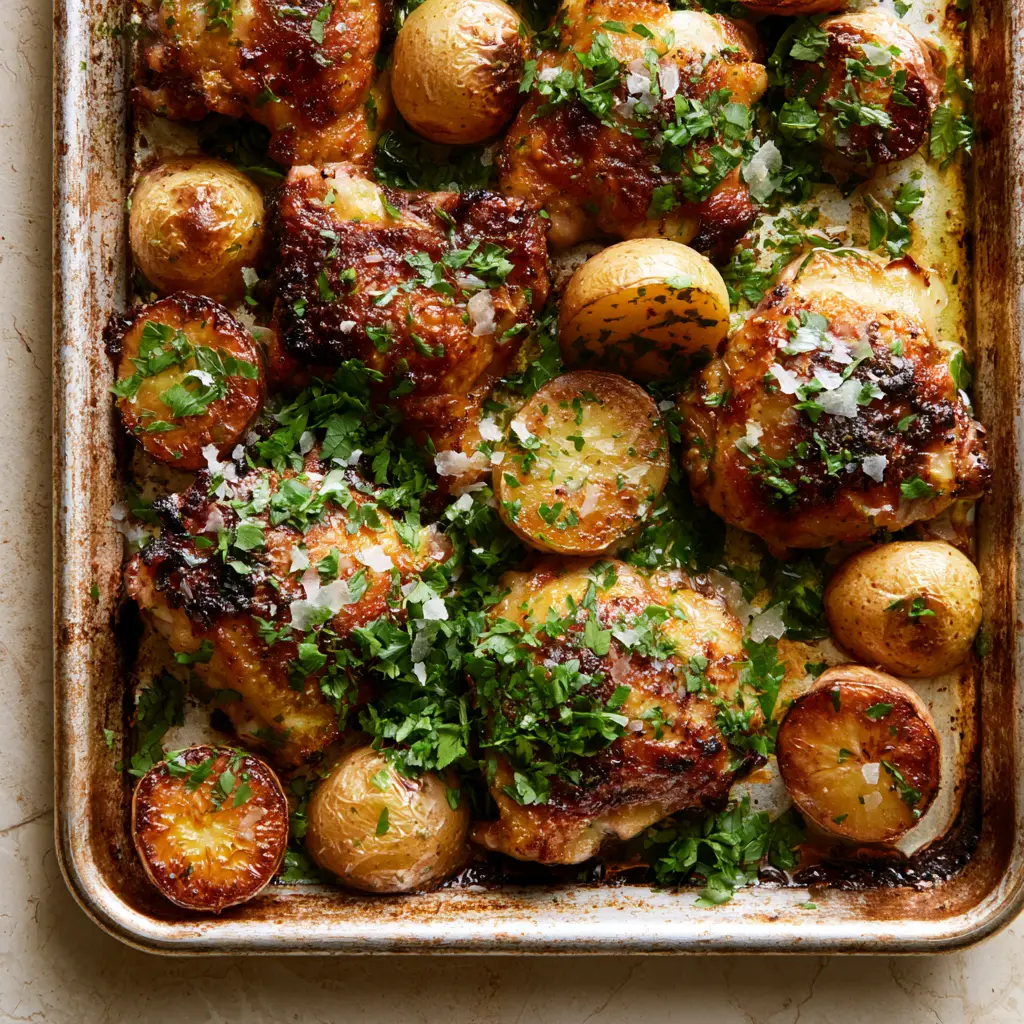
To achieve the visual results of a top-down bird’s-eye view photograph, you need the right heat conductors. Not all pans are created equal when it comes to a weeknight chicken dinner.
A rustic, seasoned metallic sheet pan (often called a half-sheet pan) is your most important tool. The rimmed edges contain the natural juices, while the metallic surface provides the rapid heat transfer required for those caramelized potato undersides.
Avoid using glass or ceramic baking dishes for this specific recipe. These materials are insulators and will result in steamed chicken rather than the blistered, charred skin we are aiming for in this high-RPM culinary project.
Golden Crisp Mastery: Step-by-Step Instructions
The secret to a world-class weeknight chicken dinner isn’t just the heat; it’s the preparation of the surfaces. We want to maximize the “glisten” and the “crunch” simultaneously.
Step 1: The Drying and Seasoning Phase
Pat the chicken thighs dry using paper towels until the skin feels like parchment. This is the most critical step for blistering; moisture is the enemy of a golden-brown crust.
In a large mixing bowl, toss the halved baby gold potatoes with 1.5 tbsp (22ml) of oil and a heavy pinch of salt. Ensure every surface is coated to guarantee even caramelization when they hit the hot pan.
Step 2: Engineering the Pan Layout
Place the chicken thighs on the sheet pan, leaving ample space between each piece. Crowding the pan creates steam, which will ruin the crisp skin we are aiming for.
Nestle the potato halves around the chicken, ensuring they are placed cut-side down. This maximizes contact with the seasoned metallic pan, leading to those signature crispy, caramelized undersides shown in our visual blueprint.
Step 3: The High-Heat Roast
Slide the pan into a preheated 425°F (220°C) oven. You should hear a faint sizzle almost immediately. This is the sound of the Maillard reaction beginning its work on your weeknight chicken dinner.
Roast for 30-35 minutes. Watch for the visual cue: the chicken skin should be deeply blistered and golden-brown, while the natural chicken drippings should be bubbling and clear, not cloudy.
Step 4: The Resting and Finishing Ritual
Once removed from the oven, let the pan rest for 5 minutes. This allows the juices to redistribute and the potatoes to “release” from the pan naturally, keeping that caramelized crust intact.
Finish with a generous scattering of vibrant, bright green chopped parsley and the large flakes of sea salt. The residual heat will slightly soften the parsley, releasing its aroma without losing its color.
Expert Tips for Success
- Room Temperature Matters: Take your chicken out of the fridge 20 minutes before cooking. This ensures the meat cooks evenly while the skin blisters at the correct rate.
- The Potato Flip: If you prefer an extra-crunchy potato, do not stir them during the roasting process. Leaving them cut-side down for the entire duration ensures a deep, dark brown crust.
- The Glisten Factor: If the pan looks a little dry, drizzle a tablespoon of the natural chicken drippings back over the thighs just before serving to recreate that “subtle glisten” from the prompt.
- Oven Calibration: Use an oven thermometer to ensure you are actually hitting 425°F (220°C). Lower temperatures will result in rubbery skin.
Preserving the Crunch: Storage and Reheating
If you have leftovers from your weeknight chicken dinner, store them in an airtight container in the refrigerator for up to 3 days. However, reheating is where most home cooks fail to maintain the texture.
To keep the skin blistered and the potatoes crispy, avoid the microwave. Instead, place the leftovers back on a sheet pan and heat in a 375°F (190°C) oven for 10-12 minutes. This restores the “charred edges” and ensures the fats remain rendered and delicious.
What to Serve With Your Sheet Pan Roast
This dish is a complete meal on its own, but it also pairs beautifully with other vibrant textures. For a lighter touch, serve it alongside a crisp oriental chicken salad or a refreshing Greek-inspired side.
If you are looking for more adventurous flavors, you might explore the bold spices of Chicken Muamba or the onion-heavy goodness of Chicken Yassa. For those nights when you aren’t in the mood for poultry, a classic robust steak dinner offers a similar level of pan-seared satisfaction.
Frequently Asked Questions
Chicken breasts lean out and dry quickly at high temperatures. If you use them, reduce the cook time, but note you will get less flavorful ‘glistening’ drippings for the potatoes.
For the best caramelization and charred edges, do not use parchment. Roasting directly on a seasoned metallic pan provides superior heat transfer.
The key is moisture removal. Pat the chicken skin with paper towels until completely dry and use a high-heat roasting temperature of at least 425°F (220°C).
While not required for cooking, sea salt flakes add a specific visual texture and crunch that elevates the dish from a standard meal to a bistro-quality experience.
You must place the potatoes cut-side down directly onto the metallic pan and avoid moving them during the roasting process to allow the sugars to caramelize.
The Ultimate Weeknight Chicken Dinner Recipe

Weeknight Chicken Dinner with Blistered Thighs and Golden Potatoes
Ingredients
Equipment
Method
- Preheat your oven to 425°F (220°C). Pat the chicken thighs extremely dry with paper towels to ensure a blistered skin.
- Toss halved gold potatoes in a bowl with half the oil and salt until well coated.
- Place chicken on the metallic sheet pan. Nestle potatoes cut-side down around the chicken. Drizzle remaining oil over chicken skin.
- Roast for 30-35 minutes until the skin is golden-brown and blistered with charred edges, and potatoes are caramelized.
- Remove from oven and let rest for 5 minutes. Scatter fresh parsley and sea salt flakes over the glistening juices.
Notes
Ensure chicken is room temperature before roasting for even cooking.
Bring the Bistro to Your Kitchen
This weeknight chicken dinner is proof that you don’t need a complex ingredient list to create a high-impact, visually stunning meal. By focusing on the science of high-heat roasting and the simple beauty of fresh garnishes, you can turn a regular Tuesday night into a culinary event.
We hope you enjoy the crackle of the skin and the buttery depth of those roasted potatoes. If you made this dish, we would love to hear your results! Please leave a comment below and let us know how your blistering turned out.
Don’t forget to follow us on Pinterest for more one-pan inspiration and visual recipe guides. Share your own bird’s-eye view photos with our community!