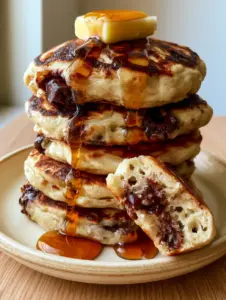
There is a specific kind of magic that happens when a pale golden batter hits a hot skillet and begins to transform into what is affectionately known as the “pancake with a thousand holes.” These African crepes, traditionally called Baghrir in Morocco and across North Africa, are a marvel of culinary engineering and visual artistry. Unlike any other pancake in the world, these are never flipped, allowing a porous, lacy surface to develop that acts as a sponge for rich, golden-amber glazes.
Imagine a stack of three tender, semolina-based crepes resting on a minimalist matte white ceramic plate, their surfaces riddled with thousands of tiny, perfectly formed circular “eyes.” As you pour a thick, glossy honey-butter mixture over the top, the liquid fills each tiny crater, cascading down the sides in ribbons of pure amber. This visual experience, complete with a melting pat of salted butter and a vibrant sprig of fresh mint, is exactly what we are recreating today.
Whether you are a seasoned explorer of authentic African dishes or a breakfast enthusiast looking for something more unique than classic French crepes, Baghrir offers a texture and flavor profile that is truly unmatched. The combination of nutty semolina and the airy lightness of a yeast-leavened batter creates a breakfast experience that is both substantial and ethereal.
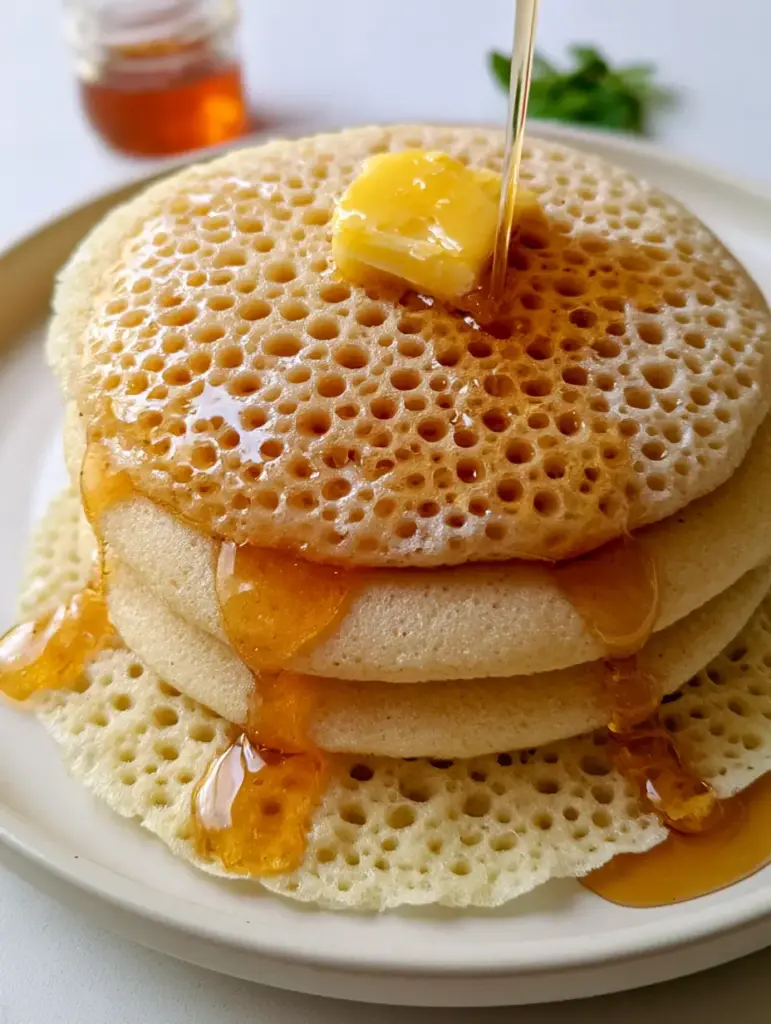
Why These Porous Semolina Delights Are a Breakfast Essential
- The Sponge Effect: The signature “thousand holes” aren’t just for show; they are designed to soak up every drop of honey and butter, ensuring flavor in every single bite.
- Uniquely Tender Texture: Because these African crepes are cooked only on one side, the bottom becomes a crisp, pale golden crust while the top remains soft, airy, and moist.
- Naturally Nutty Flavor: Using fine semolina as the primary grain provides a deeper, more complex flavor than standard all-purpose flour.
- Lacy Visual Appeal: The soft, lacy edges and the honeycomb structure make this one of the most photogenic dishes in the global culinary repertoire.
The Anatomy of a Perfect Baghrir: Essential Ingredients
Achieving that iconic thousand-hole surface requires a specific chemical reaction between leavening agents and the gluten structure of semolina. To create African crepes that look exactly like our visual blueprint, you will need both active dry yeast for flavor and depth, and baking powder for that immediate, explosive bubble formation.
Fine Semolina (1.5 cups / 250g): This is the heart of the recipe, providing the characteristic pale golden color and the structural integrity needed to hold the bubbles without collapsing. Ensure you use “fine” or “extra fine” semolina, not the coarse variety used for couscous.
All-Purpose Flour (0.5 cup / 65g): A small amount of white flour helps soften the texture of the African crepes, making them less grainy and more tender to the tooth. It acts as the glue that keeps the lacy edges from becoming too brittle.
Warm Water (2 cups / 480ml): The water must be precisely between 105°F and 110°F (40°C-43°C) to activate the yeast without killing it. Water is the medium that allows the batter to remain thin enough for bubbles to reach the surface.
Active Dry Yeast (1 tsp / 4g): Yeast is responsible for the slow-release carbon dioxide that creates the foundation of the porous surface. It also imparts a subtle, fermented tang that balances the sweetness of the honey glaze.
Baking Powder (2 tsp / 10g): This is the secret to the “thousand holes.” While yeast starts the process, baking powder provides the quick lift needed as soon as the batter hits the hot pan.
Granulated Sugar (1 tbsp / 12g): A touch of sugar feeds the yeast and encourages just a hint of pale golden browning on the bottom of the crepe. It doesn’t make the batter sweet, but it rounds out the savory notes of the grain.
Fine Sea Salt (0.5 tsp / 3g): Salt is essential for tightening the gluten structure and highlighting the nutty notes of the semolina. Without it, the crepes will taste flat and one-dimensional.
Salted Butter (4 tbsp / 56g): Used both for the glaze and as a fresh pat on top. The salt in the butter cuts through the intense sweetness of the honey, creating a balanced, decadent finish.
Amber Honey (0.25 cup / 60ml): A thick, high-quality honey provides the glossy, translucent amber look we see in our visual prompt. It should be viscous enough to cascade slowly down the stack.
Fresh Mint Sprig: A final garnish that adds a pop of cool color and a refreshing aroma that cuts through the richness of the honey-butter glaze.
Tools for Achieving the Perfect Pore Structure
To ensure your African crepes have the correct “eyes,” the batter must be perfectly emulsified and the pan must have a reliable non-stick surface. Unlike making zucchini fritters or zucchini casseroles, which require texture, this batter needs to be completely smooth.
A high-speed blender is actually the preferred tool for Moroccan Baghrir. Blending the ingredients for exactly 60 seconds ensures the yeast and baking powder are perfectly distributed and the semolina starts to hydrate immediately. If you don’t have a blender, a vigorous whisking by hand followed by a strain through a fine-mesh sieve is necessary.
A non-stick skillet or crepe pan is non-negotiable. Since we are not flipping these crepes, they must be able to slide right off the pan once the top is set. A 6-inch to 8-inch pan is the ideal size for a manageable stack of three.
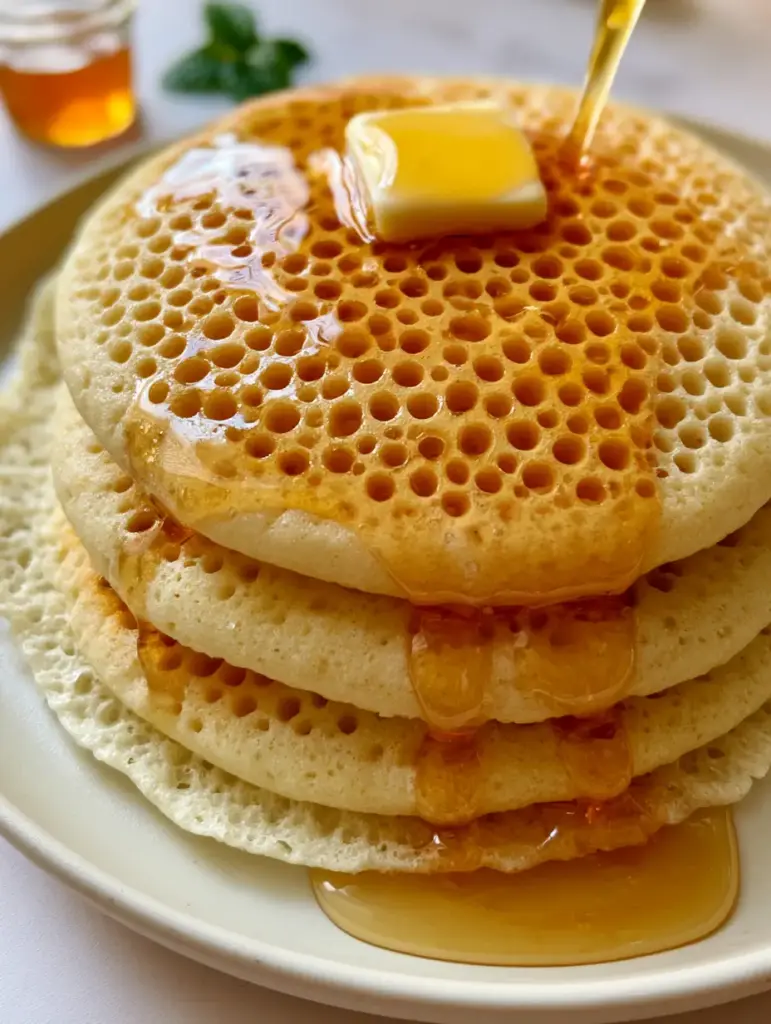
Mastering the Thousand-Hole Technique: A Step-by-Step Guide
Phase 1: The High-Speed Emulsification
In your blender jar, combine the warm water, yeast, sugar, salt, fine semolina, and all-purpose flour. Blend on high for 45 to 60 seconds until the mixture is completely smooth and starts to show tiny bubbles on the surface. Add the baking powder last and pulse just 3-4 times to incorporate; you want the chemical reaction to stay active for the pan, not disappear in the blender.
Phase 2: The Essential Activation Rest
Pour the batter into a large bowl and cover it with a warm, damp cloth. Let the batter rest for 15 to 20 minutes in a draft-free area. During this time, the yeast will begin to produce gas, and the semolina will fully hydrate. You will know it is ready when the surface looks slightly foamy and “alive.” Do not over-rest, or the bubbles will become too large and the crepes will become rubbery.
Phase 3: The No-Flip Pouring Method
Heat your non-stick skillet over medium-low heat. Do not grease the pan with oil or butter, as this can prevent the holes from forming properly. Using a ladle, pour about 1/3 cup (80ml) of batter into the center of the cool-to-warm pan. Do not swirl the pan like you would for French crepes. Let the batter spread naturally into a circle.
Phase 4: Watching the “Eyes” Form
Within seconds, you will see hundreds of tiny bubbles rising to the surface and popping, leaving behind the signature holes. The crepe is done when the surface no longer looks wet or shiny and the edges appear lacy and dry. This usually takes 2 to 3 minutes. Remember: Never flip the Baghrir. The top cooks through purely from the steam and heat rising from the bottom.
Phase 5: Crafting the Amber Honey-Butter Glaze
While the crepes are cooking, melt your salted butter and amber honey together in a small saucepan over low heat. Stir constantly until they form a single, glossy, translucent liquid. Keep this warm so it remains thin enough to pour but thick enough to cling to the porous surface of your African crepes.
Expert Tips for Flawless African Crepes
- Control the Pan Temp: If the pan is too hot, the bottom will burn before the holes form. If it’s too cold, the bubbles won’t pop. The sweet spot is a steady medium-low heat.
- The Cooling Trick: Between each crepe, many traditional cooks wipe the bottom of the pan with a damp cloth to slightly lower the temperature. This ensures the next pour doesn’t “set” too quickly.
- Do Not Stack Warm: If you stack the crepes while they are steaming hot without the glaze, they may stick together. Place them on a clean kitchen towel in a single layer until you are ready to assemble the final stack.
- Thinness Matters: If your batter thickens too much during the rest, whisk in 1 tablespoon of warm water at a time until it reaches the consistency of heavy cream.
Ideal Pairings and Service Suggestions
While these African crepes are a powerhouse on their own, they often feature as part of a larger spread. For a balanced breakfast, consider serving them alongside a savory protein like chicken salad for a brunch vibe, or even next to a hearty potato and green bean skillet.
In North Africa, these are almost always accompanied by mint tea. The astringency of the tea perfectly cleanses the palate after the rich, honey-drenched semolina. If you are serving these as a dessert after a dinner of sausage and peppers, a small glass of orange blossom water-scented milk is a traditional and refreshing choice.
Storage, Reheating, and Make-Ahead Advice
African crepes are best enjoyed fresh and warm from the pan, but they can be stored. Place parchment paper between each crepe and store them in an airtight bag in the refrigerator for up to 2 days. To reheat, briefly steam them or pop them in a low oven covered with foil to maintain their moisture.
You can also freeze Baghrir for up to a month. Thaw them at room temperature and reheat gently. Never microwave them on high power, as the semolina can become tough and chewy very quickly.
Frequently Asked Questions
You can make it about 30 minutes in advance. If left longer, the yeast will over-ferment and the crepes will taste overly sour and lose their ability to form tiny holes.
No, cornmeal is too gritty and lacks the gluten structure of semolina. If you cannot find fine semolina, you can pulse regular semolina in a spice grinder, but cornmeal is not a suitable substitute.
Correct! Baghrir are only cooked on one side. This preserves the hole structure on top and keeps the crepe incredibly tender. Flipping them would crush the ‘eyes’ and ruin the texture.
Ensure you are using a high-quality non-stick pan. If it still sticks, your heat might be too high, causing the bottom to caramelize too much. Baghrir should have a pale golden bottom, not a dark brown one.
This usually happens if the batter is too thick or the pan is too cold. The baking powder needs immediate heat to release gas, and the batter must be thin enough for those bubbles to pop on the surface.
The Ultimate Moroccan Baghrir Recipe
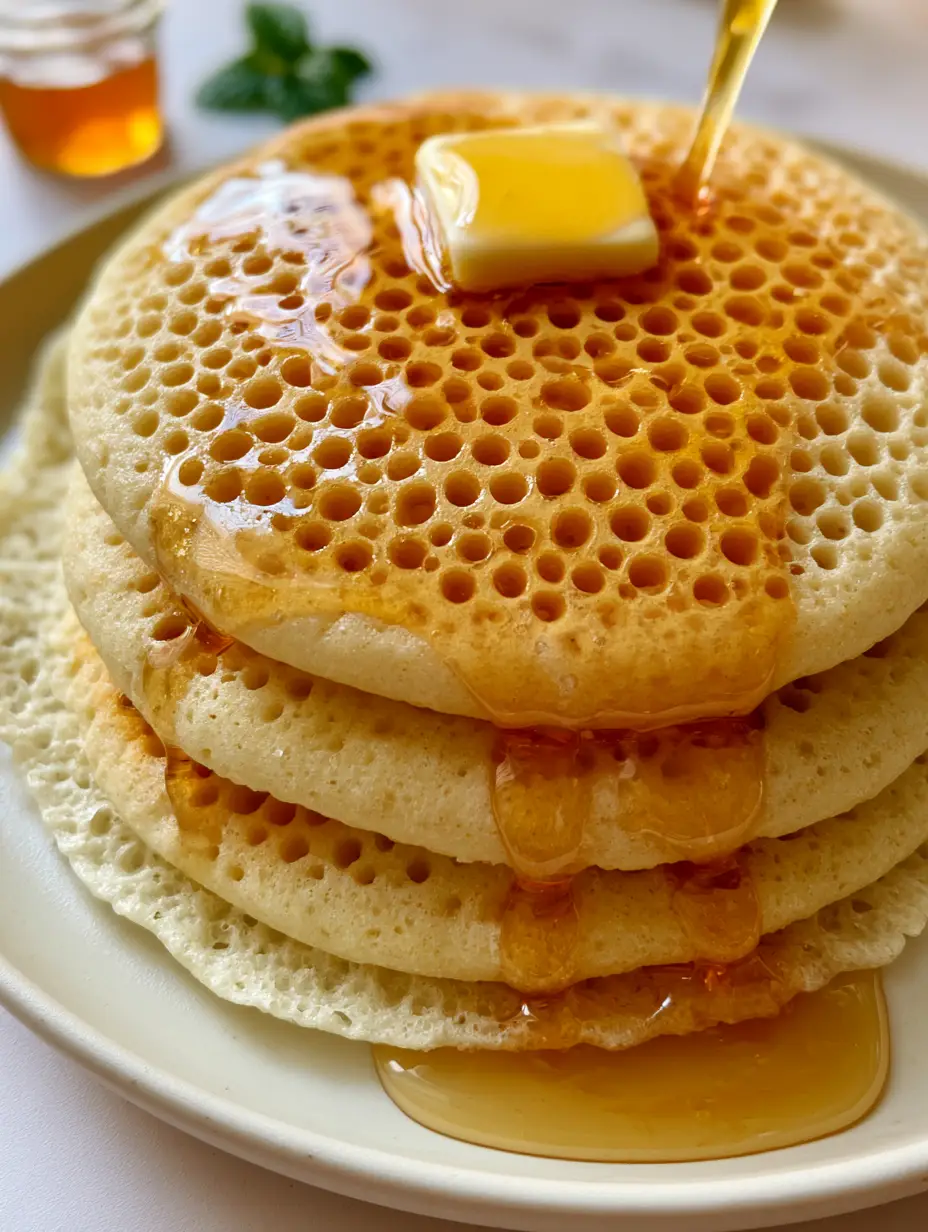
African Crepes: The Ultimate Guide to Moroccan Baghrir Thousand-Hole Pancakes
Ingredients
Equipment
Method
- Combine water, yeast, sugar, salt, semolina, and flour in a blender. Process for 60 seconds until smooth.
- Add baking powder and pulse 3 times. Pour into a bowl, cover, and rest for 20 minutes until foamy.
- Heat a non-stick pan over medium-low. Pour 1/3 cup batter into the center. Do not swirl.
- Cook for 2-3 minutes until thousands of holes form and the top is dry. Do not flip.
- Melt butter and honey together. Stack three crepes on a plate and pour the warm glaze over the top.
- Top with a pat of butter and a sprig of fresh mint.
Notes
Ensure the water is warm but not hot to keep the yeast active.

Closing & Call to Action
Mastering the art of African crepes brings a unique piece of Moroccan culture directly to your kitchen table. The hypnotic process of watching the “thousand holes” appear is just as satisfying as the first honey-soaked bite. These crepes are a testament to how simple ingredients like semolina and yeast can create something visually stunning and deeply comforting.
If you enjoyed this deep dive into the world of Baghrir, please leave a comment below and let us know how your holes turned out! Don’t forget to share your breakfast creations on Pinterest and tag us. Happy cooking!