When it comes to authentic African dishes, few recipes carry the cultural weight and culinary prestige of Jollof rice. This legendary one-pot masterpiece is more than just a meal; it is a celebration of history, spice, and the perfect texture that defines West African hospitality. Our version focuses on achieving that elusive smoky depth and the “bottom pot” crunch that enthusiasts crave.
The secret to mastering authentic African dishes lies in the balance of the pepper base and the precise steaming of the grain. In this guide, we replicate the vibrant, deep orange-red hue and glossy finish seen in traditional hearth-cooked versions. Every grain of rice remains distinct, never mushy, and is infused with a concentrated tomato and bell pepper reduction that will transport your kitchen to the streets of Lagos or Accra.
Whether you are hosting a festive gathering or looking to expand your international repertoire, this Jollof rice stands as a pillar of African gastronomy. We have paired it with caramelized fried plantains and fresh aromatics to ensure every bite hits the perfect note of sweet, savory, and spicy. Let’s dive into the forensic details of crafting this iconic dish.
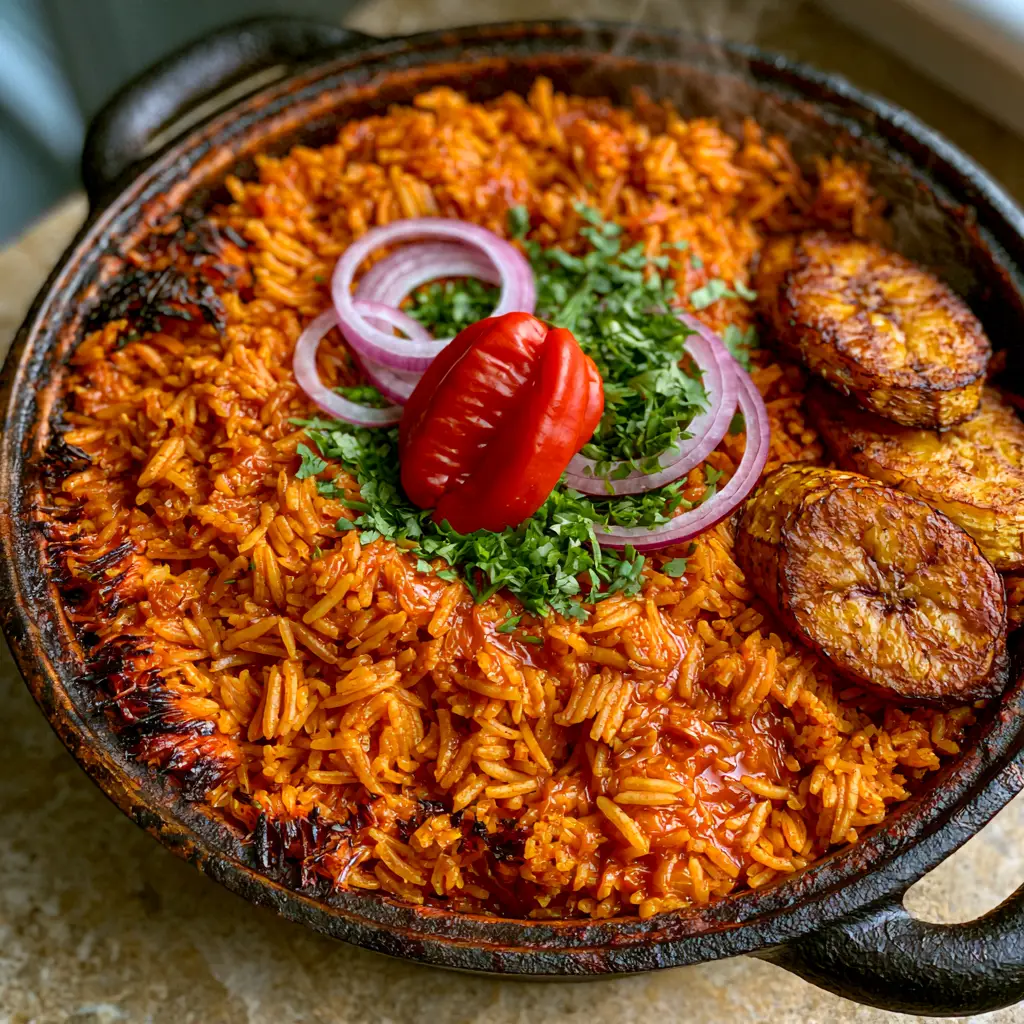
The Visual and Flavor Profile of This Iconic Masterpiece
- Distinct Grain Separation: We use long-grain parboiled rice to ensure each grain stays firm, glossy, and perfectly coated in sauce.
- The Legendary “Party Rice” Smoke: Achieved through a controlled charring process at the base of a heavy cast iron pot.
- Concentrated Umami Base: A slow-reduced blend of red bell peppers, scotch bonnets, and plum tomatoes for a deep orange-red vibrance.
- Textural Contrasts: Topped with crisp raw red onion rings and served with soft, caramelized golden-brown plantain slices.
- Controlled Heat: Featuring a whole scotch bonnet pepper for aromatic infusion without overwhelming the palate.
Foundational Ingredients for the Perfect Red Base
Long-Grain Parboiled Rice: 3 cups (600g). Unlike jasmine or basmati, parboiled rice has a tougher starch structure that survives the long steaming process without turning into a mushy porridge.
Red Bell Peppers: 3 large (approx. 450g). These provide the bulk of the color and a natural sweetness that balances the acidity of the tomatoes.
Roma (Plum) Tomatoes: 5 medium (approx. 500g). Chosen for their low water content, these help create a concentrated, thick “stew” base that coats the rice effectively.
Red Onions: 2 large (approx. 300g). One onion is blended into the sauce for depth, while the other is sliced into thin rings for a fresh, sharp garnish.
Scotch Bonnet Pepper: 1-2 peppers. We use one whole pepper for visual flair and mild infusion, plus one blended into the sauce for that signature West African heat.
Tomato Paste: 6 oz (170g). This is the “glue” of the recipe, providing the intense orange-red color and a rich, savory backbone.
Vegetable Oil: 1/2 cup (120ml). Essential for “frying” the tomato paste to remove its raw, metallic edge and for achieving the charred rice bits at the bottom.
Chicken or Vegetable Stock: 3 cups (720ml). A high-quality stock is one of those “invisible” ingredients that adds layers of flavor that water simply cannot match.
Fresh Cilantro: 1/4 cup (15g), finely chopped. While many use parsley, the citrusy brightness of cilantro perfectly cuts through the richness of the fried plantains.
Yellow Plantains: 2 large, ripe. These must be “spotted” yellow and black to ensure they caramelize into golden-brown perfection when fried.
Invisible Seasoning Essentials: 2 bay leaves, 1 tsp (5g) dried thyme, 1 tbsp (15g) curry powder, and 2 bouillon cubes. These provide the aromatic “soul” of the dish.
Essential Equipment for a Smoky Result
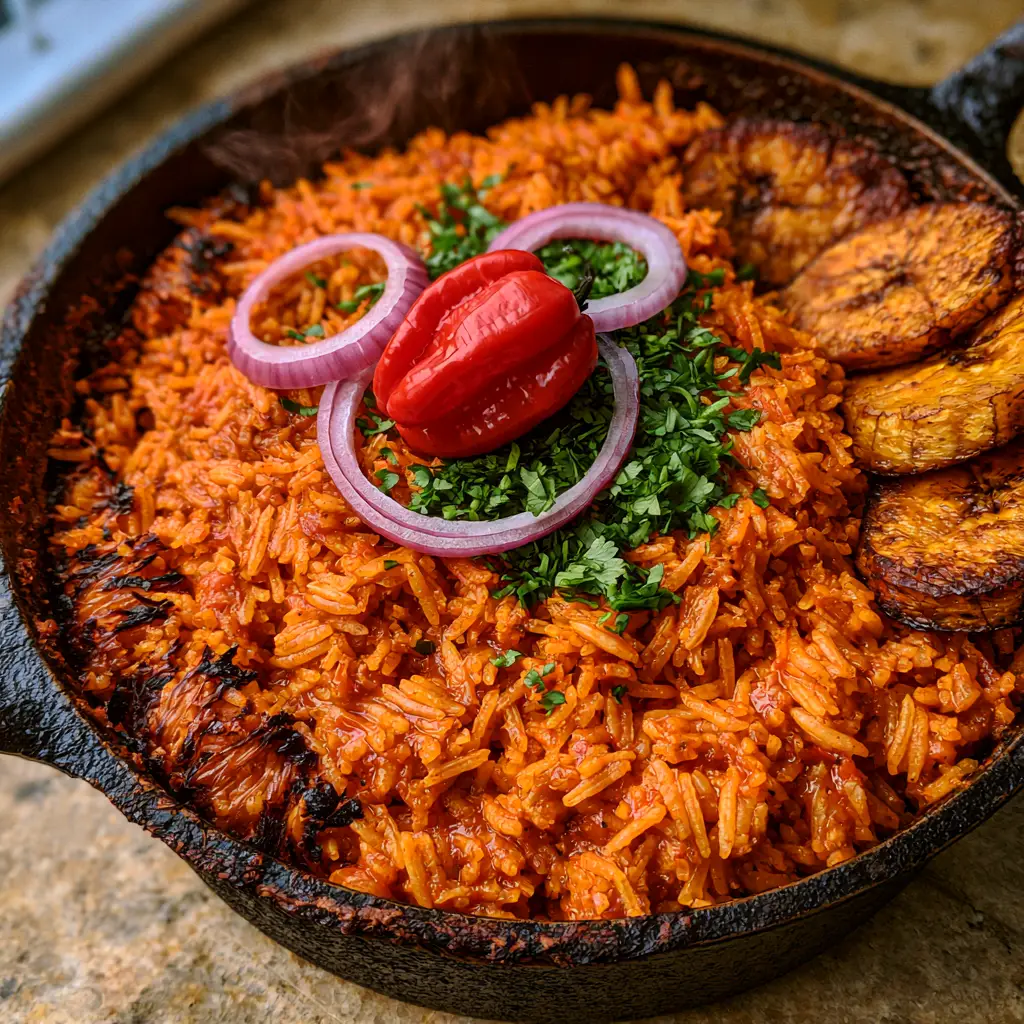
To achieve the specific look of the charred rice bits and the even steaming described in our visual prompt, a heavy-bottomed cast iron pot or Dutch oven is mandatory. The thick walls retain heat evenly, allowing the rice to steam in its own moisture while the bottom layer undergoes Maillard-style caramelization.
You will also need a high-powered blender to achieve a perfectly smooth pepper base and a tight-fitting lid. If your lid isn’t perfectly snug, use a sheet of aluminum foil or parchment paper under the lid to trap every bit of steam—this is the secret to tender, distinct grains.
Step-by-Step Instructions for Authentic African Jollof
1. Crafting the Concentrated Pepper Base
Begin by blending the red bell peppers, plum tomatoes, one red onion, and one scotch bonnet pepper until completely smooth. Pour this mixture into a saucepan and simmer over medium-high heat for 15-20 minutes until the water evaporates and you are left with a thick, concentrated paste. This step is non-negotiable for achieving a glossy, rich sauce that doesn’t make the rice soggy.
2. Frying the Aromatics and Tomato Paste
In your cast iron pot, heat the vegetable oil over medium heat. Add the tomato paste and fry it for 5-8 minutes, stirring constantly. You are looking for the paste to turn a shade darker and for the oil to turn a bright orange. This process removes the acidity and develops the deep color seen in authentic African dishes. Stir in the dried thyme, curry powder, and bay leaves until fragrant.
3. Parboiling and Rinsing the Rice
While the sauce fries, rinse your long-grain parboiled rice under cold water until the water runs clear. This removes excess surface starch, which is the primary cause of sticky rice. For the best results, parboil the rice in boiling water for 5 minutes, then drain. This ensures the rice is halfway cooked before it even hits the tomato base.
4. The Infusion and Steaming Process
Add the concentrated pepper base to the fried tomato paste and stir well. Pour in the stock and bouillon cubes, bringing the mixture to a gentle simmer. Add the parboiled rice, ensuring the liquid just barely covers the grains. Place the whole scotch bonnet pepper on top. Cover with foil and a tight lid, then turn the heat to the lowest possible setting. Let it steam undisturbed for 25-30 minutes.
5. Achieving the “Bottom Pot” Char
Once the rice is tender, turn the heat up to medium-high for exactly 3-5 minutes. You should hear a distinct crackling sound. This is the rice at the bottom caramelizing and charring against the cast iron. This “burnt” layer provides the smoky aroma that defines world-class Jollof. Turn off the heat and let the pot sit, covered, for another 10 minutes to allow the steam to redistribute.
6. Preparing the Golden Plantains and Garnish
While the rice rests, peel and slice the ripe plantains into diagonal rounds. Fry them in a separate pan with a little oil until they are golden-brown and caramelized on both sides. Finely slice the remaining red onion into thin rings and chop the fresh cilantro.
Expert Tips for Culinary Success
- The Foil Trick: Always use a layer of foil or parchment paper under your pot lid. Jollof rice is steamed, not boiled, and trapping that moisture is vital for grain separation.
- Don’t Over-Stir: Once the rice is in the pot, avoid stirring. Stirring releases starch and breaks the grains, leading to a mushy texture.
- The “Sizzle” Cue: When creating the charred bits, listen for the sizzle. If you smell burning rather than a nutty aroma, remove it from the heat immediately.
- Oil is Flavor: Don’t be afraid of the oil quantity; it’s what gives the rice its glossy, professional finish and prevents the grains from clumping.
Storage, Reheating, and Make-Ahead Advice
Authentic African dishes like Jollof rice often taste better the next day as the spices continue to meld. Store leftovers in an airtight container in the refrigerator for up to 4 days. When reheating, add a tablespoon of water or stock and microwave covered, or steam on the stovetop to restore the moisture.
This dish also freezes beautifully. Place the cooled rice in freezer-safe bags for up to 3 months. Thaw overnight in the fridge before reheating. Note that the fried plantains are best enjoyed fresh, as they can become tough when frozen and reheated.
Complementary Pairings and Side Dishes
To complete your feast of authentic African dishes, consider serving this Jollof rice alongside other regional staples. A side of West African Fufu and Egusi Soup creates a multi-textured experience that is common at West African celebrations.
For a lighter accompaniment, a crisp Cucumber Salad provides a refreshing cool-down to the scotch bonnet’s heat. If you’re looking for more grain-based inspiration, our Rice Pilaf Recipe offers a different perspective on aromatic rice techniques. This Jollof also fits perfectly into Adult Lunchable Ideas for a high-protein, flavorful meal prep option.
Frequently Asked Questions
Yes! While parsley is traditional in some regions, cilantro offers a bright, citrusy contrast that pairs exceptionally well with the sweetness of fried plantains and the heat of the peppers.
The smoky ‘party rice’ flavor is achieved by allowing the bottom layer of rice to slightly burn or ‘char’ against the base of a cast iron pot. This caramelization releases a smoky aroma that permeates the rest of the dish.
The spice level is controlled by the number of scotch bonnet peppers used. For an authentic flavor with moderate heat, we blend one pepper into the sauce and leave one whole in the pot for aroma without releasing all the seeds.
Long-grain parboiled rice is the gold standard for authentic West African Jollof. It has a lower starch content than jasmine or basmati, which prevents the grains from sticking together and allows them to remain distinct and firm even after long steaming.
Mushy rice is usually caused by using too much liquid or not rinsing the starch off the rice. Ensure you parboil the rice first and use a 1:1 ratio of liquid to rice, allowing the steam to do the majority of the cooking.
The Ultimate Authentic Jollof Rice Recipe
Authentic African Dishes: Smoky West African Jollof Rice with Golden Plantains
Ingredients
Equipment
Method
- Blend bell peppers, tomatoes, one onion, and one scotch bonnet. Simmer in a pan for 15-20 minutes until the liquid reduces by half.
- In a cast iron pot, fry the tomato paste in oil for 8 minutes until it turns dark orange and loses its metallic smell.
- Combine reduced pepper mix with the paste. Add parboiled rice and stock. Top with a whole scotch bonnet. Cover with foil and a lid.
- Steam on low for 30 minutes. Turn heat to medium-high for 3-5 minutes at the end to create charred bits at the bottom.
- Sauté plantain slices in oil until golden-brown and caramelized. Garnish rice with red onion rings and fresh cilantro.
Notes
Parboiling the rice beforehand prevents it from becoming mushy in the sauce.
Closing & Call to Action
Mastering Jollof rice is a rite of passage for any home cook interested in authentic African dishes. The combination of smoky charred rice, sweet caramelized plantains, and the punch of scotch bonnet creates a sensory experience unlike any other. If you enjoyed this deep dive into West African flavors, please leave a comment below with your favorite Jollof memory!
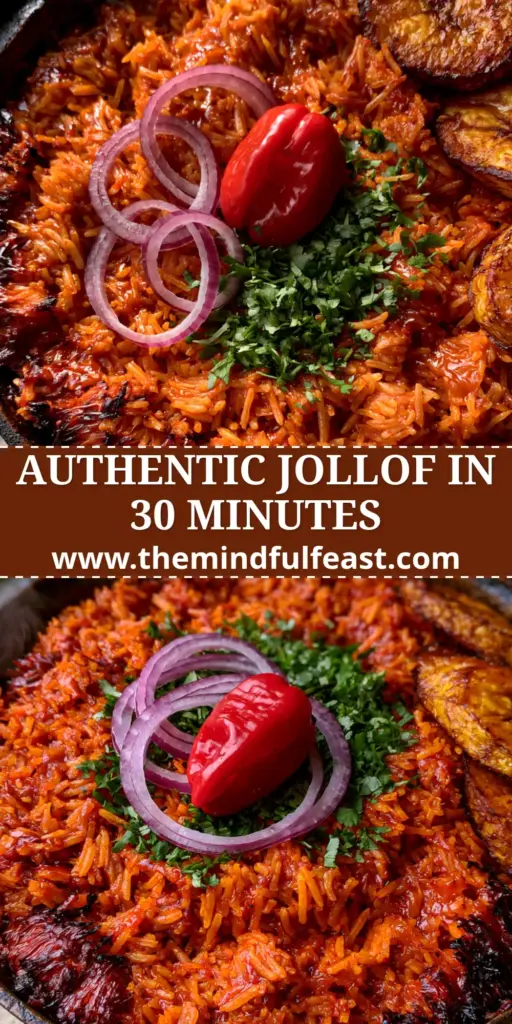
Don’t forget to sign up for our newsletter for more forensic recipe breakdowns and follow us on Pinterest to save this recipe for your next dinner party. Sharing is caring—pin the image below to your favorite “Global Flavors” board!