There is something inherently romantic about the way French food treats the humble onion. When you walk into a traditional Parisian bistro, the air is thick with the scent of butter, thyme, and the sweet, sulfuric aroma of onions slowly surrendering to the heat. This recipe for French Onion Garlic Chicken captures that exact essence, bringing the sophisticated depth of a classic soup into a hearty, protein-packed skillet meal.
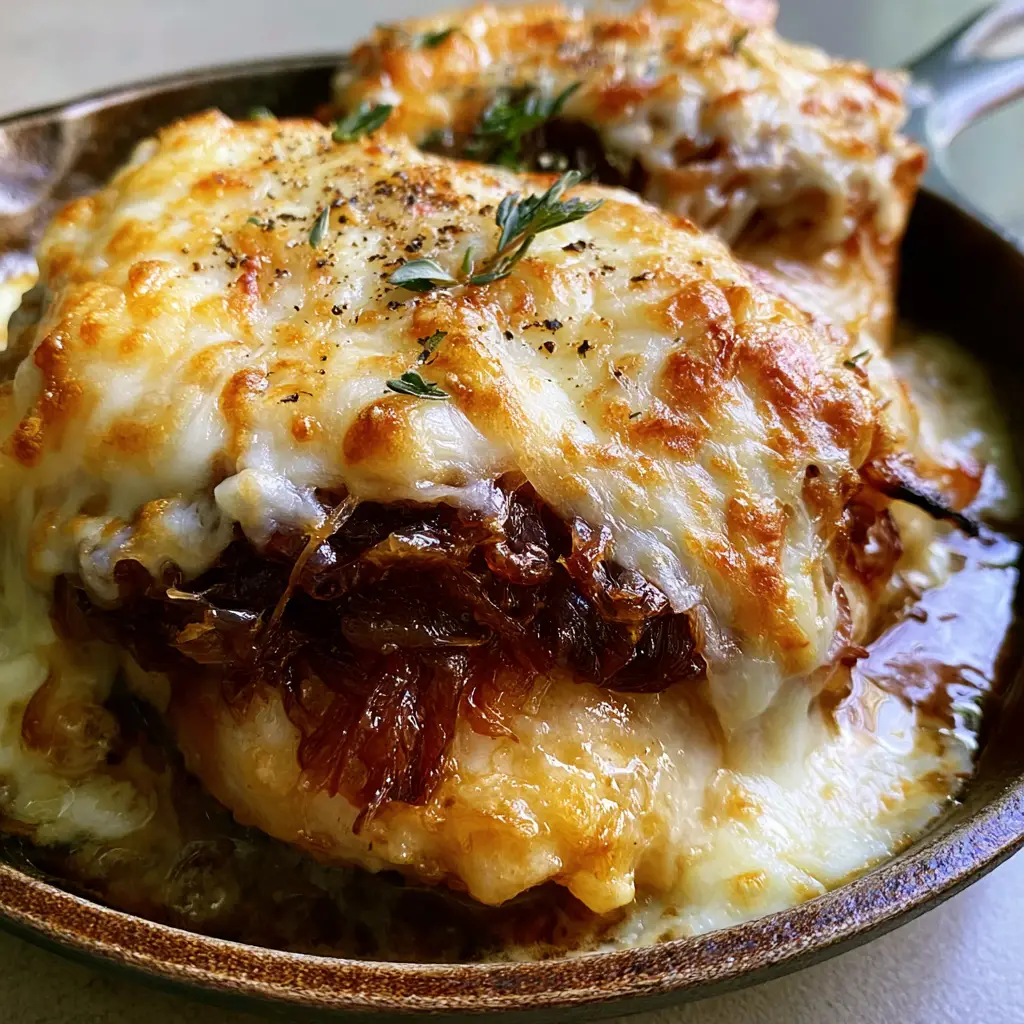
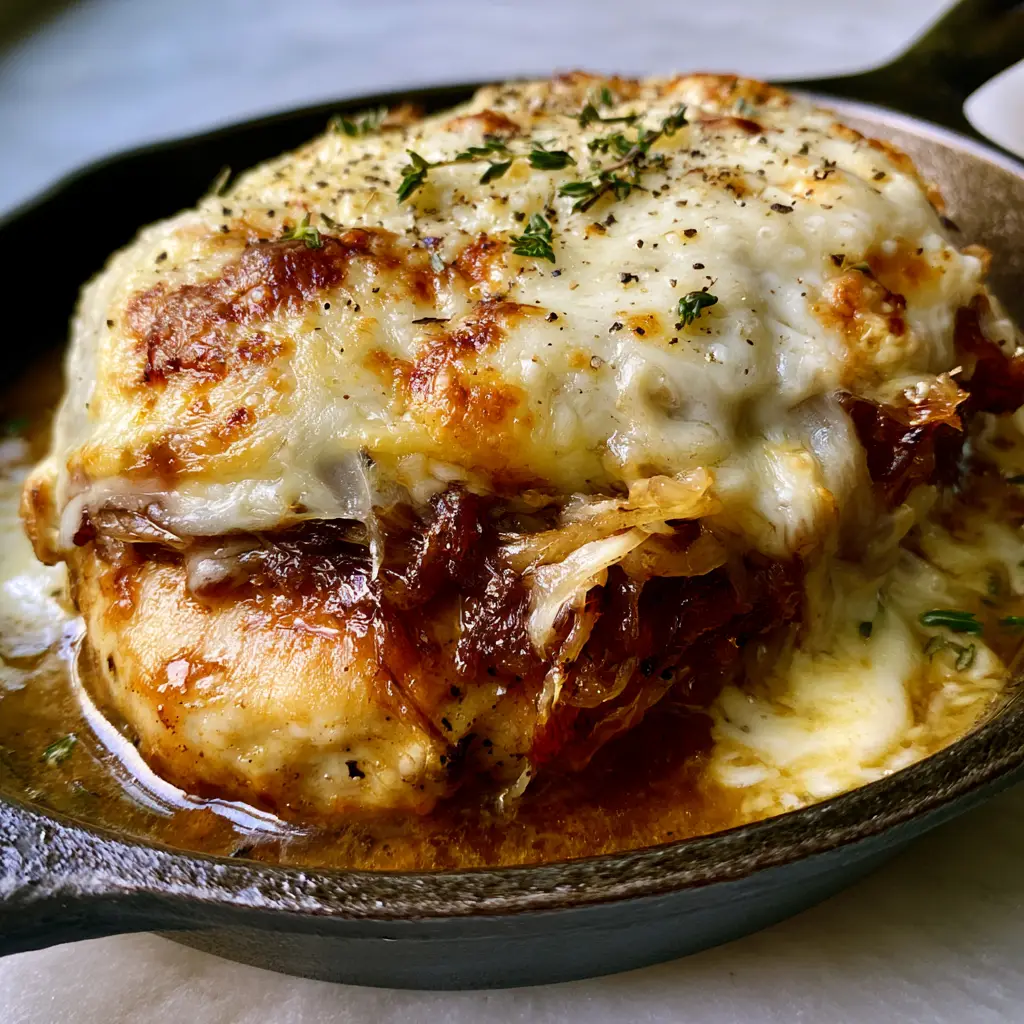
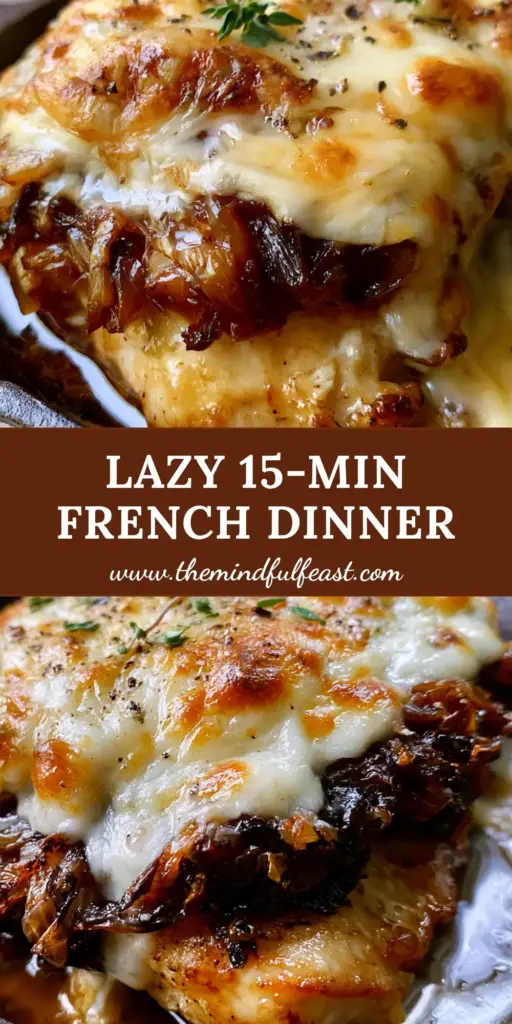
The visual appeal of this dish is undeniable, characterized by a rustic cast iron skillet that holds a symphony of textures. Imagine a golden-seared chicken breast, its surface crisp and seasoned, hidden beneath a thick, jammy layer of mahogany-brown caramelized onions. The crowning glory is a bubbling blanket of melted Gruyère cheese, dotted with those coveted toasted spots that only a high-heat broiler can achieve.
To tie everything together, a glossy, garlic-infused cream sauce pools at the edges, inviting you to dip a piece of crusty baguette into its rich depths. Sprinkled with fresh thyme leaves and a aggressive crack of black pepper, this dish is a masterclass in French food techniques applied to modern home cooking. It is designed to be a centerpiece that tastes even better than it looks.
Why This Skillet Chicken Defined by French Food Traditions Works
- Layered Umami Depth: By combining the sweetness of slowly caramelized onions with the savory richness of Gruyère, we achieve a complex flavor profile that hits every taste bud.
- Texture Contrast: You get the crunch of the golden chicken sear, the silkiness of the garlic cream, and the gooey stretch of the melted cheese in every single bite.
- Cast Iron Magic: Using a rustic skillet ensures even heat distribution, which is scientifically crucial for achieving that perfect mahogany-brown finish on the onions.
- Glossy Sauce Finish: The addition of a garlic-infused cream creates a restaurant-quality emulsion that elevates this from a simple chicken dish to a gourmet experience.
- Sensory Delight: From the sound of the chicken hitting the hot oil to the smell of fresh thyme, this recipe engages all your senses before the first forkful.
Essential Components for Your Bistro-Style Pantry
To achieve the visual and culinary results seen in high-end French food, every ingredient must serve a specific purpose. We aren’t just looking for flavor; we are looking for the specific chemical reactions that create color and texture.
Chicken Breasts: Use 1.5 lbs (680g) of boneless, skinless breasts, pounded to an even thickness. This ensures the chicken remains juicy while allowing for a high-heat sear that develops the golden-brown crust required by our visual blueprint.
Yellow Onions: You will need 3 large yellow onions (approx. 900g), thinly sliced against the grain. These provide the “jammy” texture and the deep mahogany fibers that characterize the best French food onion preparations.
Gruyère Cheese: 1.5 cups (150g) of freshly shredded Gruyère is non-negotiable for its nutty profile and superior melting capabilities. It creates the bubbling, toasted blanket that defines the visual aesthetic of the dish.
Heavy Cream: 0.5 cup (120ml) of heavy cream acts as the base for our glossy garlic sauce. It emulsifies with the chicken drippings to create a rich, ivory-colored pool at the bottom of the skillet.
Fresh Thyme: 4-5 sprigs of fresh thyme (approx. 5g) provide the essential earthy notes and the bright green visual contrast against the dark onions. Do not substitute with dried thyme if you want that fresh, bistro-style finish.
Garlic Cloves: 4 cloves (20g) of fresh garlic, finely minced, infuse the cream sauce with a pungent depth that cuts through the richness of the cheese. Garlic is a foundational element in this specific style of French food.
Unsalted Butter & Olive Oil: Use 2 tbsp (30g) of each. The oil prevents the butter from burning during the high-heat chicken sear, while the butter provides the fat necessary for the onions to reach a jammy consistency.
Beef Stock: 0.5 cup (120ml) of high-quality beef stock is used to deglaze the pan. This picks up the fond (brown bits) and contributes to the mahogany color of the onion fibers.
The Essential Skillet Toolkit
To replicate the handheld smartphone photo aesthetic of a professional chef, your equipment matters as much as your ingredients. The star of the show is a 12-inch (30cm) rustic cast iron skillet, which provides the thermal mass needed for searing and caramelizing.
You will also need a sharp chef’s knife for achieving those perfectly uniform onion slices, which ensures they cook at the same rate. A sturdy spatula is required to scrape the bottom of the pan during deglazing, capturing every bit of flavor. Finally, a meat thermometer is recommended to ensure the chicken reaches exactly 165°F (74°C) without drying out.
Mastering the Mahogany Melt: Step-by-Step Instructions
Step 1: The Foundation of Flavor—Caramelizing the Onions
In your cast iron skillet, melt 1 tbsp (15g) of butter over medium-low heat. Add the sliced onions with a pinch of salt and a teaspoon of sugar to accelerate the Maillard reaction. This is the most time-consuming part of French food, but it is the most critical for the visual result.
Cook the onions, stirring occasionally, for 25-30 minutes. You are looking for a transformation from translucent white to a deep, jammy, mahogany-brown. If the onions start to stick too much, add a tablespoon of water to scrape up the sugars. Once they are soft and dark, remove them from the skillet and set them aside.
Step 2: The Golden Sear
Wipe the skillet clean and increase the heat to medium-high. Add the olive oil and the remaining butter. Season your chicken breasts generously with salt and cracked black pepper.
Place the chicken in the skillet; you should hear a loud sizzle immediately. Sear for 5-6 minutes per side until a deep golden-brown crust forms. This crust is the “bridge” between the juicy meat and the rich toppings. Once seared, remove the chicken and set it on a plate.
Step 3: Building the Glossy Garlic Cream Sauce
Lower the heat to medium and add the minced garlic to the skillet drippings. Sauté for just 60 seconds until fragrant—do not let it burn. Pour in the beef stock to deglaze, using your spatula to lift the browned bits from the bottom of the skillet.
Whisk in the heavy cream and let the liquid simmer for 2-3 minutes. The sauce will begin to thicken and take on a glossy sheen. This sauce will eventually pool around the chicken, creating the luxurious finish seen in professional French food photography.
Step 4: The Final Assembly and Broil
Nestle the seared chicken breasts back into the garlic cream sauce. Top each breast with a generous mound of the jammy caramelized onions. Finally, cover the onions with a thick layer of shredded Gruyère cheese.
Place the entire skillet under a preheated broiler for 2-3 minutes. Watch closely! You want the cheese to be bubbling and covered in golden-brown toasted spots. The onions should peek through the cheese, showing off their dark mahogany fibers.
Step 5: The Finishing Touches
Remove the skillet from the oven. Immediately sprinkle with the fresh thyme sprigs and an extra crack of black pepper. The residual heat from the skillet will release the oils in the thyme, scenting the entire room with the aroma of high-end French food.
Expert Tips for French Food Success
- Patience with Onions: Do not rush the caramelization. High heat will burn the sugars rather than developing the deep, jammy flavor required for this recipe.
- Deglaze Thoroughly: The “fond” or brown bits at the bottom of the pan after searing the chicken are flavor gold. Use the stock to incorporate them into your sauce.
- Cheese Quality: Always grate your Gruyère from a block. Pre-shredded cheeses are coated in potato starch to prevent clumping, which interferes with that perfect, glossy melt.
- Skillet Temperature: Ensure your cast iron is hot before adding the chicken to get that specific golden-seared look described in the visual blueprint.
Storage, Reheating, and Freezing
This dish is best served fresh to maintain the texture of the bubbling cheese. However, you can store leftovers in an airtight container in the refrigerator for up to 3 days. When reheating, do so in the oven at 350°F (175°C) to help the cheese regain some of its melt without making the chicken rubbery.
We do not recommend freezing this dish, as the cream sauce may break (separate) upon thawing, losing that glossy, emulsified texture that is so vital to the presentation.
What to Serve With This Elegant Skillet Meal
To balance the richness of the Gruyère and cream, consider serving this chicken alongside some lighter vegetable sides. Our sheet pan asparagus provides a crisp-tender contrast that cuts through the garlic sauce perfectly.
If you want to lean into the rustic comfort of the dish, these slow cooker baby potatoes are excellent for soaking up every drop of the glossy garlic cream. For a unique French-inspired spread, a slice of zucchini onion pie makes for a wonderful companion during a long weekend brunch.
Finally, if you have leftovers of the caramelized onions, they work beautifully in a ground beef Philly cheesesteak bowl for a fusion twist the next day.
Frequently Asked Questions
Yes, you can, but you may need to adjust your heat. Cast iron is preferred because it holds heat better, especially when moving from the stovetop to the broiler.
True caramelization for that jammy, mahogany-brown texture takes at least 25 to 30 minutes on medium-low heat. Rushing this process with high heat will lead to burnt, bitter onions.
Absolutely. The cream sauce creates the glossy pool at the edges of the chicken, which provides a moisture barrier and a rich mouthfeel that completes the French bistro aesthetic.
Gruyère is the gold standard because of its nutty flavor and excellent melting properties, but you can substitute with Emmental or a high-quality Swiss cheese if needed.
The Ultimate French Onion Garlic Chicken Recipe
French Food Excellence: Rustic Skillet French Onion Garlic Chicken
Ingredients
Equipment
Method
- Melt butter in skillet over medium-low heat. Add onions and cook for 25-30 minutes until mahogany-brown and jammy.
- Remove onions. Add oil and remaining butter. Sear chicken for 5-6 minutes per side until a golden-brown crust forms.
- Sauté garlic for 60 seconds. Add beef stock to deglaze, then whisk in heavy cream until glossy and thickened.
- Return chicken to pan. Top with onions and Gruyère. Broil for 2-3 minutes until cheese is bubbling and toasted.
Notes
Tip 2. Don't rush the onions; the deep color is where the flavor lives.
Closing & Call to Action
Mastering French food doesn’t require a culinary degree; it requires respect for ingredients and a bit of patience. This French Onion Garlic Chicken is a testament to how simple components like onions and cheese can be transformed into something truly extraordinary. The combination of the mahogany jammy onions and the bubbling Gruyère is a flavor profile you will find yourself returning to again and again.
If you enjoyed this recipe, please leave a comment below and let us know how your caramelization turned out! Don’t forget to sign up for our newsletter for more bistro-style recipes delivered straight to your inbox. You can also save this recipe to your favorite boards on Pinterest so you never lose track of this skillet masterpiece.