There is a profound magic found in traditional Indian foods that transcends simple nourishment. It is an alchemy of heat, fat, and aromatics that transforms humble ingredients into something truly spectacular.
Today, we are deconstructing the crown jewel of the Indian kitchen: the thick, velvety onion-tomato master gravy. This isn’t just a sauce; it is a vibrant orange-red masterpiece designed to cling to every piece of charred garlic naan it meets.
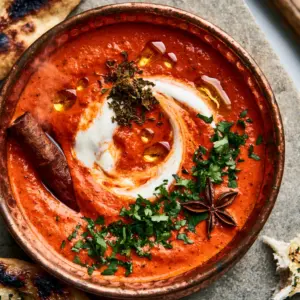
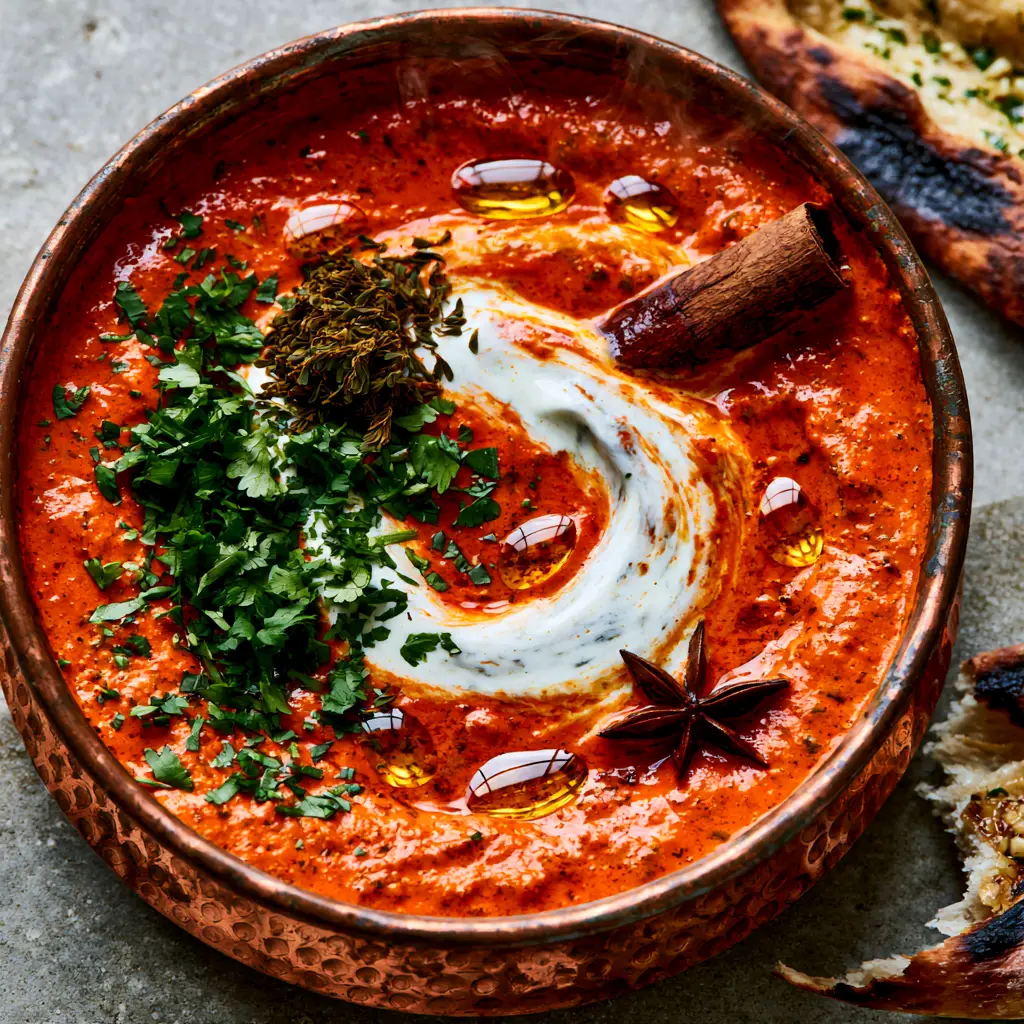
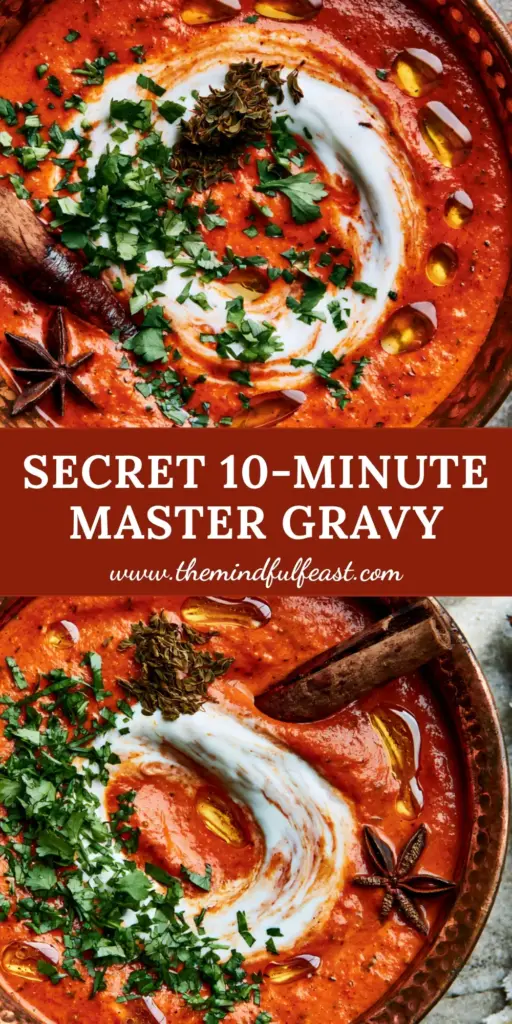
Imagine a rustic hammered copper bowl, the metal cool to the touch, cradling a simmering, aromatic curry. As you look closer, a heavy swirl of white cream marbles through the center, while golden oil droplets catch the light like liquid amber.
Why This Master Gravy is the Heart of Traditional Indian Foods
- Unrivaled Texture: A thick, velvety consistency achieved through slow-reduction and emulsified aromatics.
- Complex Aromatics: The inclusion of whole star anise and cinnamon sticks provides a woody, floral depth that ground spices cannot replicate.
- Visually Stunning: The contrast of bright green chopped cilantro against the vibrant orange-red base creates a professional, restaurant-quality presentation.
- The Umami Bridge: Dried fenugreek leaves (Kasuri Methi) add that specific “buttery” scent found in the world’s best curry houses.
The Foundation: Essential Ingredients for Deep Flavor
To recreate traditional Indian foods with forensic accuracy, we must look beyond the surface. We need ingredients that provide both structural integrity and the specific visual cues of a high-end macro shot.
Yellow Onions (300g): When finely diced and sautéed, these provide the bulk and natural sweetness of the gravy base. They must be cooked until deep golden brown to ensure the gravy lacks any raw astringency.
Roma Tomatoes (400g): These provide the vibrant red hue and necessary acidity. Their natural pectins help thicken the sauce into that signature velvety finish.
Heavy Cream (60ml): This is the secret to the iconic “marbled” look. Beyond aesthetics, it tempers the spice and adds a luxurious mouthfeel.
Whole Spices: You will need 1 whole cinnamon stick (approx. 3 inches) and 1 whole star anise. These are not just for flavor; they are visible textures that signify authenticity in our copper bowl.
Dried Fenugreek Leaves (1 tbsp / 2g): Also known as Kasuri Methi, these must be crushed between your palms to release their oils. They provide the “restaurant smell” that defines these dishes.
Garlic and Ginger Paste (2 tbsp / 30g): The aromatic backbone of the dish. This paste should be fresh for the most pungent and bright flavor profile.
Equipment for a Professional Curry Texture
Achieving the visual perfection of traditional Indian foods requires the right tools. A heavy-bottomed pot or “Kadai” is essential for even heat distribution during the long simmering process.
You will also need a high-speed immersion blender or countertop blender. This is how we achieve the “thick, velvety” texture described in our blueprint, turning chunky aromatics into a smooth, orange-red canvas.
Step-by-Step: Mastering the Vibrant Orange-Red Gravy
1. Searing the Aromatics and Whole Spices
Heat 3 tbsp (45ml) of neutral oil in your pot over medium-high heat. Add the whole cinnamon stick and star anise, watching for small bubbles to form around them.
Wait for the scent of wood and licorice to hit your nose. This “blooming” process ensures the fat is flavored before any other ingredients are added.
2. The Art of the Onion Reduction
Add your finely diced onions. Sauté them for 12-15 minutes, stirring frequently. You are looking for a deep “bhuna” color—a rich, dark tan that signals caramelization.
If you have ever made a savory onion-based pie, you know that patience here is key. The onions should be soft and almost jam-like in consistency.
3. Building the Tomato Base
Stir in the ginger-garlic paste and cook for 2 minutes until the raw smell dissipates. Add your pureed tomatoes, turmeric, and kashmiri chili powder.
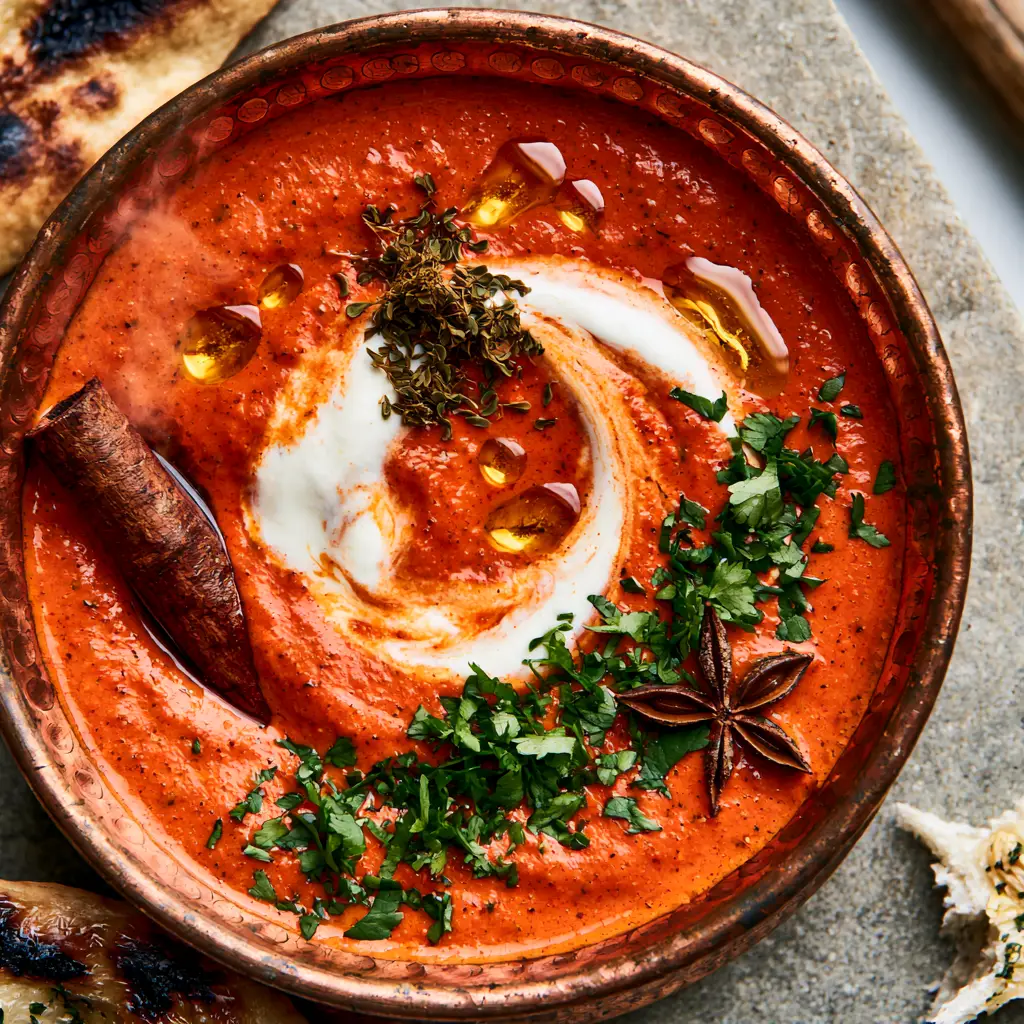
Cover and simmer. You will know it is ready when “golden oil droplets” begin to separate from the sauce and rise to the surface—a classic technique known as “oil separation.”
4. Emulsifying for a Velvety Finish
Once the base is cooked, remove the whole cinnamon stick and star anise temporarily. Use your blender to process the sauce until it is completely smooth and vibrant orange-red.
Return the whole spices to the pot. This ensures the flavor continues to infuse without the gritty texture of un-blended spices.
5. The Finishing Touches and Garnishing
Turn the heat to low. Gently pour 1/4 cup (60ml) of heavy cream into the center, using a spoon to create a marble-like swirl. Do not over-mix; we want the visual contrast.
Sprinkle the crushed dried fenugreek leaves and finely chopped fresh cilantro across the surface. The steam rising from the bowl should carry the scent of herbs and toasted spices.
Expert Tips for Success
- Control the Color: Use Kashmiri Chili Powder instead of standard cayenne. It provides the “vibrant orange-red” color without excessive heat.
- The Fat Ratio: Don’t skimp on the oil. Those “golden oil droplets” are essential for carrying the fat-soluble flavors of the spices.
- Naan Prep: To achieve “torn, charred garlic naan,” brush your naan with garlic butter and place it directly over a gas flame for 5-10 seconds per side.
- Sieve for Silk: For a truly “velvety” result, pass your blended gravy through a fine-mesh sieve before the final simmer.
Storage, Reheating, and Make-Ahead Advice
Traditional Indian foods often taste better the next day. The spices have more time to penetrate the liquid, much like how a rich beef gravy improves after a night in the fridge.
Store in an airtight container for up to 4 days. When reheating, add a splash of water (15ml) to loosen the consistency, as the starches will thicken significantly when cold.
You can freeze this master gravy (without the cream) for up to 3 months. Simply thaw and add the fresh cream and garnishes just before serving to maintain that macro-shot visual appeal.
What to Pair with Your Master Gravy
While charred garlic naan is the traditional choice, this gravy is versatile. For a lighter side, consider a crisp vinegar-based cucumber salad to cut through the richness of the cream.
If you are looking for more vegetable-forward sides, this sauce pairs beautifully with roasted sheet pan vegetables or even a side of tender baby potatoes.
Frequently Asked Questions About Indian Gravies
Yes, you can substitute the heavy cream with full-fat coconut milk or a cashew cream to maintain the velvety texture while keeping it plant-based.
No, these are whole aromatics used to infuse the sauce. They are often left in the bowl for visual appeal but should be moved to the side while eating.
To mimic a tandoor oven, char the naan briefly over an open gas flame or use a very hot cast-iron skillet until dark spots appear.
The color comes from a combination of deeply caramelized onions, pureed Roma tomatoes, and Kashmiri chili powder, which provides a rich red hue with mild heat.
Golden oil droplets, or ‘oil separation,’ is a sign that the tomato-onion base has been cooked sufficiently and the raw moisture has evaporated, intensifying the flavor.
The Ultimate Indian Master Gravy Recipe
Traditional Indian Foods: The Ultimate Restaurant-Style Master Gravy
Ingredients
Equipment
Method
- Heat oil and add whole cinnamon and star anise until fragrant bubbles form.
- Cook onions for 15 minutes until deep golden brown and jammy.
- Add tomatoes and spices, simmer until oil separates, then blend until velvety smooth.
- Swirl in heavy cream, sprinkle fenugreek and cilantro, and serve with charred garlic naan.
Notes
Always crush the dried fenugreek between your palms before adding.
Bring the Flavors of India Into Your Kitchen
Mastering traditional Indian foods is about respecting the process and the ingredients. From the charred edges of the garlic naan to the delicate steam rising from the copper bowl, every detail matters.
If you enjoyed this deep dive into culinary aromatics, please consider sharing this post or following us on Pinterest for more visually-driven recipe guides.
What is your favorite spice to work with? Let us know in the comments below!