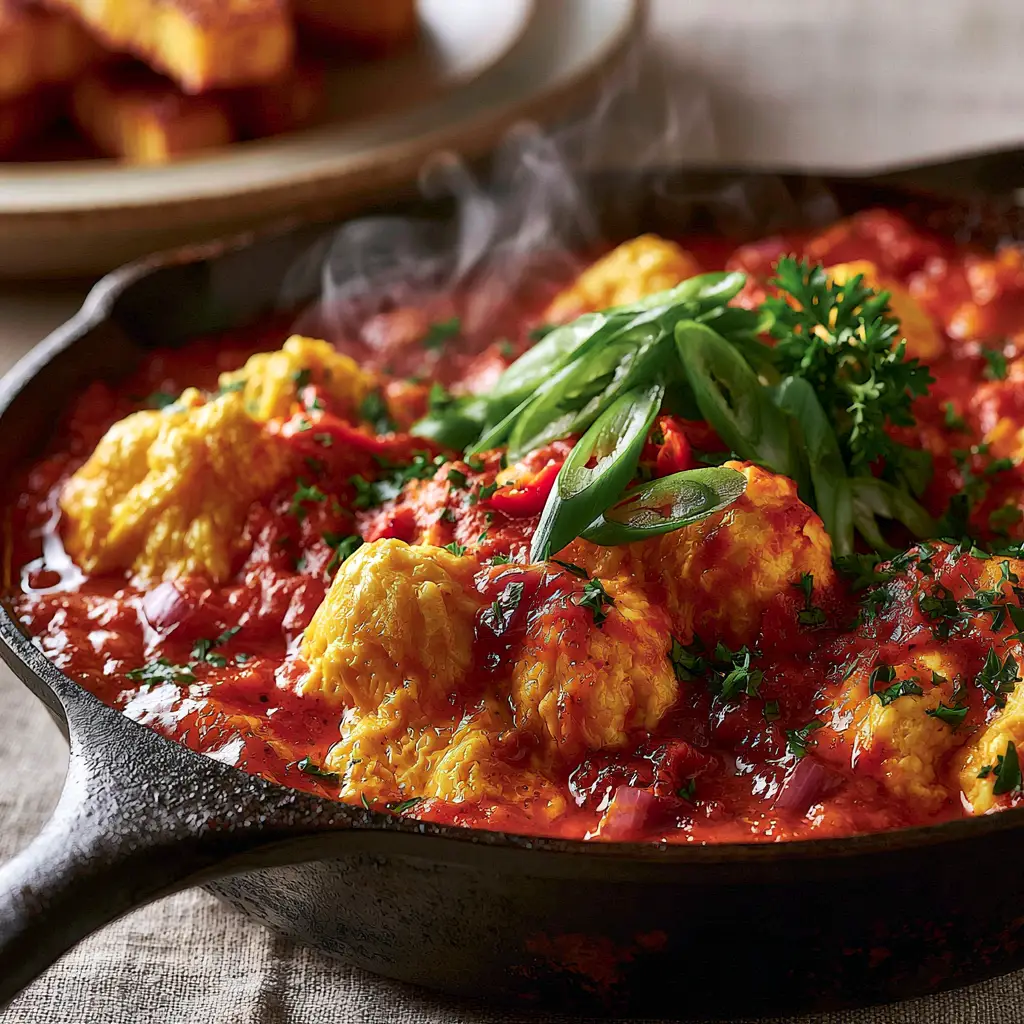
There is a specific kind of magic that happens in a seasoned black cast iron skillet on a sunny morning. The aroma of sizzling onions and the sharp, bright scent of scotch bonnet peppers fill the air, signaling the arrival of the ultimate comfort food. Nigerian Egg Stew is not just a breakfast staple; it is a masterclass in texture and concentrated flavor, featuring massive, irregular golden-yellow bumpy egg clusters set within a heavy, vibrant crimson sauce.
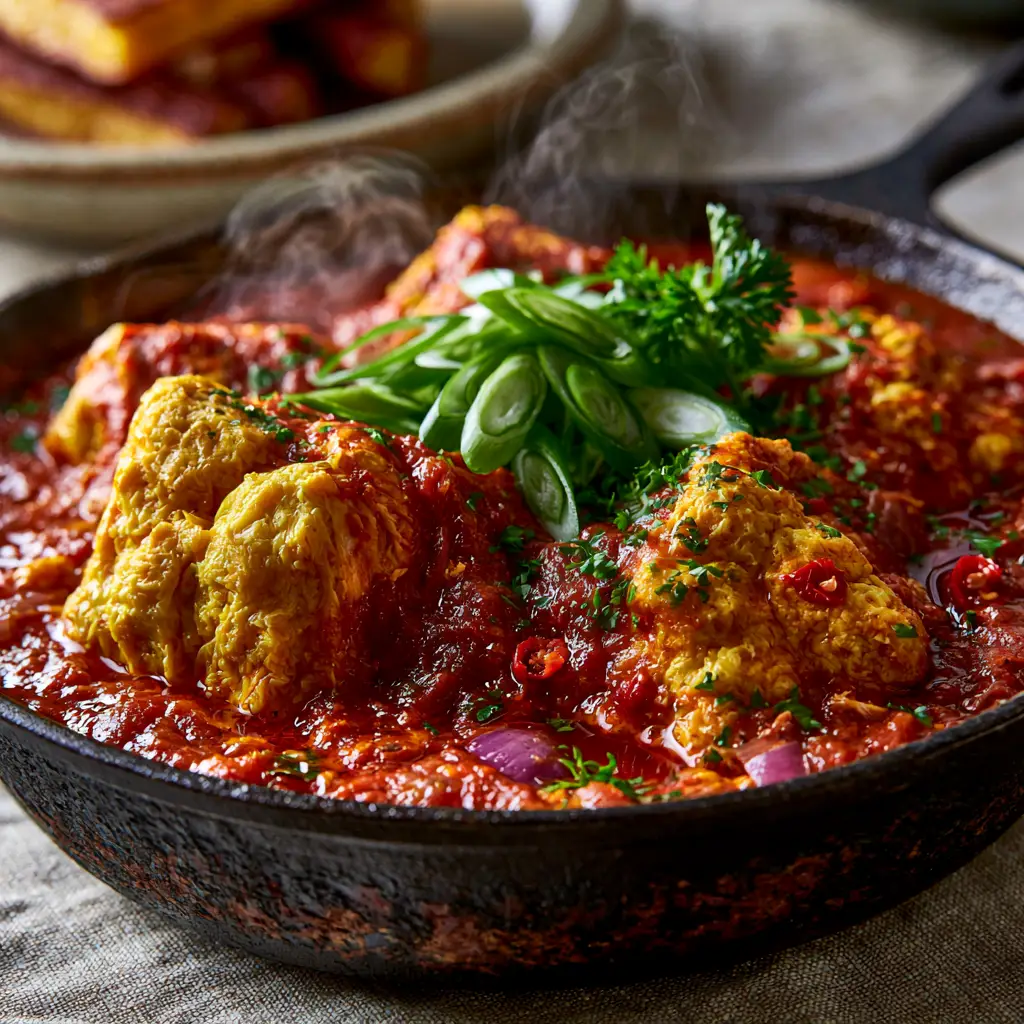
When you look at a plate of authentic Nigerian Egg Stew, you shouldn’t see a watery scramble. Instead, you should see a glossy vegetable oil sheen reflecting the morning light, highlighting the high-contrast shadows of deeply textured eggs. This recipe focuses on achieving that specific visual and culinary profile—thick, set egg pieces that hold their own against a robust tomato and red bell pepper reduction. Whether you are looking for new Nigerian lunch recipes or a hearty weekend brunch, this dish delivers every time.
In this guide, we will dive deep into the culinary forensics of the perfect stew. We will explore how to properly reduce your pepper base to avoid any watery runoff and the exact technique required to get those signature “bumpy” egg heights. Served alongside thick, golden-edged fried yam fries, this is a meal that satisfies both the eyes and the palate.
The Anatomy of a Perfect Nigerian Egg Stew
- Textural Contrast: Massive, irregular egg clusters that are soft yet firm enough to hold their shape, providing a “bumpy” topography across the skillet.
- Concentrated Flavor: A base made from a reduction of tomatoes and red bell peppers, cooked until the natural sugars caramelize and the water evaporates.
- Vibrant Visuals: A deep crimson sauce base accented by softened purple red onions and flecks of fiery red habanero.
- Aromatic Garnish: A fresh finishing touch of sliced green scallions and a whisper of fresh parsley for a color pop that cuts through the rich sauce.
- The Perfect Side: Traditional fried yam slices with crispy golden edges and soft, starchy interiors to scoop up the heavy sauce.
Essential Ingredients for the Ultimate Skillet Stew
To achieve the authentic Nigerian Egg Stew result, each ingredient serves a specific structural or flavor purpose. We do not use fillers; we use concentrated aromatics and high-quality fats.
Large Eggs (6-8 units): The star of the show. We use a high volume of eggs to ensure those thick, golden-yellow clusters dominate the skillet rather than disappearing into the sauce.
Red Bell Peppers (2 large / 300g): These provide the bulk of the sauce’s crimson color and natural sweetness. They are blended to create the thick base that coats the eggs.
Plum Tomatoes (3 medium / 250g): These add the necessary acidity to balance the richness of the oil and eggs. We cook them down until the liquid is gone to ensure a heavy, concentrated texture.
Scotch Bonnet or Habanero Peppers (1-3 peppers): This provides the signature West African heat. Minced finely, they appear as bright red flecks within the deep red sauce.
Red Onion (1 large / 150g): Half is blended for the base, and half is sliced into half-moons. The sliced portions soften in the oil, providing a translucent purple visual and a sweet, savory bite.
Vegetable Oil (1/2 cup / 120ml): This may seem like a lot, but a glossy vegetable oil sheen is vital for authentic mouthfeel and heat distribution. It carries the flavor of the peppers into the eggs.
Seasoning Cubes (2 units, e.g., Maggi or Knorr): These provide the foundational umami and salt profile characteristic of traditional Nigerian cooking.
Fresh Scallions and Parsley: These are our visual “finishers.” The green spring onions add a sharp crunch, while the parsley provides an earthy note that rounds out the spice.
Puna Yam (1 lb / 450g): Sliced into thick rounds or fries, the yam acts as the structural vessel for the stew. It is fried until the edges are golden-brown and crispy.
Invisible Essentials: You will also need 1 tsp (6g) of fine sea salt for the eggs and 1/2 tsp (3g) of curry powder for an aromatic undertone in the oil.
Tools for Achieving Professional Texture
While any pan will work, a 12-inch (30cm) seasoned black cast iron skillet is the preferred tool for Nigerian Egg Stew. The heavy iron retains heat evenly, allowing the egg clusters to set quickly without burning. You will also need a high-speed blender to create a smooth pepper puree and a slotted spatula to gently flip the large egg pieces without breaking them into a fine scramble.
Step-by-Step Guide to the Perfect Reduction
Preparing the Crimson Base
Start by blending your red bell peppers, plum tomatoes, and half of the red onion with very little water. The goal is a thick pulp, not a watery juice. Pour this mixture into a pot and boil it over medium-high heat until the water has completely evaporated. You will know it is ready when the mixture looks like a thick, concentrated paste and starts to “pop” or sizzle against the bottom of the pot.
Searing the Aromatics
Heat the vegetable oil in your cast iron skillet until it shimmers. Add the remaining sliced red onions and the minced scotch bonnets. Sauté for 3-4 minutes until the onions are softened and translucent, but not browned. The oil should take on a slightly reddish hue from the peppers. If you’re looking for healthy dinner ideas, you can reduce the oil slightly, but the gloss will be less pronounced.
Building the Stew Layers
Add the concentrated tomato-pepper paste to the shimmering oil. Fry the sauce for 5-8 minutes, stirring frequently. This “frying” step is crucial; it removes the raw tomato taste and develops the deep crimson color. Season with salt, curry powder, and crushed seasoning cubes. The sauce should be thick enough to hold a trail when you run a spatula through it.
Creating Massive Golden Egg Clusters
Whisk your eggs in a large bowl with a pinch of salt just until combined—do not over-beat, as we want to maintain the irregular textures. Pour the eggs slowly over the boiling sauce. Do not stir immediately. Let the eggs sit undisturbed for 45-60 seconds to allow the bottom layer to set. Gently lift the edges and fold large sections toward the center. This creates the “bumpy,” thick clusters seen in the visual blueprint. Continue to fold gently every 30 seconds until the eggs are just set and glossy.
Frying the Yam Side Dish
While the stew simmers on low, peel and slice your puna yam into thick wedges. Soak them in salted water for 5 minutes, then pat them dry thoroughly. Fry in hot oil (350°F / 175°C) until the edges are golden and the center is fork-tender. The contrast between the crunchy yam and the soft egg clusters is the hallmark of this dish.
Expert Tips for Culinary Success
- Control the Stir: The most common mistake is stirring the eggs too much. For those massive, irregular clusters, treat the eggs like an omelet-scramble hybrid. Use a folding motion, not a whisking motion.
- The Oil Test: If your sauce looks matte, it needs more oil. A true Nigerian Egg Stew should have a visible glossy sheen that pools slightly at the edges of the clusters.
- Pepper Concentration: If you see watery runoff on the plate, you didn’t boil the pepper blend long enough. The sauce must be a thick reduction before the eggs are added.
- Morning Light Presentation: To replicate the visual prompt, serve the dish in the cast iron skillet and garnish with the green scallions and parsley at the very last second to keep them vibrant.
What to Serve with Nigerian Egg Stew
While fried yam is the traditional partner, this stew is incredibly versatile. If you prefer a lighter side, try pairing it with smashed baby potatoes or even a fresh vinegar cucumber salad to cut through the richness of the oil. For those who enjoy a fusion breakfast, the stew works beautifully inside philly cheesesteak grilled wraps for a spicy twist on a breakfast burrito.
If you have leftover yam, you can use it for quick 3-ingredient snacks later in the day, or serve the egg stew with a side of sautéed vegetables for a balanced lunch.
Frequently Asked Questions
Yes, you can use canned crushed tomatoes, but you should still blend them with fresh red bell peppers and onions to achieve the traditional flavor profile and thick texture.
The secret is to let the eggs sit undisturbed for at least 45-60 seconds after pouring them into the sauce. Use a folding motion with a spatula rather than stirring vigorously.
If you cannot find Puna yam, sweet potatoes or plantains are excellent substitutes. They provide a similar starchy contrast to the spicy, savory egg stew.
Watery stew usually happens because the tomato and bell pepper blend wasn’t boiled down long enough. You must reduce the puree until it becomes a thick paste before adding the oil and eggs.
Authentic Nigerian Egg Stew Recipe
Nigerian Egg Stew with Thick Golden Clusters and Fried Yam
Ingredients
Equipment
Method
- Blend bell peppers, tomatoes, and half the onion into a thick pulp. Boil in a pot until all water evaporates and only a thick paste remains.
- Heat oil in the skillet. Sauté sliced onions and scotch bonnets for 3-4 minutes until softened.
- Add the boiled pepper paste and curry powder to the oil. Fry for 5-8 minutes until a glossy sheen appears and the sauce is a deep crimson.
- Pour whisked eggs over the sauce. Let sit for 60 seconds. Gently fold large sections to create thick, bumpy clusters.
- Fry sliced yam in hot oil until golden-edged and crispy. Drain on paper towels.
- Top the stew with sliced scallions and fresh parsley. Serve hot with the fried yam.
Notes
Ensure the pepper base is fully reduced to avoid a watery stew.

Conclusion and Final Flourish
Nigerian Egg Stew is a vibrant, soul-warming dish that proves how simple ingredients like eggs and peppers can be transformed through technique. By focusing on the reduction of the sauce and the gentle handling of the egg clusters, you create a breakfast that is as visually stunning as it is delicious. The deep crimson sauce and golden eggs are a testament to the rich culinary heritage of West Africa.
If you enjoyed this recipe, please leave a comment below and share your results! Don’t forget to follow us on Pinterest for more authentic global recipes and visual cooking inspiration. Happy cooking!