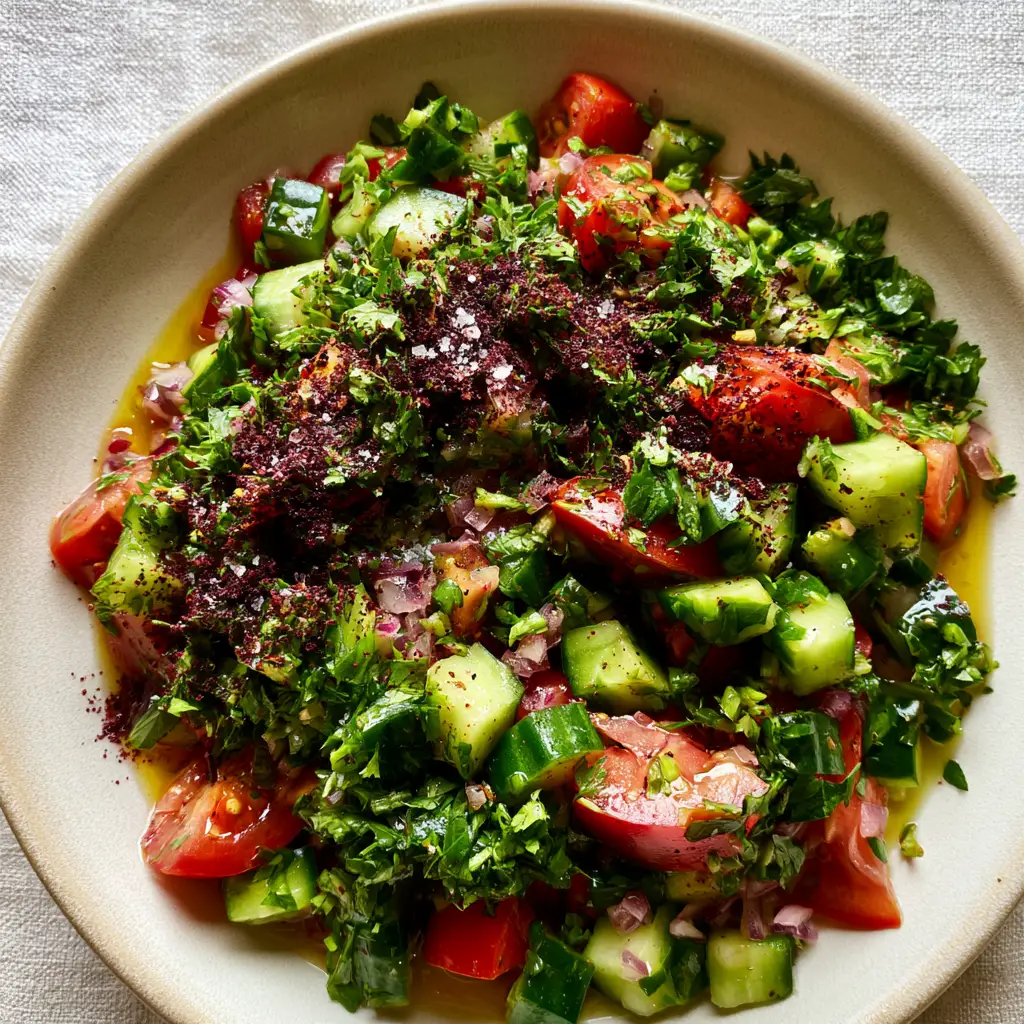
There is a profound beauty in the simplicity of a perfectly executed Arabic salad. When you gaze into a shallow, matte-finish cream ceramic bowl filled with vibrant greens and deep reds, you aren’t just looking at a side dish; you are seeing a celebration of Mediterranean harvest. This specific recipe focuses on the architectural integrity of the vegetables, ensuring every bite is a crisp, refreshing explosion of flavor.
The secret to this Arabic salad lies in the precision of the dice. By small-cubing firm Persian cucumbers and Roma tomatoes, we create a uniform texture that allows the golden extra-virgin olive oil and fresh lemon juice to coat every single surface. The addition of dark purple-red sumac provides an earthy tartness that elevates the dish from a simple garden salad to a professional-grade culinary experience.
Imagine the soft, natural side-lighting from a kitchen window catching the glistening droplets of citrus on a lush carpet of flat-leaf parsley. This is the sensory experience we are building today. Whether you are serving this at a summer barbecue or a quiet weeknight dinner, the visual and textural detail of coarse sea salt flakes and translucent red onions will leave your guests reaching for seconds.
Why This Authentic Salata Arabieh Stands Out
- Precision Texture: By using small-cubed Persian cucumbers with the skin on, we maintain a snap that contrasts beautifully with firm Roma tomatoes.
- Aromatic Herb Foundation: A heavy layering of finely chopped flat-leaf parsley and tiny flecks of torn mint creates a “lush carpet” of flavor.
- The Sumac Factor: Ground purple sumac offers a unique, astringent depth that lemon juice alone cannot achieve.
- Visual Glisten: The specific ratio of golden extra-virgin olive oil ensures the vegetables shine under natural light without becoming soggy.
- Balanced Sharpness: Finely minced red onions provide a translucent, sharp bite that cuts through the richness of the oil.
The Vibrant Ingredients Required for Success
Persian Cucumbers: You will need 4-5 medium Persian cucumbers. Their thin skins provide a bright green visual border to each cube, and their low seed count ensures the salad stays crisp rather than watery.
Firm Roma Tomatoes: Select 3-4 deep red Roma tomatoes that feel heavy for their size. Dicing them while they are firm allows them to hold their shape against the acidity of the dressing.
Red Onion: One small red onion, minced until translucent. This adds a pungent depth and a beautiful purple-white contrast to the green cucumber skins.
Fresh Flat-Leaf Parsley: One large bunch (about 2 cups or 60g) of parsley. This isn’t just a garnish; it is a primary vegetable component that provides the “lush carpet” look.
Fresh Mint Leaves: A handful of leaves, torn by hand. Tearing the mint rather than chopping it prevents bruising and keeps the “tiny flecks” bright green.
Extra Virgin Olive Oil: 3 tbsp (45ml) of high-quality golden oil. This provides the essential glisten and a peppery finish that ties the earthiness of the sumac together.
Fresh Lemon Juice: 2 tbsp (30ml) of juice. The citrus acidity reacts with the sumac to create a bright, mouth-watering profile.
Ground Purple Sumac: 1 tbsp (8g) of high-quality sumac. Look for a dark purple-red hue to provide the intricate textural detail described in our visual blueprint.
Coarse Sea Salt Flakes: 1 tsp (5g) for finishing. These flakes catch the light and provide a localized burst of seasoning that enhances the natural sweetness of the tomatoes.
Essential Tools for the Perfect Dice
To achieve the high-angle, professional look of a vibrant Arabic salad, you need the right tools. A sharp Chef’s knife is non-negotiable for creating those precise, small cubes of cucumber and tomato without crushing the cell walls. A large wooden cutting board provides the space needed to mince your red onions until they are nearly translucent.
You will also want a shallow ceramic bowl—ideally with a matte cream finish—to serve the dish. The shallow depth ensures the “lush carpet” of herbs remains visible on top rather than sinking to the bottom. A small glass jar is helpful for emulsifying the lemon juice and olive oil before drizzling, though a direct drizzle often creates better “glistening” highlights for photography.
Step-By-Step Execution for Culinary Excellence
1. Prepping the Foundation Vegetables
Begin by washing your Persian cucumbers and Roma tomatoes in cold water. Leave the skins on the cucumbers; the bright green exterior is essential for the visual contrast. Slice the cucumbers into long spears, then cross-cut them into 1/4 inch (0.6cm) cubes. Repeat this process with the tomatoes, ensuring they are the same uniform size as the cucumbers.
2. Achieving the Translucent Onion Mince
Peel the red onion and slice it as thinly as possible. Turn the slices and mince them into tiny, translucent shards. If you find the onion too sharp, you can soak the minced pieces in cold water for 5 minutes and pat them dry, though for an authentic Arabic salad, the raw bite is often preferred.
3. Creating the Lush Herb Carpet
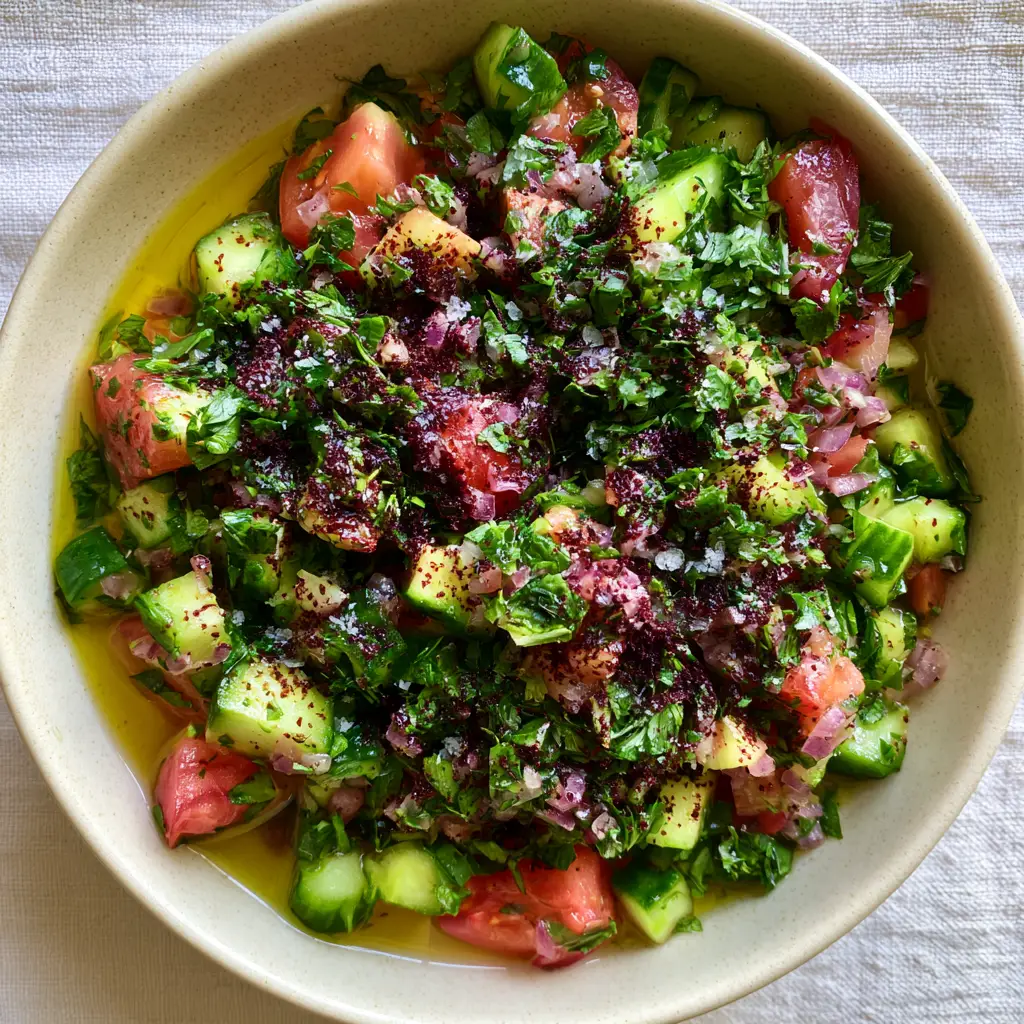
Remove the thick stems from the flat-leaf parsley. Bunch the leaves tightly and use a rocking motion with your knife to chop them finely. You want a volume that feels substantial. For the mint, gently tear the leaves into tiny flecks. Scatter these over the diced vegetables to create a dense, green layer that completely covers the base.
4. The Glistening Finish and Seasoning
Drizzle the golden extra-virgin olive oil in a circular motion over the herbs. Follow with the fresh lemon juice, watching as droplets catch the light. Finally, sprinkle the ground purple sumac and coarse sea salt flakes from a height. This ensures an even “dusting” that provides the intricate textural detail necessary for a professional presentation.
Expert Tips for a Professional Result
- Temperature Matters: Serve the Arabic salad immediately after assembly while the vegetables are still chilled from the fridge for maximum crispness.
- Avoid the Mush: Do not over-mix the salad after adding the salt. Salt draws out moisture; toss gently just once to keep the vegetables firm.
- Herb Ratio: If your parsley looks sparse, add more. The “lush carpet” effect is what separates a world-class salata from a standard chopped salad.
- Acid Balance: If your sumac is particularly tart, reduce the lemon juice by half a teaspoon to maintain balance.
The Best Way to Store Your Leftovers
While this Arabic salad is best enjoyed fresh, you can store it in an airtight container in the refrigerator for up to 24 hours. Note that the cucumbers will lose some of their “snap” and the tomatoes will release juices due to the salt. If you plan to make this ahead of time, dice the vegetables and chop the herbs, but wait to add the oil, lemon, and salt until the moment of serving.
Do not freeze this salad. The high water content of the Persian cucumbers and Roma tomatoes will cause the cell structures to collapse, resulting in a mushy texture upon thawing. This dish is all about the “crunch,” so fresh is always the way to go.
What to Serve With Your Arabic Salad
This refreshing salad is incredibly versatile. Its bright acidity makes it the perfect palate cleanser for rich, fatty meats. Try serving it alongside some honey sriracha salmon for a fusion of Middle Eastern and spicy flavors. The cooling cucumber also works wonders when paired with crispy flautas, providing a fresh contrast to the fried texture.
If you are looking for a complete Mediterranean spread, serve this salad with a side of garlic butter orzo or a bowl of Moroccan chicken and rice. For those following a plant-based diet, this salad is a fantastic accompaniment to a healthy zucchini stir fry.
Frequently Asked Questions
While sumac has a unique earthy tartness, a pinch of lemon zest mixed with a tiny bit of extra lemon juice is the closest substitute, though you will miss the dark purple visual detail.
No, it is recommended to leave the skin on. The bright green skin provides essential visual contrast and a firmer texture that holds up better against the acidic dressing.
Use firm Roma tomatoes and remove excess seeds. Most importantly, add the sea salt flakes only right before serving, as salt draws out moisture from the vegetables.
Yes, it is naturally vegan, gluten-free, and packed with vitamins from fresh herbs and vegetables. The extra-virgin olive oil provides heart-healthy monounsaturated fats.
While both share ingredients like parsley and cucumber, Tabbouleh is primarily an herb salad containing bulgur wheat. Arabic salad (Salata Arabieh) focuses on diced cucumbers and tomatoes as the base.
The Authentic Arabic Salad Recipe
Arabic Salad with Sumac and Persian Cucumbers (The Ultimate Guide)
Ingredients
Equipment
Method
- Wash the Persian cucumbers and Roma tomatoes. Leave the skins on the cucumbers for a bright green visual. Small-cube both into uniform 1/4-inch pieces to ensure a consistent texture.
- Finely mince the red onion until the pieces are translucent. Scatter these throughout the cucumber and tomato mixture in a shallow ceramic bowl.
- Finely chop the flat-leaf parsley and tear the mint leaves. Layer them heavily over the diced vegetables to create a lush, green carpet effect.
- Drizzle the golden extra-virgin olive oil and fresh lemon juice over the herb layer, ensuring the droplets catch the light. Dust generously with dark purple sumac and coarse sea salt flakes for textural detail.
Notes
Do not over-mix after adding salt to maintain the firm vegetable texture.
Closing & Call to Action
This Arabic salad is more than just a side; it is a masterclass in vegetable preparation and flavor balancing. By focusing on the precision of your dice and the quality of your sumac, you can recreate this glistening, vibrant dish in your own kitchen. The combination of cooling Persian cucumbers and the earthy tartness of sumac is a timeless pairing that never fails to impress.
Did you try this recipe? We would love to hear how your “lush herb carpet” turned out! Leave a comment below and share your photos with us. Don’t forget to follow us on Pinterest for more vibrant recipe inspiration and culinary tips. Sign up for our newsletter to get the latest fresh recipes delivered straight to your inbox!