There is a profound, sensory magic that occurs when a piece of hand-sculpted, velvety West African Fufu meets a steaming bowl of vibrant Egusi soup. If you have ever scrolled through social media and seen that iconic “finger indent” in a mound of perfectly smooth, white dough, you have witnessed the gold standard of African soul food. This isn’t just a side dish; it is the heartbeat of many West African dinner tables, designed to be torn, dipped, and savored.
Our recipe captures the exact moment described in the finest culinary photography: a high-angle view of a glistening, golden-orange Egusi soup base paired with a fufu so elastic it stretches between your fingers. Achieving that lump-free, glossy finish requires a blend of traditional technique and modern culinary science. Whether you are a seasoned pro or exploring authentic African dishes for the first time, this guide ensures your fufu is never sticky, but always perfectly supple.
Imagine the rising steam carrying the nutty aroma of toasted melon seeds and the earthy richness of red palm oil. As you dip your fufu into the thick, beef-laden broth, the sauce clings to every curve of the dough. This is the ultimate comfort food experience—a tactile, flavorful journey that connects you to the rich heritage of Nigeria, Ghana, and beyond.
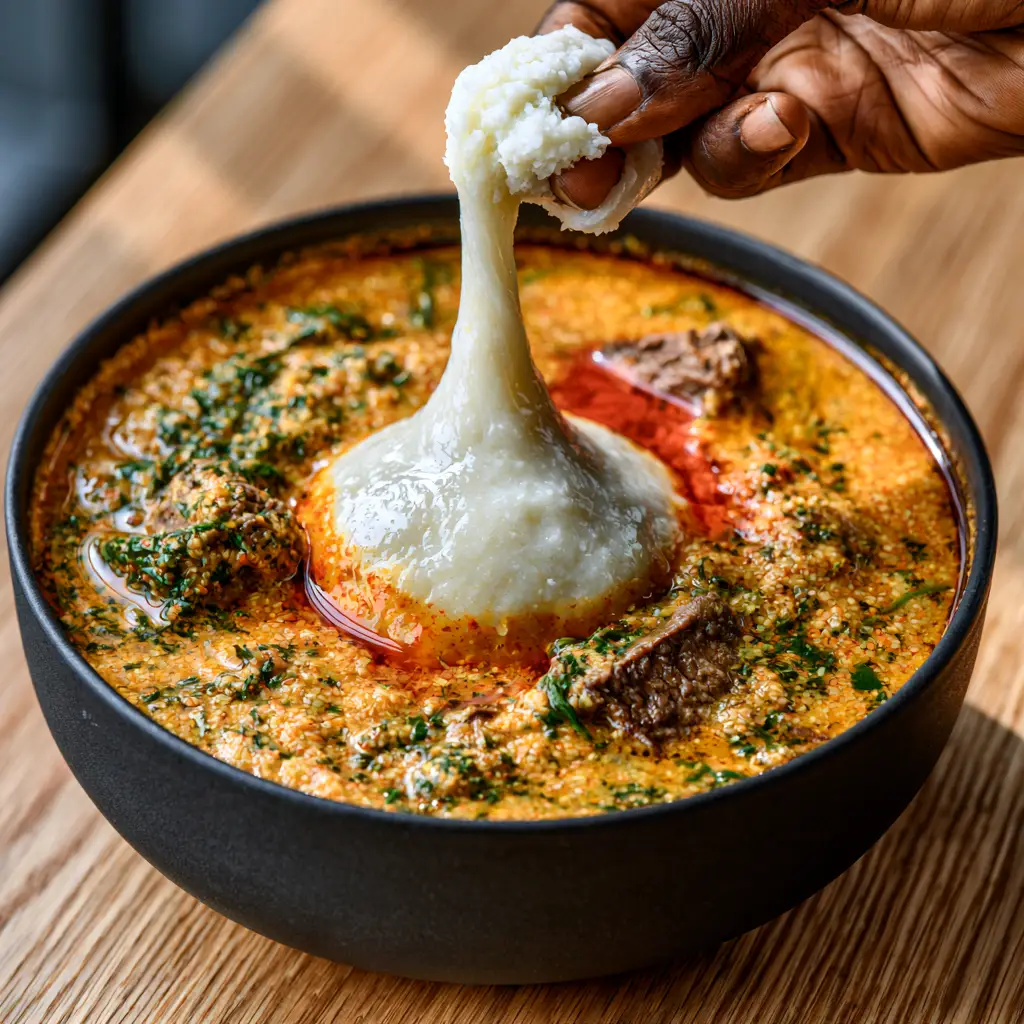
Why This Recipe Delivers the Ultimate Visual and Culinary Result
- Unrivaled Elasticity: We use a specific heat-control method to ensure your cassava fufu has that signature “bounce” and stretch seen in professional food styling.
- Textural Harmony: The Egusi soup features toasted ground melon seeds that create a “curd-like” texture, providing a beautiful contrast to the smooth fufu.
- Vibrant Aesthetics: A precise drizzle of red palm oil provides that glistening, professional finish that makes the golden-orange broth pop against a dark bowl.
- Sustainably Braised Beef: We focus on “low and slow” braising to ensure every chunk of beef is fork-tender and deeply infused with scotch bonnet heat.
The Anatomy of Authentic West African Fufu and Egusi Soup
Cassava Flour (2 cups / 320g): This is the foundation of our white, smooth fufu. High-quality, fine-milled cassava flour provides the starch necessary for the incredible elasticity shown in the visual blueprint.
Ground Egusi Seeds (1 cup / 150g): These toasted melon seeds act as the protein-rich thickening agent. Toasting them in a dry pan first ensures they maintain their “bit-like” texture in the soup rather than dissolving completely.
Red Palm Oil (1/4 cup / 60ml): This oil is essential for the “glistening” surface and the authentic golden-orange hue of the soup base. It provides a unique, earthy flavor profile that vegetable oils simply cannot replicate.
Beef Chuck Roast (1 lb / 450g): Cut into 1-inch cubes, this tough cut transforms into tender, braised morsels. The collagen breakdown adds body to the soup, making it rich and satisfying.
Fresh Spinach (2 cups / 60g, chopped): Added at the very end, the spinach provides the vibrant green flecks seen in the visual prompt. It should be wilted but not mushy to maintain its structural integrity.
Foundational Aromatics: A blend of red onion, scotch bonnet peppers, and ginger provides the aromatic “soul” of the dish. These are blended and sautéed in the palm oil to create a deep, complex flavor base.
Essential Equipment for a Lump-Free Result
To achieve the “perfectly smooth” look of the fufu, you will need a heavy-bottomed saucepan. This prevents the starch from scorching while you vigorously stir. A sturdy wooden spoon (often called a “turning stick”) is non-negotiable for the “pounding” motion required for elasticity.
For the Egusi soup, a high-speed blender is necessary to create a smooth base of onions and peppers. Additionally, a matte black ceramic bowl is recommended for serving. The contrast between the dark vessel and the vibrant orange soup creates the high-end aesthetic found in professional food blogs.
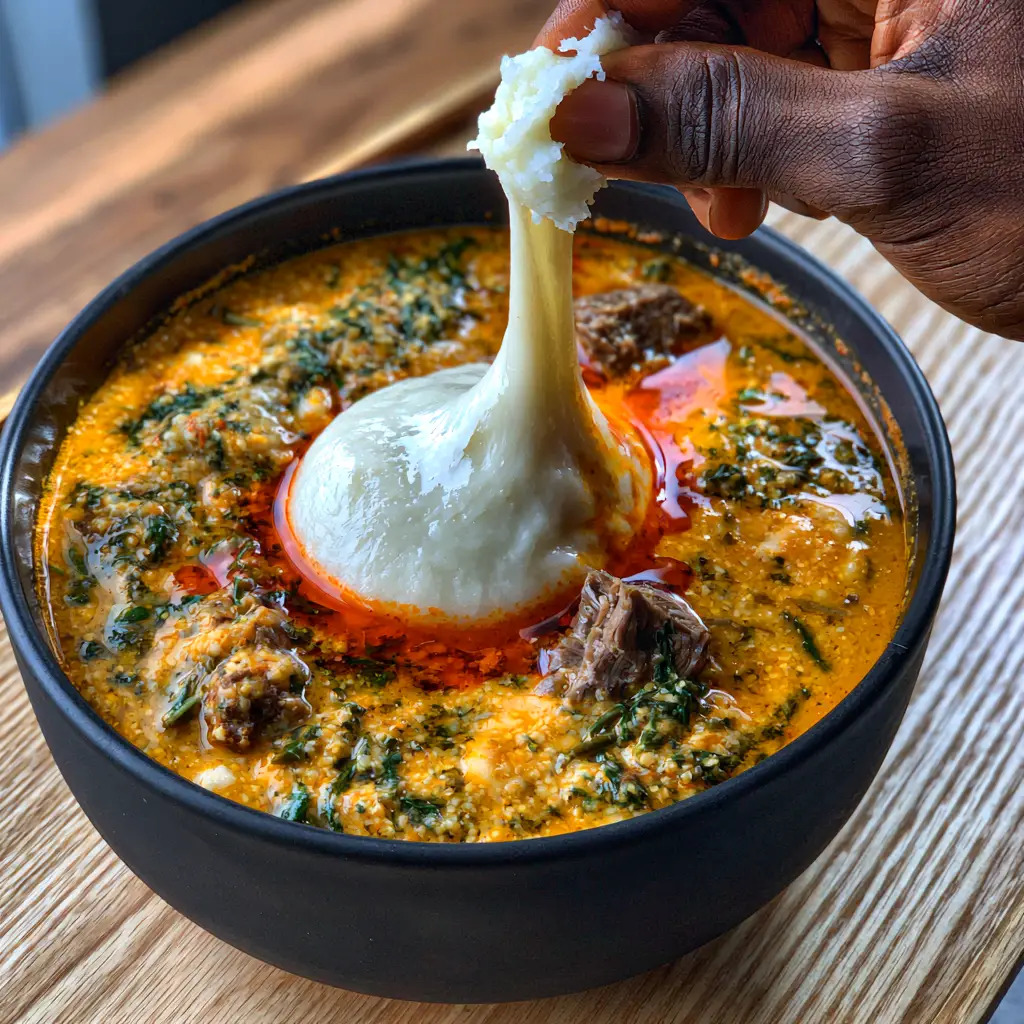
Step-by-Step: Crafting the Golden Egusi Soup Base
Braising the Beef for Maximum Tenderness
Begin by searing your 1 lb (450g) of beef chunks in a pot with a teaspoon of salt and half a chopped onion. Add 2 cups (480ml) of water and simmer over medium-low heat for 40-45 minutes. You are looking for a “fork-tender” result where the beef yields easily but doesn’t completely fall apart.
Developing the Glistening Palm Oil Base
In a separate large pot, heat 1/4 cup (60ml) of red palm oil over medium heat until it becomes translucent and fragrant. Pour in your blended mixture of 1 red onion and 2 scotch bonnet peppers. Sauté this until the “raw” smell vanishes and the oil begins to separate, creating a shimmering surface.
Toasting and Incorporating the Egusi Seeds
Add your 1 cup (150g) of ground melon seeds to the oil and aromatics. Stir constantly for 3-5 minutes; you will see the seeds start to form small, toasted clumps. This is the secret to the “textured” look in the final bowl. Slowly pour in the beef stock from your braising pot, stirring gently to maintain the seed clusters.
The Final Green Flourish
Once the soup has thickened (about 10 minutes), fold in the chopped spinach and the braised beef. Let it simmer for just 2 minutes until the spinach is vibrant green. The final result should be a thick, rich broth with a thin, glistening layer of red oil on top, just like in our detailed egusi guide.
Mastering the Elasticity: How to Make Smooth Cassava Fufu
The Initial Slurry
In a cool saucepan, whisk together 2 cups (320g) of cassava flour and 3 cups (720ml) of room temperature water. It is vital to do this *before* turning on the heat to prevent lumps from forming. The mixture should look like a thin, white milk.
The “Turn-Turn” Technique
Turn the heat to medium and begin stirring constantly with your wooden spoon. As the starch gelatinizes, the mixture will thicken rapidly. Once it forms a thick paste, start the “pounding” motion—pressing the dough against the sides of the pot and folding it over itself.
Visual Cues for Perfect Elasticity
Add 1/4 cup (60ml) of hot water around the edges of the dough ball, cover, and steam for 3 minutes. Remove the lid and resume the vigorous stirring. You will know it is ready when the fufu becomes glossy, translucent, and shows incredible stretch when pulled with the spoon. It should be “lump-free” and have a uniform white color.
Expert Tips for Culinary Success
- The Steam Test: If your fufu feels too stiff, add a tablespoon of boiling water at a time and continue “turning.” The steam is what hydrates the core of the starch molecules.
- Oil Management: If the palm oil feels too heavy, you can skim a little from the top, but remember that the “glistening layer” is a hallmark of authentic Egusi.
- Sensation Cues: Listen for the “slapping” sound as you stir the fufu against the pot; this sound indicates the dough has reached the correct density and elasticity.
- Heat Control: Never boil the Egusi seeds on high heat, as this can cause the oil to emulsify and lose that beautiful “orange and red” separation.
Storage, Reheating, and Make-Ahead Advice
West African Fufu is best enjoyed immediately while it is at its most elastic. If you must store it, wrap the individual mounds tightly in plastic wrap to prevent a “skin” from forming. It will stay fresh in the refrigerator for up to 2 days. To reheat, add a splash of water and microwave, then re-knead with a spoon to restore the stretch.
The Egusi soup actually improves with age as the flavors meld. It can be refrigerated for 4 days or frozen for up to 3 months. When reheating, do so gently on the stovetop to prevent the melon seeds from becoming rubbery. If you enjoy this type of hearty meal, you might also like our savory sausage skillet for a quicker weeknight option.
What to Serve With This Traditional Feast
While Egusi and Fufu are a complete meal, many households serve them alongside other authentic African dishes. If you are looking for a lighter side, a simple crisp cucumber salad can provide a cooling contrast to the scotch bonnet heat of the soup.
For those interested in exploring more starch-based staples, comparing this cassava fufu to other “swallows” is a great way to build your culinary palate. Many people also enjoy serving this with a side of fried plantains for a touch of sweetness that balances the earthy palm oil.
Frequently Asked Questions
While you can use vegetable oil, you will lose the signature golden-orange color and the unique earthy flavor that defines authentic Egusi soup.
Fufu is eaten with your hands. Pull off a small piece, roll it into a ball, make a small indent with your thumb (like a spoon), and use it to scoop up the soup and meat.
Authentic Egusi soup typically has a kick from scotch bonnet peppers, but you can control the heat level by reducing the number of peppers or removing the seeds before blending.
Traditional fufu is made from boiled and pounded cassava and green plantains, but it is also commonly made using high-quality cassava flour or yam flour mixed with water to create a stretchy, dough-like consistency.
Lumps usually form if the flour is added to hot water too quickly. Always whisk the flour into room temperature water to create a slurry before turning on the heat, and stir vigorously as it thickens.
The Ultimate West African Fufu Recipe Card
West African Fufu: Mastering the Art of the Perfect Elastic Swallow
Ingredients
Equipment
Method
- Simmer beef cubes with half an onion and salt in 2 cups of water for 45 minutes until fork-tender.
- Heat palm oil in a pot; add blended onion and scotch bonnets. Sauté until oil glistens on top.
- Stir in ground melon seeds to form clusters. Add beef and stock; simmer for 10 minutes before folding in spinach.
- Combine cassava flour and water in a saucepan off-heat until smooth.
- Stir over medium heat until thickened. Use a wooden spoon to vigorously fold and pound the dough against the pot sides.
- Add a splash of water, cover for 3 minutes, then stir again until the fufu is glossy and stretchy.
Notes
The red palm oil should create a thin glistening layer on the soup; don't stir it away!
Share Your Culinary Creation!
There is nothing quite like the satisfaction of mastering a “swallow” like West African Fufu. We want to see your results! Did you get that perfect finger indent? Was your Egusi soup as vibrant as the sunrise? Take a photo of your masterpiece and share it with us. For more global inspiration and easy weeknight meals, follow our journey on Pinterest. Don’t forget to save this recipe to your “International Eats” board!