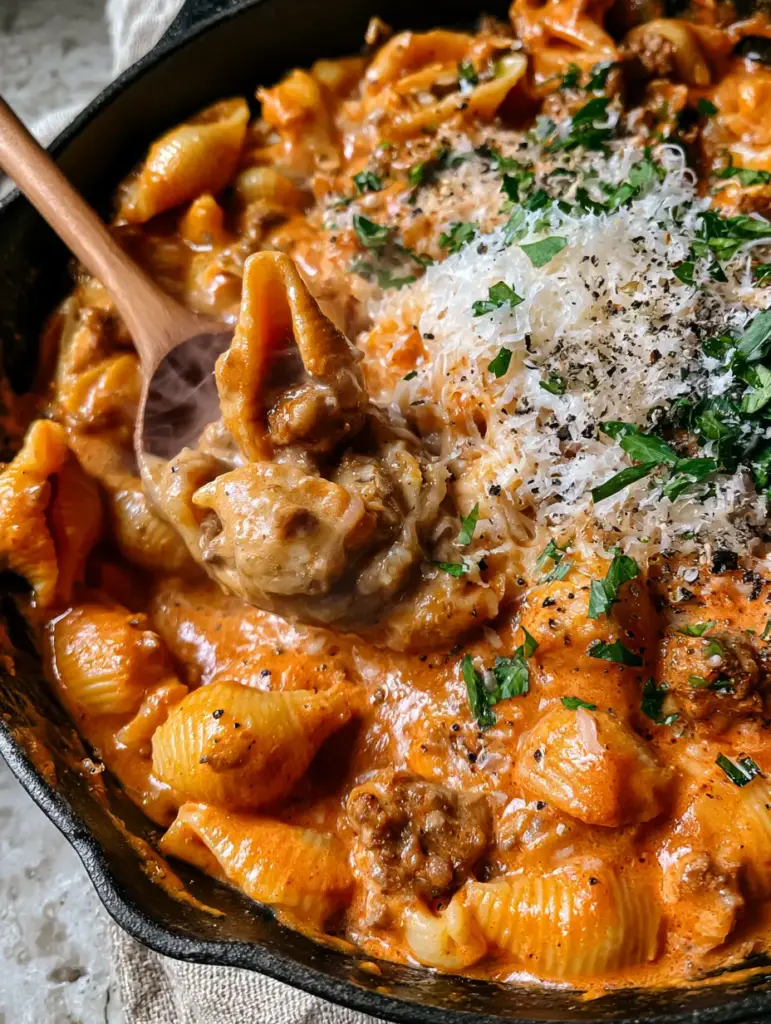
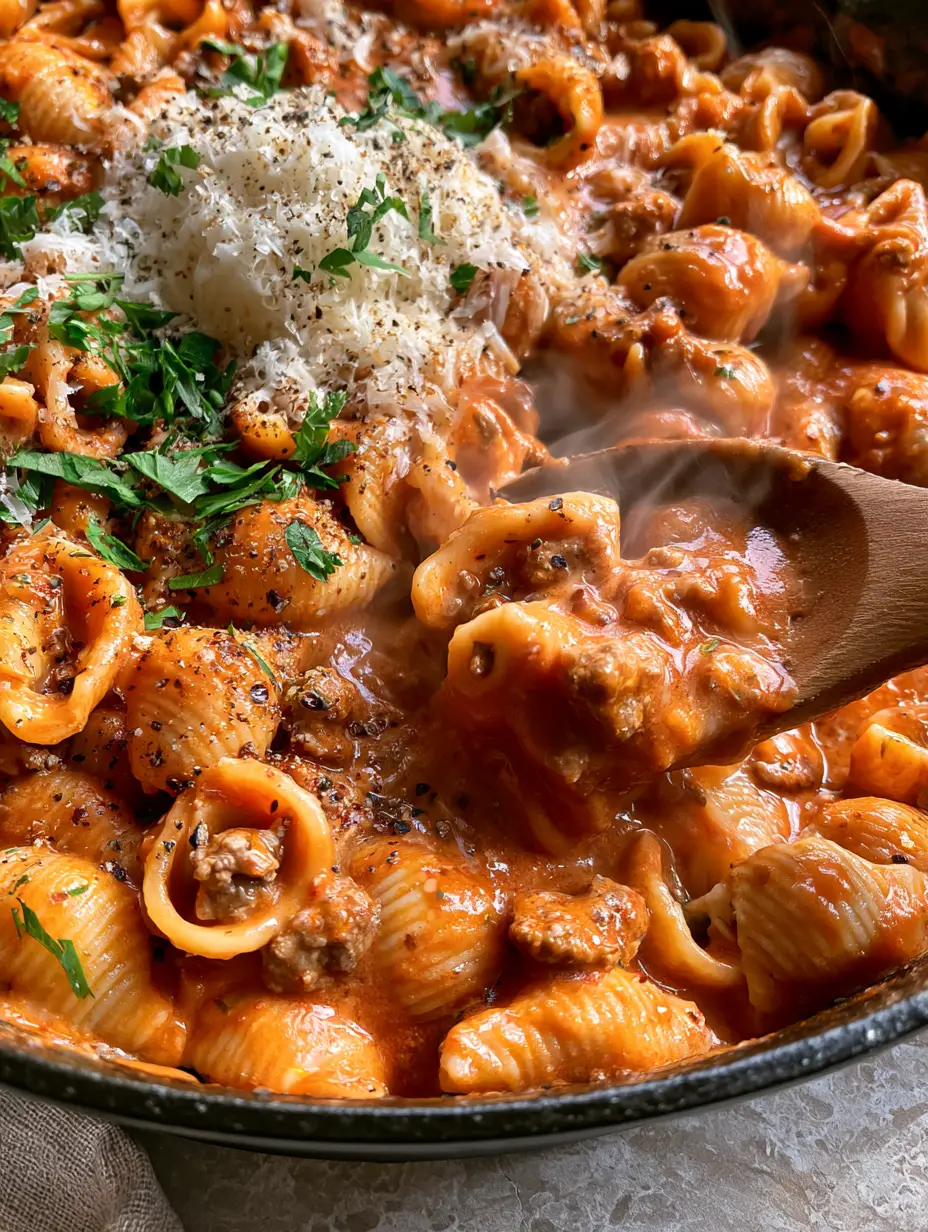
This Beef pasta recipe is the ultimate intersection of rustic comfort and gourmet execution. Imagine medium pasta shells perfectly cradling a deep reddish-orange velvet sauce, all served in a seasoned cast iron skillet that retains every bit of heat. It is a dish designed for those who crave the nostalgia of a childhood classic but demand the technical precision of a modern kitchen.
The magic of this Beef pasta recipe lies in the contrast of textures. You have the craggy, well-seared bits of ground beef nestled against tender, al dente shells, all topped with a snowy mountain of microplaned parmesan cheese that melts into the glossy sauce reduction. It is a visual and sensory masterpiece that looks just as good as it tastes.
Whether you are looking for a weeknight upgrade or a centerpiece for a casual dinner party, this Beef pasta recipe delivers. The combination of coarse cracked black pepper and vibrant jagged flakes of fresh flat-leaf parsley adds the final bright note to a rich, shimmering sauce that clings to every ridge of the pasta.
Why This Creamy Skillet Beef Pasta Works
- The Velvet Sauce Texture: By emulsifying tomato paste with heavy cream and a glossy sauce reduction, we achieve a thick, non-watery consistency that coats the pasta perfectly.
- Seared Beef Depth: Instead of just browning the meat, we focus on creating craggy, seared crumbles that provide a salty, umami-rich bite against the soft pasta.
- Al Dente Shells: Using medium shells creates “flavor pockets” that trap the sauce, ensuring every mouthful is a complete experience of the Beef pasta recipe.
- Microplaned Cheese Integration: The use of a microplane creates a heavy, snowy mountain of parmesan that melts instantly into the sauce, adding a luxurious mouthfeel.
The Anatomy of a Perfect Skillet Beef Pasta
Medium Pasta Shells (340g / 12 oz): These are essential for the Beef pasta recipe because their concave shape acts as a vessel for the sauce and beef crumbles. Ensure they are cooked just to al dente so they can finish cooking in the sauce without becoming mushy.
Ground Beef (450g / 1 lb): Use an 80/20 lean-to-fat ratio to ensure the beef sears properly in the cast iron. The rendered fat becomes the base for the deep reddish-orange velvet sauce.
Tomato Paste (45g / 3 tbsp): This provides the concentrated base for the color and acidity. It needs to be caramelized in the pan to transition from a bright red to a deep, shimmering brick color.
Heavy Cream (240ml / 1 cup): The secret to the “velvet” descriptor in this Beef pasta recipe. It mellows the acidity of the tomato and provides the shimmering finish seen in the blueprint.
Beef Broth (350ml / 1.5 cups): Used to deglaze the skillet and provide the liquid necessary for the sauce reduction. It adds a layer of savory depth that water simply cannot provide.
Microplaned Parmesan Cheese (60g / 2 oz): Must be freshly grated to achieve that “snowy mountain” effect. Pre-grated cheese contains cellulose which prevents the smooth melting seen in our visual guide.
Fresh Flat-Leaf Parsley: Provides jagged flakes of vibrant green contrast. It cuts through the richness of the cream and beef, offering a necessary aromatic lift.
Coarse Cracked Black Pepper: A few heavy cracks provide a rustic aesthetic and a sharp, biting heat that balances the creamy tomato base.
Aromatic Base (Onion and Garlic): Essential “invisible” ingredients that provide the foundation for the sauce’s flavor profile without distracting from the visual blueprint.
Olive Oil or Butter (15g / 1 tbsp): Required for the initial sear of the beef to ensure it doesn’t stick to the matte black cast iron skillet.
Essential Equipment for a Rustic Skillet Finish
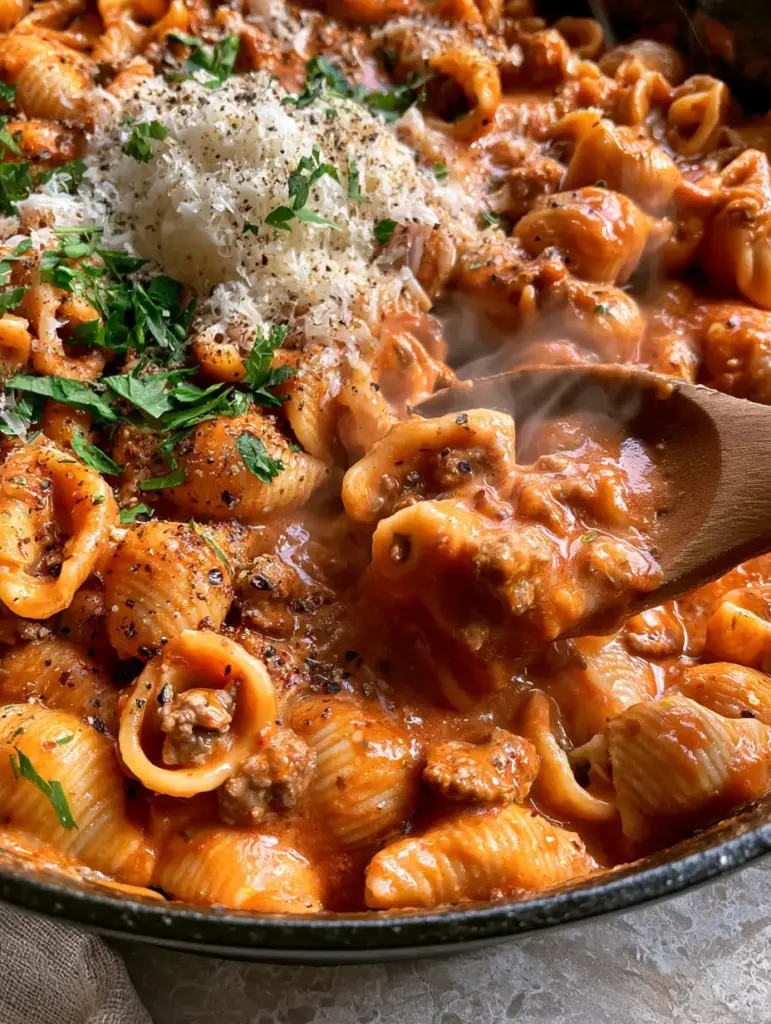
To recreate the visual depth of this Beef pasta recipe, a 12-inch (30cm) rustic matte black cast iron skillet is non-negotiable. The cast iron provides the thermal mass needed to sear the beef crumbles until they are craggy and browned, rather than just steamed.
A wooden spoon is your primary tool for stirring and lifting scoops of the pasta to check the sauce consistency. For the cheese, a microplane grater is required to create those ultra-fine, delicate wisps of parmesan that form a snowy peak on top of the hot pasta.
Mastering the Art of the Deep Reddish-Orange Velvet Sauce
Searing the Beef for Maximum Texture
Heat your cast iron skillet over medium-high heat until a drop of water sizzles instantly. Add a touch of oil and crumble the ground beef into the pan, but do not stir it immediately. Let the beef sit for 3-4 minutes to develop a deep, dark crust.
Once seared, use your wooden spoon to break the beef into craggy, irregular crumbles. These bits are what will nestle inside the pasta shells, providing the textural contrast central to this Beef pasta recipe. Remove excess fat, leaving about a tablespoon in the pan for flavor.
Building the Shimmering Tomato Base
Add finely diced onions to the beef fat, sautéing until translucent. Stir in the tomato paste and cook it for 2 minutes until it turns a shade darker—this is the key to achieving that deep reddish-orange velvet sauce color. Add the garlic and cook for only 30 seconds to avoid burning.
Slowly pour in the beef broth, using the wooden spoon to scrape the flavorful browned bits (fond) from the bottom of the skillet. This is where the glossy sauce reduction begins its transformation into a restaurant-quality meal.
The Emulsification Process
Lower the heat and whisk in the heavy cream. You will see the sauce shift into a shimmering, vibrant orange hue. Let it simmer gently until it thickens enough to coat the back of the spoon. The consistency should be thick and non-watery, just like the steam-filled scoop in our visual prompt.
Stir in the cooked pasta shells, tossing them gently so the sauce clings to every ridge. If the sauce is too thick, add a splash of the pasta cooking water—the starch will help maintain the glossy finish without thinning the flavor.
Chef Tips for the Ultimate Skillet Pasta
- Salt the Pasta Water: Your shells should taste like the sea. Since the pasta is a main component of the Beef pasta recipe, it needs to be seasoned from the inside out.
- Avoid Over-Stirring: When you add the parmesan, let it sit on top for a moment to create that “snowy mountain” visual before gently folding it in.
- The Steam Factor: Serve the dish immediately in the skillet. The cast iron holds heat so well that it will continue to release steam as you lift each scoop with your wooden spoon.
- Texture is King: If your beef is too fine, you lose the “craggy bits” look. Keep the crumbles substantial enough to be seen among the shells.
Flavor Pairings and Internal Links
This Beef pasta recipe is a heavy, comforting meal that pairs beautifully with lighter sides. You might consider serving it with a crisp green salad or a side of lemon zucchini pasta for a bright, citrusy contrast to the rich cream sauce.
If you enjoy the heartiness of this dish, you will likely love our Southwest ground beef pasta which uses similar techniques with a spicy twist. For those who prefer a baked version, our cheesy beef casserole recipe is a fantastic alternative for meal prepping.
Looking for more ways to use ground beef? Explore our guide on beef with pasta combinations or try the classic comfort of a ground beef and potato recipe for a gluten-free skillet option.
Frequently Asked Questions
Yes, but a cast iron skillet is preferred for its heat retention, which creates the superior sear on the beef crumbles and keeps the dish steaming at the table.
The shimmer comes from emulsifying tomato paste with heavy cream and beef broth, then reducing it until thick. A splash of starchy pasta water at the end also adds a glossy finish.
Ensure you reduce the beef broth and cream sufficiently before adding the pasta. The sauce should be thick enough to coat a spoon before the shells are tossed in.
Medium pasta shells are ideal because their shape captures the thick velvet sauce and seared beef crumbles, ensuring every bite is flavorful.
A microplane creates thin, airy wisps of cheese that melt faster and more evenly into the hot sauce, creating the ‘snowy mountain’ aesthetic described.
The Complete Skillet Beef Pasta Recipe
Beef Pasta Recipe: Creamy Skillet Shells with Seared Ground Beef
Ingredients
Equipment
Method
- In a rustic cast iron skillet, sear the ground beef until deep browned and craggy crumbles form. Remove excess grease.
- Add onions and tomato paste to the skillet, cooking until the paste turns a deep reddish-orange. Deglaze with beef broth.
- Whisk in heavy cream and simmer until a thick, shimmering velvet sauce forms. Toss with cooked pasta shells.
- Top with a snowy mountain of microplaned parmesan, fresh parsley, and coarse cracked black pepper before serving.
Notes
Use the starchy pasta water to adjust sauce thickness for that glossy finish.
Bringing the Skillet to the Table
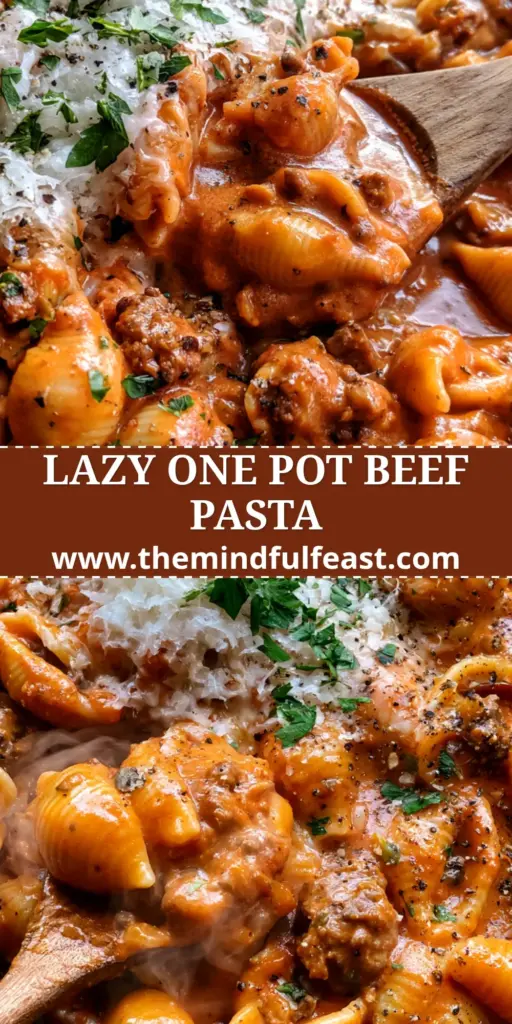
There is something uniquely satisfying about placing a rustic cast iron skillet in the center of the table. This Beef pasta recipe isn’t just a meal; it’s a sensory experience that brings people together. The sight of the melting parmesan and the aroma of the fresh parsley and cracked pepper are guaranteed to work up an appetite.
We would love to see your version of this dish! Did you achieve the perfect velvet sauce? Share your photos and tag us, or pin this Beef pasta recipe to your favorite board on Pinterest for your next Sunday dinner. Don’t forget to leave a comment below with your favorite skillet pasta tips!