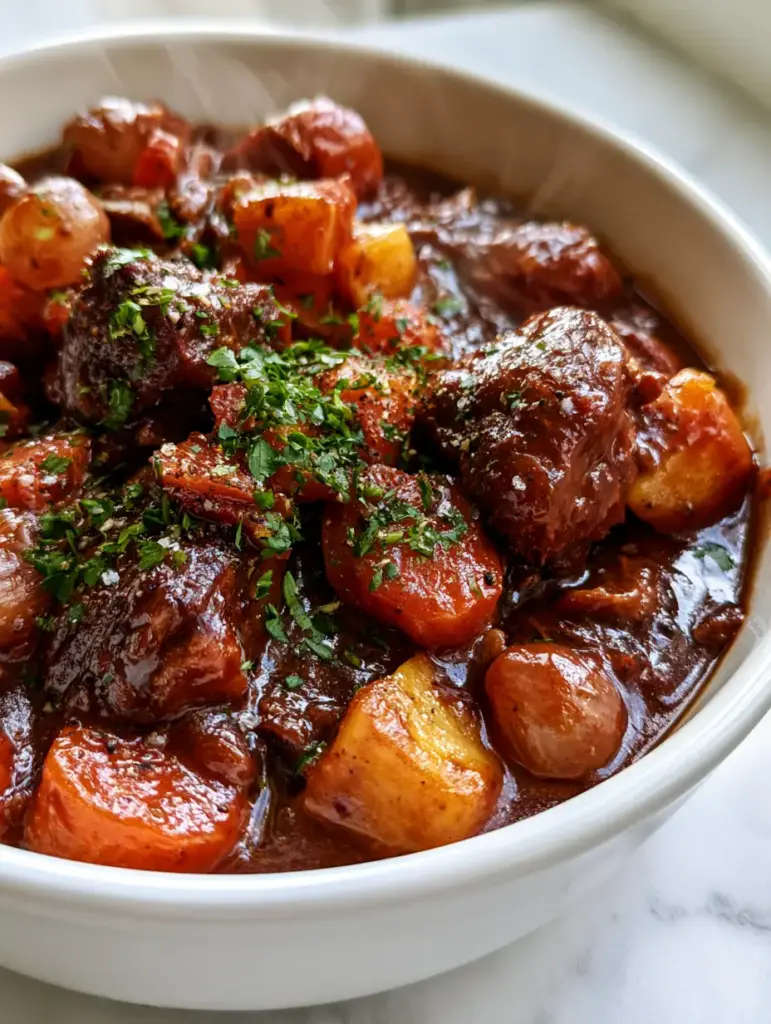
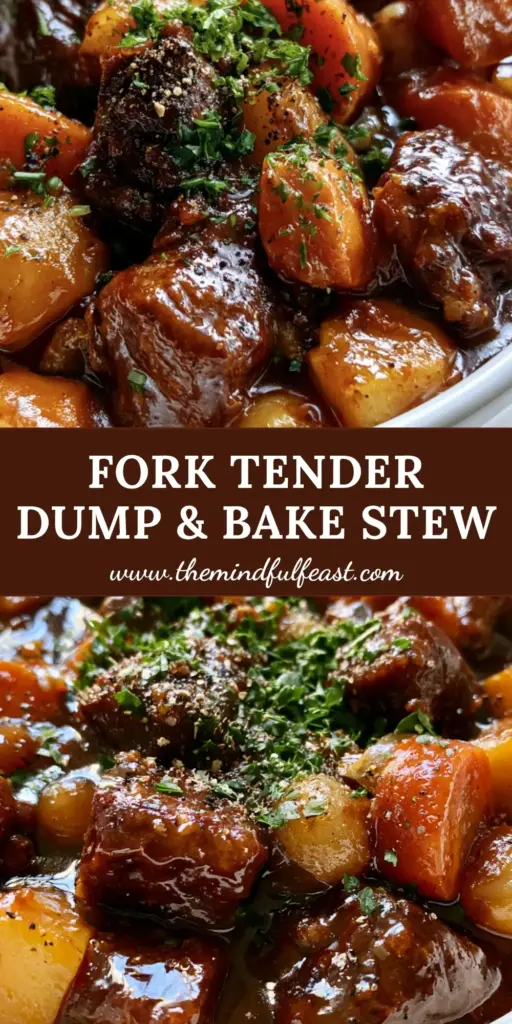
When the morning light hits a fresh Beef Stew Meat Casserole resting on a marble countertop, you know you are in for a culinary treat. There is something profoundly comforting about succulent, fork-tender beef tips swimming in a thick, dark mahogany-colored gravy. This isn’t just a meal; it is a sensory experience defined by gentle steam, the earthy aroma of softened carrots, and the visual pop of emerald green parsley.
Creating a Beef Stew Meat Casserole that rivals high-end bistro quality requires a bridge between traditional braising techniques and the convenience of a baked dish. By using a white ceramic baking dish, we ensure even heat distribution that transforms humble beef tips into melt-in-your-mouth morsels. This recipe focuses on achieving that specific, glossy sauce consistency that clings to every cubed golden potato and pearl onion.
Why This Oven-Baked Comfort Dish Works
- Succulent Beef Tips: Unlike stovetop stews that can sometimes dry out, the enclosed environment of the casserole dish locks in moisture for maximum tenderness.
- Visual Mahogany Depth: The secret lies in a deep sear and a structured roux, resulting in a dark, glossy gravy that looks as good as it tastes.
- Perfectly Proportioned Aromatics: Small pearl onions and carrot rounds provide natural sweetness that balances the savory, cracked black pepper finish.
- One-Dish Elegance: Serving this directly from a white ceramic dish creates an authentic, rustic-yet-refined aesthetic perfect for family gatherings.
The Components for the Ultimate Beef Stew Meat Casserole
To achieve the forensic visual accuracy of a professional food blog, every ingredient must serve a specific culinary purpose. We aren’t just throwing things in a pot; we are building layers of flavor and texture.
2 lbs (900g) Beef Stew Meat or Beef Tips: Look for well-marbled cuts, as the fat will render down to enrich the mahogany gravy and provide that “fork-tender” texture. You might also enjoy using similar cuts in our creamy beef and shells recipe.
3 tbsp (45ml) Vegetable Oil: This high-smoke point oil is essential for searing the beef to a deep brown, which is the foundational step for a dark sauce.
1 lb (450g) Golden Potatoes: Cubed into 1-inch (2.5cm) pieces, these potatoes hold their shape better than Russets while providing a buttery interior. If you love potato-based comfort, check out our Amish beef and hashbrown casserole.
3 Large Carrots (200g): Sliced into rounds, these provide the classic orange hue and a softened, sweet bite that cuts through the richness of the beef.
1 cup (150g) Pearl Onions: These small, whole onions offer a sophisticated look and bursts of concentrated flavor compared to chopped yellow onions.
3 cups (720ml) Beef Bone Broth: A high-quality broth is the liquid gold that forms the base of your mahogany gravy.
1/4 cup (30g) All-Purpose Flour: This is our thickening agent, toasted slightly with the meat drippings to create a robust roux.
2 tbsp (30ml) Worcestershire Sauce: This adds the “umami” punch and helps deepen the color of the sauce to that desired mahogany shade.
1 tsp (5g) Coarse Cracked Black Pepper: Used both in the cooking process and as a final garnish to provide visual texture and a spicy bite.
1/4 cup (10g) Fresh Parsley: Chopped finely, this emerald green garnish provides a necessary fresh contrast to the dark, rich stew.
Essential Tools for Casserole Perfection
To replicate the visual result of a thick, glossy casserole, you need a heavy-bottomed skillet for the initial sear and a 9×13 inch (23x33cm) white ceramic baking dish. The ceramic material is crucial because it retains heat steadily, allowing the beef tips to break down without boiling violently. You will also need a sharp chef’s knife to ensure the carrot rounds and potato cubes are uniform in size for even cooking.
Mastering the Sear and the Sauce
Phase 1: Developing the Mahogany Foundation
Begin by patting your beef tips dry with paper towels. This is a critical culinary step; moisture on the surface of the meat prevents the Maillard reaction. Heat the oil in your skillet over medium-high heat until it shimmers. Add the beef in a single layer, ensuring you do not crowd the pan.
Sear the beef until a deep, dark brown crust forms on all sides. This “fond” (the brown bits stuck to the pan) is the literal source of your mahogany gravy. Once seared, remove the meat and set aside. In the same pan, whisk in the flour, scraping up those brown bits for about 2 minutes until the flour smells nutty and turns a light brown color.
Phase 2: Building the Casserole Layers
Slowly whisk in the beef broth and Worcestershire sauce. Continue whisking until the mixture thickens into a glossy, dark sauce. Add a generous pinch of cracked black pepper. The sauce should be thick enough to coat the back of a spoon—this ensures it won’t become watery during the baking process.
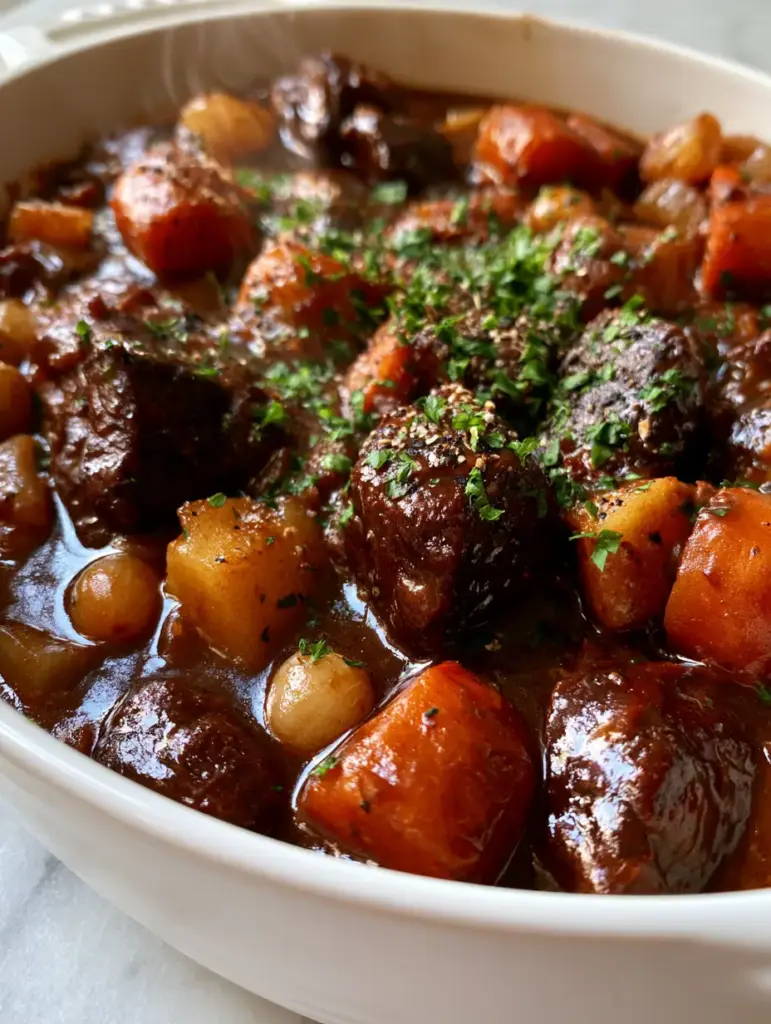
In your white ceramic baking dish, combine the seared beef tips, cubed golden potatoes, carrot rounds, and pearl onions. Pour the mahogany gravy over the top, ensuring every piece of vegetable and meat is submerged or well-coated. This prevents the vegetables from drying out in the oven.
Phase 3: The Slow Oven Braise
Cover the dish tightly with aluminum foil or a well-fitting lid. Place it in a preheated oven at 325°F (165°C). The lower temperature is key for beef stew meat; it allows the collagen to melt into gelatin, resulting in that succulent, handheld-photo-worthy texture. Bake for 2.5 to 3 hours.
Listen for a gentle bubbling sound and look for the gravy to have reduced slightly into a thick, syrupy consistency. The carrots should be easily pierced with a fork, and the pearl onions should be translucent and soft.
Expert Tips for a Picture-Perfect Result
- The Flour Hack: If your gravy isn’t dark enough, add a teaspoon of tomato paste to the roux. It deepens the “mahogany” color without making the dish taste like tomato.
- Vegetable Timing: If you prefer your carrots with a slight bite, add them halfway through the cooking time, though for a traditional casserole, “softened” is the goal.
- Deglazing Secret: Use a splash of dry red wine to deglaze the skillet before adding the broth to add even more complexity to the flavor profile.
- Resting Period: Let the casserole sit for 10 minutes after removing it from the oven. This allows the starches in the potatoes to further thicken the sauce to a perfect glossy finish.
Serving Suggestions for a Complete Meal
This Beef Stew Meat Casserole is a powerhouse on its own, but it pairs beautifully with light, acidic sides to balance the richness. Consider serving it alongside an easy cucumber salad for a refreshing crunch. If you want to double down on the comfort, a side of zucchini cornbread casserole is perfect for soaking up every last drop of that mahogany gravy.
For those looking for a lighter pairing, a simple green salad or even some refrigerator pickles can provide the vinegary brightness needed to cleanse the palate between bites of succulent beef.
Frequently Asked Questions
Yes, you can sear the meat and make the sauce on the stove, then transfer everything to a slow cooker for 6-8 hours on low. However, the oven method provides a better glossy finish.
While pearl onions offer a specific aesthetic and sweet flavor, you can substitute them with one large diced yellow onion if necessary.
The color comes from searing the beef until a dark crust forms and browning the flour in the meat drippings (roux) before adding broth and Worcestershire sauce.
Well-marbled beef stew meat or beef tips are best. Cuts like chuck contain connective tissue that breaks down during the slow bake, resulting in succulent, fork-tender meat.
If the vegetables are hard, the casserole needs more time. Root vegetables like carrots and potatoes require a full 2.5 to 3 hours at 325°F to become properly softened.
The Ultimate Beef Stew Meat Casserole Recipe
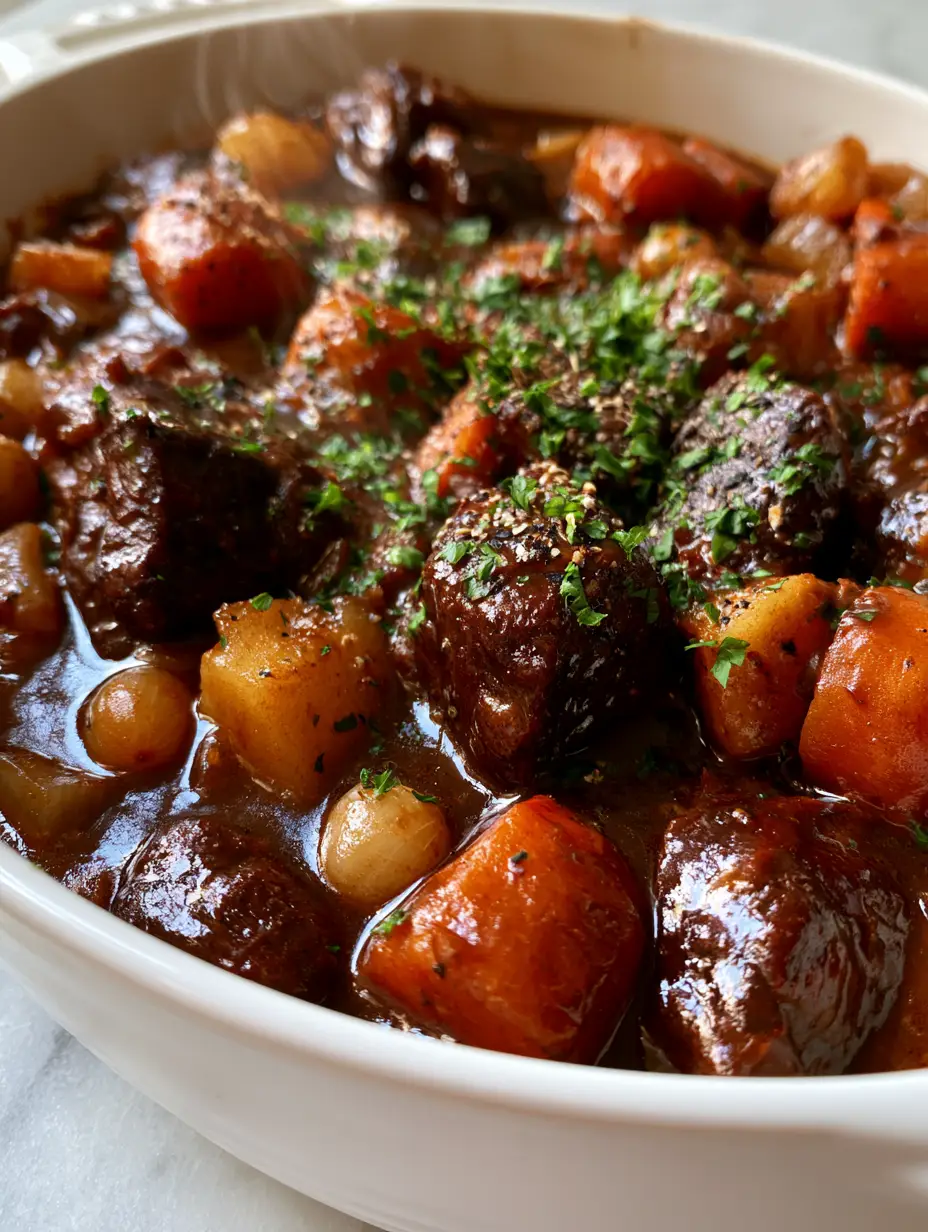
Beef Stew Meat Casserole with Rich Mahogany Gravy
Ingredients
Equipment
Method
- Pat beef tips dry. Heat oil in a skillet and sear meat until a deep mahogany crust forms on all sides. Remove meat.
- Whisk flour into the pan drippings for 2 minutes. Slowly add broth and Worcestershire sauce, whisking until thick and glossy.
- Place beef, potatoes, carrots, and onions in the white ceramic dish. Pour gravy over the mixture.
- Cover and bake at 325°F (165°C) for 2.5 to 3 hours until beef is fork-tender.
- Sprinkle with fresh parsley and extra cracked black pepper before serving hot.
Notes
Use gold potatoes for the best texture as they hold their shape during the long bake.
Closing & Call to Action
This Beef Stew Meat Casserole is the epitome of home-cooked luxury. With its rich mahogany gravy and fork-tender beef tips, it’s a recipe that satisfies both the eyes and the appetite. Whether you are hosting a Sunday dinner or prepping for a cozy weeknight, this dish never fails to impress. If you enjoyed this recipe, please leave a comment below and share your results! Don’t forget to follow us on Pinterest for more culinary inspiration.