Chicken Jollof Rice is more than just a meal; it is a cultural icon, a centerpiece of celebration, and a masterclass in building layers of deep, complex flavor. This recipe captures the essence of West African soul food, featuring long-grain parboiled rice infused with a concentrated tomato and red pepper reduction that glows with a vibrant orange-red hue.
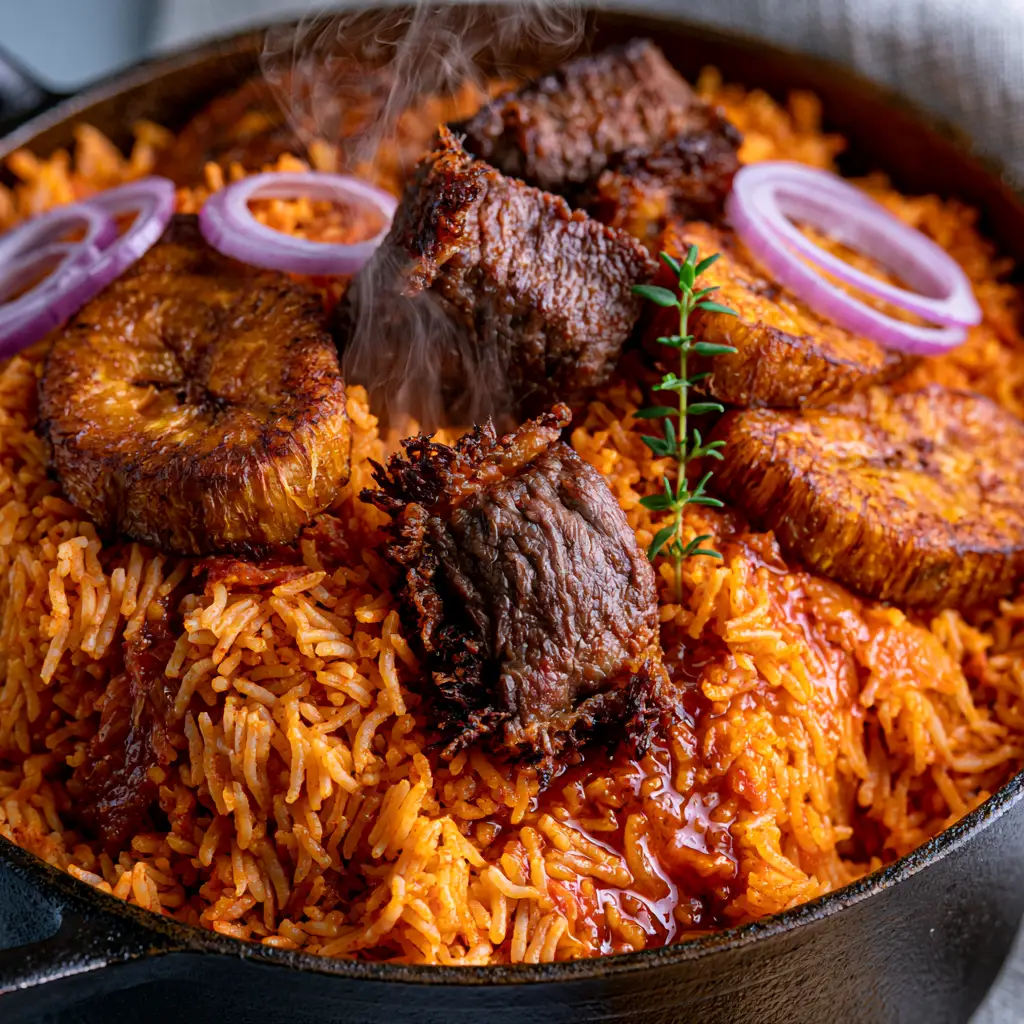
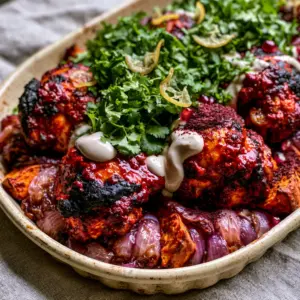
Imagine lifting the lid of a rustic cast iron pot to reveal a bed of perfectly separated, fluffy rice, topped with succulent chicken thighs boasting crispy, spice-rubbed skin and dark seared char marks. The sight of steam rising, carrying the aroma of ginger, garlic, and scotch bonnet, is enough to stop any food lover in their tracks.
Whether you are looking for an authentic Sunday dinner or a show-stopping dish for your next gathering, this version focuses on the technical precision required to achieve that elusive “party-style” smokiness and the distinct grain separation that defines a high-quality Chicken Jollof Rice.
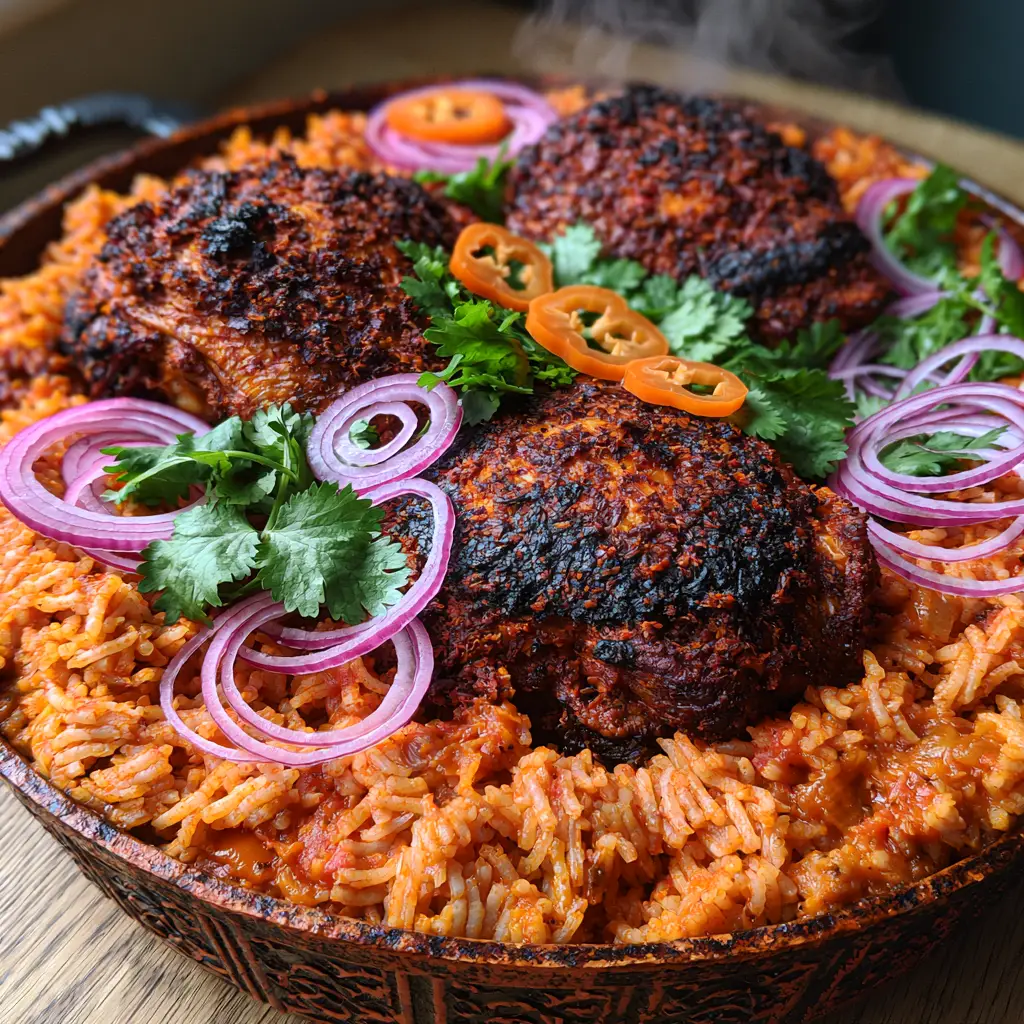
The Anatomy of an Authentic Chicken Jollof Rice Experience
- Perfectly Fluffy Grains: Utilizing parboiled long-grain rice ensures that every single grain stays distinct and tender, never mushy or clumped together.
- Concentrated Umami Base: A slow-cooked reduction of red bell peppers, tomatoes, and onions creates a deep, vibrant orange-red sauce that coats every grain.
- Crispy Charred Chicken: Spice-rubbed chicken thighs are seared to perfection, providing a smoky, textural contrast to the soft rice.
- Vibrant Fresh Garnishes: A scattering of paper-thin raw red onion rings, bright green cilantro, and fiery orange scotch bonnet slices adds a final layer of crunch and heat.
The Secret Ingredients for a Vibrant and Flavorful Jollof Base
To achieve the signature depth of Chicken Jollof Rice, each ingredient serves a specific culinary purpose. We are not just making a sauce; we are building a foundation of flavor.
Long-Grain Parboiled Rice: 3 cups (approx. 555g). This rice has been partially boiled in the husk, which gelatinizes the starch, ensuring the grains remain firm and separate during the long steaming process.
Red Bell Peppers and Plum Tomatoes: 3 large peppers and 5 tomatoes. These are blended and reduced to form the “stew” base, providing both the natural sweetness and the iconic red color.
Bone-In, Skin-On Chicken Thighs: 4 to 6 large pieces. The fat from the skin renders into the pot, adding a rich mouthfeel, while the bone keeps the meat succulent during the searing and steaming phases.
Scotch Bonnet Peppers: 2 peppers (for the base) and 1 for garnish. These provide the characteristic fruit-forward heat that defines West African cuisine. If you prefer less heat, remove the seeds before blending.
Tomato Paste: 6 oz (170g). This is the secret to the vibrant orange-red color. Frying the paste in oil before adding the liquid removes the metallic tin flavor and caramelizes the natural sugars.
The Aromatic Trinity: Red onion, fresh ginger, and garlic. These aromatics are the backbone of the dish, providing a sharp, spicy, and earthy aromatic profile that penetrates the rice.
Essential Equipment for a Masterful One-Pot Roast
To achieve the visual result seen in professional food photography, you need the right heat conductivity. A heavy-bottomed pot, ideally a rustic cast iron pot or a Dutch oven, is non-negotiable.
The thick walls of a cast iron pot distribute heat evenly, preventing the bottom of the rice from burning prematurely while allowing for that slight, deliberate “char” at the base that adds a smoky flavor to the entire pot. You will also need a high-powered blender to achieve a perfectly smooth pepper reduction.
Finally, ensure you have a roll of aluminum foil. A tight seal is the difference between rice that is “cooked” and rice that is perfectly steamed and fluffy.
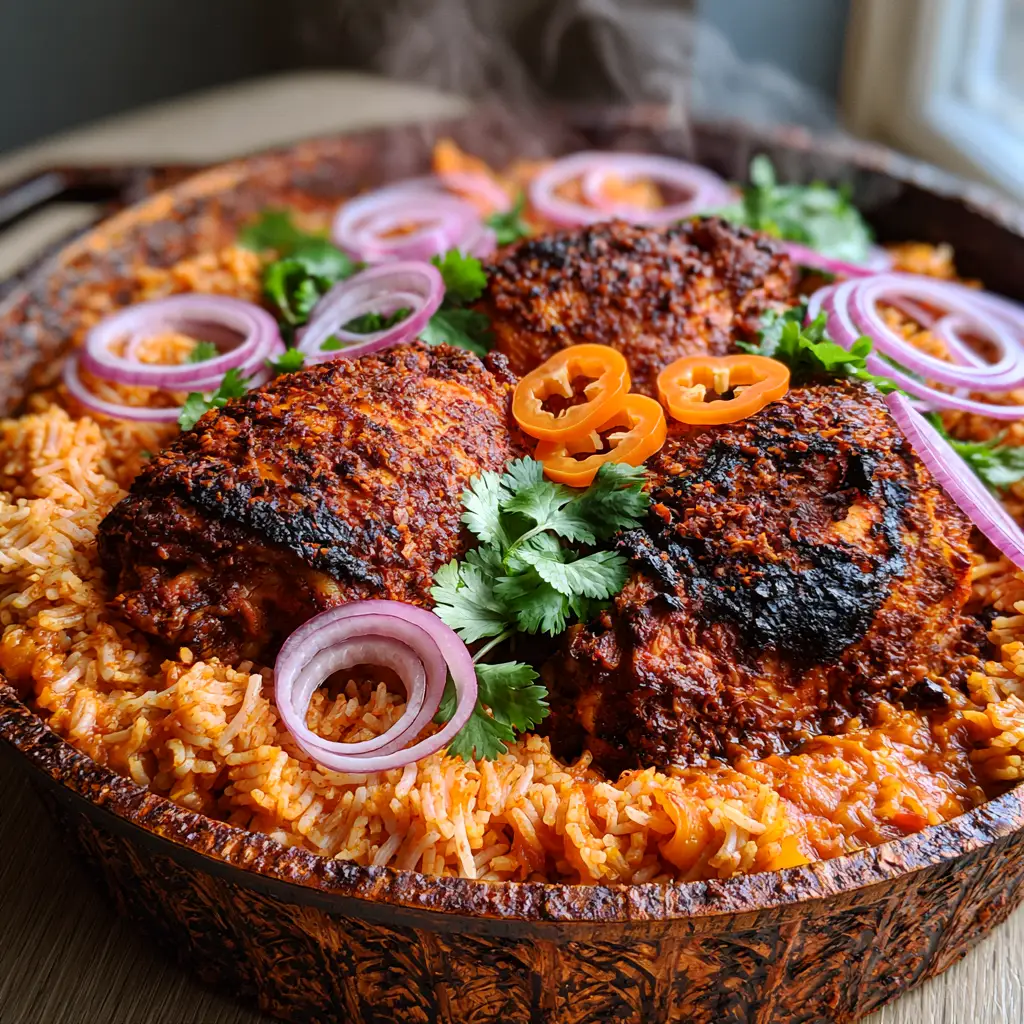
Developing the Base: The Art of the Pepper Reduction
Step 1: Blending and Concentrating the Flavor
In a blender, combine your red bell peppers, plum tomatoes, one red onion, and 2 scotch bonnet peppers. Blend until completely smooth. Pour this mixture into a saucepan and simmer over medium-high heat for 15-20 minutes.
You are looking for the water to evaporate until you have a thick, concentrated paste. This step is critical; if you skip it, the rice will be boiled rather than fried in the seasoned oil, leading to a loss of flavor intensity.
Step 2: Searing the Spice-Rubbed Chicken
Pat the chicken thighs dry with paper towels. Rub with a mixture of salt, black pepper, smoked paprika, and a touch of bouillon powder. In your cast iron pot, heat 3 tbsp (45ml) of vegetable oil over medium-high heat.
Place the chicken skin-side down. Sear until the skin is crispy and features dark, succulent char marks. Flip and sear the other side for 3 minutes. Remove the chicken from the pot and set aside; it will finish cooking with the rice.
Step 3: Frying the Aromatics and Tomato Paste
In the same oil (now flavored with chicken fat), add a finely sliced red onion. Sauté until translucent. Stir in 6 oz (170g) of tomato paste. Fry the paste for 5-8 minutes, stirring constantly.
You will see the oil turn a deep red and the paste begin to “clump” and darken. This “frying” process is what gives the Chicken Jollof Rice its professional, vibrant orange-red color. Stir in minced garlic and ginger during the last minute.
Step 4: Incorporating the Rice and Steaming
Add your parboiled rice to the fried paste and stir vigorously to coat every single grain. Pour in the concentrated pepper reduction and 2.5 cups (600ml) of high-quality chicken stock. Season with thyme, bay leaves, and curry powder.
Nestle the seared chicken thighs back into the rice. Cover the pot tightly with aluminum foil, then place the lid on top. Reduce heat to the lowest setting. The foil traps every bit of steam, which is what cooks the rice to a fluffy perfection without making it soggy.
Expert Tips for Success and Troubleshooting
- The Foil Trick: Never rely on just the pot lid. Using a layer of foil creates a pressurized environment that ensures the rice cooks evenly from top to bottom.
- Don’t Peek: Resist the urge to open the pot for at least 25 minutes. Every time you lift the lid, the steam escapes and the temperature drops, which can lead to hard rice.
- The “Burned” Bottom: In West Africa, the slightly scorched rice at the bottom (called “bottom pot”) is a delicacy. It provides the smoky flavor that characterizes a Nigerian party jollof rice.
- Rinsing the Rice: Even with parboiled rice, rinse it under cold water until the water runs clear. This removes surface starch that causes clumping.
The Final Flourish: Garnishing for Visual Impact
Once the rice is tender and has absorbed all the liquid, turn off the heat and let it rest for 10 minutes. This allows the moisture to redistribute. Fluff the rice gently with a fork, being careful not to break the grains.
To match the stunning visual of authentic Chicken Jollof Rice, garnish with paper-thin slices of raw red onion. These provide a sharp, crisp contrast to the warm, spicy rice. Add fresh cilantro leaves for a pop of bright green and three thin slices of orange scotch bonnet peppers for a warning of the heat within.
Storage, Reheating, and Freezing Your Jollof Rice
Chicken Jollof Rice is one of those rare dishes that tastes even better the next day as the spices have more time to meld. Store leftovers in an airtight container in the refrigerator for up to 4 days.
To reheat, add a splash of water or chicken stock to the rice and microwave it covered, or reheat it on the stovetop over low heat. This prevents the rice from drying out. You can also freeze Jollof rice for up to 3 months; just ensure it is completely cool before sealing it in a freezer-safe bag.
What to Serve With This Vibrant One-Pot Meal
While this is a complete meal on its own, you can elevate the experience by pairing it with other West African-inspired sides. Consider a side of fried sweet plantains (dodo) to balance the heat of the scotch bonnets.
If you enjoy variety in your rice dishes, you might also like exploring a shrimp fried rice for a different flavor profile, or perhaps a Moroccan harissa chicken if you love North African spice blends. For those who prefer a more traditional poultry pairing, this dish goes beautifully with a side of flavorful chicken skewers. If you are looking for the base version without the meat, check out our standard Jollof rice recipe.
Frequently Asked Questions
You can, but the texture will be different. Basmati is more delicate and requires significantly less water. For the most authentic, firm grain separation, parboiled rice is highly recommended.
The smokiness comes from two things: searing the chicken until charred and allowing the bottom layer of rice to slightly brown (not burn) in a heavy cast iron pot.
It has a kick thanks to the scotch bonnet peppers. You can control the heat by removing the seeds from the peppers before blending them into the base.
The vibrant red color comes from a concentrated reduction of red bell peppers and tomatoes, combined with tomato paste that has been fried in oil to darken its hue.
Mushy rice usually happens if you use too much water or the wrong type of rice. Always use long-grain parboiled rice and ensure you rinse it thoroughly to remove excess starch before cooking.
Authentic Chicken Jollof Rice Recipe
Chicken Jollof Rice: The Ultimate Guide to Smoky, One-Pot Perfection
Ingredients
Equipment
Method
- Blend tomatoes, red bell peppers, 1 onion, and 2 scotch bonnets until smooth.
- Simmer the blended mixture in a pan for 15-20 minutes until water evaporates and it becomes a thick paste.
- Season chicken with paprika, salt, and pepper. Sear in oil in the cast iron pot until the skin is charred and crispy. Remove chicken.
- Sauté sliced onions in the same pot, then add tomato paste and fry for 8 minutes until it turns deep red.
- Stir in the rinsed rice, the pepper reduction, and chicken stock. Add bay leaves and thyme.
- Place chicken back on top. Cover tightly with foil and a lid. Cook on low heat for 30 minutes.
- Let rest for 10 minutes. Fluff with a fork and garnish with raw onion rings, cilantro, and scotch bonnet slices.
Notes
The 'foil seal' is the most important step for fluffy grains.
Conclusion: Bring the Taste of West Africa to Your Kitchen
This Chicken Jollof Rice is a testament to the beauty of slow-cooked, intentional flavors. By focusing on the pepper reduction and the steaming technique, you can create a restaurant-quality dish that is as visually stunning as it is delicious. The combination of charred chicken and fluffy, spice-infused rice is a culinary experience you won’t soon forget.
If you enjoyed this recipe, please leave a comment below and let us know how your Jollof turned out! Don’t forget to share your creations and follow us on Pinterest for more authentic home-cooked inspiration.