There is no culinary icon quite as celebrated as the Nigerian party jollof rice. It is more than just a dish; it is the heartbeat of any celebration, known for its signature smoky aroma and vibrant, deep-red hue.
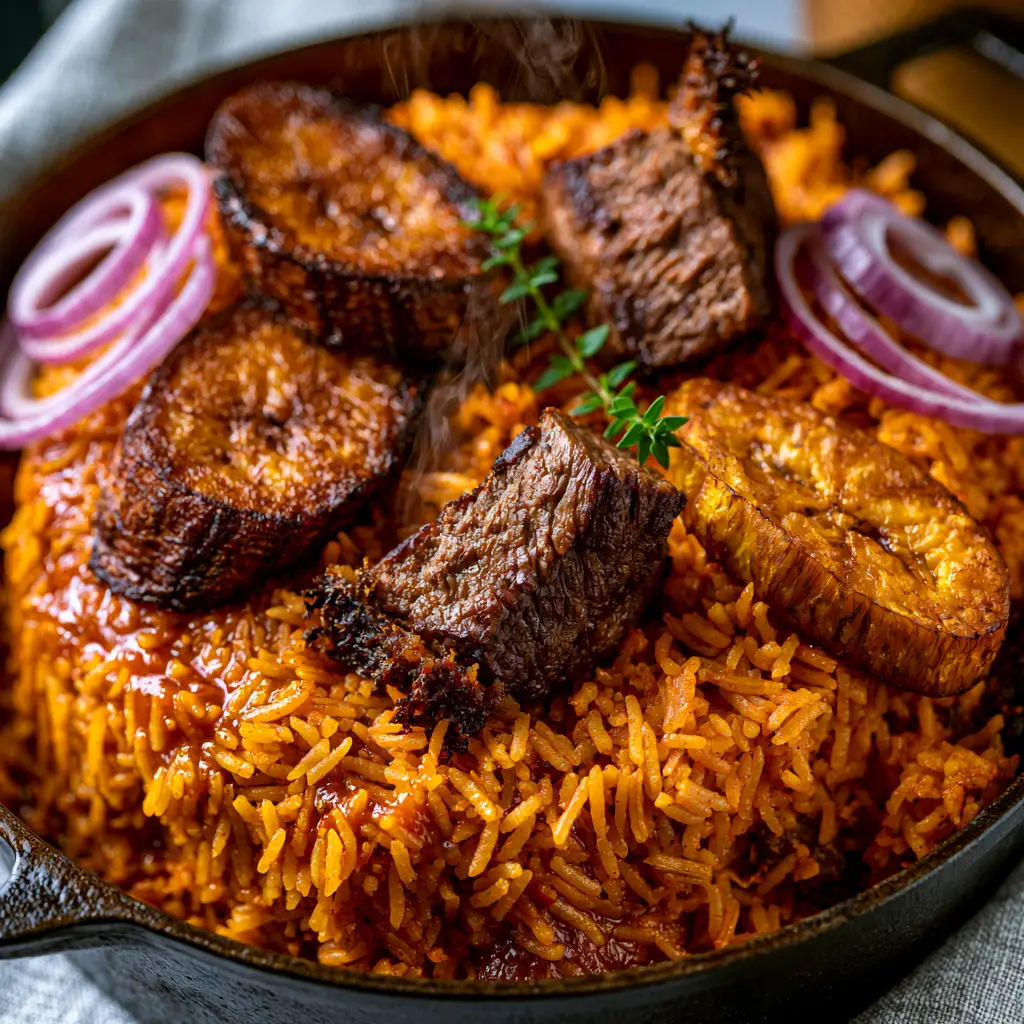
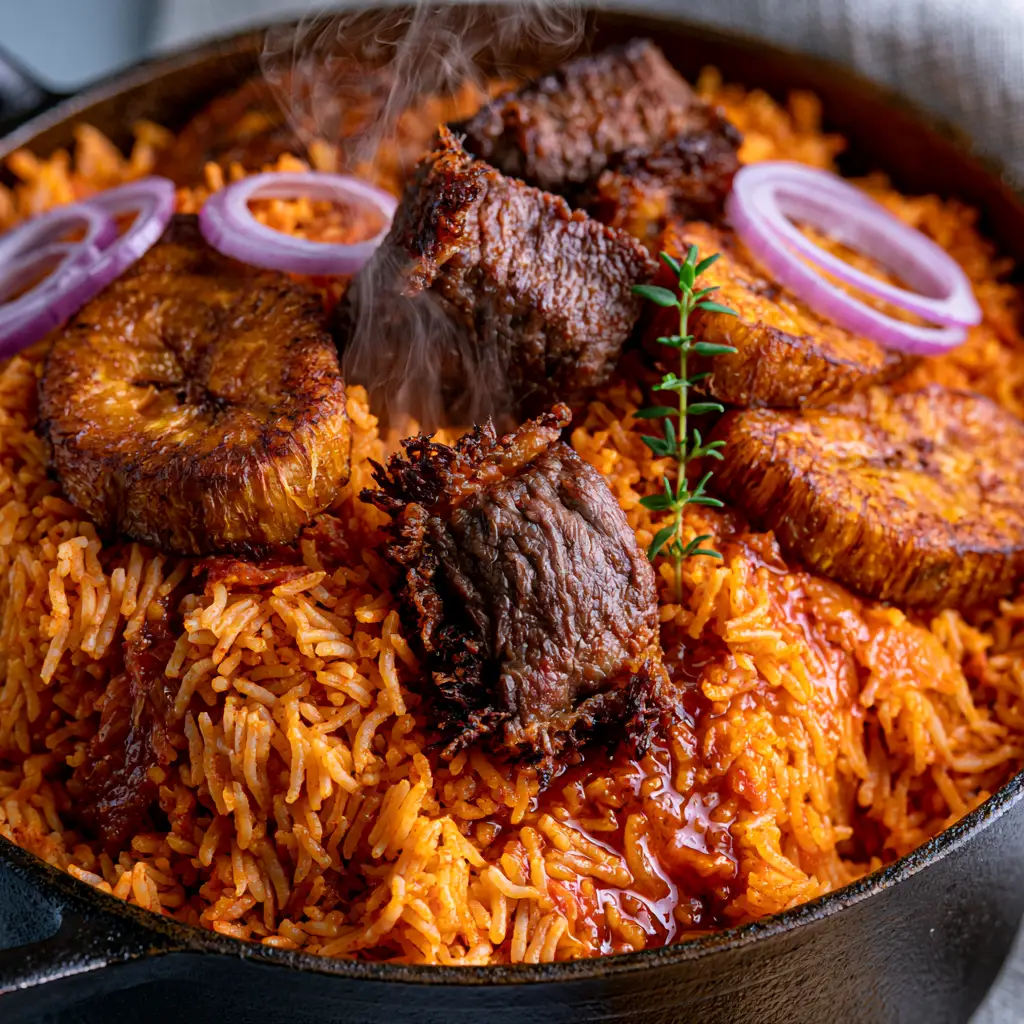
When you look at a pot of authentic jollof, you should see individual grains of long-grain parboiled rice, each glistening with a glossy tomato-pepper reduction. The visual of steam rising from a rustic cast iron pot, revealing charred grains at the base, is the hallmark of a master chef.
This recipe captures that exact magic, featuring succulent seared beef chunks with crispy edges and sweet, caramelized fried plantains. Topped with paper-thin raw red onion rings and a fresh thyme sprig, this dish is a sensory masterpiece that brings the spirit of Lagos to your kitchen.
The Unmistakable Appeal of Authentic Smoky Jollof Rice
What sets a true Nigerian party jollof rice apart from a standard weekday meal is the “party” factor. This involves a specific technique of steaming the rice in a rich, fried pepper base until it develops a subtle smoky flavor from the “bottom-pot” char.
- The Texture: Every grain of parboiled rice remains perfectly separated, never mushy, thanks to a careful parboiling and steaming process.
- The Color: A vibrant, deep-orange and red coat achieved through a high ratio of red bell peppers and premium tomato paste.
- The Flavor Profile: A complex balance of heat from scotch bonnets, savory umami from beef stock, and the sweet contrast of fried plantains.
- The Sensory Experience: The sight of seared beef chunks nestled against golden-brown plantains and the aromatic scent of scorched rice.
Essential Elements for a Vibrant Red Jollof Sauce
3 cups (600g) Long-Grain Parboiled Rice: This specific rice variety is crucial because it contains less starch, allowing the grains to remain distinct and firm throughout the long steaming process.
4 Large Red Bell Peppers (Tatase): These provide the foundation of the deep-red color and a sweet, earthy base that defines the sauce’s character.
3 Large Tomatoes: Fresh tomatoes add necessary acidity and moisture to the pepper mix, helping to balance the richness of the oil.
2 Medium Red Onions: One is blended into the base for sweetness, while the other is sliced and fried to build a savory aromatic foundation.
2-3 Scotch Bonnet Peppers (Atarodo): These provide the quintessential West African heat; adjust according to your spice tolerance for the perfect kick.
1/2 cup (120ml) Vegetable Oil: Essential for “frying” the sauce until the oil separates, which ensures the rice has that signature glossy, oily sheen.
1 lb (450g) Beef Chuck Chunks: We use beef with a bit of fat to ensure the seared edges become crispy and succulent during the browning phase.
2 Large Ripe Plantains: Look for yellow skins with black spots to ensure they caramelize into golden-brown, sweet rounds when fried.
3 tbsp (45g) Tomato Paste: This concentrated paste intensifies the red color and provides a deep, savory thickness to the jollof base.
2 cups (480ml) Rich Beef Stock: High-quality stock is the secret “invisible” ingredient that infuses every grain of rice with deep meaty flavor.
1 tbsp (6g) Curry Powder and 1 tsp (2g) Dried Thyme: These are the traditional spices that give Nigerian jollof its nostalgic, aromatic “party” scent.
3 Bay Leaves: These are tucked into the rice during the steaming phase to impart a subtle, herbal tea-like depth.
1 tsp (6g) Salt and 2 Bouillon Cubes (Knorr): These enhance the natural flavors of the peppers and beef, providing that essential savory backbone.
1 Small Red Onion (for garnish): Sliced into paper-thin rings to provide a sharp, crunchy contrast to the rich, warm rice.
Fresh Thyme Sprigs: A single green sprig adds a final pop of color and a fresh herbal aroma to the finished pot.
Must-Have Tools for the Perfect Charred Base
To achieve the visual result of a mountain of rice with visible steam and a charred base, a heavy-bottomed cast iron pot or Dutch oven is non-negotiable. The thick walls distribute heat evenly, preventing the rice from scorching too quickly while allowing the bottom layer to caramelize perfectly.
You will also need a high-speed blender to create a smooth pepper puree and a wide frying pan for the plantains. A tight-fitting lid—often supplemented with a layer of aluminum foil or parchment paper—is the secret to trapping steam, which cooks the rice without the need for excess water.
Mastering the Art of the Smoky Nigerian Jollof Rice Reduction
Preparing the Signature Pepper Base
Start by blending your red bell peppers, tomatoes, scotch bonnets, and one red onion until completely smooth. Pour this mixture into a pot and boil it over medium-high heat for 15-20 minutes until the water evaporates and you are left with a thick, concentrated paste.
This “par-boiling” of the sauce is a professional trick that removes the raw vegetable taste and intensifies the red pigments. Set this concentrated base aside while you prepare your aromatics.
Searing the Beef and Frying the Aromatics
In your cast iron pot, heat the vegetable oil over medium-high heat. Pat the beef chunks dry with a paper towel—moisture is the enemy of a good sear.
Season the beef with salt and sear in the hot oil until a deep golden-brown crust forms on all sides. Remove the beef and set aside, leaving the beef-infused oil in the pot.
Add the sliced red onions to the oil and sauté until translucent. Stir in the tomato paste and fry for 5 minutes, stirring constantly, until the paste turns a shade darker and the oil begins to look red and glossy.
The Slow-Fried Sauce Foundation
Add the concentrated pepper base to the fried tomato paste and onions. Season with curry powder, dried thyme, bouillon cubes, and bay leaves.
Lower the heat and fry the sauce for 10-15 minutes. You will know it is ready when the oil separates from the sauce and rises to the top—a visual cue that the flavors are fully developed and the bitterness is gone.
The Steaming Process for Individual Grains
Wash your long-grain parboiled rice multiple times in warm water until the water runs clear, removing excess starch. Add the washed rice to the fried sauce and stir until every grain is coated in the glossy red oil.
Pour in the beef stock. The liquid should only just cover the rice; if you add too much, the rice will become mushy. Cover the pot with a sheet of foil, then the lid, to create a pressurized seal.
Cook on the lowest possible heat for 25-30 minutes. Resist the urge to open the pot! The steam trapped inside is what does the heavy lifting, ensuring the rice is tender but firm.
Achieving the Golden Caramelized Plantains
While the rice is steaming, peel your ripe plantains and slice them into thick diagonal rounds. In a separate pan, heat oil over medium heat and fry the plantains until they reach a deep golden-brown color.
The edges should look slightly caramelized and tacky, indicating the sugars have developed. Set them aside on a paper towel to drain before placing them atop the finished rice.
Expert Tips for a Flawless Party Result
- The Foil Trick: Always use foil or a clean kitchen towel under your lid. This forces the steam back into the rice, which is the only way to get that “separated grain” look seen in our photos.
- The Intentional Burn: For the authentic “party” flavor, turn the heat up to medium for the last 5 minutes of cooking. You want to hear a slight crackling sound; this creates the charred rice base that infuses the whole pot with smokiness.
- Don’t Over-Stir: Once you’ve mixed the rice into the sauce, leave it alone. Excessive stirring breaks the grains and releases starch, leading to a “pudding” texture.
- Quality of Stock: If you use water instead of stock, you lose 50% of the flavor. Use a concentrated beef or chicken stock for that professional, savory depth.
Optimal Storage and Reheating Methods
Nigerian party jollof rice actually tastes better the next day as the spices continue to meld. Store leftovers in an airtight container in the refrigerator for up to 4 days.
To reheat, avoid the microwave if possible as it can dry out the rice. Instead, place the rice in a pan with a splash of water or stock, cover tightly, and steam on low heat until the grains are supple and the steam is visible again.
This dish also freezes beautifully for up to 3 months. Thaw overnight in the fridge before following the steaming reheat method described above.
What to Serve With Your Nigerian Feast
While this Nigerian party jollof rice is a complete meal on its own, it is traditionally served as part of a larger spread. For a truly authentic experience, pair it with authentic Nigerian fried rice for a “half-and-half” plate that is a staple at West African weddings.
If you prefer a lighter side, a crisp cucumber onion salad provides a refreshing vinegar-based crunch that cuts through the richness of the fried sauce. For those who love a variety of grains, serving this alongside chicken jollof rice offers different protein textures for your guests.
For dessert, the sweet profile of caramelized banana rice paper rolls echoes the sweetness of the fried plantains, rounding out the meal perfectly.
Answering Your Jollof Rice Questions
Allow the rice at the bottom of the pot to slightly burn or ‘char’ during the last 5 minutes of cooking. This scorched layer infuses the entire pot with a smoky aroma.
The secret is using a high ratio of red bell peppers (Tatase) and frying the tomato paste in oil until it darkens before adding the rice.
Yes, long-grain parboiled rice is sturdier and has less starch than jasmine or basmati, allowing the grains to remain separate and firm during the long steaming process.
Mushy rice is caused by using too much water. Jollof should be steamed, not boiled. Use a foil seal under the lid to cook the rice with minimal liquid and steam.
It refers to the specific smoky flavor and vibrant color achieved when cooking in large quantities over firewood. This recipe mimics that effect using a cast iron pot and a concentrated pepper base.
The Ultimate Nigerian Party Jollof Rice Recipe
Nigerian Party Jollof Rice: The Ultimate Smoky and Authentic Recipe Guide
Ingredients
Equipment
Method
- Blend bell peppers, tomatoes, scotch bonnets, and one onion. Boil in a pot for 20 minutes until water evaporates and paste thickens.
- In a cast iron pot, sear beef chunks in oil until a deep golden-brown crust forms. Remove and set aside.
- Sauté sliced onions and tomato paste in the beef oil for 5 minutes. Add the reduced pepper base and spices, frying until oil separates.
- Stir in washed rice and beef stock. Cover with foil and a lid. Steam on low for 30 minutes until grains are tender and separated.
Notes
Always wash parboiled rice until water is clear to prevent sticking.
Bring the Celebration Home
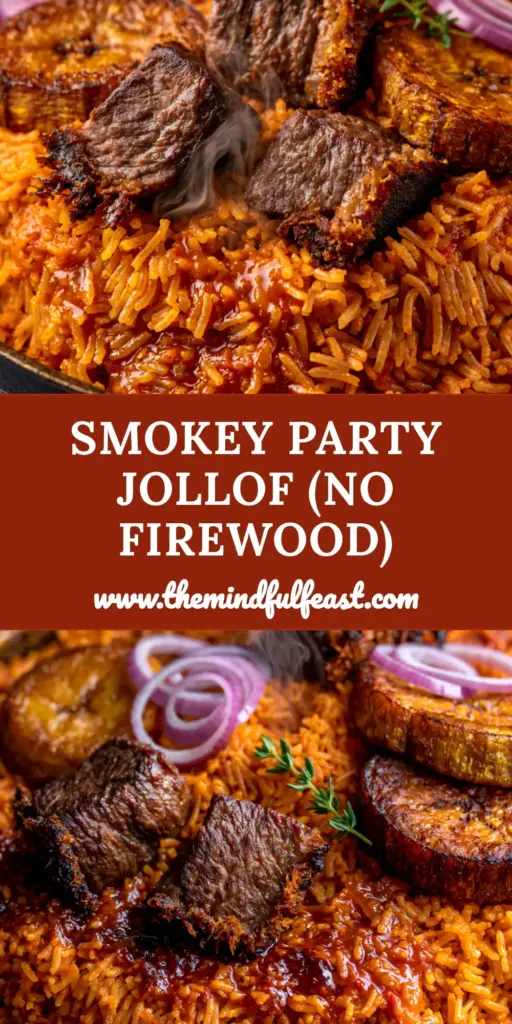
Mastering the Nigerian party jollof rice is a rite of passage for any home cook looking to explore West African cuisine. With its deep-red color, perfectly separated grains, and that unmistakable smoky finish, it is a dish that commands attention and brings people together.
Whether you are serving it in a rustic cast iron pot for a family dinner or at a large gathering, the combination of seared beef and caramelized plantains makes it unforgettable. We would love to see your results! Please leave a comment below and share your beautiful creations with us on Pinterest.