The perfect ciabatta sandwich is a masterpiece of textures, balancing a shatteringly crisp crust with a pillowy, airy interior. Imagine biting into golden-brown artisan bread, dusted with flour, only to meet a flood of creamy basil pesto and warm, melted fresh mozzarella. This isn’t just a quick lunch; it is a sensory experience inspired by the rustic cafes of Italy and perfected for your home kitchen.
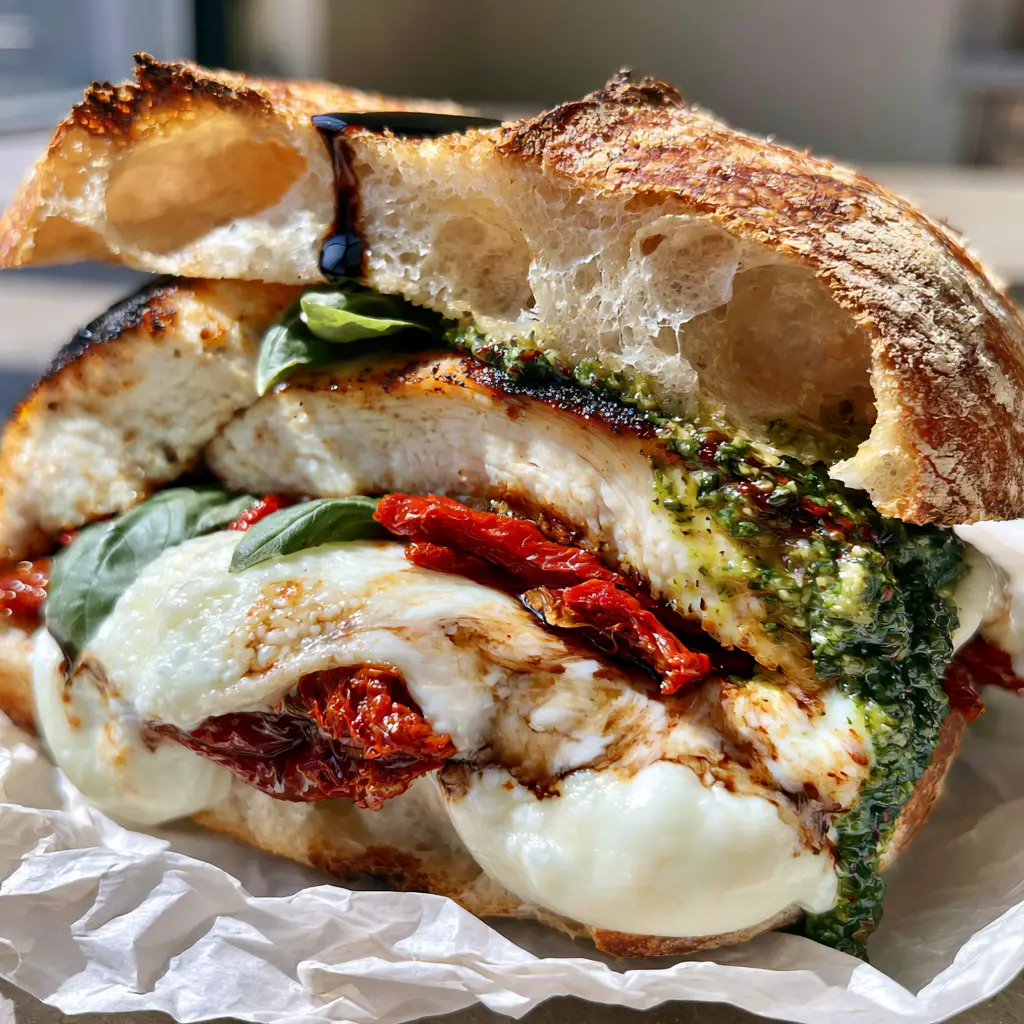
Visualizing the perfect bite is easy when you see the vibrant green pesto dripping down the side of thick-cut, seared chicken breast. Each layer is designed to provide a specific contrast: the tart pop of sun-dried tomatoes, the herbaceous aroma of fresh basil leaves, and the sophisticated zing of a dark balsamic glaze drizzle. This recipe ensures that every element, from the large air pockets in the bread to the cracked black pepper finish, creates a restaurant-quality result.
Whether you are looking for an elevated weekend brunch or a satisfying weeknight meal, this sandwich delivers on every promise. The natural highlights of the melted cheese and the deep char on the chicken make it as beautiful to look at as it is to eat. Let’s dive into the culinary science of crafting this gourmet handheld delight.
Why This Artisan Pressed Sandwich Works
- Structural Integrity: The open crumb of the ciabatta bread acts as a sponge for the creamy basil pesto without becoming soggy.
- Temperature Contrast: Combining sizzling seared chicken with cool, fresh basil leaves creates a complex mouthfeel.
- Flavor Balance: The richness of the fresh mozzarella is perfectly cut by the high acidity of the sun-dried tomatoes and balsamic glaze.
- Visual Appeal: The contrast between the golden-brown crust and the bright red and green fillings makes this a Pinterest-worthy meal.
The Anatomy of a Perfect Ciabatta Sandwich
The Foundation: Flour-Dusted Ciabatta
You cannot have a premier ciabatta sandwich without the right loaf. Look for a loaf that feels light for its size, indicating large air pockets (alveoli) created by a high-hydration dough. The crust should have a visible flour dusting, which provides a rustic aesthetic and a unique tactile experience when toasted.
For this recipe, you will need 1 large ciabatta loaf (approx. 12 inches/30cm) or 4 individual ciabatta rolls. Using high-quality bread ensures the sandwich holds up under the weight of the balsamic glaze and pesto. If you have extra garden produce, you might consider pairing this with a refreshing cucumber salad to balance the bread’s density.
The Protein: Gold-Seared Chicken Breast
We use 1.5 lbs (680g) of boneless, skinless chicken breast, sliced into thick, even cutlets. Searing the chicken over medium-high heat is essential to achieve the deep golden-brown crust described in our visual blueprint. This Maillard reaction provides the savory depth needed to stand up to the strong aromatics of the basil.
To ensure the chicken remains juicy, we season it simply with 1 tsp (6g) kosher salt and 1/2 tsp (1g) cracked black pepper. A touch of 1 tbsp (15ml) extra virgin olive oil in the pan helps conduct heat for that perfect sear. If you enjoy poultry-based meals, you may also like our creamy chicken salad recipe for your weekly meal prep.
The Creamy Elements: Pesto and Mozzarella
The “glue” of our ciabatta sandwich consists of 1/2 cup (125g) of creamy basil pesto and 8 oz (225g) of fresh mozzarella cheese. Fresh mozzarella is superior here because of its high moisture content, which leads to that bubbly, stretchy texture when melted under a broiler or in a hot pan.
The pesto should be vibrant green and slightly emulsified. Look for a version that uses high-quality pine nuts and Parmigiano-Reggiano for the best flavor profile. When the pesto meets the warm chicken, it begins to drip down the sides, creating those irresistible “sauce drips” seen in gourmet food photography.
The Bright Finish: Tomatoes, Basil, and Glaze
To provide a sweet and tangy counterpoint, we incorporate 1/3 cup (50g) of oil-packed sun-dried tomatoes, drained and chopped. These offer a much more concentrated flavor than fresh tomatoes, which can sometimes water down a toasted sandwich. We finish the interior with 8-10 large, fresh basil leaves, left whole for a striking visual impact.
The final touch is a 2 tbsp (30ml) drizzle of balsamic glaze. This thick, syrupy reduction adds a dark, glossy contrast to the crusty golden bread. If you are looking for other vegetable-forward ideas, check out our summer vegetable gratin as a side dish.
Essential Tools for the Gourmet Home Chef
Achieving the specific textures of this ciabatta sandwich requires a few key pieces of equipment. A heavy-bottomed cast iron skillet is the best tool for searing the chicken, as it retains heat efficiently and produces an even crust. You will also need a sharp serrated knife to slice the ciabatta without crushing the delicate air pockets.
To get the mozzarella bubbly and melted, a standard baking sheet lined with parchment paper is necessary. This prevents the cheese from sticking and makes for easy cleanup. If you want to press the sandwich like a traditional panino, a panini press or a second heavy skillet can be used to weight it down during the final toasting phase.
Mastering the Sear and the Melt: Step-by-Step
Preparing the Chicken Cutlets
Start by slicing your chicken breasts horizontally into even cutlets, about 1/2 inch (1.25cm) thick. Pat them dry with paper towels to remove excess moisture; this is the secret to getting a sear rather than a steam. Season both sides generously with salt and cracked black pepper.
Heat your olive oil in the skillet until it shimmers. Lay the chicken in the pan, ensuring they don’t overlap. Sear for 4-5 minutes per side. Look for the visual cue of the edges turning opaque and a deep brown crust forming on the bottom before flipping.
Toasting the Artisan Ciabatta
Slice the ciabatta loaf in half lengthwise. Place the bread cut-side up on your parchment-lined baking sheet. For an extra layer of flavor, you can lightly brush the cut sides with a bit of the oil from the sun-dried tomato jar. This adds a subtle herbal note to the bread itself.
Toast the bread in a preheated oven at 400°F (200°C) for about 5 minutes. You are looking for a golden-brown hue and a crusty exterior that yields slightly when pressed. The flour dusting should remain white and visible against the darkened bread.
The Melting Phase
Remove the bread from the oven and spread a thick layer of creamy basil pesto on both the top and bottom halves. On the bottom half, layer your seared chicken cutlets. Top the chicken with thick slices of fresh mozzarella. Return the bottom half to the oven (or under the broiler) for 2-3 minutes.
Watch closely for sensory cues: the cheese should begin to bubble and develop small golden spots, and the pesto will start to release its fragrance. Once the mozzarella is draped over the chicken, remove it from the heat. This is the stage that creates the “handheld smartphone photo” look we desire.
Final Assembly and Glaze
While the cheese is still hot, press the sun-dried tomatoes into the melted mozzarella. Lay the fresh basil leaves across the top. Drizzle the balsamic glaze in a zig-zag pattern over the fillings and even a little on the top crust of the bread for that professional aesthetic.
Close the sandwich and press down slightly. Use your serrated knife to cut the sandwich at a slight diagonal. This reveals the beautiful internal layers and makes the sandwich easier to handle. For a fun variety, you could serve this alongside adult lunchable components for a sophisticated picnic spread.
Expert Tips for the Ultimate Ciabatta Sandwich
- The “Soggy-Proof” Barrier: Always spread the pesto all the way to the edges. The oil in the pesto acts as a barrier, preventing the moisture from the cheese and chicken from soaking into the bread.
- Rest the Chicken: Let the seared chicken rest for 3 minutes before slicing or placing it on the bread. This allows the juices to redistribute, ensuring they stay in the meat and not on your plate.
- Balsamic Balance: If your balsamic glaze is too thin, simmer it in a small saucepan for 5 minutes until it coats the back of a spoon. A thick glaze stays where you put it rather than running off the sandwich.
- Cheese Selection: If using “Buffalo Mozzarella,” be sure to pat it dry extremely well, as it has a much higher water content than standard fresh mozzarella.
Storage and Reheating Advice
The ciabatta sandwich is best enjoyed immediately while the bread is at its peak crispness. However, if you have leftovers, wrap them tightly in foil and store them in the refrigerator for up to 24 hours. Note that the fresh basil leaves may wilt and darken upon reheating.
To reheat, avoid the microwave, as it will turn the artisan bread rubbery. Instead, place the sandwich in a toaster oven or air fryer at 350°F (175°C) for 5-7 minutes. This will crisp the crust back up and remelt the mozzarella without overcooking the chicken. For a different meal prep option, you might try our easy chicken fajitas which store exceptionally well.
What to Serve with Your Gourmet Press
This sandwich is quite hearty, so lighter side dishes work best. A simple green salad or a bowl of tomato bisque is a classic pairing. If you want something more substantial, consider a side of crispy zucchini fritters or a small serving of fluffy rice pilaf.
For a themed Italian dinner, you could start with a baked zucchini parmesan as an appetizer. The key is to choose sides that offer a different texture, such as the crunch of fresh vegetables or the softness of a grain-based dish.
Frequently Asked Questions
Yes, but ensure the chicken is fully thawed and patted extremely dry with paper towels before searing to achieve the required golden-brown crust.
Toast the bread first to create a crisp barrier, and apply a layer of fat-based sauce like pesto or mayo to prevent moisture from the meat and cheese from soaking into the crumb.
Fresh mozzarella provides a superior creamy texture and visual ‘melt,’ but it contains more water. Pat it dry before using to avoid excess liquid in your sandwich.
Use a store-bought balsamic glaze (reduction) or simmer balsamic vinegar with a touch of honey until it thickens. Apply it in a quick back-and-forth motion for a clean look.
Ciabatta is ideal due to its high hydration level, which creates large air pockets and a sturdy, chewy crust that can support heavy fillings and sauces without collapsing.
The Perfect Seared Chicken Ciabatta Sandwich Recipe
Ciabatta Sandwich: The Ultimate Gourmet Pesto and Seared Chicken Press
Ingredients
Equipment
Method
- Heat olive oil in a skillet over medium-high heat. Season chicken cutlets with salt and pepper. Sear for 4-5 minutes per side until a deep golden-brown crust forms.
- Slice ciabatta lengthwise and toast at 400°F (200°C) for 5 minutes until crusty.
- Spread pesto on both halves. Layer chicken and mozzarella on the bottom half. Broil for 2-3 minutes until cheese is bubbly and melted.
- Add sun-dried tomatoes, fresh basil, and a drizzle of balsamic glaze. Close the sandwich and slice diagonally.
Notes
Pat the chicken very dry before searing for the best crust.

Closing & Call to Action
Mastering the ciabatta sandwich is a gateway to professional-level home cooking. By focusing on high-quality ingredients and proper searing techniques, you turn a simple lunch into a gourmet event. The combination of melted mozzarella, bright pesto, and crusty bread is a timeless favorite that never fails to impress.
Did you try this recipe? We would love to hear how your sear turned out! Leave a comment below and let us know your favorite sandwich toppings. Don’t forget to share your beautiful creations on Pinterest and follow us for more artisan recipe inspiration.