There is a specific, intoxicating aroma that defines the coastal air of East Africa—a blend of warm cloves, pungent ginger, and toasted cumin. This East African Pilau Rice is not just a side dish; it is a fragrant masterpiece that serves as the crown jewel of Swahili celebrations from Mombasa to Zanzibar. Unlike its Indian cousin, the East African version relies on a specific browning technique to achieve its iconic, deep mahogany hue without the use of artificial colors.
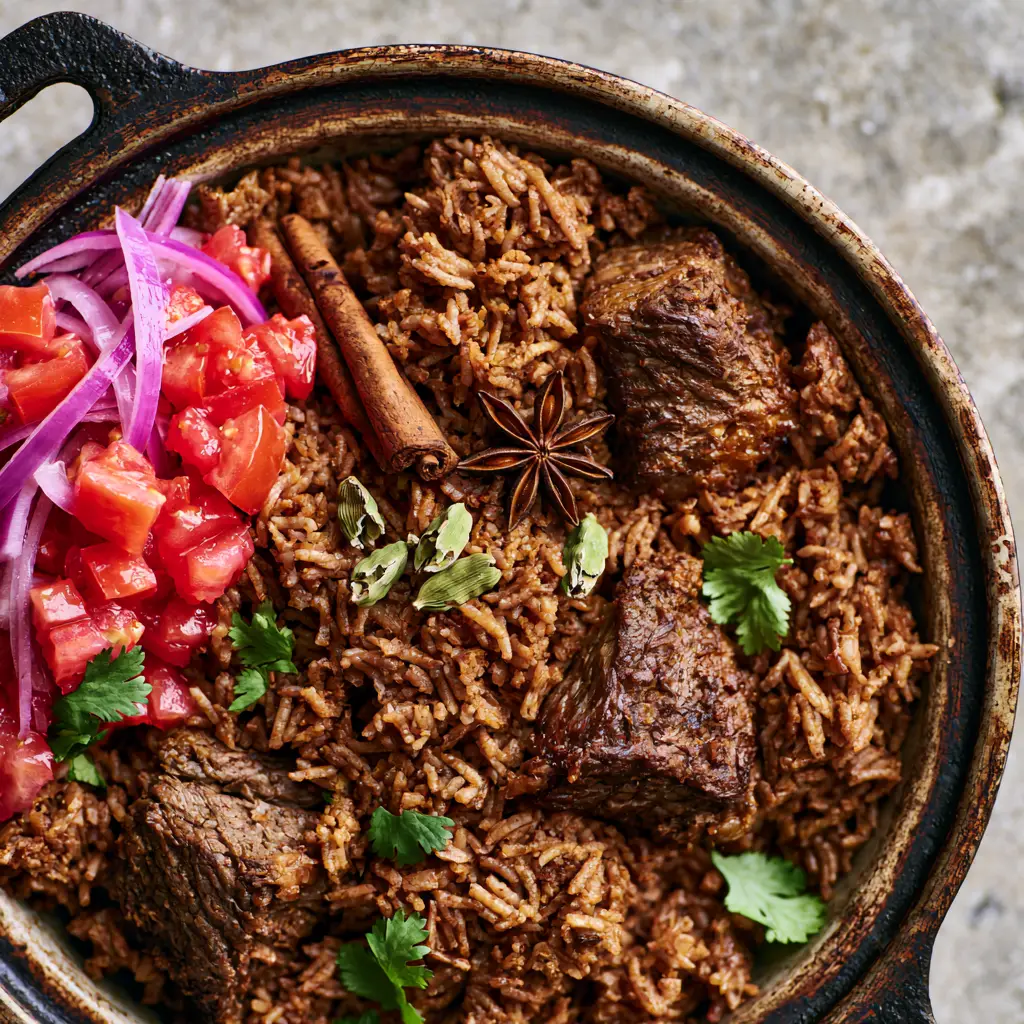
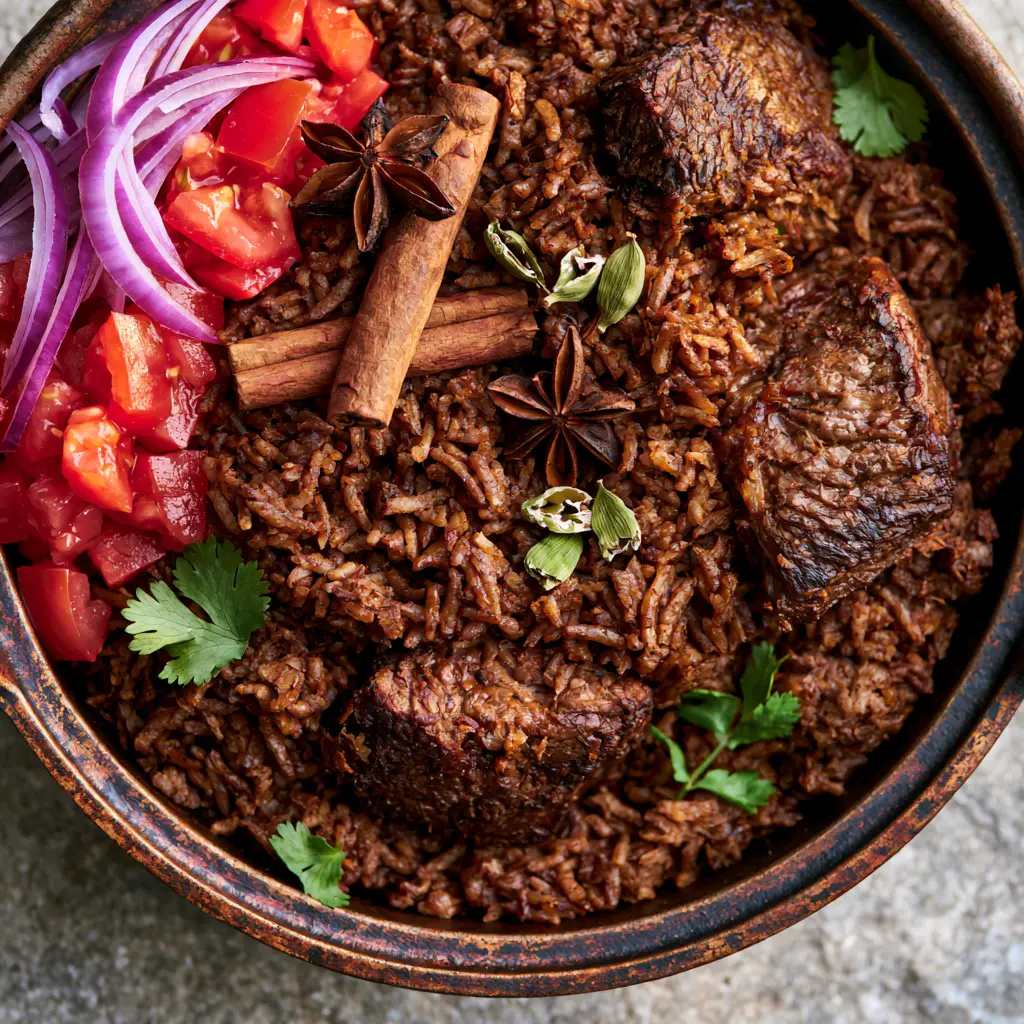
When you lift the lid of your rustic cast iron pot, the first thing you notice is the visual perfection: every single grain of long-grain basmati rice stands tall and separate. Nestled among the fluffy grains are succulent chunks of seared beef, their edges caramelized to a dark, savory crust. The dish is a sensory explosion, punctuated by the structural beauty of whole cinnamon sticks, cracked green cardamom pods, and the occasional star anise peeking through the rice.
In this guide, we are going to master the forensic details of this dish. We will achieve that exact mahogany brown spice infusion described in the culinary blueprint, ensuring your kitchen smells like a spice market and your plate looks like a professional food photograph. Let’s dive into the science of the perfect Pilau.
Why This Authentic Swahili Pilau is a Culinary Masterpiece
- Perfectly Individual Grains: We utilize a rigorous rinsing and steaming method to ensure your rice is fluffy and light, never clumping or mushy.
- Deep Mahogany Infusion: Learn the professional “onion browning” technique that provides the rich, dark color and a hidden layer of sweet-savory depth.
- Caramelized Beef Textures: By searing the beef cubes at high heat, we create a textural contrast between the tender interior and the crisp, browned edges.
- Whole Spice Complexity: The inclusion of whole cinnamon, star anise, and cardamom provides a slow-release aromatic experience that ground spices simply cannot match.
- Visual Contrast: The addition of a fresh tomato and red onion garnish (Kachumbari) provides a sharp acid pop and vibrant color against the dark, earthy rice.
The Anatomy of a Perfect Mahogany Pilau
To achieve the results seen in our visual blueprint, every ingredient must serve a specific structural or flavor purpose. This isn’t just a list; it’s a collection of building blocks for flavor. If you enjoy traditional African foods, you’ll know that the quality of your spices determines the soul of the dish.
Long-Grain Basmati Rice: 3 cups (600g). Basmati is essential for its length and aroma; the grains must be aged to ensure they stay separate during the steaming phase.
Beef Chuck or Brisket: 1.5 lbs (680g). You need a cut with enough connective tissue to stay succulent during the simmer, yet firm enough to hold those seared, caramelized edges.
Red Onions: 3 large (approx. 450g), thinly sliced. These are the most critical “invisible” ingredient; as they caramelize past golden to a deep brown, they provide the natural pigment for the rice.
Whole Spices: 2 cinnamon sticks, 5 green cardamom pods (cracked), and 2 star anise. These whole elements infuse the oil and rice slowly, creating a complex fragrance that builds with every bite.
Pilau Masala (Ground): 2 tbsp (30g). A blend of cumin, black pepper, cloves, and cardamom that reinforces the whole spices and coats the grains in flavor.
Fresh Ginger & Garlic Paste: 2 tbsp (30g). This provides the “zing” that cuts through the richness of the beef and the warmth of the spices.
Diced Tomatoes: 2 medium (200g). Added toward the end of the browning process to provide moisture and a hint of acidity that balances the earthy spices.
Beef Stock or Water: 5 cups (1.2L). Using a high-quality stock adds another layer of “umami,” though water is traditional to let the spices shine.
Vegetable Oil or Ghee: 1/4 cup (60ml). You need enough fat to properly sear the beef and “fry” the rice grains before steaming, which prevents clumping.
Essential Tools for the Professional Home Cook
Achieving the mahogany brown spice infusion requires even heat distribution. A heavy-bottomed rustic cast iron pot or a Dutch oven is non-negotiable here. The thick walls hold heat consistently, allowing the onions to brown evenly without burning and the rice to steam in its own residual moisture.
You will also need a fine-mesh strainer for rinsing the rice. Rinsing is a “foundational invisible step”—it removes excess surface starch. If you skip this, your rice will clump, failing the visual standard of “perfectly individual and fluffy” grains. A sharp chef’s knife is also required for the precise slicing of red onions and the dicing of the kachumbari garnish.
Step-by-Step: Mastering the Art of East African Pilau Rice
Phase 1: Preparing the Rice and Searing the Beef
Begin by rinsing your 3 cups (600g) of basmati rice in cold water. You must repeat this process 4-5 times until the water runs completely clear. Soak the rice for 20 minutes to allow the grains to hydrate slightly, then drain thoroughly.
In your cast iron pot, heat 1/4 cup (60ml) of oil over medium-high heat. Pat your beef cubes dry with a paper towel—moisture is the enemy of a good sear. Drop the beef into the hot oil and do not move them for 2-3 minutes. You are looking for those “caramelized edges” described in the blueprint. Once a deep brown crust forms, flip and sear the other sides. Remove the beef and set aside, leaving the flavored oil in the pot.
Phase 2: The Secret to the Mahogany Hue
This is where the magic happens. Add your sliced red onions to the pot. Sauté them over medium heat, stirring frequently. You aren’t just looking for translucent onions; you want them to reach a dark, chocolatey brown. If they look like they might burn, add a tablespoon of water to deglaze the pot. This “onion jam” stage is what dyes the East African Pilau Rice its signature color.
Once the onions are dark brown, add the ginger-garlic paste and your whole spices: the cinnamon sticks, star anise, and cracked cardamom pods. Toast them for 60 seconds until the aroma fills the room. Add the ground Pilau Masala and the diced tomatoes. Cook until the tomatoes break down into a thick, dark paste.
Phase 3: The Infusion and Simmer
Return the seared beef to the pot and stir to coat it in the spice paste. If you have ever made Ghanaian Jollof Rice, you know that the “fry” stage of the base is critical. Pour in 5 cups (1.2L) of beef stock or water. Bring the mixture to a rolling boil, then add a generous pinch of salt (about 1 tbsp/15g). Taste the liquid; it should taste slightly “over-salted,” as the rice will absorb much of it.
Phase 4: The Perfect Rice Steam
Add the drained rice to the pot. Stir once gently to distribute the beef and spices. Let the liquid boil down until it reaches the level of the rice and “craters” or small holes begin to form on the surface. This is the signal that most of the free water has been absorbed. Reduce the heat to the absolute lowest setting. Cover the pot with a tight-fitting lid (or wrap the lid in a clean kitchen towel to trap every bit of steam).
Steam the rice for 20 minutes. Do not peek! Opening the lid releases the pressure needed to finish the grains. After 20 minutes, turn off the heat and let it sit, covered, for another 10 minutes. This allows the moisture to redistribute, ensuring the grains are “individual and fluffy.”
Expert Tips for the Fluffiest Rice Every Time
- The “No-Stir” Rule: Once the rice is in the pot and boiling, stop stirring. Stirring breaks the grains and releases starch, leading to the “clumping” we want to avoid.
- Temperature Control: If your onions are browning too fast on the edges but stay white in the middle, your heat is too high. Low and slow is the key to that mahogany pigment.
- The Towel Trick: Placing a cloth under the lid absorbs the rising steam that would otherwise drip back onto the rice and make the top layer soggy.
- Resting is Vital: Always allow the rice to rest after the heat is off. This is the difference between a good rice dish and a professional East African Pilau Rice.
Preserving the Flavor: Storage and Reheating
Pilau is one of those rare dishes that tastes even better the next day as the spices continue to meld. Store leftovers in an airtight container in the refrigerator for up to 4 days. When reheating, avoid the microwave if possible, as it can dry out the beef. Instead, place the rice in a pan with a splash of water, cover, and steam over low heat until warmed through.
This dish also freezes beautifully. Use freezer-safe bags and press out the air. It will stay fresh for up to 3 months. To serve, thaw overnight in the fridge and reheat using the steaming method described above. The beef will remain just as tender as the day it was made.
What to Serve with Your Authentic Pilau
To truly match the visual prompt, you must serve this with Kachumbari. This is a simple salad of diced fresh tomatoes, thin-sliced purple onions, and chopped fresh cilantro. The acidity of the raw onions and tomatoes acts as a palate cleanser against the heavy, spiced rice.
If you want a full feast, consider pairing this with other vegetable side dishes or a refreshing cucumber and tomato salad. For those who love a bit of heat, a side of pili-pili (African bird’s eye chili) sauce is traditional. Because the beef in this recipe is so prominent, it reminds many of the savory depth found in juicy seared beef recipes, making it a hit for meat lovers.
Frequently Asked Questions About East African Pilau
Yes, you can substitute beef with goat, lamb, or chicken. For a vegetarian version, use hardy vegetables like potatoes or chickpeas, but the browning of the onions remains the most important step for flavor.
Three factors are key: rinse the rice until the water is clear to remove starch, use a 1:1.5 or 1:1.75 rice-to-water ratio, and never stir the rice once it begins to simmer.
No. Pilau is a one-pot dish where the rice, meat, and spices are cooked together in the same broth. Biryani involves par-boiling rice and layering it with a separate meat curry before a final steam.
Authentic Pilau Masala is a warm spice blend primarily consisting of ground cumin, black peppercorns, cloves, cinnamon, and cardamom pods.
The mahogany brown color comes from caramelizing the red onions. You must cook them until they are a very dark chocolatey brown (but not burnt) before adding the rice and liquid.
The Ultimate East African Beef Pilau Recipe
[Image-Pin]
East African Pilau Rice: The Secret to Mahogany Brown Beef and Rice
Ingredients
Equipment
Method
- Rinse the basmati rice 4-5 times until water is clear. Soak for 20 minutes, then drain.
- Heat oil in a cast iron pot. Sear beef cubes in batches until deep mahogany brown edges form. Remove and set aside.
- Sauté sliced onions in the same pot until they reach a deep, dark brown color. Add water if needed to prevent burning.
- Stir in ginger-garlic paste, whole cinnamon, star anise, cardamom, and pilau masala. Add tomatoes and cook until a dark paste forms.
- Return beef to the pot. Add stock and bring to a boil. Stir in the rice.
- Reduce heat to low when water levels drop. Cover tightly and steam for 20 minutes. Rest for 10 minutes before fluffing with a fork.
Notes
Do not open the lid during the steaming phase.
Bring the Flavors of the Swahili Coast Home
This East African Pilau Rice is more than a meal; it’s a journey through history and spice. From the deep mahogany color of the rice to the perfectly seared beef chunks, every element of this recipe is designed to impress both the eyes and the palate. The contrast of the whole cinnamon and star anise against the vibrant green of the cilantro garnish makes it a stunning centerpiece for any table.
If you enjoyed this deep dive into authentic flavors, please leave a comment below and let us know how your mahogany browning turned out! Don’t forget to sign up for our newsletter for more culinary forensics and share this recipe to your favorite boards on Pinterest so you never lose the secret to the perfect Pilau.