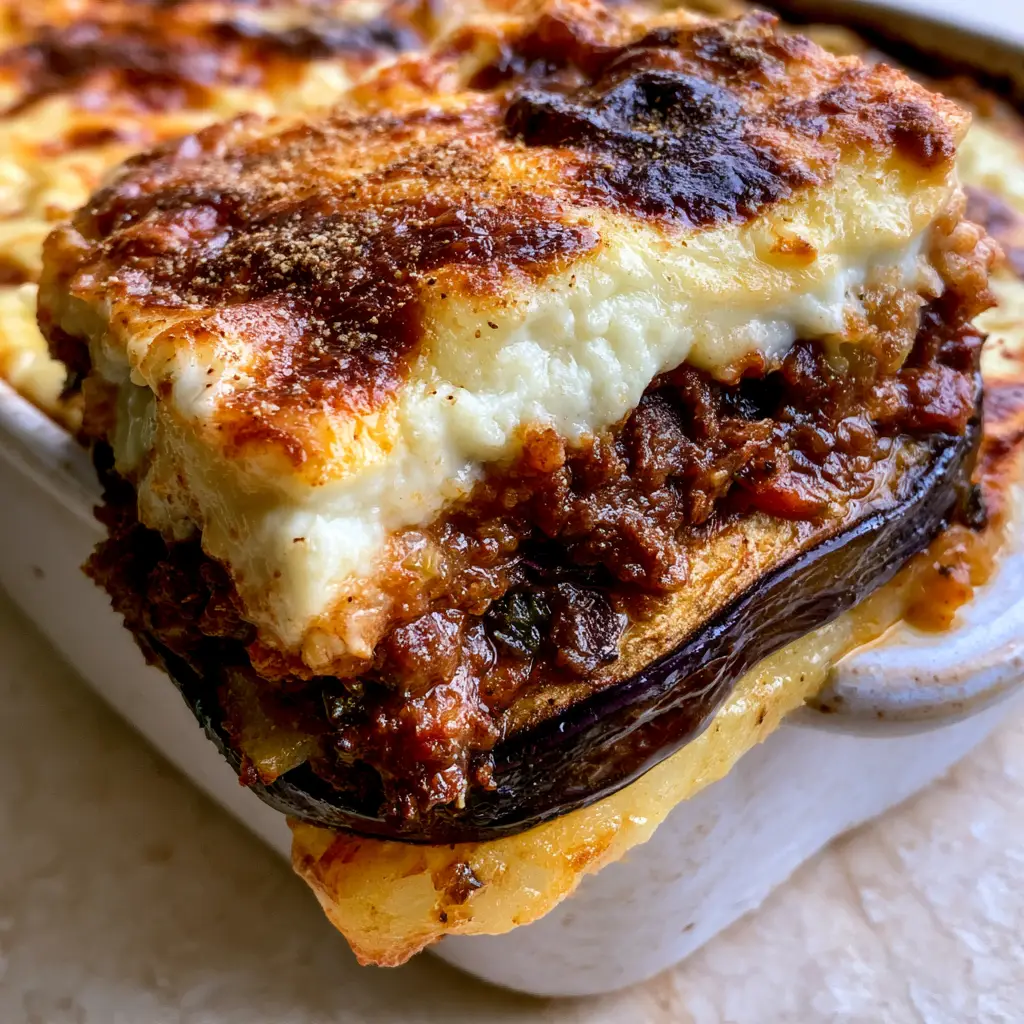
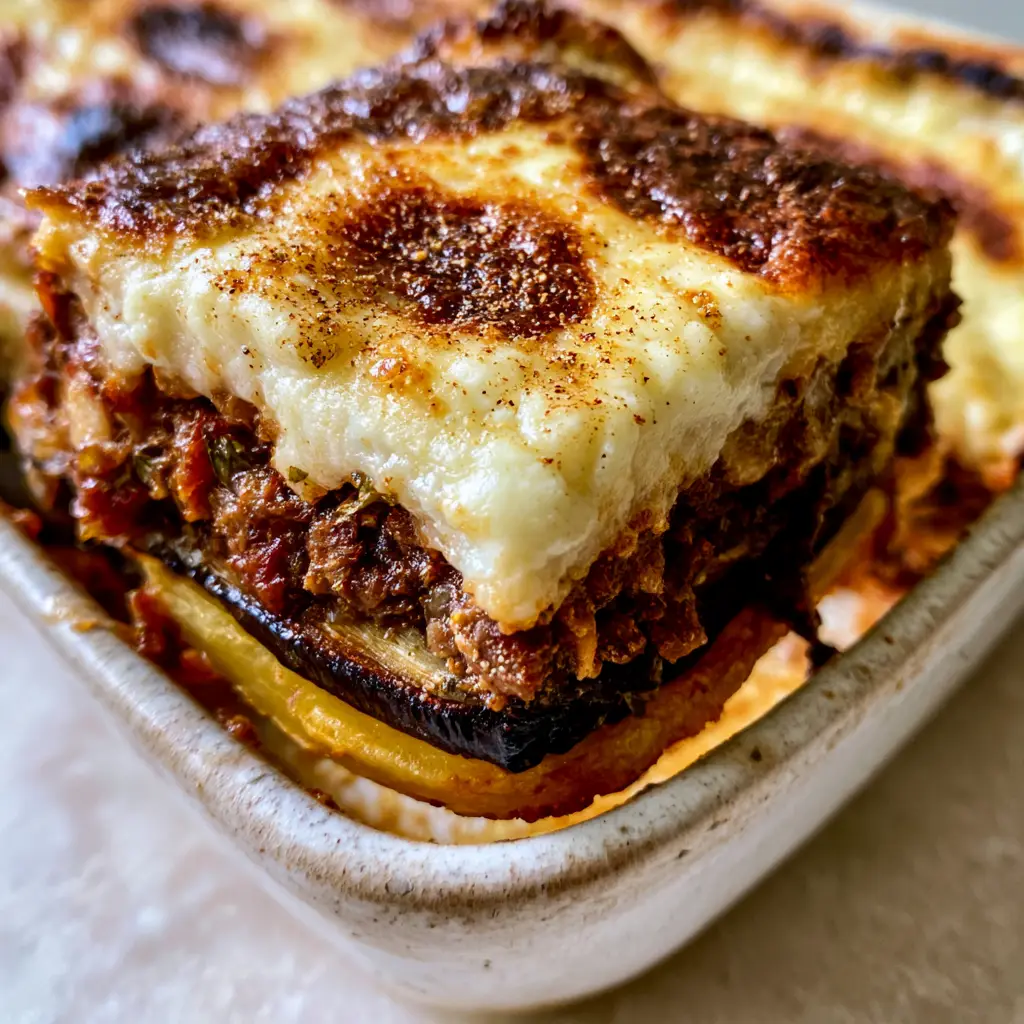
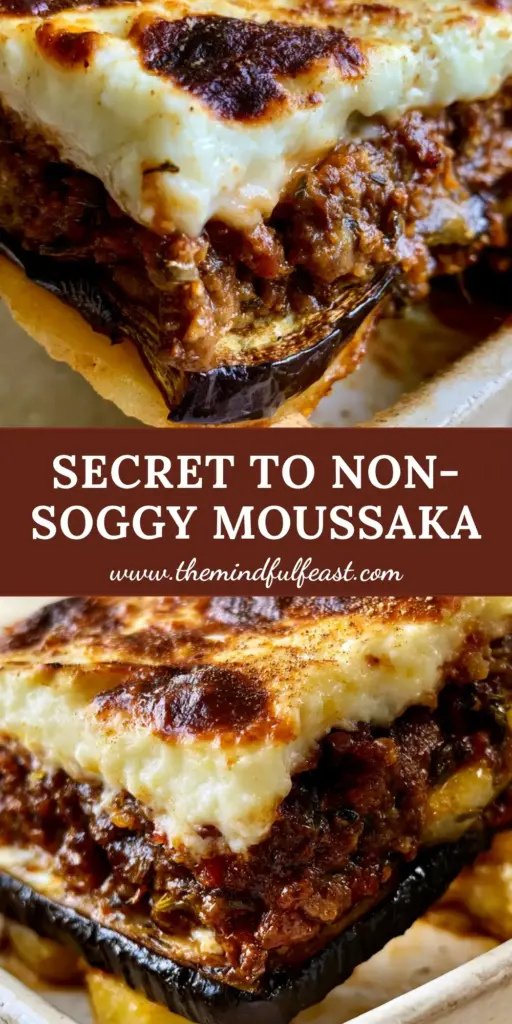
There is something fundamentally soul-warming about a perfectly executed Eggplant Moussaka. When you lift that first square slice from a rustic white ceramic baking dish, the sight of a two-inch thick, velvety white bechamel sauce—bubbly and toasted with deep golden-brown spots—is enough to stop time. This isn’t just a casserole; it is a labor of love that balances the smoky char of dry-roasted vegetables against a rich, dark mahogany meat sauce.
In this recipe, we are moving away from the greasy, oil-laden versions often found in tourist traps. Instead, we lean into a hand-held smartphone aesthetic of home-cooked perfection. Imagine the contrast: a firm, non-greasy vegetable foundation topped with a sauce so dense and savory it holds its shape, all crowned by that signature micro-dusting of ground nutmeg that catches the soft natural morning light.
Whether you are looking for robust beef dinner recipes or simply want to master the art of the Greek kitchen, this Eggplant Moussaka provides the ultimate sensory experience. From the sound of the bechamel bubbling in the oven to the aromatic scent of cinnamon and oregano wafting through your home, every step is designed for culinary excellence.
Why This Authentic Eggplant Moussaka Stands Above the Rest
- The 2-Inch Bechamel Standard: We use a specific ratio of roux to milk, stabilized with egg yolks, to ensure your topping is thick, velvety, and structurally sound enough to create those iconic layers.
- Dry-Roasted Precision: By dry-roasting the eggplant slices until they achieve charred edges, we eliminate the “sponge effect,” ensuring your Moussaka is never soggy or oily.
- Mahogany Meat Sauce: A deep, long simmer with tomato paste and red wine creates a dark, herb-flecked sauce that provides a sharp visual and flavor contrast to the white cream topping.
- Textural Harmony: The combination of tender golden potato rounds, firm eggplant, and fluffy sauce creates a multi-dimensional mouthfeel in every single bite.
The Essential Components for a Mahogany Meat Sauce and Beyond
Large Eggplants (2 lbs / 900g): Choose firm, shiny eggplants with green stems. These provide the meaty, smoky structure of the dish once dry-roasted to remove excess moisture.
Yukon Gold Potatoes (1 lb / 450g): These potatoes hold their shape beautifully. They act as the “foundation” layer, soaking up the juices from the meat sauce without turning into mush.
Ground Beef or Lamb (1.5 lbs / 680g): Use a lean mix (85/15) to prevent excess grease. This meat is the heart of the mahogany sauce, providing the protein-rich depth the dish is known for.
Tomato Paste (3 tbsp / 45g): This is the secret to that dark mahogany color. It provides a concentrated umami punch that fresh tomatoes alone cannot achieve.
Dry Red Wine (0.5 cup / 120ml): Use a bold red like Agiorgitiko or Cabernet. The acidity cuts through the richness of the bechamel and deglazes the pan for maximum flavor recovery.
Whole Milk (4 cups / 960ml): The base of our thick bechamel. Use full-fat milk for the most luxurious, velvety texture that can support the golden-brown cheese spots.
Unsalted Butter (0.5 cup / 115g): Quality butter is essential for a smooth roux. It provides the fat needed to suspend the flour and create a glossy, thick sauce.
All-Purpose Flour (0.5 cup / 65g): The thickening agent that gives the bechamel its two-inch height. It must be cooked out properly to avoid a raw flour taste.
Egg Yolks (3 large): These are non-negotiable for a traditional Greek bechamel. They add richness and help the sauce “set” so it can be sliced cleanly.
Kefalotyri or Parmesan Cheese (1 cup / 100g): A salty, hard cheese that creates those toasted golden spots on top. If you enjoy cheesy textures, consider checking out our baked zucchini and cheese casserole for more inspiration.
Foundational Seasonings: You will need extra virgin olive oil, kosher salt, black pepper, a stick of cinnamon, dried oregano, and a whole nutmeg for that final micro-dusting.
The Tools You Need for That Perfect 2-Inch Bechamel Lift
To achieve the unedited, authentic food blog aesthetic, you need the right gear. A large, rustic white ceramic baking dish (9×13 inch) is essential for even heat distribution and beautiful presentation.
You will also need two large rimmed baking sheets and parchment paper for the dry-roasting process. A heavy-bottomed Dutch oven is best for the meat sauce, while a balloon whisk and a medium saucepan are required for a lump-free bechamel.
Finally, a microplane or fine grater is vital. This allows you to achieve that precise dusting of ground nutmeg across the bubbly surface, just like the visual blueprint specifies.
The Layer-by-Layer Guide to Moussaka Perfection
Preparing the Non-Greasy Vegetable Foundation
Start by slicing your potatoes into thin 1/4-inch (6mm) rounds. Toss them with a teaspoon of salt and a tablespoon of olive oil, then roast at 400°F (200°C) for 15 minutes until just tender and golden.
Next, slice the eggplants into 1/2-inch (1cm) rounds. Place them on parchment-lined sheets and sprinkle lightly with salt; let them sit for 20 minutes to “sweat,” then pat them bone-dry with paper towels.
Dry-roast the eggplant slices in the same 400°F (200°C) oven for 20-25 minutes. You are looking for charred edges and a firm, dehydrated texture; this ensures they won’t release water into your Eggplant Moussaka later.
Simmering the Mahogany Meat Sauce
In your Dutch oven, brown the ground meat over medium-high heat until no pink remains. Use a wooden spoon to break it into small bits, ensuring a dense, uniform texture.
Add finely diced onions and garlic, sautéing until translucent. Stir in the tomato paste and cook for 2 minutes—this “toasting” of the paste is what develops that dark mahogany color.
Pour in the red wine to deglaze, followed by a can of crushed tomatoes (14oz / 400g), the cinnamon stick, and oregano. Simmer uncovered for 30-40 minutes until the sauce is thick and very little liquid remains.
Whisking the Velvety 2-Inch Bechamel
Melt the butter in a saucepan over medium heat, then whisk in the flour. Cook the roux for 2 minutes, whisking constantly to prevent browning while removing the raw flour scent.
Gradually stream in the milk, whisking vigorously. Continue cooking and stirring until the sauce is thick enough to coat the back of a spoon heavily—it should feel like a loose custard.
Remove from heat and let cool for 5 minutes. Temper the egg yolks by adding a spoonful of warm sauce to them, then whisk the yolks and half of the cheese into the main pot until velvety and smooth.
Assembling the Eggplant Moussaka Layers
In your rustic white ceramic dish, layer the potatoes in a tight, overlapping foundation. Top this with a single layer of the dry-roasted eggplant slices, ensuring no gaps are visible.
Spread the rich meat sauce evenly over the eggplant. Press it down slightly with a spatula to create a dense, stable middle layer that will support the heavy bechamel.
Pour the bechamel sauce over the meat, smoothing it out to the edges. Sprinkle the remaining cheese on top and finish with a generous micro-dusting of freshly grated nutmeg.
Baking for Bubbly, Golden Results
Bake at 350°F (175°C) for 45-55 minutes. You are looking for the bechamel to puff up significantly and develop deep golden-brown toasted spots across the surface.
The most critical step: let the Moussaka rest for at least 45 minutes before slicing. This allows the layers to set, ensuring that when you lift a square slice, it maintains its perfect vertical stack.
Expert Tips for Moussaka Success
- Salt the Eggplant: Do not skip the sweating process. It draws out bitterness and prevents the eggplant from acting like an oil-soaked sponge.
- The Resting Rule: Slicing too early will cause the bechamel to run. Patience results in the sharp, clean textures seen in professional food photography.
- Consistency is Key: If your meat sauce is too watery, the dish will collapse. Simmer it until it is thick enough to stand a spoon in.
- Nutmeg Timing: Grate the nutmeg immediately before baking. The volatile oils provide the best aroma when they hit the hot oven air.
Storage, Reheating, and Freezing
Eggplant Moussaka actually tastes better the next day as the spices meld. Store leftovers in an airtight container in the refrigerator for up to 4 days.
To reheat, cover with foil and bake at 325°F (160°C) until the center is hot. This preserves the texture of the bechamel better than a microwave would.
You can freeze this dish for up to 3 months. For best results, freeze it after assembly but before the final bake; then, bake from frozen, adding an extra 20 minutes to the cook time.
Perfect Pairings for a Greek Feast
To balance the richness of the bechamel, serve this dish with light, acidic sides. A crisp vinegar cucumber salad provides a refreshing crunch that cleanses the palate between bites of savory meat sauce.
If you want to stay within the Mediterranean theme, consider adding some sautéed vegetables or a side of smashed baby potatoes for those who can’t get enough of golden, crispy textures.
For a lighter alternative to Moussaka on weeknights, you might also enjoy a baked zucchini spinach feta casserole, which offers similar Mediterranean flavors with a quicker prep time.
Frequently Asked Questions
Yes, ground beef is a very common and delicious substitute. Use a lean 85/15 blend to ensure the mahogany sauce remains rich but not greasy.
Yes! Resting is critical for structural integrity. It allows the bechamel to firm up and the meat sauce to bind with the vegetable layers for a clean slice.
The secret is a high flour-to-milk ratio and the addition of egg yolks. The yolks help the sauce set during baking, allowing it to maintain that 2-inch height.
Traditional Greek Kefalotyri is best for its salty, sharp flavor and high melting point, which creates those beautiful golden-brown spots. Parmesan or Pecorino Romano are excellent substitutes.
Sogginess usually comes from eggplant releasing water. To prevent this, salt your eggplant to draw out moisture and dry-roast it until firm and charred before layering.
Authentic Greek Eggplant Moussaka Recipe
Eggplant Moussaka: The Ultimate Guide to the Perfect Greek Casserole
Ingredients
Equipment
Method
- Roast potato rounds at 400°F (200°C) for 15 mins until golden and tender.
- Salt and sweat eggplant, pat dry, and roast at 400°F (200°C) until edges are charred.
- Brown meat, add tomato paste and wine. Simmer until dark mahogany and very thick.
- Create roux with butter and flour, whisk in milk. Off heat, add tempered yolks and cheese.
- Layer potatoes, then eggplant, then meat sauce. Top with 2-inch bechamel and nutmeg.
- Bake at 350°F (175°C) for 50 mins until bubbly with golden-brown toasted spots.
Notes
Ensure eggplant is roasted until firm to avoid a soggy casserole.
Bringing the Taste of Greece to Your Table
Mastering the Eggplant Moussaka is a hallmark of an accomplished home cook. With its two-inch thick velvety topping and mahogany-rich meat sauce, this recipe is a showstopper that delivers both visually and culinarily. The contrast between the charred edges of the eggplant and the soft natural steam rising from a fresh slice is pure comfort.
If you enjoyed this deep dive into Greek flavors, please leave a comment below and share your results! Don’t forget to follow us on Pinterest for more visually stunning recipe inspiration and healthy dinner ideas.