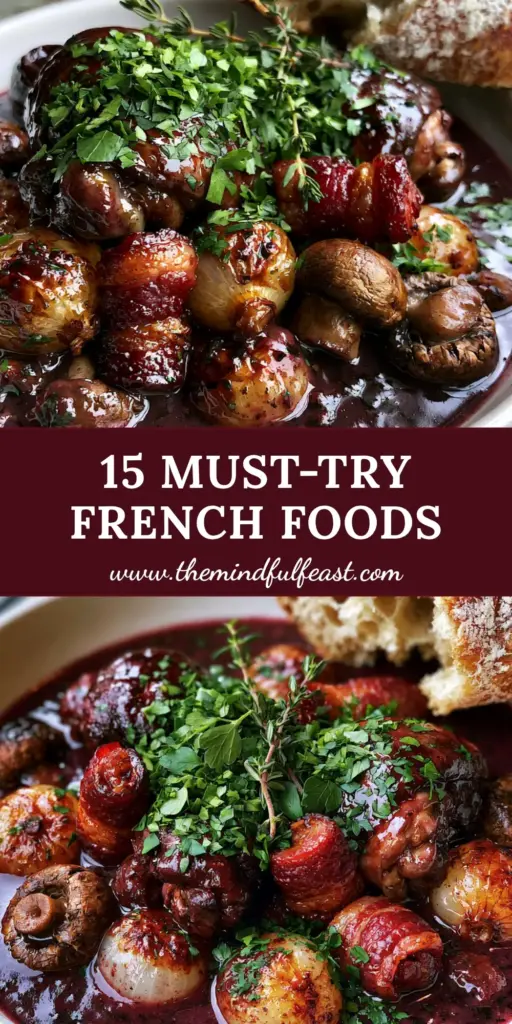
When one imagines the most famous foods in France, the mind immediately drifts to a sun-drenched bistro table, a bottle of uncorked Pinot Noir, and a steaming ceramic bowl of Coq au Vin. This iconic dish represents the pinnacle of French country cooking, where humble ingredients are transformed through the magic of a slow, wine-drenched braise. Our recipe captures that exact rustic charm you see in professional food photography—think glistening chicken skin, a sauce so dark and glossy it looks like velvet, and the crunch of perfectly rendered bacon lardons.
Mastering this dish is a rite of passage for any home cook looking to explore the depth of European flavors. We have meticulously engineered this version to ensure the chicken remains succulent while the burgundy wine sauce achieves that signature deep red hue and thick viscosity. Whether you are hosting a formal dinner or seeking the ultimate comfort food, this Coq au Vin brings the authentic taste of the French countryside directly to your kitchen.
The Visual Allure of Authentic French Braising
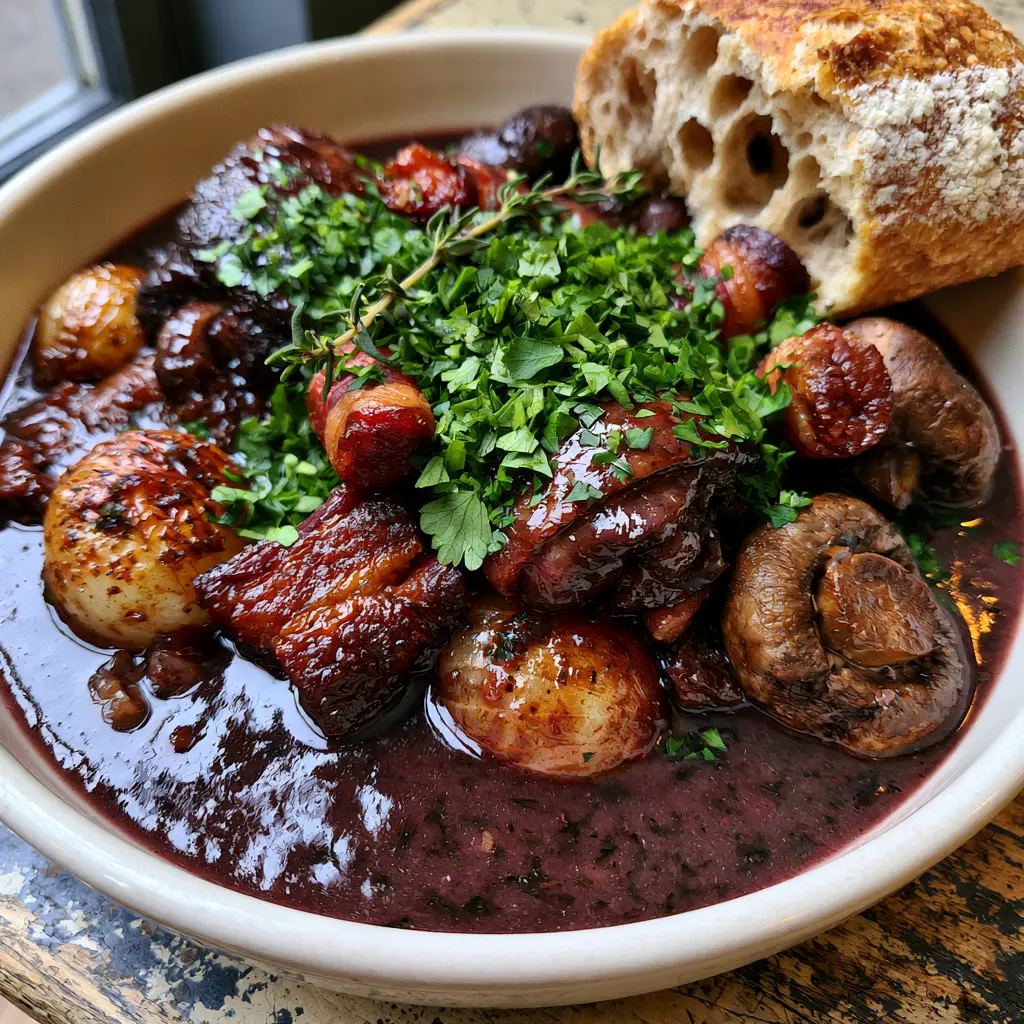
- The Mahogany Glaze: A rich, deep burgundy sauce that clings to the back of a spoon, signaling hours of flavor development.
- Textural Harmony: The contrast between tender chicken thighs, snappy seared pearl onions, and the definitive crunch of thick-cut bacon lardons.
- Rustic Presentation: Whole browned cremini mushrooms and vibrant green flat-leaf parsley provide a visual pop against the dark, soulful stew.
- The Perfect Companion: A hand-torn, crusty French baguette with a flour-dusted exterior, ready to soak up every last drop of the wine reduction.
The Essential Pantry for a Traditional French Braise
Bone-in, Skin-on Chicken Thighs: 6-8 large pieces (approx. 3 lbs / 1.4kg). Using thighs ensures the meat stays juicy during the long braising process while the skin provides essential fats for the sauce.
Thick-Cut Bacon Lardons: 6 oz (170g), sliced into batons. Lardons provide the foundational fat for the entire dish and add a smoky, salty complexity that defines famous foods in France.
Red Burgundy Wine: 1 bottle (750ml) of Pinot Noir or a similar dry red. The wine is the heart of the dish; its tannins and acidity mellow into a complex, fruity base as it reduces.
Cremini Mushrooms: 8 oz (225g), kept whole or halved if large. These earthy gems are browned separately to ensure they maintain a meaty texture rather than becoming soggy.
Pearl Onions: 1 cup (150g), peeled. We sear these until golden-brown to provide sweet, localized bursts of flavor within the savory sauce.
Chicken Stock: 2 cups (480ml), preferably low-sodium. This builds volume and adds gelatinous body to the burgundy reduction without over-salting.
All-Purpose Flour: 2 tbsp (16g). This is used to create a light roux or “singer” to thicken the sauce to its characteristic glossy viscosity.
Fresh Aromatics: 4 sprigs fresh thyme, 2 dried bay leaves, and 1/2 cup (15g) chopped flat-leaf parsley. These herbs cut through the richness with bright, floral notes.
Invisible Essentials: 2 tbsp (30ml) olive oil, 1 tsp (6g) kosher salt, and 1/2 tsp (2g) cracked black pepper. These are the scientific pillars of seasoning and searing.
Tools for Achieving Bistro-Quality Results
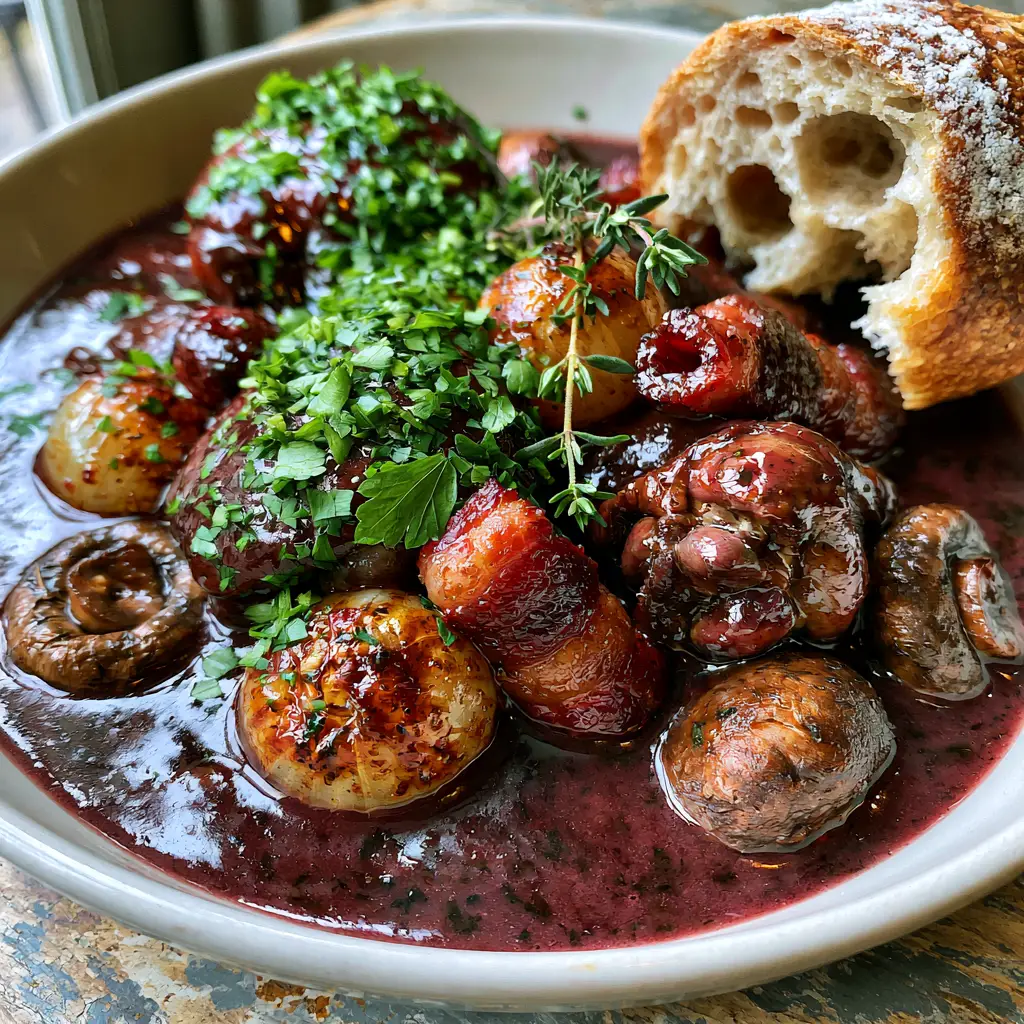
To replicate the deep, even browning seen in our visual blueprint, a heavy-bottomed 5-to-7-quart Dutch oven is non-negotiable. The cast iron retains heat, allowing for a consistent simmer that tenderizes the chicken without boiling it into toughness. You will also need a sharp chef’s knife for precise herb chopping and a slotted spoon to remove the lardons and vegetables while keeping the flavorful fats in the pan.
Mastering the Art of the Slow Braise: Step-by-Step
Phase 1: Rendering and Searing for Maximum Flavor
Begin by placing your bacon lardons in the cold Dutch oven over medium heat. As the pan warms, the fat will render out, becoming clear and liquid while the bacon turns into crispy, golden-brown morsels. Remove the bacon with a slotted spoon and set aside, leaving the liquid gold—the rendered fat—in the pot.
Season your chicken thighs generously with salt and pepper. Increase the heat to medium-high and sear the chicken, skin-side down, in the bacon fat. Listen for a vigorous sizzle; you are looking for the skin to transform into a glistening, deep golden-brown crust. This process, known as the Maillard reaction, is the secret to why this is one of the most famous French dishes in the world.
Phase 2: Developing the Vegetable Base
Remove the chicken and set aside. In the same pot, toss in the whole cremini mushrooms and pearl onions. Sear them until the onions show visible charred edges and the mushrooms have a matte, browned exterior. This high-heat contact ensures they don’t just boil in the wine later but retain their individual structural integrity.
Stir in the flour, coating the vegetables and cooking for 1-2 minutes until the raw flour smell disappears. This foundational step is what guarantees your final sauce will be thick, glossy, and perfectly emulsified, rather than watery and thin.
Phase 3: The Burgundy Wine Reduction
Slowly pour in the entire bottle of red wine, using a wooden spoon to scrape the bottom of the pot. Those browned bits stuck to the bottom (the fond) are concentrated flavor packets that will dissolve into the sauce. Add the chicken stock, thyme sprigs, and bay leaves.
Nestle the chicken thighs back into the liquid, ensuring the skin remains slightly above the waterline to keep it glistening. Bring to a gentle simmer, then cover and reduce the heat to low. Let the magic happen for 45-60 minutes, or until the chicken is fork-tender and the sauce has reduced by nearly half.
Expert Tips for Culinary Success
- The Wine Rule: Never cook with a wine you wouldn’t drink. A cheap, bitter wine will only become more bitter as it reduces into a concentrated glaze.
- Texture Control: If your sauce isn’t thick enough at the end, remove the chicken and boil the liquid rapidly for 5 minutes. Whisk in a teaspoon of butter for that final professional sheen.
- Cold Start Bacon: Always start bacon in a cold pan to render the maximum amount of fat without burning the delicate meat.
- Herb Freshness: Add the chopped parsley only at the very end. The residual heat is enough to release its oils without turning it a dull, muddy brown.
The Ideal Pairings for a French Feast
To truly honor the famous foods in France, serve this Coq au Vin with a torn piece of crusty French baguette. The airy, porous interior of the bread acts as a sponge for the burgundy sauce. For a more rounded meal, consider serving alongside smashed baby potatoes to soak up the gravy or a light vinegar cucumber salad to cut through the richness of the bacon and wine.
If you enjoy the earthy notes of the cremini mushrooms in this dish, you might also love our recipe for sauteed mushrooms as a versatile side dish for future beef dinner recipes.
Storage, Reheating, and Freezing
Coq au Vin is famously better the next day as the flavors continue to marry in the refrigerator. Store leftovers in an airtight container for up to 3 days. When reheating, do so gently on the stovetop over low heat, adding a splash of chicken stock if the sauce has thickened too much in the cold.
You can freeze this dish for up to 3 months. However, the mushrooms may change texture slightly upon thawing. Always thaw overnight in the refrigerator before reheating to maintain the delicate structure of the chicken thighs.
Common Questions About French Coq au Vin
It is not recommended. Chicken breasts lean out and become dry during the long braising process required to develop the sauce. Thighs stay succulent and tender.
While traditional, you can substitute with frozen pearl onions or small shallots. The key is to sear them whole so they provide distinct bites of sweetness.
The gloss comes from a combination of the flour coating (the ‘singer’) and a final whisk of cold butter or a well-reduced sauce that has concentrated the natural gelatins from the chicken.
A dry red wine from Burgundy, such as Pinot Noir, is traditional. You want a wine with good acidity and moderate tannins to balance the richness of the chicken and bacon.
The Authentic Rustic Coq au Vin Recipe
Famous foods in France: The Ultimate Rustic Coq au Vin Guide
Ingredients
Equipment
Method
- Place bacon lardons in a cold Dutch oven. Turn heat to medium and cook until crispy and golden brown. Remove with a slotted spoon.
- Season chicken with salt and pepper. Sear in bacon fat skin-side down over medium-high heat until deep golden-brown and glistening. Remove and set aside.
- Add pearl onions and mushrooms to the pot. Sear until onions are golden-brown. Stir in flour and cook for 2 minutes.
- Pour in wine and stock. Add thyme and bay leaves. Return chicken to the pot. Cover and simmer on low for 45-60 minutes until tender.
- Remove thyme sprigs. Stir in crispy bacon and fresh parsley. Serve with torn baguette.
Notes
Always sear the chicken skin-side down first to render the fat for a richer sauce.
Bring the Bistro to Your Kitchen
This rustic Coq au Vin is more than just a meal; it is a sensory journey through the traditions that make famous foods in France so globally beloved. With its deep colors, rich aromas, and tender textures, it’s a recipe that promises to impress. Don’t forget to share your culinary creations with us! Follow our journey on Pinterest for more authentic inspirations and pin this recipe to your favorite board for your next Sunday dinner.