When you think of famous French dishes, your mind likely drifts to the bustling bistros of Lyon or the candlelit tables of Paris. There is one specific masterpiece that captures the heart of French home cooking: Poulet à la Crème. This isn’t just a simple chicken dinner; it is a masterclass in texture, balancing a shattered-glass crispy skin with a velvet-smooth, ivory reduction sauce that defines the elegance of Gallic cuisine.
Mastering famous French dishes at home requires more than just a recipe; it requires an understanding of heat management and the “holy trinity” of French aromatics. In this guide, we are diving deep into the macro-details of searing the perfect chicken thigh, deglazing with a crisp white wine, and finishing with a glossy tarragon cream that looks—and tastes—like it came straight from a Michelin-starred kitchen. If you love exploring global flavors, you might also enjoy discovering traditional African dishes to expand your culinary repertoire.
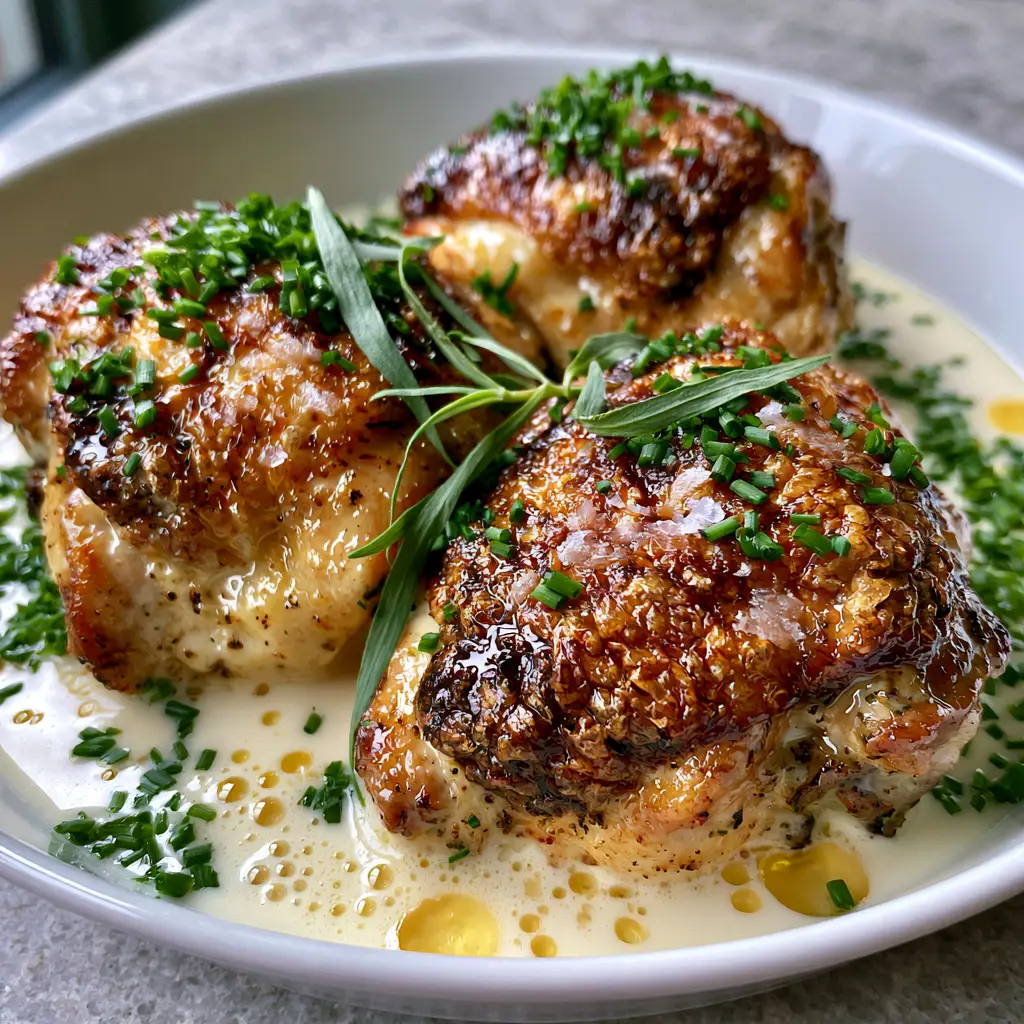
The Sensory Architecture of a Classic French Cream Sauce
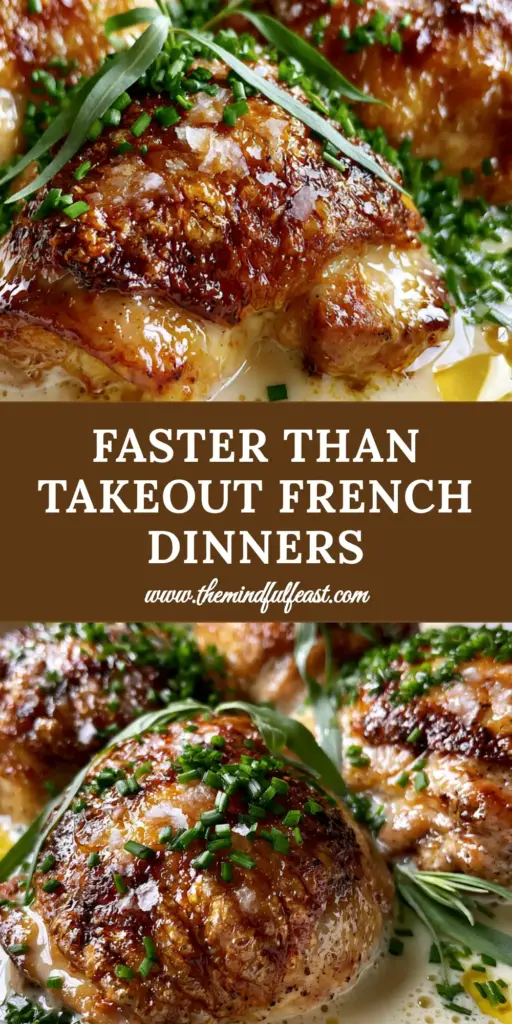
- Unrivaled Skin Texture: We achieve a deep, golden-brown crackling skin that stands up against the rich cream sauce, ensuring every bite has a satisfying crunch.
- Aromatic Depth: The combination of fresh tarragon leaves and minced garlic creates a layered scent profile that is unmistakably French.
- The “Monter au Beurre” Finish: Tiny golden butter droplets and glossy ivory cream create a visual and palatal luxury typical of famous French dishes.
- Balanced Acidity: A sharp white wine reduction cuts through the heavy cream, providing a brightness that keeps you coming back for more.
Essential Components for This Bistro Masterpiece
To recreate the visual and flavor profile of the most famous French dishes, each ingredient must be selected for its specific chemical contribution to the final plate. Quality matters when the ingredient list is this focused.
Bone-in, Skin-on Chicken Thighs: You need the fat from the skin to render out, creating the natural oil for searing. The bone ensures the meat remains succulent during the high-heat pan-sear.
Heavy Cream (Double Cream): With at least 36% fat content, this provides the “thick, glossy ivory” appearance seen in our blueprint. It emulsifies with the wine to create a stable, luxurious sauce.
Dry White Wine: A Sauvignon Blanc or Pinot Grigio is ideal for deglazing. The acidity releases the “fond” (browned bits) from the bottom of the pan, which is the secret to all famous French dishes.
Fresh Tarragon & Chives: Tarragon offers a delicate anise-like sweetness, while chives provide a sharp, green bite. Never use dried herbs here; the visual “vibrant green” garnish depends on fresh leaves.
Unsalted European-Style Butter: High fat content butter is melted into the sauce at the very end to create those signature glistening droplets and a rich mouthfeel.
Tools Required for Culinary Success
Achieving the results of famous French dishes requires the right conductivity. A heavy-bottomed stainless steel skillet or a cast-iron pan is non-negotiable for that “crackling skin” described in our visual prompt. You will also need a sharp chef’s knife for mincing the garlic and finely chopping the chives, and a wire whisk to ensure the ivory sauce remains perfectly smooth without breaking.
Step-by-Step: Crafting the Perfect Poulet à la Crème
The Art of the Perfect Sear
Start by patting 4 bone-in chicken thighs completely dry with paper towels. Season generously with 1 tsp (5g) flaky sea salt and 1/2 tsp (2.5g) cracked black peppercorns. Place 1 tbsp (15ml) of high-smoke point oil in a cold skillet, then place the thighs skin-side down. Turn the heat to medium-high. This “cold start” method allows the fat to render slowly, resulting in that incredibly crispy, crackling skin seen in our macro photography.
Building the Wine Reduction
Once the chicken skin is deep golden-brown (about 8-10 minutes), flip and cook for another 2 minutes, then remove the chicken from the pan. Pour off all but 1 tbsp (15ml) of the rendered fat. Add 3 cloves of minced garlic, sautéing for only 30 seconds until fragrant but not browned. Pour in 1/2 cup (120ml) of dry white wine. Use a wooden spoon to scrape the bottom of the pan, dissolving the flavorful brown bits into the liquid.
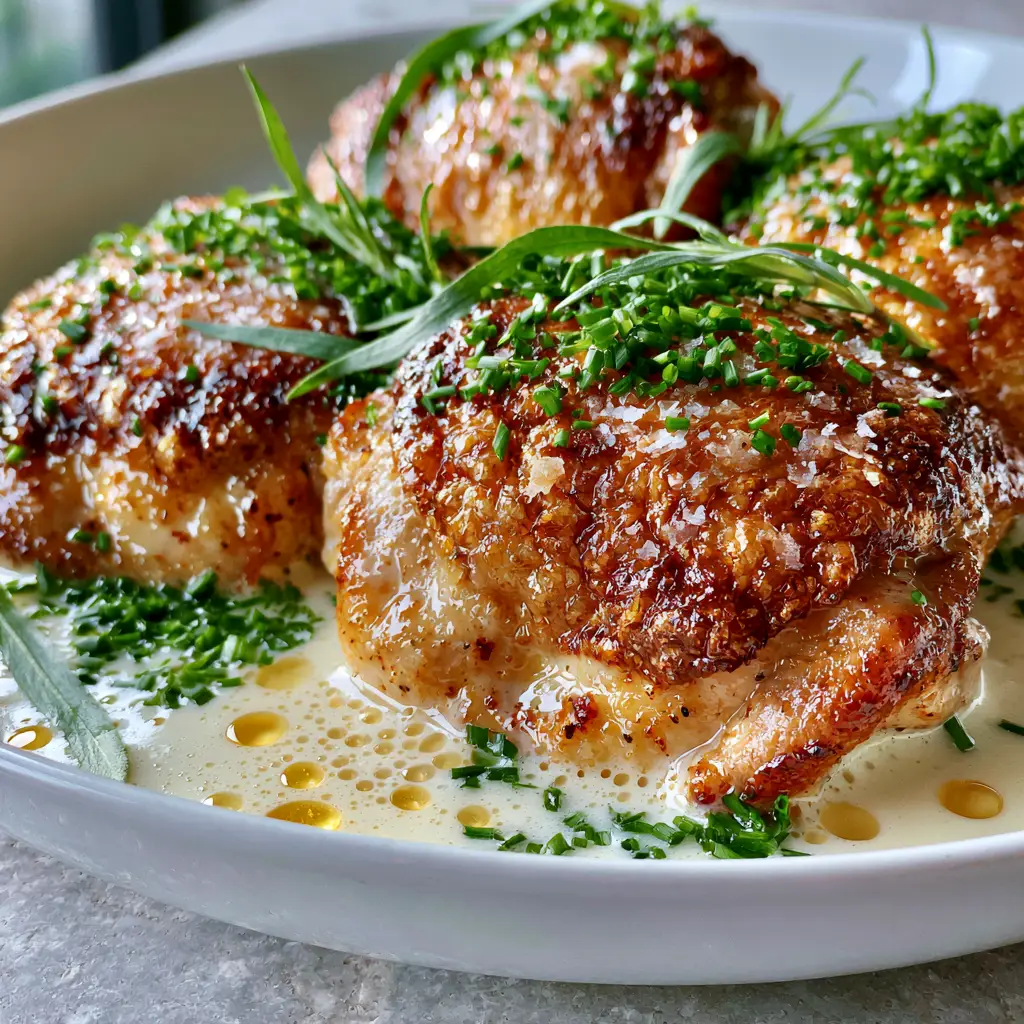
Achieving the Ivory Cream Gloss
Reduce the wine by half, then pour in 1 cup (240ml) of heavy cream. Lower the heat to a simmer. The sauce will begin to show “tiny bubbles” as it thickens. Stir in 1 tbsp (15g) of cold, cubed butter, whisking gently until it melts into “golden butter droplets” that pool around the base of the sauce. This technique is a hallmark of famous foods in France.
The Final Garnish and Assembly
Nestle the chicken thighs back into the sauce, ensuring the crispy skin stays *above* the liquid line to maintain its texture. Garnish heavily with 2 tbsp (8g) of finely chopped chives and 5-6 delicate whole tarragon leaves. Sprinkle a final pinch of flaky sea salt over the skin for that glistening, macro-shot finish.
Professional Tips for Bistro-Quality Results
- Dry the Skin: Moisture is the enemy of crispiness. Leave your chicken uncovered in the fridge for 2 hours before cooking for the ultimate crunch.
- Don’t Crowd the Pan: If the thighs are too close, they will steam instead of sear. Use a large enough skillet to maintain air circulation.
- Herb Timing: Add the chives and tarragon at the very last second. Residual heat will wilt them perfectly while keeping their color “vibrant green.”
- Sauce Consistency: If the sauce becomes too thick, add a tablespoon of chicken stock or water to loosen it back to a “glossy ivory” state.
How to Store and Reheat Your French Chicken
This dish is best served immediately to enjoy the contrast of textures. However, leftovers can be stored in an airtight container for up to 3 days. To reheat, place the chicken in a pan over low heat with a splash of cream. To regain the skin’s crispness, you may briefly place the chicken under a broiler, being careful not to burn the cream sauce.
Perfect Pairings for a Complete French Meal
To turn this into a full feast of famous French dishes, serve the chicken alongside smashed baby potatoes to soak up every drop of that ivory sauce. For a lighter touch, a side of sautéed asparagus and mushrooms provides an earthy contrast to the rich cream. If you are looking for more healthy dinner ideas, a simple green salad with a mustard vinaigrette is the traditional French way to cleanse the palate after a rich main course.
Frequently Asked Questions
While tarragon provides the classic French flavor, you can substitute it with chervil or a small amount of fennel fronds if necessary. Fresh parsley works but lacks the signature anise note.
Yes, the garlic should be finely minced so it melts into the sauce, providing a background aromatic layer without large, bitter chunks.
Avoid boiling the sauce vigorously once the cream is added. Keep it at a gentle simmer and whisk in cold butter at the end to stabilize the emulsion.
A dry, high-acid white wine like Sauvignon Blanc, Pinot Grigio, or an un-oaked Chardonnay is best for deglazing and balancing the rich cream.
To maintain crispiness, ensure the skin side stays above the liquid level. Never cover the pan once the chicken is returned to the sauce, as the steam will soften the skin.
The Recipe: Classic French Poulet à la Crème
Famous French Dishes: The Ultimate Crispy Poulet à la Crème with Tarragon
Ingredients
Equipment
Method
- Pat the chicken thighs completely dry. Season with sea salt and cracked black pepper.
- Place thighs skin-side down in a cold skillet with oil. Heat to medium-high and sear until the skin is deep golden-brown and crackling.
- Remove chicken, pour off excess fat, and sauté minced garlic. Add white wine, scraping the fond from the pan bottom.
- Reduce wine by half, add heavy cream and simmer. Whisk in cold butter cubes until tiny golden droplets form.
- Return chicken to the pan (skin up). Garnish with whole tarragon leaves and chopped chives. Sprinkle with extra sea salt.
Notes
Use a high-fat European butter for the best gloss and flavor droplets.
Experience the Elegance of French Cuisine
Mastering famous French dishes like this Poulet à la Crème brings a touch of sophisticated comfort to your home. The combination of high-heat searing and delicate herb infusions creates a meal that satisfies all the senses. We would love to see your culinary creations! Leave a comment below with your results, sign up for our newsletter for more bistro secrets, and be sure to share this recipe to Pinterest so others can enjoy this crispy, creamy delight.