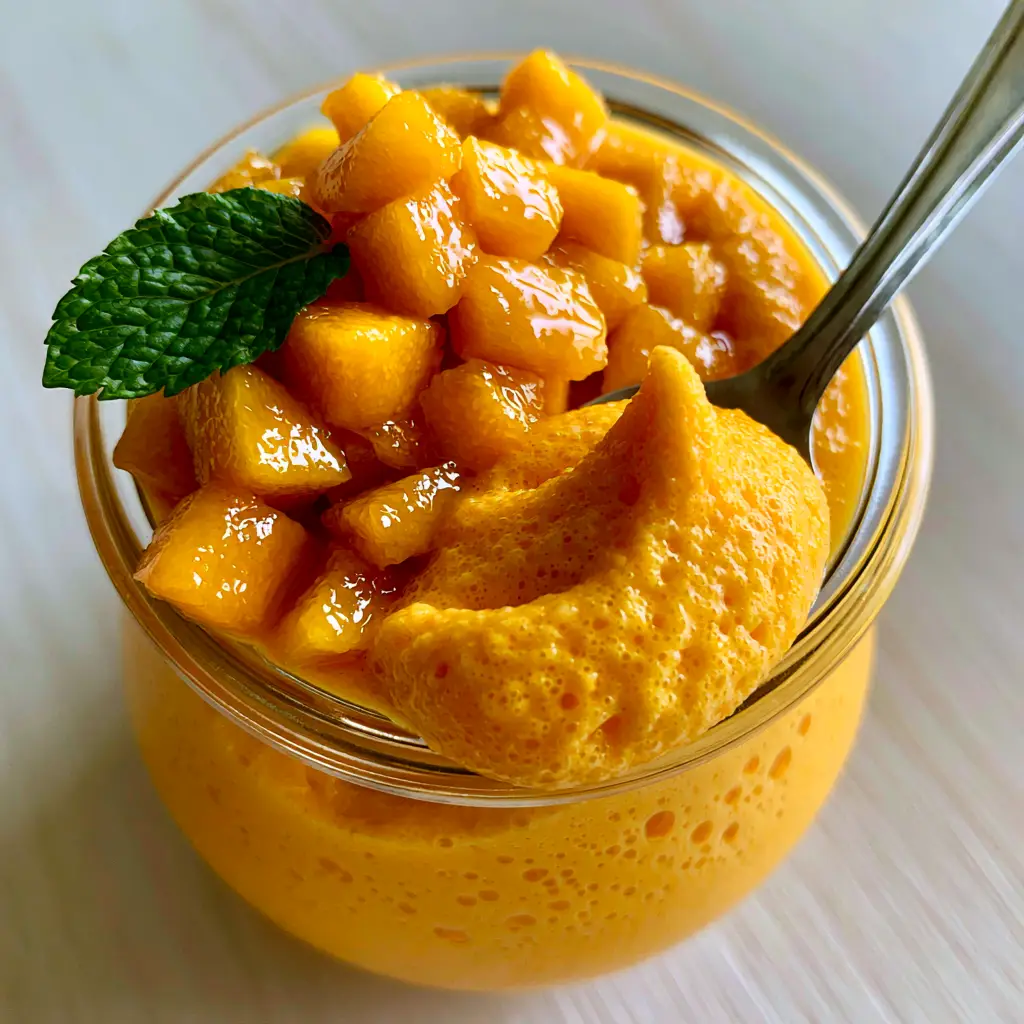
When the heat of summer arrives, nothing satisfies the palate quite like a vibrant, chilled Mango dessert recipe. This particular rendition is a masterpiece of simplicity, focusing on the intense, tropical flavor of Alphonso mangoes transformed into a velvety, aerated cloud. Imagine a clear glass jar filled with a saturated sunset-orange mousse, so light that tiny air bubbles are visible throughout the structure, yet rich enough to hold a soft, smooth peak on a silver spoon.
This recipe isn’t just about mixing ingredients; it is about a forensic approach to texture and color. By leveraging the natural thickness of whipped mango pulp and the stabilizing power of chilled heavy cream, we create a dessert that is both visually stunning and scientifically sound. Whether you are hosting a summer dinner party or looking for a quick tropical escape, this mousse delivers the essence of the tropics in every spoonful.
The Sensory Magic of a Saturated Sunset-Orange Mango Mousse
The visual appeal of this Mango dessert recipe is its first triumph. To achieve that specific, deep orange hue mentioned in our visual blueprint, the selection of the mango variety is paramount. Alphonso mangoes, often called the “King of Mangoes,” provide a natural pigment that no food coloring can replicate.
- Structural Integrity: The mousse maintains a velvety, thick consistency that stands up to the weight of fresh fruit toppings.
- Aerated Texture: High-speed whipping introduces microscopic air pockets, ensuring the mousse feels light rather than dense on the tongue.
- Glossy Finish: The inclusion of sweetened condensed milk provides a reflective, glistening quality to the orange base.
- Color Contrast: The vibrant orange is perfectly offset by the deep, crisp green of a fresh mint leaf garnish.
- Fruit Garnish: Generous cubes of fresh mango add a necessary textural bite to the smooth mousse.
Why You Will Love This Vibrant Tropical Treat
This Mango dessert recipe is designed for the home cook who values high-impact results with minimal ingredients. By focusing on quality over quantity, each component shines without being masked by excessive sugar or artificial binders. It is a pure expression of fruit and cream.
Furthermore, this is a no-bake dessert, making it ideal for warm weather when you want to keep the kitchen cool. It pairs beautifully with light, summery meals. For instance, after enjoying a fresh zesty shrimp salad, this mousse serves as the perfect refreshing finale. The balance of sweetness and acidity clears the palate and leaves a lingering tropical note.
Essential Ingredients for Velvety Mousse Perfection
To achieve the result captured in our macro close-up, every ingredient must serve a structural and flavor purpose. We do not use gelatin here; instead, we rely on the fat content of the cream and the natural pectin in the mango to set the dessert.
1.5 cups (360ml) Mango Pulp: Use fresh Alphonso or Ataulfo mangoes processed until completely smooth. This provides the “sunset-orange” base and the primary flavor profile.
2 cups (480ml) Heavy Whipping Cream: Ensure it has at least 36% fat content and is bone-chilled. This is the engine of the recipe, responsible for those visible air bubbles and the “soft peak” texture.
0.5 cup (120ml) Sweetened Condensed Milk: This acts as the sweetener and a thickener, providing a silky mouthfeel that balances the acidity of the fruit.
1 cup (160g) Fresh Diced Mango: These glistening cubes are the “generous heap” seen in the visual prompt, providing a fresh, juicy contrast to the whipped base.
1-2 Fresh Mint Leaves: A simple, crisp garnish that adds a pop of color and a faint herbal aroma that cuts through the richness of the cream.
0.5 tsp (2.5ml) Pure Vanilla Extract (Optional): While not in the primary visual, a hint of vanilla rounds out the dairy notes and enhances the mango’s natural floral scent.
Must-Have Kitchen Tools for the Lightest Aerated Texture
Achieving a professional-grade mousse requires the right mechanical intervention. You cannot simply stir these ingredients; you must build a matrix of air and fat to reach that “velvety” description.
High-Speed Blender: Essential for turning fresh mango flesh into a pulp so smooth it looks like liquid silk. Any fibers left behind will ruin the macro-level smoothness of the final dish.
Stand Mixer or Hand Mixer: You need consistent power to whip the heavy cream to stiff peaks. Manual whisking rarely achieves the stable volume required for a thick mousse.
Clear Glass Dessert Jars: Since the visual prompt emphasizes the clear glass and visible air bubbles, presentation in transparent vessels is non-negotiable for the full aesthetic experience.
Large Silicone Spatula: This is the most important tool for the “folding” stage. A gentle hand prevents the air bubbles you worked so hard to create from deflating.
The Forensic Process: Crafting Your Whipped Mango Masterpiece
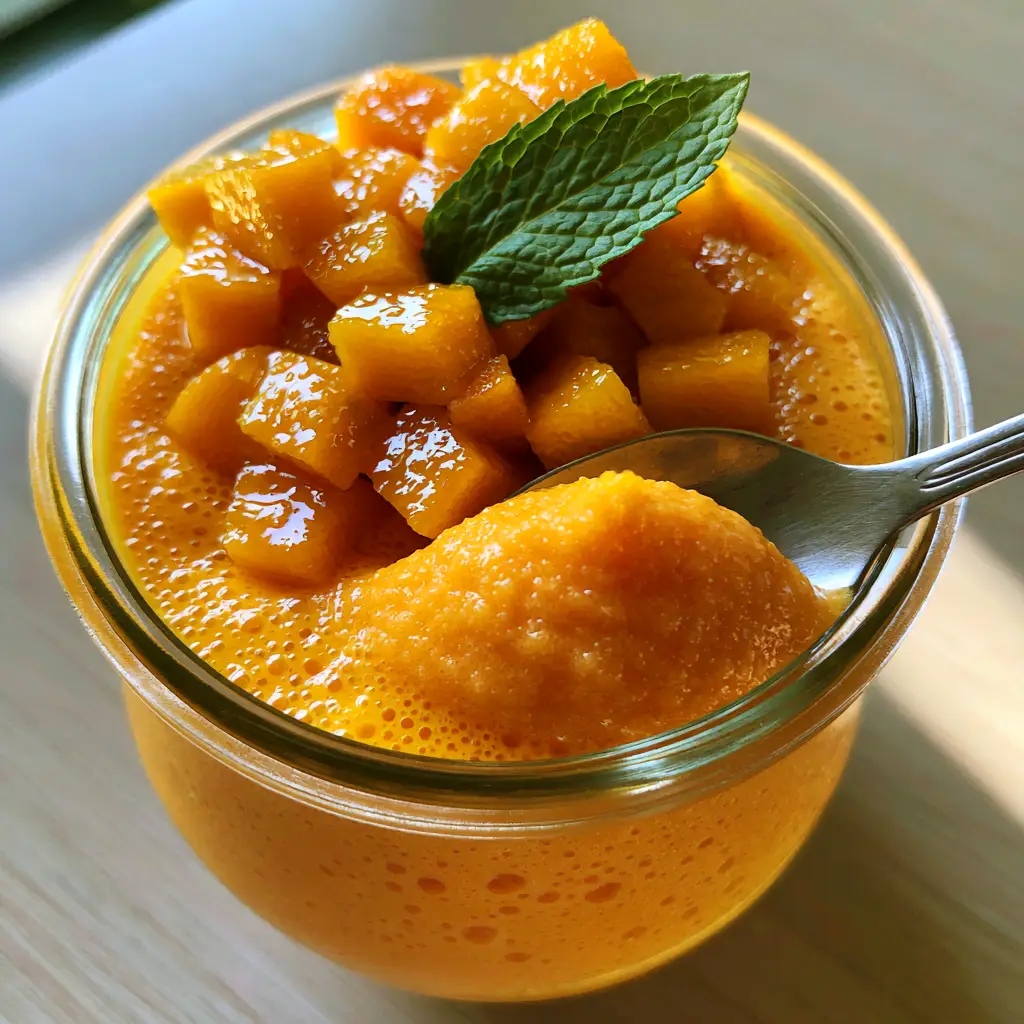
Success with this Mango dessert recipe depends on temperature and technique. Follow these steps to ensure your mousse looks exactly like the one in our hand-held smartphone photo.
Step 1: Preparing the Sunset-Orange Base
Peel and pit your ripe mangoes, ensuring you remove all the flesh. Place the fruit in a blender and process until it is a thick, vibrant orange liquid. Measure out 1.5 cups (360ml) of this pulp and stir in the sweetened condensed milk. The mixture should look saturated and glossy.
Step 2: Aerating the Cream
Pour the chilled heavy cream into a cold mixing bowl. Begin whipping on low speed, gradually increasing to high. Watch for sensory cues: the sound will change from a liquid splash to a soft hum, and the cream will begin to form ripples. Stop immediately when you reach stiff peaks—where the cream stands straight up when the whisk is lifted.
Step 3: The Art of the Fold
Add one-third of the mango mixture to the whipped cream. Using your silicone spatula, cut through the center and scoop from the bottom, turning the mixture over. This “sacrificial” third lightens the mango pulp. Add the remaining mango mixture and fold gently until no white streaks remain. You should see those tiny air bubbles forming the “light and airy” appearance.
Step 4: Chilling and Setting
Carefully spoon the mousse into clear glass jars. Avoid smearing the sides to maintain a clean macro look. Chill in the refrigerator for at least 2 hours. This allows the fats to solidify, creating that “soft, smooth peak” that holds its shape when scooped with a silver spoon.
Step 5: Final Visual Assembly
Just before serving, dice your fresh mango into uniform cubes. Place a generous heap on top of the set mousse. The fruit should look glistening and fresh. Finish with a single, crisp green mint leaf placed at an angle. Serve on a neutral wooden table to replicate the warm, natural daylight aesthetic of our guide.
Expert Troubleshooting for the Fluffiest Mousse
Even a simple Mango dessert recipe can have pitfalls. Here is how to ensure forensic accuracy in your results.
- Preventing Graininess: If your mousse looks curdled, you likely over-whipped the cream. Stop as soon as peaks are firm. If this happens, you can sometimes fix it by gently folding in two tablespoons of un-whipped cream.
- Maintaining the Hue: If your mangoes are pale, the mousse will be pastel. For that “saturated sunset” look, only use fully ripe Alphonso or Kesar mangoes.
- Bubble Preservation: If the mousse looks flat, you were too aggressive during the folding stage. Use a “J-motion” with your spatula to keep the air trapped.
- Avoid Watering Down: Ensure your mango pulp isn’t too watery. If using frozen mangoes, thaw them completely and drain any excess liquid before blending.
Storing and Preparing Your Mango Dessert Ahead of Time
This dessert is a fantastic make-ahead option. You can prepare the mousse base up to 24 hours in advance. Keep the jars tightly covered with plastic wrap to prevent the cream from absorbing any refrigerator odors.
However, do not add the diced mango cubes or the mint leaf until the moment of serving. The fruit will release juices over time, which can bleed into the mousse, and the mint leaf will wilt. For the freshest “glistening” appearance, the topping must be added last.
Tropical Menu Pairings: What to Serve Alongside Mango
To create a cohesive dining experience, consider what comes before the Mango dessert recipe. A tropical dessert benefits from a menu that leans into fresh, bold flavors.
Start your meal with a protein-forward dish like a seared tuna steak or perhaps some lemon-herb chicken breasts. If you are looking for a full tropical spread, a traditional Hawaiian-inspired plate works beautifully. To drink, something light and effervescent like a Honey Lemon Butterfly Fizz provides a wonderful acidic counterpoint to the creamy mousse.
If you have leftovers, this mousse can even be frozen and served as a semi-freddo, which is a delightful twist on a classic summer treat.
Common Mango Mousse Questions Answered
Yes, canned Alphonso mango pulp works excellently and often provides a more consistent sunset-orange color than fresh mangoes that aren’t fully ripe.
Replace heavy cream with chilled full-fat coconut cream (whipped) and use a vegan sweetened condensed coconut milk for a dairy-free version.
The mousse base stays fresh for up to 48 hours. However, for the best visual appeal and texture, it is best consumed within 24 hours of assembly.
You can use powdered sugar and a touch of extra mango pulp, but you will lose the specific ‘velvety’ mouthfeel and gloss that condensed milk provides.
If the mousse is too runny, the heavy cream may not have been whipped to stiff enough peaks, or the mango pulp was too watery. Ensure your cream is very cold before whipping.
The Full Whipped Mango Mousse Recipe
Mango Dessert Recipe: The Ultimate 3-Ingredient Whipped Mango Mousse
Ingredients
Equipment
Method
- Process fresh mango flesh in a blender until smooth. Mix 1.5 cups of pulp with condensed milk until glossy.
- Whip chilled heavy cream in a cold bowl until stiff peaks form and it holds its shape.
- Gently fold the mango mixture into the cream in batches to preserve the tiny air bubbles.
- Spoon into clear glass jars and refrigerate for 2 hours to set.
- Add a heap of diced mango and a mint leaf before serving.
Notes
Ensure the mango pulp is room temperature or cooler before folding into the cream.
Final Thoughts on This Refreshing Summer Staple
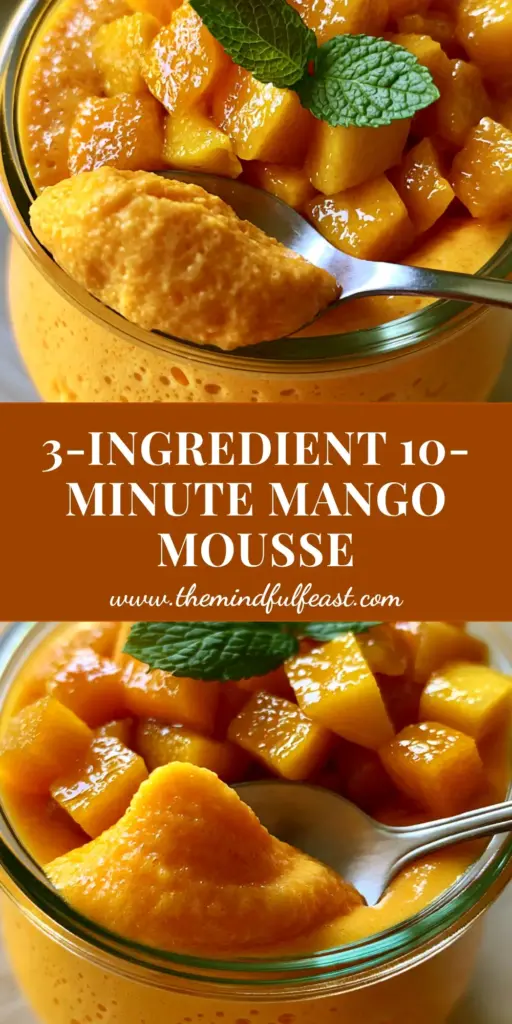
Creating this Mango dessert recipe is a journey into the heart of tropical flavors. It proves that with just a few ingredients and the right culinary technique, you can produce a dessert that looks like it belongs in a high-end food magazine. The combination of the vibrant sunset-orange color and the airy, velvety texture makes it an unforgettable experience for both the eyes and the palate.
We would love to see your creations! If you make this mousse, please leave a comment below and share your photos. Don’t forget to follow us on Pinterest for more visually stunning recipes. Your feedback helps us continue to develop the best forensic-grade recipes for home cooks everywhere.