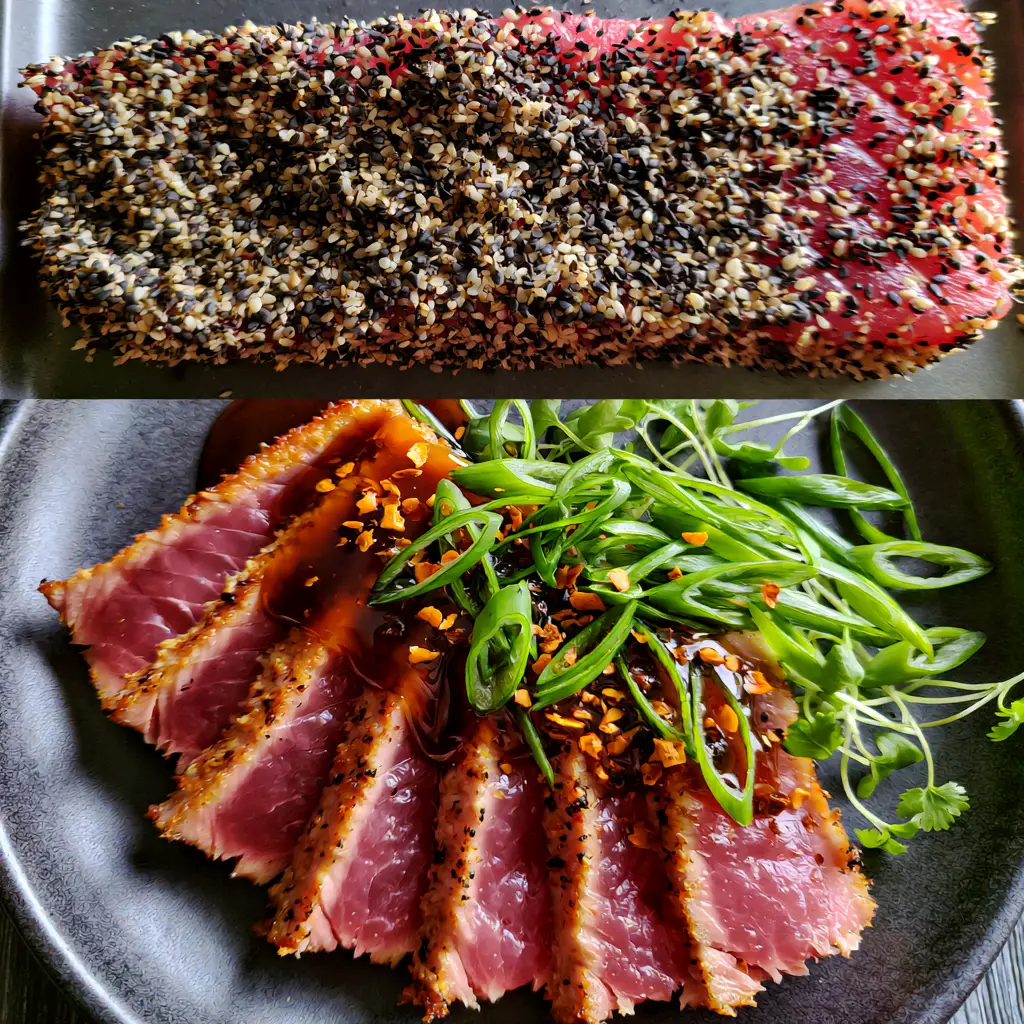
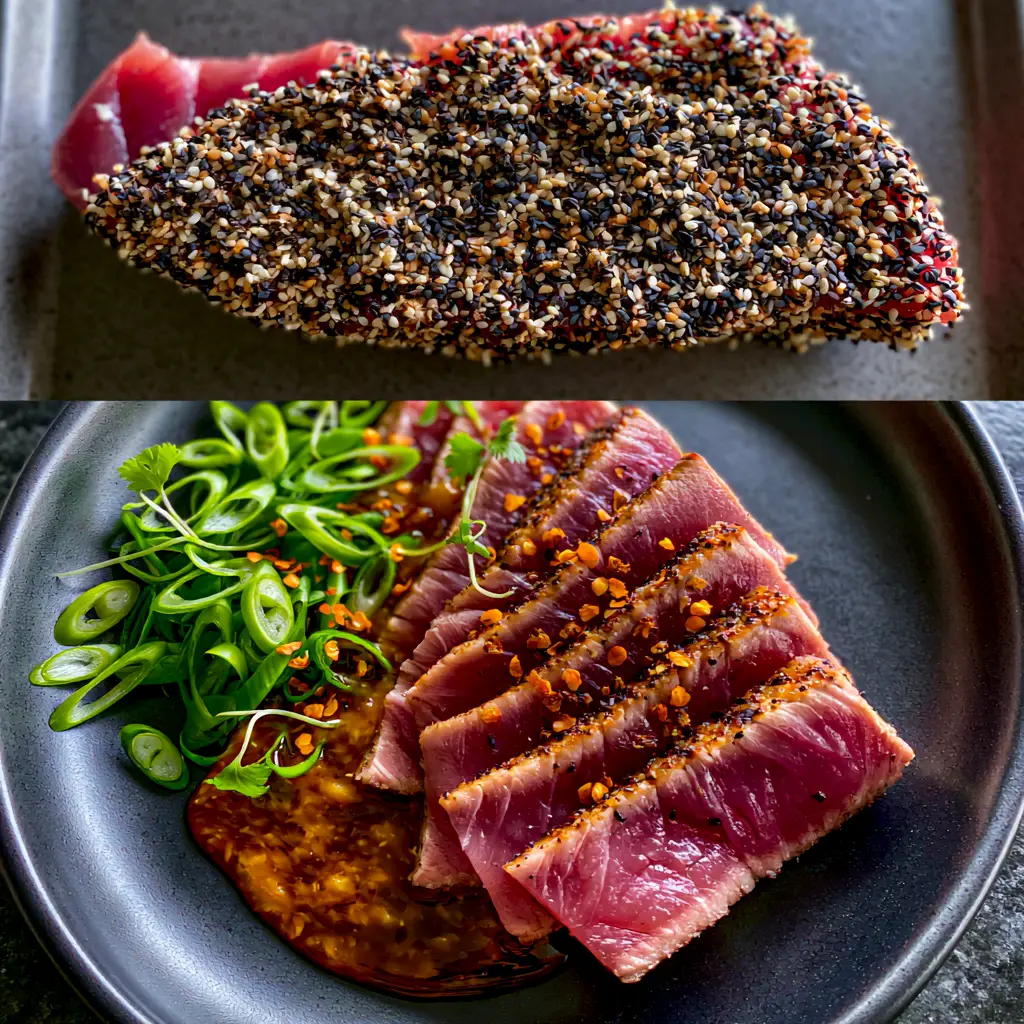
Mastering the perfect tuna steak recipe is the ultimate culinary transition from home cook to professional chef. There is something undeniably alluring about the contrast between a crunch-heavy, toasted sesame exterior and the buttery, ruby-red interior of a premium Ahi steak. When you plate this dish on a matte charcoal ceramic dish, the vibrant colors of the fish and the bright green scallions pop with restaurant-quality brilliance.
In this guide, we aren’t just searing fish; we are engineered a specific sensory experience. We are aiming for that precise 2mm golden-brown crust that yields to a cool, rare center, all tied together by a thick, glossy soy-ginger reduction. Whether you are preparing this for a high-end date night or a sophisticated weeknight meal, the textures and flavors here are designed to impress.
The Anatomy of an Award-Winning Sesame-Crusted Ahi Tuna Steak
To achieve the visual and textural perfection seen in high-end sushi dens, we focus on several key pillars of culinary science. This recipe isn’t about complexity; it’s about the execution of heat and the quality of the primary protein.
- The 2mm Threshold: We use a high-smoke-point oil and intense heat to create a micro-thin sear that preserves the integrity of the AAA-grade tuna.
- Dual-Texture Crust: A dense mixture of black and white sesame seeds provides both a visual mosaic and a nutty, aromatic crunch.
- The Gloss Factor: A dark amber soy-ginger reduction provides the necessary acidity and sweetness to cut through the richness of the fish.
- Vibrant Garnishes: Fresh scallions, micro-cilantro, and a hint of dried chili flakes add layers of heat, herbaceousness, and color.
Sourcing Foundations for the Perfect Tuna Steak Recipe
The success of this tuna steak recipe depends entirely on the quality of your fish. Since the center remains rare, you must source “Sushi-Grade” or “Sashimi-Grade” Ahi (Yellowfin) or Bigeye tuna. Look for a deep ruby red color with minimal connective tissue (the white stringy bits) for the most tender mouthfeel.
1.5 lbs (680g) AAA-Grade Ahi Tuna Steaks: Look for steaks cut at least 1.5 inches (3.8cm) thick. This thickness is crucial to ensure you get that beautiful fanned-out look while maintaining a cool pink center during the searing process.
2 tbsp (18g) White Sesame Seeds: These provide a classic nutty flavor and turn golden-brown when seared, acting as a visual indicator of doneness.
2 tbsp (18g) Black Sesame Seeds: These add a sophisticated, earthy bitterness and striking visual contrast against the red tuna and white seeds.
1/4 cup (60ml) Low-Sodium Soy Sauce: This serves as the savory, umami-rich base for our glossy reduction. If you prefer a lighter profile, you might enjoy this alongside a savory shrimp fried rice.
1 tbsp (15ml) Fresh Ginger, Grated: Ginger adds a sharp, aromatic heat that is essential for authentic Pacific Rim flavor profiles.
1 tbsp (15ml) Honey or Brown Sugar: The sugars are necessary to achieve the “glossy dark amber” look of the reduction through caramelization.
1 tbsp (15ml) Avocado Oil or Grapeseed Oil: You need an oil with a high smoke point (above 400°F/200°C) to get that 2mm sear without burning the seeds or the fish.
Essential Culinary Tools for a Professional Sear
To achieve the handheld aesthetic and ultra-sharp textures described in our blueprint, you need the right gear. A heavy-bottomed skillet is non-negotiable for even heat distribution.
A Cast Iron Skillet or high-quality stainless steel pan is preferred. These materials hold heat better than non-stick, ensuring the tuna sears instantly upon contact rather than steaming in its own juices.
You will also need a Microplane for the ginger and a very sharp Chef’s Knife. Slicing the seared tuna into clean, fanned-out pieces requires a blade that can glide through the crust and the soft center without tearing.
Step-by-Step Evolution of the Ultimate Tuna Steak
Phase 1: Preparing the Ahi and the Seed Mosaic
Start by removing your tuna steaks from the refrigerator about 15 minutes before cooking. Pat them extremely dry with paper towels; moisture is the enemy of a golden-brown crust. If the surface is damp, the seeds will not adhere properly and the fish will steam.
In a shallow bowl, combine your black and white sesame seeds. Season the tuna steaks lightly with kosher salt, then press each side firmly into the seed mixture. You want a dense, even coating that covers the top and bottom surfaces entirely, just like the raw steak shown in our visual blueprint.
Phase 2: The High-Heat Flash Sear
Place your skillet over medium-high heat and add the avocado oil. Wait until the oil is shimmering and just beginning to wisps of smoke. This is the sensory cue that the pan is ready for the tuna steak recipe to begin its transformation.
Carefully lay the tuna in the pan. Sear for exactly 45 to 60 seconds per side. You are looking for the sesame seeds to turn a light golden brown and the sear to penetrate exactly 2mm into the flesh. Use tongs to sear the edges for 10 seconds each to lock in the juices.
Phase 3: Crafting the Soy-Ginger Reduction
Remove the tuna and let it rest on a cutting board. In the same pan (or a small saucepan), combine the soy sauce, grated ginger, honey, and a splash of rice vinegar. Simmer over medium heat for 3-5 minutes.
Watch for the bubbles to become thick and slow. The sauce should coat the back of a spoon with a dark amber, glossy sheen. This reduction provides the “liquid gold” finish that ties the whole dish together.
Expert Tips for a Flawless Plate
- Temperature Control: If your tuna is too warm before hitting the pan, the center will overcook. Keep it slightly chilled until you are ready to crust it.
- The Resting Period: Let the tuna rest for 3-5 minutes before slicing. This allows the fibers to relax, ensuring the juices stay inside the fish rather than on your cutting board.
- Knife Technique: Use a long, single drawing motion when slicing. Avoid a “sawing” motion, which will knock off your beautiful sesame crust.
- Visual Garnish: Always slice your scallions on a sharp bias (diagonal). This mimics the high-end culinary aesthetic of professional plating.
What to Serve with Sesame-Crusted Tuna
This tuna steak recipe is incredibly versatile. For a light lunch, serve the slices over an elevated avocado toast or a bed of mixed greens. If you are looking for a fuller dinner experience, a side of fresh Vietnamese rice paper rolls provides a crunchy, fresh contrast.
For those who love a bit of heat, pairing this with a deconstructed spicy tuna bowl base of sushi rice and spicy mayo is a winning combination. The acidity of the soy-ginger glaze also pairs beautifully with roasted asparagus or a simple cucumber salad.
Storage and Reheating Guidelines
Seared tuna is best enjoyed immediately to appreciate the temperature contrast between the warm crust and cool center. However, if you have leftovers, store them in an airtight container in the refrigerator for up to 24 hours.
Do not reheat in the microwave, as this will turn your beautiful rare tuna into a dry, gray puck. Instead, enjoy the leftovers cold in a salad or a chilled tuna pasta dish. If you must have it warm, a very brief flash-sear in a hot pan (15 seconds per side) is the only way to go.
Frequently Asked Questions
Yes, but ensure it is ‘sushi-grade’ and thawed completely in the refrigerator. Pat it very dry to remove excess moisture from the freezing process.
The key is to pat the tuna extremely dry with paper towels before pressing it into the seeds. Moisture creates steam, which causes the crust to slide off.
Ideally, the steaks should be 1.5 inches (3.8cm) thick. This allows you to achieve a beautiful golden crust without overcooking the delicate rare center.
For a perfect rare center, aim for an internal temperature of 115°F to 120°F (46°C to 49°C). The center should remain cool and bright pink.
Use an oil with a high smoke point like avocado, grapeseed, or canola oil. Avoid olive oil or butter, as they will burn at the high temperatures required.
The Final Recipe: Perfect Sesame Seared Ahi Tuna
Tuna Steak Recipe: The Ultimate Sesame-Crusted Ahi Tuna Guide
Ingredients
Equipment
Method
- Pat the tuna steaks extremely dry with paper towels. Lightly season with salt.
- Mix black and white sesame seeds in a bowl. Press the tuna steaks firmly into the seeds until a dense coating forms on the top and bottom.
- Heat avocado oil in a cast iron skillet over medium-high heat until it just starts to smoke.
- Place tuna in the pan. Sear for 45-60 seconds per side until a 2mm golden-brown crust forms. The center should remain rare and pink. Remove and rest.
- In the same pan, whisk soy sauce, ginger, honey, and vinegar. Simmer for 3 minutes until thick and glossy dark amber.
- Slice tuna into 1/2-inch thick pieces and fan out on a matte charcoal plate. Drizzle with glaze and top with scallions, micro-cilantro, and chili flakes.
Notes
Patting the fish dry is the secret to a crust that doesn't fall off.
Closing & Call to Action
Mastering the tuna steak recipe is a rite of passage for any home cook looking to bring restaurant-quality flavors into their kitchen. The combination of the toasted sesame crunch and the melt-in-your-mouth Ahi is a culinary triumph that never goes out of style. If you enjoyed this guide, please leave a comment below and share your results! For more visual inspiration and recipe ideas, follow us on Pinterest.