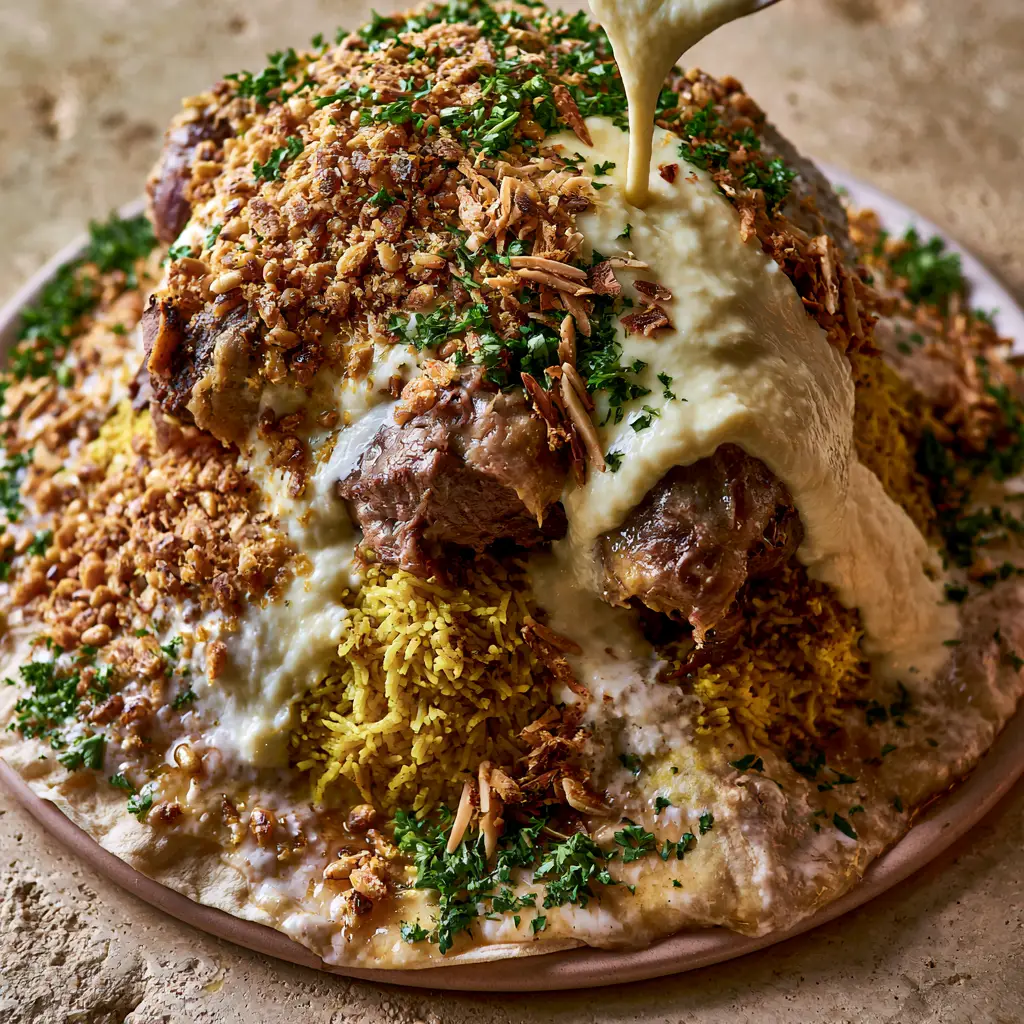
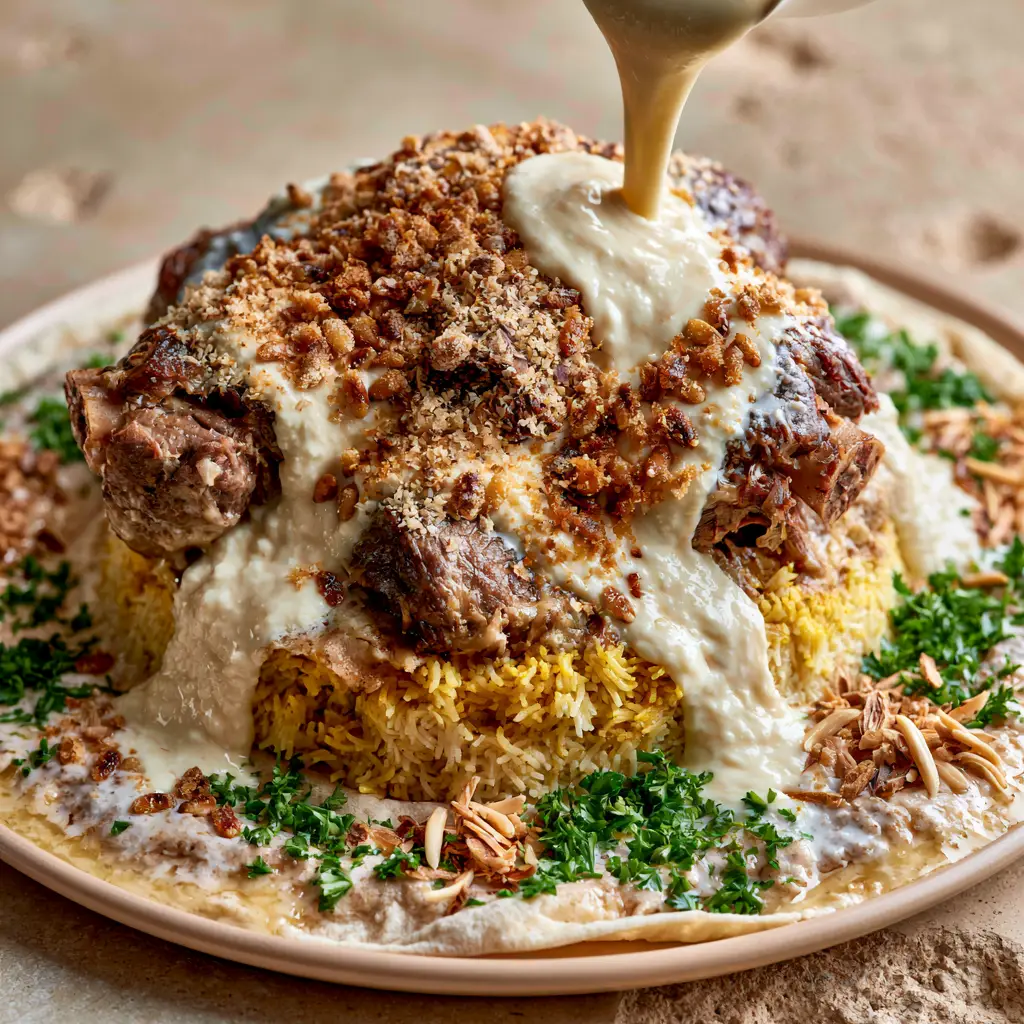
When you first witness a traditional Jordanian platter, the Mansaf recipe stands as a towering testament to Bedouin hospitality and culinary art. This isn’t just a meal; it is a sensory experience defined by a tall mound of sun-drenched golden rice, succulent braised lamb that pulls apart with the gentlest touch, and a bone-white, silky yogurt sauce that ties the entire dish together. If you have ever marveled at the high-end food styling of a Mediterranean spread, you know that the visual appeal of Mansaf is unparalleled, especially when the light catches the sheen of the creamy sauce as it is poured over the meat.
The heart of a true Mansaf recipe lies in the contrast of textures and the depth of the fermented yogurt flavor. From the thin, sauce-soaked shrak bread foundation to the crunch of golden-brown fried pine nuts, every element serves a purpose. Whether you are hosting a festive gathering or looking to master one of the most iconic dishes of the Levant, this guide provides the professional culinary science required to achieve a restaurant-quality result in your own kitchen.
To truly round out a Middle Eastern feast, you might consider starting your meal with an authentic manakeesh or serving this hearty lamb dish alongside a vibrant Mediterranean mezze bowl for a complete spread of flavors.
Why This Traditional Jordanian Masterpiece Works
- The Golden Standard: Aromatic turmeric-tinted rice provides a fluffy, vibrant base that captures the eye and the palate.
- Fall-Off-The-Bone Texture: Braised lamb chunks are slow-cooked until they reach a state of succulent tenderness, perfectly matching the visual promise of high-end food photography.
- The Jameed Factor: Using traditional fermented goat milk yogurt creates a thick, ultra-smooth, bone-white sauce with a unique tang that cannot be replicated by standard yogurt alone.
- Multi-Textural Garnish: The heavy sprinkle of fried pine nuts and toasted slivered almonds adds a necessary buttery crunch against the soft bread and rice.
Essential Components for a Royal Platter
To recreate the visual recipe blueprint exactly, you need specific ingredients that balance acidity, fat, and aromatics. Each component plays a vital role in the structural integrity of the final dish.
The Meat and Aromatic Base
4 lbs (1.8kg) Lamb Shanks or Shoulder: Choose large, bone-in chunks to ensure the meat remains moist and flavorful during the long braising process. The bone marrow enriches the broth, providing a foundational depth for the yogurt sauce.
2 tsp (10g) Turmeric Powder: This is the secret to the rice’s iconic golden-yellow hue; it adds an earthy undertone without overpowering the lamb.
Whole Spices (Cardamom, Cinnamon, Bay Leaves): These “invisible” ingredients infuse the lamb braising liquid with a warm, spiced aroma that defines the Mansaf recipe.
The Soul of the Dish: Jameed and Yogurt
5 oz (140g) Jameed (Hard Dried Yogurt): This fermented stone of goat’s milk provides the characteristic tang; it must be soaked and blended to achieve that ultra-smooth, silky consistency seen in professional food styling.
2 cups (480ml) Plain Greek Yogurt: Adding high-fat Greek yogurt helps stabilize the jameed, ensuring the sauce is bone-white and resistant to curdling when heated.
1 tbsp (8g) Cornstarch: A professional culinary insurance policy to ensure your sauce remains a thick, cohesive stream rather than separating on the platter.
The Foundations and Finishes
3 pieces Shrak (Markook) Bread: This paper-thin flatbread acts as the “sponge,” soaking up the rich yogurt sauce at the base of the platter. If you cannot find shrak, a very thin moroccan msemen could provide a similar layered texture, though shrak is traditional.
3 cups (600g) Long-Grain Basmati Rice: When cooked correctly, this rice yields individual, fluffy grains that stand tall in a mound.
1/2 cup (75g) Pine Nuts and Slivered Almonds: Fried in ghee until golden-brown, these provide the lavish garnish that completes the visual blueprint.
Tools Required for Culinary Success
Achieving the perfect, non-curdled consistency for your yogurt sauce requires more than just a pot. A high-speed blender is essential for processing the soaked jameed into a smooth liquid. You will also need a large, heavy-bottomed Dutch oven for the lamb braise, ensuring even heat distribution so the meat becomes succulent rather than tough. Finally, a wide, shallow platter is the only way to properly display the layers of bread, rice, and lamb.
Step-by-Step Evolution of the Perfect Mansaf
Step 1: The Long Braise for Succulent Lamb
Begin by searing your lamb chunks in a large pot with a splash of oil over medium-high heat. You are looking for a deep, golden-brown crust to form on all sides; this Maillard reaction is the first step toward visual and flavor excellence. Cover the meat with water and add your whole spices—cinnamon sticks, cardamom pods, and bay leaves.
Simmer the lamb gently for 90 to 120 minutes. The sensory cue you are waiting for is the meat beginning to pull away from the bone with no resistance. Once tender, remove the lamb and strain the broth, reserving at least 3 cups (720ml) for the yogurt sauce and rice.
Step 2: Preparing the Ultra-Smooth Jameed Sauce
While the lamb simmers, soak your jameed pieces in warm water for at least an hour. Place the softened jameed into a blender with the Greek yogurt and cornstarch. Blend on high until the mixture is bone-white and shows a perfect, silky consistency without a single lump.
Pour this mixture into a clean pot and bring to a very gentle simmer, whisking constantly in one direction. Gradually add the reserved lamb broth. The sauce should be thick enough to coat the back of a spoon but fluid enough to pour in a heavy, creamy stream. For a different flavor profile in future meals, you might enjoy the techniques used in a creamy orzo chicken, but for Mansaf, the jameed must remain the star.
Step 3: Cooking the Aromatic Golden Rice
Rinse your rice until the water runs clear to remove excess starch, ensuring fluffy grains. In a pot, melt 2 tbsp (30g) of ghee and stir in the turmeric powder until it blooms and smells fragrant. Add the rice, stirring to coat every grain in the golden fat. Add 4.5 cups (1.1L) of water or light broth and salt.
Bring to a boil, then reduce to the lowest heat and cover. After 15-18 minutes, the rice will be a vibrant sun-drenched gold. Fluff it gently with a fork; the grains should be separate and aromatic, never mushy.
Step 4: The Art of the Golden Garnish
In a small skillet, heat a tablespoon of ghee over medium-low heat. Add the slivered almonds first, as they take slightly longer to toast. Once they turn pale gold, add the pine nuts. Watch them closely; they transition from raw to perfectly golden-brown in seconds. Remove them immediately and drain on a paper towel to maintain their buttery crunch.
Professional Tips for Visual and Flavor Accuracy
- Prevent Curdling: Never let the yogurt sauce reach a rolling boil. Keep it at a gentle simmer and always whisk in one direction to maintain the protein structure of the goat milk.
- The Soak: Ensure the shrak bread is properly “primed.” Drizzle a few spoonfuls of the yogurt sauce over the bread before adding the rice so it becomes tender and flavorful, not dry.
- Freshness Counts: Use flat-leaf parsley and chop it only seconds before serving. The bright green contrast against the white sauce and golden rice is a critical visual cue from the blueprint.
- Lamb Quality: If your lamb looks dry, it has been boiled too hard. A low, slow simmer ensures the succulent, moist look required for high-end food styling.
Serving and Pairing Suggestions
Mansaf is a centerpiece dish that needs very little accompaniment. However, the richness of the lamb and yogurt is beautifully balanced by something acidic. Consider serving a side of tangy quick pickles or a light, crisp salad. For those who enjoy a variety of textures, a roasted beet and sweet potato salad offers an earthy sweetness that complements the fermented tang of the jameed.
Storing and Reheating Your Mansaf
If you have leftovers, store the components separately. The rice and lamb will keep in an airtight container for up to 3 days. The yogurt sauce should be stored in a glass jar. When reheating, do so slowly on the stovetop. Add a splash of water or broth to the sauce to loosen it, as it will thicken significantly in the fridge. Do not freeze the yogurt sauce, as the emulsion will break upon thawing, losing that silky bone-white texture.
Frequently Asked Questions
While shrak (Markook) is traditional for its thinness, you can use very thin pita or large flour tortillas as a substitute, provided they are thin enough to soak up the sauce.
Stabilize the sauce with a little cornstarch or egg white, whisk it constantly in one direction, and never let it reach a full rolling boil.
Jameed is a hard, dried yogurt made from goat’s milk. If you cannot find it, you can substitute it with a mixture of Greek yogurt and a splash of lemon juice, though the unique fermented depth will be slightly different.
Bone-in lamb shanks or shoulder chunks are best because the bone adds flavor to the broth and the fat content keeps the meat succulent during the long braise.
The Final Mansaf Recipe: Jordanian Perfection
Mansaf Recipe: The Ultimate Guide to Jordan’s Authentic National Feast
Ingredients
Equipment
Method
- Sear the lamb chunks in a heavy pot until browned. Cover with water and add cinnamon, cardamom, and bay leaves. Simmer for 90-120 minutes until succulent and tender.
- Blend soaked jameed with Greek yogurt and cornstarch. Whisk into a portion of the lamb broth and simmer gently until a silky, bone-white consistency is reached.
- Bloom turmeric in ghee, add rice and water. Cook on low for 18 minutes until fluffy and golden-tinted.
- Layer shrak bread on a platter, soak with a little sauce. Top with a mound of rice, the lamb chunks, and pour the remaining silky sauce over. Garnish heavily with fried nuts and parsley.
Notes
Ensure the lamb is simmering, not boiling, to keep the meat succulent.
Embrace the Tradition of the Mansaf Recipe
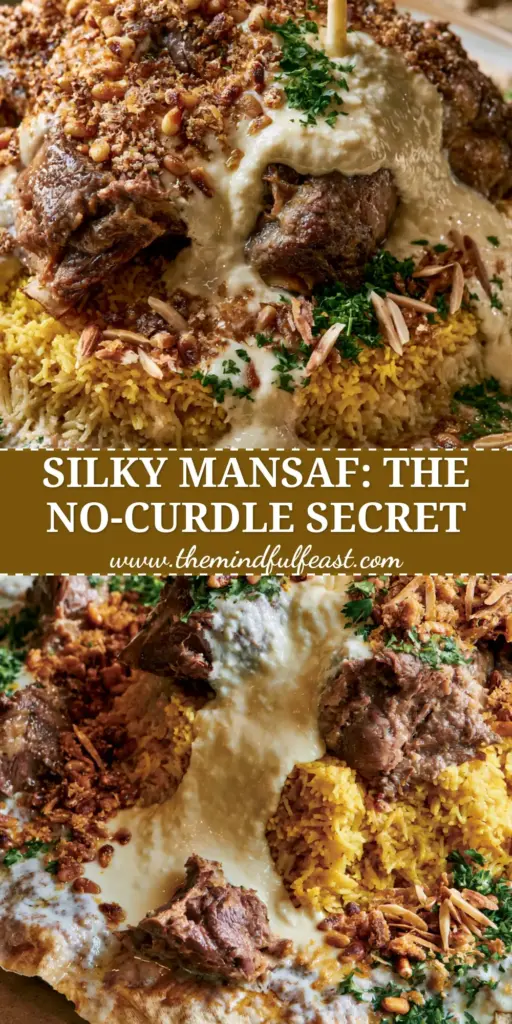
Mastering the Mansaf recipe is a milestone for any home cook interested in global cuisines. By following these forensic visual cues—from the sun-drenched gold of the rice to the ultra-smooth pour of the jameed—you are not just making dinner; you are preserving a cultural legacy. The combination of tender lamb and tangy yogurt is a flavor profile that stays with you long after the meal is over.
If you enjoyed this journey into Jordanian flavors, please leave a comment below and share your results! You can also find more visual inspiration and recipe saves on our Pinterest page.