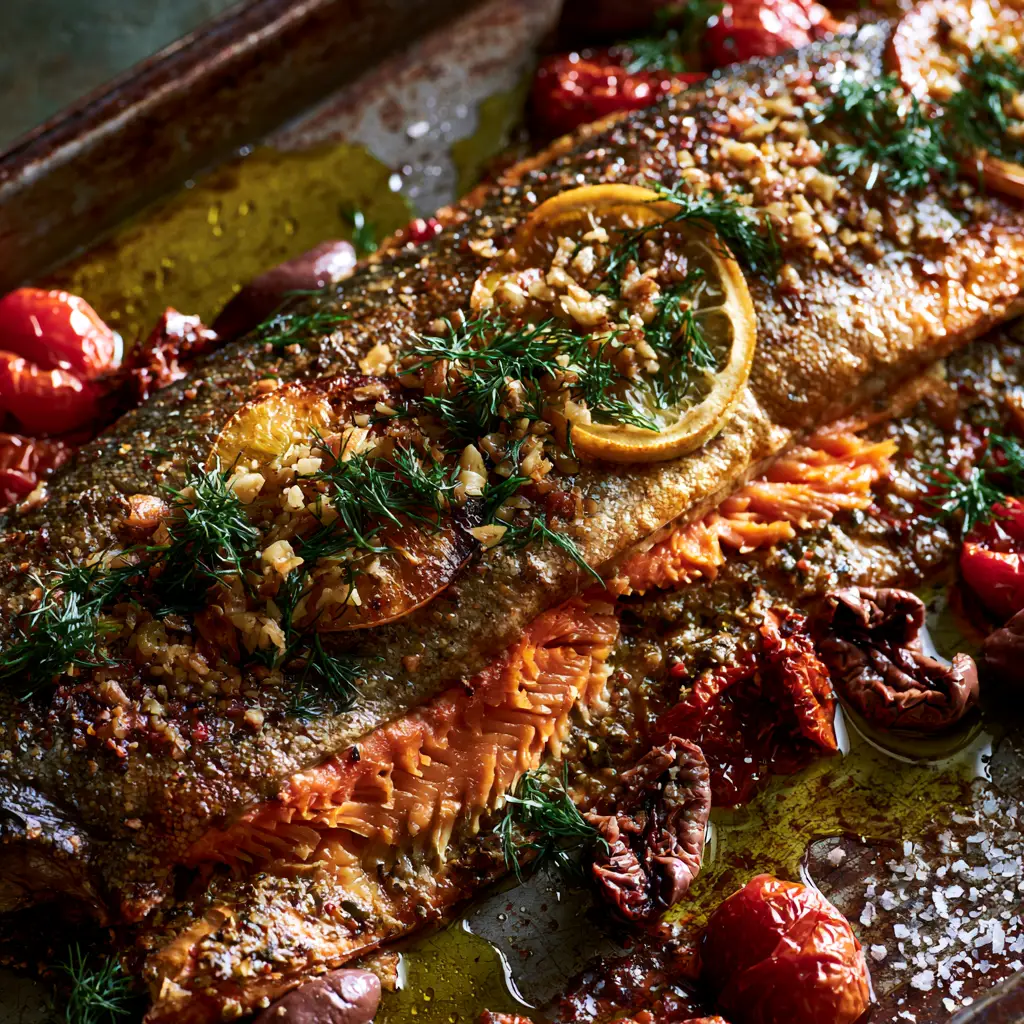
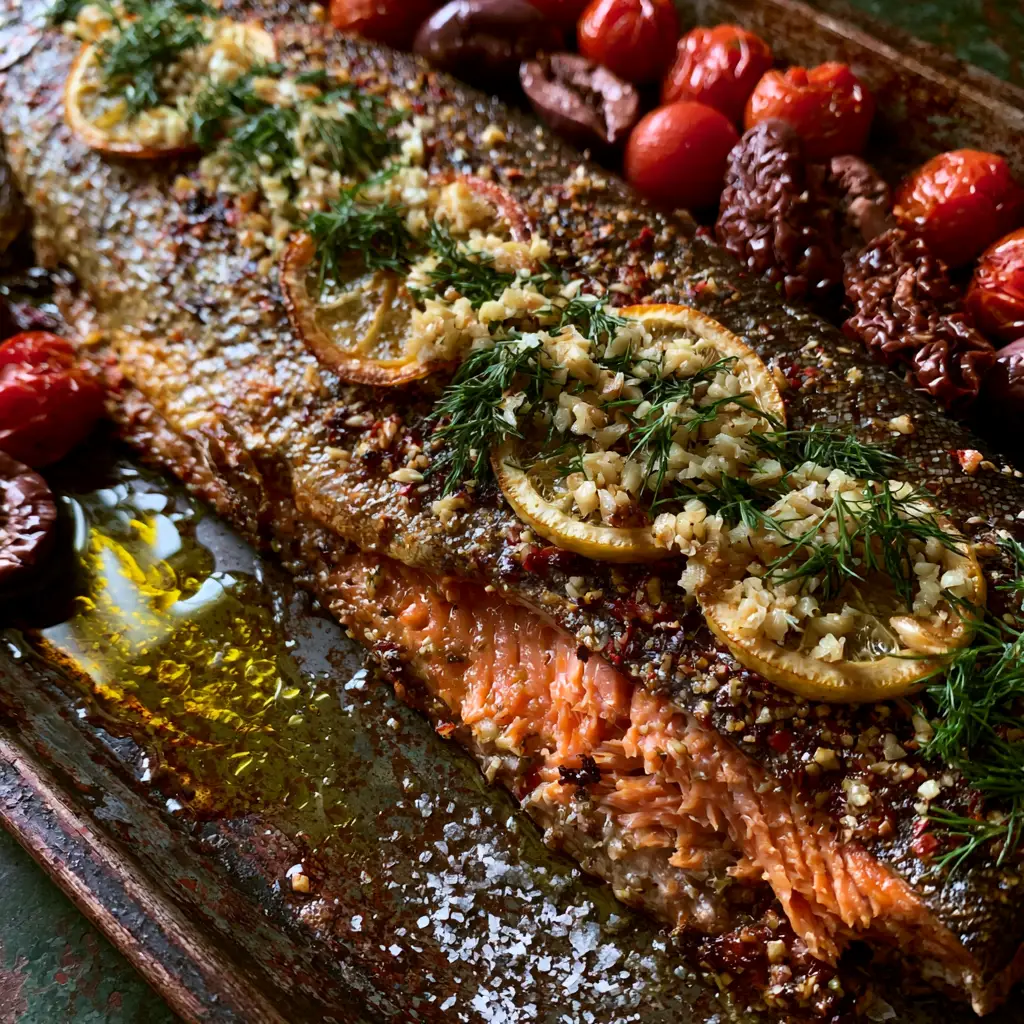
The Mediterranean trout bake is more than just a simple weeknight dinner; it is a masterclass in textures and vibrant, sun-drenched flavors. Imagine a rustic, dark metal sheet pan emerging from the oven, carrying a large roasted trout fillet with skin that has transformed into a crispy, golden-brown crust. Beneath that crunch lies the prize: flakes of juicy, tender pinkish-orange meat that melt away at the touch of a fork.
Every corner of the pan tells a story of high-heat transformation. You will see thin lemon slices that have caramelized to a deep amber, their acidity mellowing into a sweet tang. Beside them, bright red cherry tomatoes have blistered until their skins pop, releasing a concentrated nectar that mingles with the shimmering drizzle of golden extra virgin olive oil. This dish isn’t just a meal; it’s a sensory experience captured in the soft, natural morning light of a bustling kitchen.
Why You Will Love This Vibrant Sheet Pan Masterpiece
- Textural Contrast: The combination of crispy fish skin, wrinkled Kalamata olives, and succulent, flaky meat provides a professional-grade mouthfeel in every bite.
- One-Pan Simplicity: By utilizing the high-heat roasting method, you achieve complex flavors like charred garlic and blistered tomatoes without staining multiple pots.
- Nutrient-Dense Elegance: This recipe highlights the heart-healthy fats of trout and olive oil, paired with the antioxidant-rich profiles of roasted garlic and fresh dill.
- Visual Perfection: The contrast between the deep greens of fresh dill and the vibrant reds of the tomatoes makes this a centerpiece-worthy dish.
If you enjoy the delicate flavor profile of fresh water fish, you might also find yourself craving our honey garlic steelhead trout for a sweeter alternative. However, today we are leaning into the savory, briny notes of the Mediterranean coast.
Essential Components for the Perfect Mediterranean Trout Bake
To achieve the visual and culinary success seen in our blueprint, every ingredient serves a dual purpose: flavor and structural integrity. Selecting the right trout is the first step toward a restaurant-quality result.
Large Trout Fillet (approx. 1.5 lbs / 680g): Look for a fillet with vibrant pinkish-orange flesh. The color indicates a diet rich in natural pigments and ensures the meat remains juicy during the roasting process.
Cherry Tomatoes (2 cups / 300g): These are essential for the “blistered” effect. Their high sugar content allows the skins to char quickly under high heat, creating a natural sauce for the fish.
Kalamata Olives (1/2 cup / 75g): We use whole, pitted olives to achieve that “wrinkled” look. As they roast, their brine concentrates, offering a salty punch that cuts through the richness of the trout.
Fresh Lemon (1 large): Slicing these paper-thin is the secret to caramelization. The heat transforms the bitter pith into a candied, edible garnish that perfumes the entire Mediterranean trout bake.
Roasted Garlic (6-8 cloves, minced): We start with pre-roasted garlic or mince fresh cloves very finely. These become golden nuggets of umami, scattered across the surface of the fish for maximum aromatic impact.
Extra Virgin Olive Oil (3 tbsp / 45ml): This is the conductor of heat. A generous drizzle ensures the skin crisps up while the vegetables soften and the flavors meld together.
Fresh Dill Sprigs (1/4 cup / 10g): Added both during and after cooking, dill provides a grassy, cooling contrast to the heavy roasted notes of the garlic and olives.
Coarse Sea Salt Flakes (1 tsp / 5g): Unlike table salt, these flakes provide a visible, crunchy finish. They catch the light on the surface of the oil, adding a professional “chef’s touch” to the final presentation.
Foundational Tools for Roasting Excellence
The equipment you choose directly impacts the “Forensic Visual Accuracy” of this dish. To get the specific results described in our Midjourney prompt, you need a dark, rustic metal sheet pan. Darker pans absorb more heat, which is the secret to achieving that golden-brown, crispy trout skin and the wrinkled texture of the Kalamata olives.
You will also need a very sharp mandoline or chef’s knife to ensure the lemon slices are thin enough to caramelize rather than just steam. A high-quality fish spatula is recommended for transferring the large fillet without breaking those delicate, juicy flakes of meat. If you are looking for other sheet-pan inspiration, check out our rustic Italian bake for a different take on roasted Mediterranean flavors.
Step-by-Step Evolution of the Mediterranean Trout Bake
Preparing the Sheet Pan and Aromatics
Preheat your oven to 400°F (200°C). Position your rack in the upper third of the oven to ensure maximum heat exposure for the skin. Lay your large trout fillet on the dark metal sheet pan. Pat the skin completely dry with paper towels; moisture is the enemy of crispiness.
Mince your garlic cloves finely. In a small bowl, toss the cherry tomatoes and Kalamata olives with 1 tablespoon (15ml) of olive oil. This pre-coating ensures they begin blistering immediately once they hit the heat. Scatter them around the trout, ensuring they aren’t crowded, which would cause them to steam rather than roast.
Layering Flavors for Visual Impact
Drizzle the remaining 2 tablespoons (30ml) of extra virgin olive oil over the trout fillet. Use your hands or a brush to ensure every inch of the skin is coated. Arrange the thin lemon slices directly on top of the fish meat. As the fish cooks, the juices from the lemon will penetrate the flesh while the edges of the slices turn a beautiful caramelized brown.
Sprinkle the minced roasted garlic over the lemons and the exposed fish. The garlic will toast in the oil, turning golden and fragrant. Finally, add half of your fresh dill sprigs to the pan. The heat will wilt these, infusing the oil with a deep herbal note that characterizes a true Mediterranean trout bake.
The Roasting Process: Visual Cues to Watch For
Slide the pan into the oven. Roast for 12 to 15 minutes, depending on the thickness of your fillet. After the first 10 minutes, start looking for sensory cues. You should hear a distinct sizzling sound as the tomato skins begin to pop and the olive oil bubbles.
Look for the trout skin to turn a shimmering golden-brown. The cherry tomatoes should look deflated and slightly charred, while the olives should appear wrinkled and matte. The lemon slices should have dark, crispy edges. If the meat is opaque and flakes easily with a fork, the Mediterranean trout bake is ready.
The Finishing Touches
Remove the pan from the oven and let it rest for 3 minutes. This allows the juices to redistribute, ensuring the meat remains “juicy and tender” as described in our visual blueprint. Just before serving, sprinkle the coarse sea salt flakes over the entire pan. The salt will sit on top of the oil, providing a beautiful crystalline highlight. Finish with the remaining fresh, bright green dill sprigs for a pop of color and a fresh aromatic lift.
Expert Tips for Culinary Forensic Accuracy
- The Dry Skin Rule: For that “crispy and golden-brown” skin, the fish must be bone-dry before the oil is applied. Any surface water will create steam, resulting in rubbery skin.
- Lemon Placement: Place the lemon slices on the thicker parts of the fillet. This protects the delicate meat from overcooking while allowing the lemons to char under the direct heat.
- The Salt Timing: Always add the coarse sea salt flakes *after* cooking. If added before, they may dissolve into the juices; adding them at the end ensures they remain visible and crunchy.
- Garlic Management: If your garlic starts browning too quickly, tuck some of it under the lemon slices to protect it from burning, which can introduce a bitter flavor.
Optimal Storage and Reheating Strategies
While this dish is best served immediately to enjoy the crispy skin, leftovers are quite versatile. Store the trout and roasted vegetables in an airtight container in the refrigerator for up to 2 days. The flavors of the Mediterranean trout bake actually deepen overnight as the garlic and dill infuse the oil.
To reheat, avoid the microwave, which will make the fish rubbery and the skin soggy. Instead, place the fillet back on a sheet pan in a 350°F (175°C) oven for 5-8 minutes until warmed through. Leftover trout is excellent cold, flaked over a pearl couscous salad or used as a protein boost for chicken-style salad sandwiches using fish instead of poultry.
What to Serve with Your Mediterranean Trout Bake
This dish is robust enough to stand on its own, but the right side dishes can elevate the meal. A light, acidic side like a pasta salad (omitting the chicken for a vegetarian side) works beautifully to balance the rich fats of the trout.
For a more traditional pairing, serve the fish alongside a Mediterranean-inspired bowl of quinoa or farro. The roasted cherry tomato juices act as a built-in dressing for any grain you choose to serve underneath the fillet. If you want to keep the meal low-carb, a simple bed of sautéed spinach or arugula will wilt perfectly under the heat of the freshly roasted fish.
Frequently Asked Questions
You can, but the visual and flavor impact will be different. Use 1 tablespoon of dried dill in place of the fresh, but be aware it won’t provide the same bright green pop of color.
Yes, salmon is a great substitute as it has a similar fat content. However, trout fillets are often thinner, so you may need to increase the roasting time by 3-5 minutes for a thick salmon fillet.
It is highly recommended to use pitted olives for ease of eating, but whole olives roast beautifully. If using olives with pits, be sure to warn your guests!
The key is removing all surface moisture with a paper towel and using a dark metal sheet pan. Dark pans absorb more heat, which helps fry the skin in the olive oil during the roasting process.
Your oven might not be hot enough. Ensure you preheat fully to 400°F (200°C) and place the pan in the upper third of the oven where the heat is most intense.
The Ultimate Mediterranean Trout Bake Recipe
Mediterranean Trout Bake with Charred Lemons and Blistered Tomatoes
Ingredients
Equipment
Method
- Preheat oven to 400°F (200°C). Pat the trout fillet completely dry with paper towels to ensure the skin crisps.
- Toss cherry tomatoes and Kalamata olives in 1 tbsp of olive oil on the dark sheet pan.
- Place the trout on the pan. Drizzle with remaining oil, top with lemon slices, minced garlic, and half the dill.
- Roast for 12-15 minutes until the skin is golden-brown, tomatoes are blistered, and meat flakes easily.
- Sprinkle with coarse sea salt flakes and remaining fresh dill sprigs before serving.
Notes
Use a dark baking sheet to improve heat absorption and charring.
Join The Mindful Feast Community
Mastering the Mediterranean trout bake is a milestone for any home cook looking to bring restaurant-quality seafood to their table. The combination of charred citrus, briny olives, and perfectly roasted fish creates a symphony of flavors that is hard to beat. We invite you to share your results with us! Did your tomatoes blister perfectly? Did the skin achieve that elusive golden crunch?
Leave a comment below with your experience or any substitutions you tried. Don’t forget to follow us on Pinterest and save this recipe to your “Healthy Dinners” board for easy access. If you enjoyed this, you might also love our classic Trout Amandine for your next seafood night!