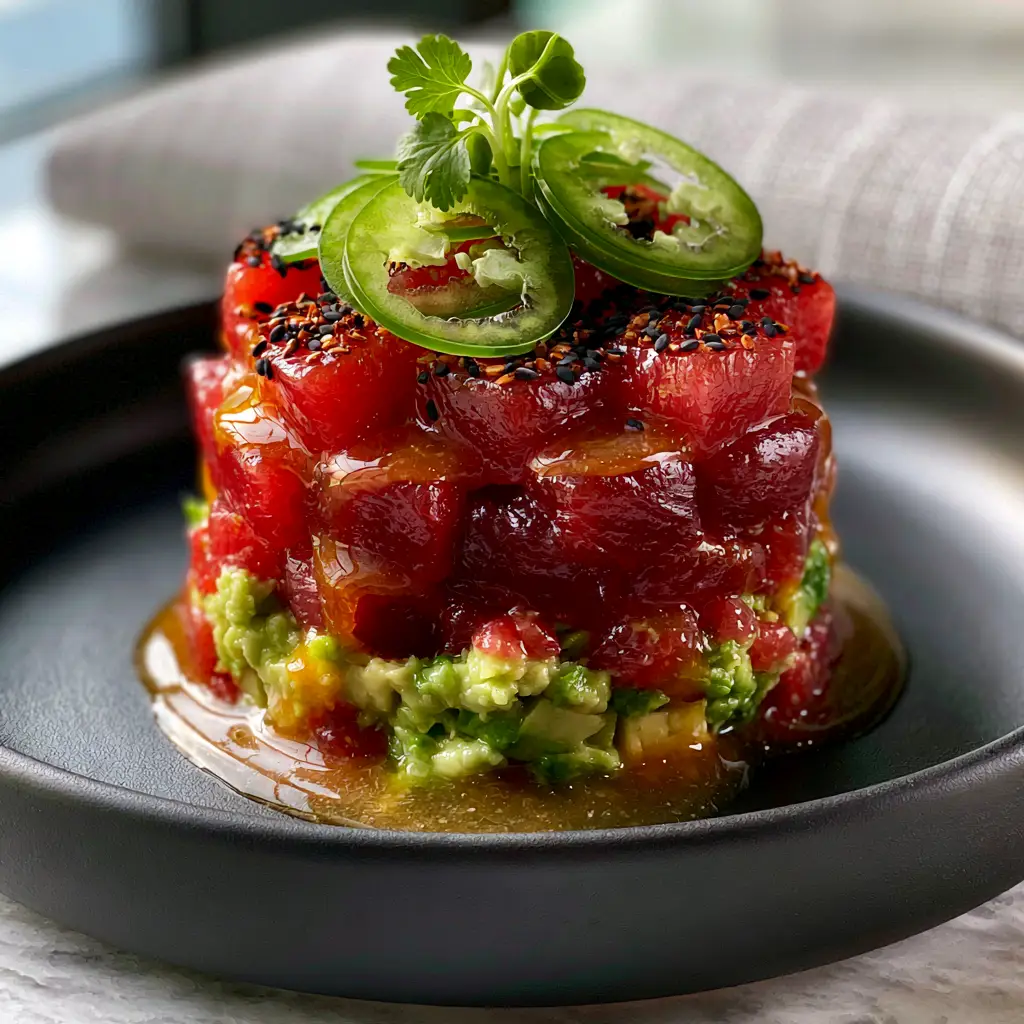
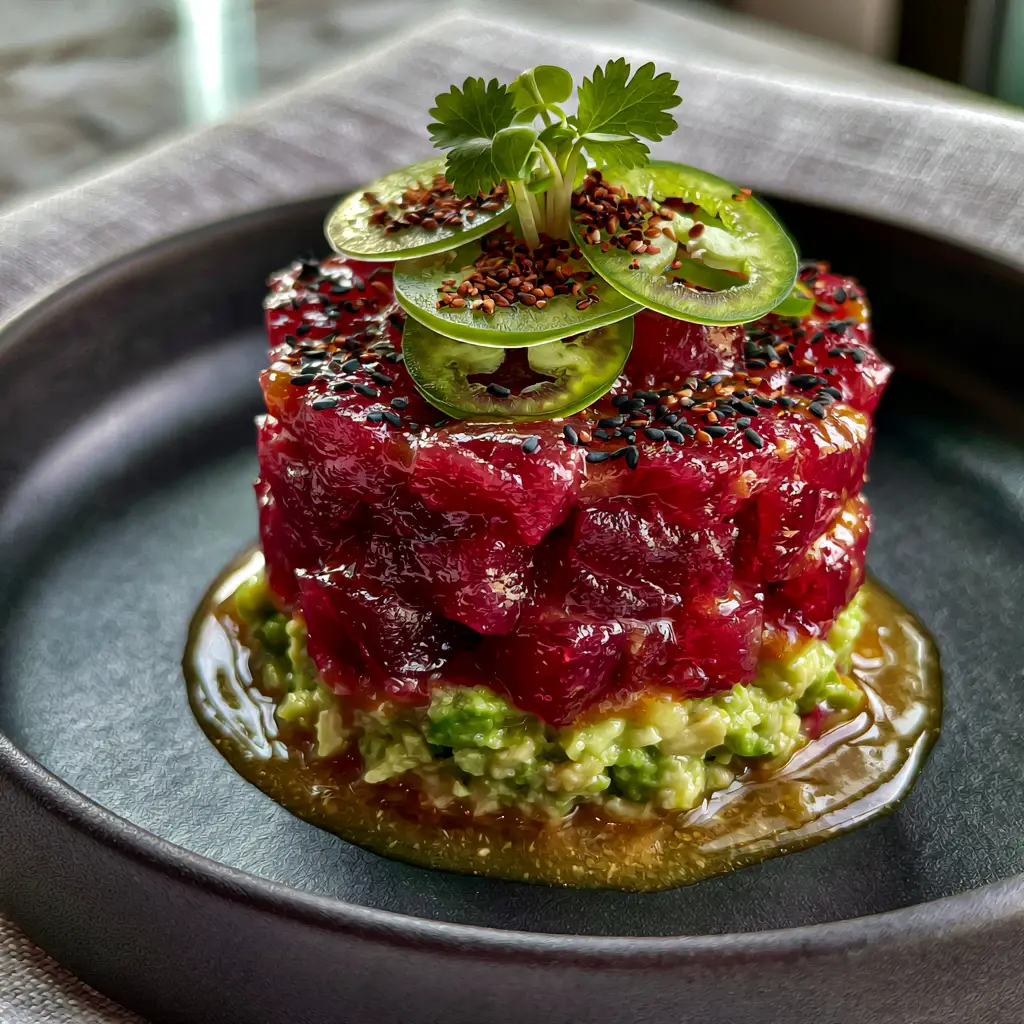
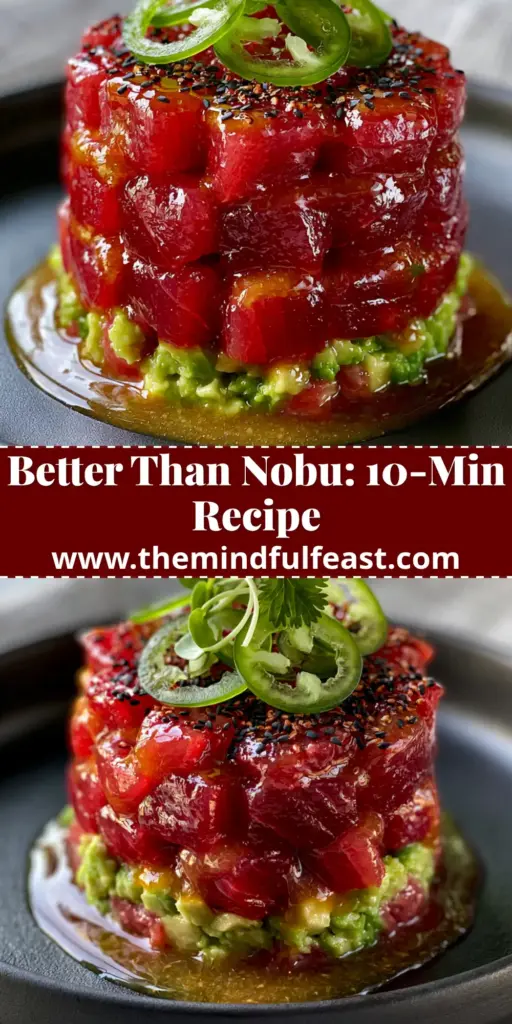
There is a specific kind of magic that happens when you sit down at a high-end sushi counter and a plate of Nobu Tuna Tartare is placed before you. The visual impact is immediate: a deep, ruby-red stack of sashimi-grade ahi tuna shimmering under a golden-brown glaze, resting atop a foundation of creamy, pale green avocado. It is a dish that defines minimalist luxury, relying on the absolute freshness of its components rather than complex cooking techniques.
Recreating this iconic appetizer at home requires more than just a recipe; it requires a commitment to sourcing and precision. When you see that glistening, translucent spicy miso sauce pooling at the base of a matte black ceramic plate, you know you are about to experience a perfect balance of umami, heat, and buttery richness. This guide will walk you through the professional techniques needed to achieve that exact gourmet aesthetic and flavor profile.
Whether you are looking to impress guests at a dinner party or simply craving the clean, vibrant flavors of high-end Japanese cuisine, this version of the Nobu Tuna Tartare delivers. We will focus on the structural integrity of the cylinder stack and the specific sensory cues—the smell of toasted sesame, the sharp snap of serrano, and the silky mouthfeel of chilled fish—that make this dish legendary.
The Culinary Blueprint for a Flawless Ahi Stack
Before we pick up a knife, we must understand the architecture of this dish. The appeal of a Nobu Tuna Tartare lies in its contrasting textures and temperatures. The tuna must remain chilled to maintain its firm yet buttery texture, while the avocado provides a rich, fatty counterpoint that melts on the tongue.
- Sashimi-Grade Purity: We utilize deep ruby-red ahi tuna cubes, cut to a precise 1/4-inch (6mm) dimension to ensure every bite is uniform.
- The Creamy Foundation: Ripe Hass avocados are finely diced and seasoned to provide a stable, flavorful base for the tower.
- Glossy Umami Veil: A translucent golden-brown spicy miso glaze provides the “glisten” seen in high-end food photography, pooling elegantly at the plate’s base.
- Aromatic Garnishes: Paper-thin serrano pepper rings and micro-cilantro sprigs add both height and a sharp, fresh finish.
- Textural Contrast: Toasted black sesame seeds are sprinkled with precision to offer a subtle crunch and a striking visual pop against the red tuna.
Essential Components for the Ultimate Nobu Tuna Tartare
To achieve the professional results seen in fine-dining establishments, every ingredient must serve a specific culinary purpose. While the visual prompt dictates the stars of the show, foundational elements like high-quality oils and acids are what bridge the flavors together.
Sashimi-Grade Ahi Tuna: You need 8 oz (225g) of the highest quality tuna. Its deep ruby color is a sign of freshness and provides the primary protein structure for the tartare stack.
Ripe Hass Avocado: One large avocado (approx. 200g) acts as the creamy pedestal. Its high fat content balances the lean nature of the ahi tuna.
White Miso Paste: 2 tbsp (30g) of fermented soybean paste provides the salty, savory umami base for our glossy glaze. It is the “secret” to that signature Nobu profile.
Mirin and Rice Vinegar: 1 tbsp (15ml) of each adds sweetness and acidity. This combination thins the miso into a translucent sauce that flows beautifully over the fish.
Sriracha or Chili Oil: 1 tsp (5ml) gives the glaze its “spicy” moniker. It adds a gentle back-end heat that doesn’t overwhelm the delicate fish.
Toasted Sesame Oil: 1/2 tsp (2.5ml) provides an invisible but essential aromatic layer. It rounds out the sharp edges of the vinegar and miso.
Fresh Serrano Pepper: One pepper, sliced into paper-thin rings. These add a localized heat and a vibrant green visual that cuts through the rich colors of the tuna.
Micro-Cilantro and Black Sesame Seeds: These are the finishing touches. The micro-greens add height, while the seeds provide a sophisticated, matte-black contrast to the glossy fish.
Lemon Juice and Sea Salt: Crucial for the avocado base. A squeeze of lemon prevents oxidation (browning) and a pinch of salt enhances the natural creaminess.
Professional Tools for Gourmet Plating
To achieve the “perfect cylinder” described in our visual blueprint, you will need a few specific kitchen tools. Precision is the difference between a homemade salad and a restaurant-quality Nobu Tuna Tartare.
A 3-inch (7.6cm) stainless steel ring mold is non-negotiable for this recipe. It allows you to pack the layers tightly, ensuring the tower doesn’t collapse when the mold is removed. You will also need a very sharp chef’s knife or a Yanagiba (sushi knife) to ensure the tuna cubes are cleanly cut rather than torn.
For the garnishes, a mandolin slicer is highly recommended to get the serrano pepper slices thin enough to be translucent. Finally, a matte black ceramic plate is the ideal canvas, as it absorbs light and allows the glossy, golden-brown miso glaze to stand out in high relief.
Step-by-Step Instructions for the Perfect Tartare Tower
Preparing the Ahi Tuna and Avocado
Begin by ensuring your tuna is extremely cold; this makes dicing much easier and keeps the fish food-safe. Using your sharpest knife, cut the ahi tuna into uniform 1/4-inch (6mm) cubes. Avoid over-handling the fish, as the heat from your hands can begin to soften the fats. Place the cubes in a chilled glass bowl and return them to the refrigerator immediately.
Next, prepare the avocado base. Halve the Hass avocado, remove the pit, and dice the flesh into pieces slightly smaller than the tuna cubes. In a small bowl, gently toss the avocado with 1 tsp (5ml) of lemon juice and a pinch of fine sea salt. The lemon juice is vital—it keeps the avocado a vibrant, grassy green, which is essential for that striking color contrast against the red tuna.
Whisking the Glossy Spicy Miso Glaze
In a small mixing bowl, combine the white miso paste, mirin, rice vinegar, toasted sesame oil, and sriracha. Whisk vigorously until the mixture is completely smooth and translucent golden-brown. If the glaze feels too thick, add a few drops of water until it reaches a consistency that will coat the back of a spoon but still “pool” slightly when poured.
Take your chilled tuna cubes and add 1 tablespoon (15ml) of the glaze to the bowl. Gently fold the tuna with a silicone spatula until every cube is glistening. You want the tuna to look “wet” and ruby-red, not swimming in sauce. If you enjoy this flavor profile, you might also like exploring spicy tuna bowls for a more casual weeknight meal.
Executing the Cylinder Construction
Place your 3-inch (7.6cm) ring mold in the exact center of your matte black ceramic plate. Spoon the seasoned avocado into the bottom of the mold. Use the back of a small spoon to press the avocado down firmly, creating a flat, even surface. This is your foundation; if it isn’t level, the whole tower will lean.
Carefully spoon the glazed tuna cubes on top of the avocado layer. Again, press down very gently to close any air gaps between the cubes. You are looking for a thick, substantial layer of tuna that sits proudly atop the avocado. For those who prefer cooked variations of these flavors, our tuna meatballs offer a unique twist on seafood prep.
The Final Garnish and Reveal
Slowly and steadily, lift the ring mold straight upward. The tartare should hold its cylindrical shape perfectly. Drizzle another teaspoon of the spicy miso glaze directly over the top of the tuna, allowing it to run down the sides and pool elegantly at the base on the matte black plate.
Place 3 to 4 paper-thin serrano pepper rings on the top of the tuna stack. Add a precise pinch of micro-cilantro in the center to create height. Finally, take a pinch of toasted black sesame seeds and sprinkle them from about 6 inches (15cm) above the plate to ensure an even, delicate distribution. The result should match the Nobu Tuna Tartare visual perfectly: a glistening, high-end masterpiece.
Expert Tips for Tartare Success
- Temperature Control: Always chill your plates in the refrigerator for 15 minutes before plating. This keeps the Nobu Tuna Tartare at the optimal serving temperature and prevents the glaze from thinning too quickly.
- Knife Skills: Wipe your knife blade with a damp towel between every few cuts of the tuna. This prevents the proteins from sticking and ensures every cube has clean, sharp edges.
- Miso Selection: Use “White” (Shiro) miso. Red miso is too fermented and salty for this dish and will muddy the translucent golden color of the glaze.
- Sourcing Fish: Always ask your fishmonger for “Grade 1” or “Sashimi-Grade.” If you can’t find fresh ahi, high-quality frozen saku blocks are an excellent alternative as the flash-freezing process kills parasites.
- Waste Not: If you have leftover scraps of tuna that aren’t perfect cubes, save them for chickpea tuna salad or a quick tuna rice muffin snack.
Structural Integrity and Serving Suggestions
This dish is best served immediately. Because the tuna is raw and the avocado is prone to oxidation, the window of perfection is about 20 minutes. The Nobu Tuna Tartare is a stand-alone star, but it pairs beautifully with light, crispy elements like lotus root chips or toasted nori sheets.
If you are serving this as part of a larger Japanese-inspired feast, consider starting with this tartare and following it with Japanese BBQ chicken fried rice or even a light smoked salmon platter. The key is to keep the surrounding dishes complementary in their umami-forward flavor profiles.
Storage and Food Safety Guidelines
Due to the nature of raw sashimi-grade fish, we do not recommend storing leftovers of the assembled Nobu Tuna Tartare. Raw fish should be consumed the day it is purchased. If you have leftover spicy miso glaze, it can be kept in an airtight container in the refrigerator for up to 5 days and used as a dressing for a healthy tuna salad.
Never freeze the assembled tartare. The cellular structure of the avocado will break down, turning it into mush, and the delicate texture of the seasoned ahi will be lost. This is a “moment in time” dish designed for immediate enjoyment.
Frequently Asked Questions
You can prep the glaze and dice the tuna up to 2 hours ahead (kept separately and chilled), but the dish must be assembled immediately before serving to prevent the avocado from browning.
The secret is using a stainless steel ring mold and firmly pressing the avocado base down to create a solid foundation before adding the tuna.
No, it is a mild-to-medium heat. The miso and mirin provide a sweet-savory balance that mellows the sriracha, highlighting the fish rather than masking it.
If micro-cilantro is unavailable, very finely chiffonaded shiso leaves or small sprigs of fresh chervil provide a similarly elegant look and fresh flavor.
Always use Sashimi-Grade Ahi (Yellowfin) or Bigeye tuna. It should have a deep ruby-red color and no ‘fishy’ smell, ensuring it is safe and buttery in texture.
The Definitive Nobu Tuna Tartare Recipe Card
Nobu Tuna Tartare: A Masterclass in Silky Ahi and Spicy Miso
Ingredients
Equipment
Method
- Cleanly slice the chilled ahi tuna into uniform 1/4-inch (6mm) cubes. Place in a cold bowl and refrigerate immediately.
- Dice the avocado flesh into small cubes. Gently fold with lemon juice and sea salt in a small bowl until coated.
- Whisk miso, mirin, vinegar, sriracha, and sesame oil until smooth and translucent golden-brown.
- Fold 1 tbsp of the glaze into the tuna cubes until they are glistening and ruby-red.
- Place a ring mold on a matte black plate. Pack the avocado into the bottom firmly, then layer the glazed tuna on top. Lift the mold slowly.
- Drizzle extra glaze so it pools at the base. Top with serrano slices, a pinch of micro-cilantro, and a sprinkle of black sesame seeds.
Notes
Keep everything chilled until the very moment of plating to maintain the best mouthfeel.
Elevate Your Home Kitchen with Iconic Flavors
Mastering the Nobu Tuna Tartare is a rite of passage for any serious home cook. It teaches the importance of ingredient quality, the precision of knife work, and the art of minimalist plating. By following these steps, you’ve created a dish that isn’t just a meal, but a sensory experience—from the ruby-red glisten of the fish to the sharp, clean bite of the serrano garnish.
We hope this recipe brings a touch of gourmet elegance to your table. If you enjoyed this masterclass, please leave a comment below and share your plating photos with us! Don’t forget to follow us on Pinterest for more visually stunning recipe inspiration and culinary tips.