There is a specific visual magic that happens when high-quality Ahi meets a blistering hot pan. The contrast between a perfectly seared, nutty exterior and a cool, ruby-red rare center is the hallmark of a master home cook. These pan-seared tuna steaks aren’t just a meal; they are a sensory experience that rivals any high-end sushi bistro.
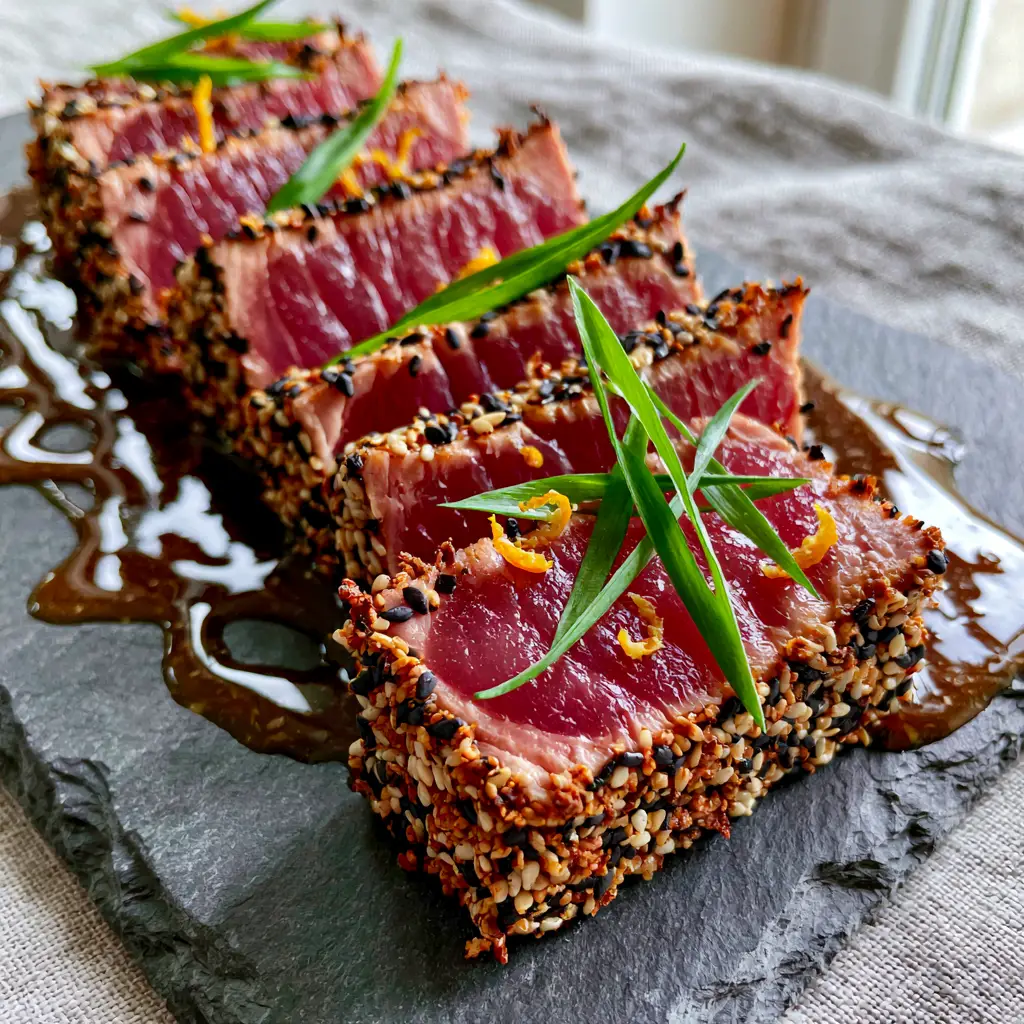
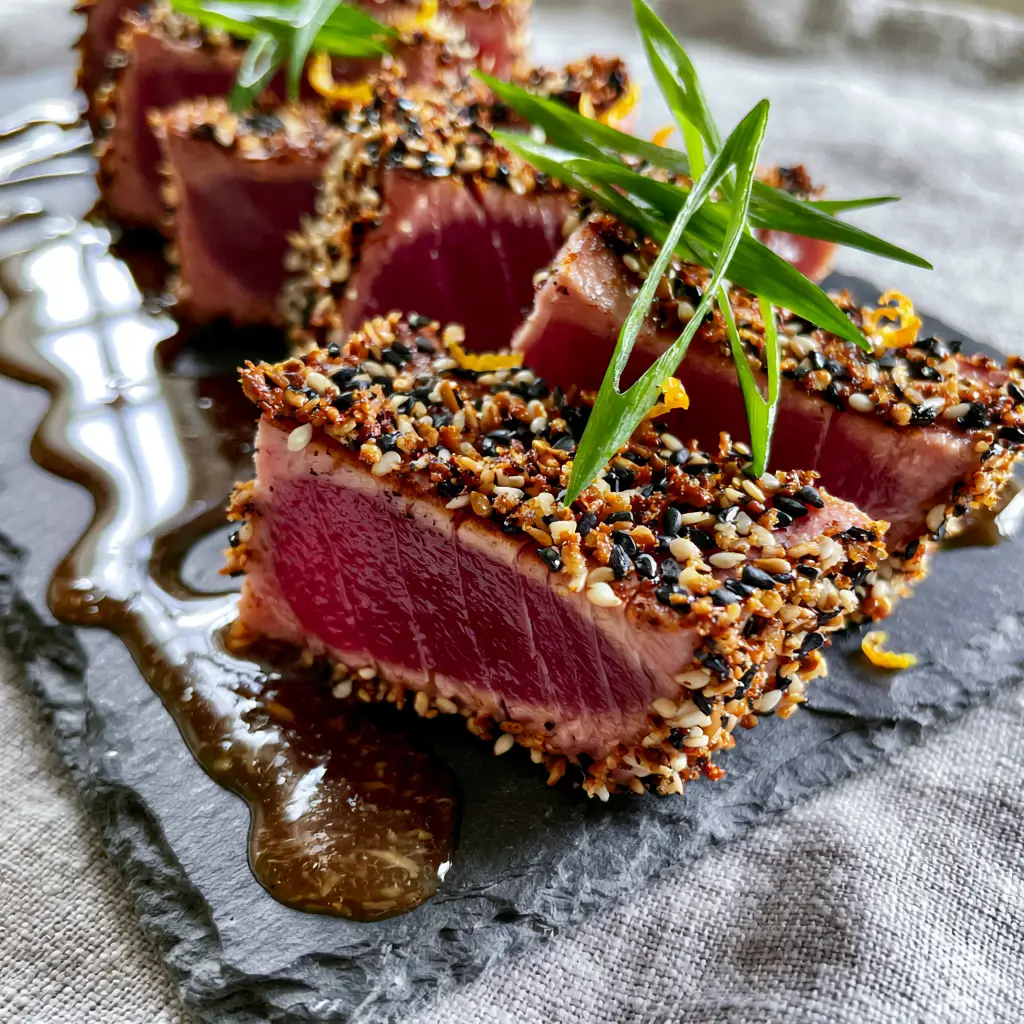
Imagine a thick-cut steak, sliced into precise 1-inch strips, revealing that vibrant pink interior that looks almost like a gemstone. The crunch of toasted black and white sesame seeds provides a structural counterpoint to the buttery texture of the fish. Drizzled with a glossy, light-catching ginger-soy reduction and finished with bright green scallions and citrusy orange zest, this dish is a masterpiece of balance.
Whether you are looking for a quick weeknight luxury or an impressive date-night centerpiece, this recipe delivers professional results in under 20 minutes. We have engineered this method to ensure the seeds stay put and the tuna remains tender, avoiding the common pitfall of a dry, overcooked steak.
Why This Sesame-Crusted Ahi Tuna Works
- Textural Contrast: The combination of a dense sesame seed crust and a melt-in-your-mouth rare center creates a professional-grade mouthfeel.
- Umami-Citrus Balance: The deep, savory notes of the soy reduction are cut by the sharp fragrance of fresh orange zest and bias-cut scallions.
- High-Speed Luxury: You can achieve these restaurant-quality results in less time than it takes to boil water for pasta.
- Nutrient Dense: Packed with Omega-3 fatty acids and high-quality protein, it’s a healthy choice that feels like an indulgence.
The Essential Components for a Professional Pan Sear
To achieve the visual and culinary perfection seen in our blueprint, every ingredient must serve a specific purpose. We aren’t just flavoring the fish; we are building layers of texture and color.
Ahi Tuna Steaks (1 lb / 450g): Look for “Sashimi Grade” or “AAA” rated Yellowfin or Bigeye tuna. It should be deep red, firm to the touch, and at least 1.5 inches (4cm) thick to ensure you can achieve a rare center while getting a hard sear on the outside.
Black and White Sesame Seeds (1/4 cup / 40g each): Using a 50/50 blend is crucial for that sophisticated, high-contrast visual aesthetic. The seeds act as a thermal barrier, protecting the delicate flesh while providing a nutty, toasted crunch.
Low-Sodium Soy Sauce (1/4 cup / 60ml): This forms the base of our reduction. Using low-sodium allows us to concentrate the flavor through simmering without the end result becoming unpleasantly salty.
Fresh Ginger (1 tbsp / 15g, grated): Freshness is non-negotiable here. The sharp, peppery bite of freshly grated ginger cuts through the richness of the tuna and the honey in the glaze.
Honey (1 tbsp / 21g): This is the “secret” to the glossy, light-catching drizzle seen in the photos. It provides the necessary sugar for the sauce to thicken into a syrupy reduction.
Avocado Oil (1 tbsp / 15ml): You need an oil with a very high smoke point. Avocado oil allows you to get the pan screaming hot—essential for searing the seeds without burning them or overcooking the tuna’s core.
Fresh Scallions & Orange Zest: These are your visual “pop” ingredients. The bright green of the bias-cut scallions and the tiny curls of orange zest provide the final aromatic lift that defines this dish.
Must-Have Tools for the Perfect Sliced Ahi
Achieving those clean 1-inch strips requires more than just good technique; you need the right gear. A heavy-bottomed cast iron skillet is the best choice for heat retention, ensuring the pan temperature doesn’t drop when the cold fish hits the surface.
You will also need a very sharp chef’s knife or a Japanese Slicer (Sujihiki). Because the tuna is seared on the outside but raw in the middle, a dull blade will tear the meat and knock off your beautiful sesame crust. A microplane is also essential for creating those delicate orange zest curls and fine ginger paste.
Mastering the Sear: Step-by-Step Instructions
Phase 1: Preparing the Tuna and the Crust
Remove your tuna steaks from the refrigerator about 15-20 minutes before cooking. Bringing them slightly toward room temperature ensures the heat doesn’t “shock” the protein, though we still want the center to remain cool.
Pat the tuna steaks completely dry with paper towels. This is the most important step for crust adhesion. If the surface is damp, the seeds will steam rather than toast, and they will likely fall off in the pan.
In a shallow bowl, mix your black and white sesame seeds. Lightly brush the tuna steaks with a tiny amount of oil or water, then press each side firmly into the seed mixture. You want a dense, even coating that covers every millimeter of the exterior.
Phase 2: Crafting the Glossy Ginger-Soy Reduction
In a small saucepan over medium heat, combine the soy sauce, grated ginger, and honey. Bring the mixture to a gentle simmer, whisking occasionally.
Let the sauce reduce by about half, or until it coats the back of a spoon. It should look dark, glossy, and thick. Set this aside to cool slightly; it will continue to thicken as it reaches room temperature, creating that artistic drizzle effect.
Phase 3: The 60-Second Sear
Place your skillet over high heat and add the avocado oil. Wait until the oil is shimmering and just starting to send up a faint wisp of smoke. This is your cue that the pan is ready.
Carefully lay the tuna steaks into the pan. You should hear a loud, aggressive hiss immediately. Press down gently with a spatula to ensure the sesame seeds make full contact with the hot metal.
Sear for exactly 45 to 60 seconds per side. Use tongs to sear the thin edges of the steak for about 15 seconds each. The goal is a golden-brown toasted crust on the seeds while the interior remains a bright ruby red.
Phase 4: Slicing and Artistic Presentation
Transfer the tuna to a cutting board and let it rest for 2 minutes. This allows the heat to stabilize so the juices don’t run when you slice it.
Using a long, steady drawing motion with your sharpest knife, slice the tuna into 1-inch (2.5cm) thick strips. Arrange them on a dark slate plate, slightly overlapping to show off the rare centers.
Drizzle the ginger-soy reduction artistically over the meat. Garnish with the bias-cut scallions and the orange zest curls. Serve immediately while the exterior is still warm and the interior is cool.
Pro Tips for Culinary Success
- The Dryness Factor: If your seeds are falling off, the fish wasn’t dry enough. Use multiple paper towels to wring out any moisture before crusting.
- Don’t Overcrowd: If cooking multiple steaks, work in batches. Overcrowding the pan drops the temperature, resulting in a soggy crust rather than a crunchy one.
- Knife Temperature: Some chefs find that dipping their knife in warm water and wiping it between slices helps create the cleanest cuts through the raw interior.
- Sourcing Quality: Since the center is rare, always inform your fishmonger that you intend to serve it “seared rare” to ensure you get the freshest possible cut.
Smart Storage and Leftover Transformations
Seared tuna is best enjoyed immediately. However, if you have leftovers, store them in an airtight container in the refrigerator for up to 24 hours. Because the center is rare, we do not recommend freezing the cooked steaks, as the texture of the rare meat will become mushy upon thawing.
Leftover seared tuna is incredible when served cold. You can flake the meat to create a sophisticated tuna pasta salad or add it to a refreshing canned tuna bowl (replacing the canned variety with your premium seared strips) for a high-end lunch the next day.
What to Serve with Pan-Seared Tuna Steaks
To keep the meal light and vibrant, serve this tuna with sides that offer a crisp contrast. A simple bed of sheet pan asparagus provides a wonderful earthy note that complements the ginger-soy glaze.
If you are craving a more substantial meal, these steaks pair beautifully with a side of jasmine rice or even a cold noodle dish like our tuna spaghetti, which shares similar umami profiles. For those following a low-carb path, a crisp cucumber onion salad adds the perfect vinegary bite to cleanse the palate between pieces of rich Ahi.
If you enjoy this preparation, you might also love our technique for pan-seared rainbow trout, which focuses on achieving that elusive crispy skin.
Frequently Asked Questions
While you can, Ahi tuna becomes very dry and firm when cooked to well-done. The best culinary experience is a ‘seared rare’ or ‘medium-rare’ finish to maintain the buttery texture of the fish.
The key is moisture control. Pat the tuna steaks extremely dry with paper towels before pressing them into the seeds. If the fish is even slightly damp, the seeds will steam and fall off instead of toasting and adhering.
Aim for steaks that are at least 1.5 inches (4cm) thick. Thinner steaks will cook through to the center too quickly before you can achieve a proper crust on the exterior.
You should always look for ‘Sashimi Grade’ or ‘AAA’ Ahi (Yellowfin or Bigeye) tuna. Since the center remains rare, the quality and freshness of the fish are paramount for both safety and flavor.
Use an oil with a high smoke point, such as avocado oil or grapeseed oil. Avoid butter or extra virgin olive oil for the sear, as they will burn at the temperatures required to toast the sesame seeds quickly.
The Ultimate Sesame-Crusted Ahi Tuna Recipe
Pan-Seared Tuna Steaks with a Crunchy Sesame Crust and Ginger-Soy Glaze
Ingredients
Equipment
Method
- Pat the tuna steaks completely dry with paper towels to ensure the sesame seeds stick.
- Mix black and white sesame seeds in a bowl. Press each side of the tuna firmly into the seeds for a thick coating.
- In a small saucepan, whisk soy sauce, ginger, and honey over medium heat until reduced by half and glossy.
- Heat avocado oil in a cast iron skillet over high heat. Sear tuna for 45-60 seconds per side until seeds are toasted and interior is rare.
- Slice tuna into 1-inch strips. Drizzle with glaze and top with scallions and orange zest.
Notes
Ensure the pan is smoking hot before adding the fish to prevent sticking.
Join the Purely Home Cooked Community!
Mastering the art of pan-seared tuna steaks is a milestone for any home cook. The combination of technique and high-quality ingredients results in a dish that looks like it belongs on a magazine cover. If you made this recipe, we want to see your results! Tag us in your photos and share your gorgeous plates.
For more restaurant-quality seafood inspiration and weekly recipe updates, be sure to follow us on Pinterest and subscribe to our newsletter. Happy searing!