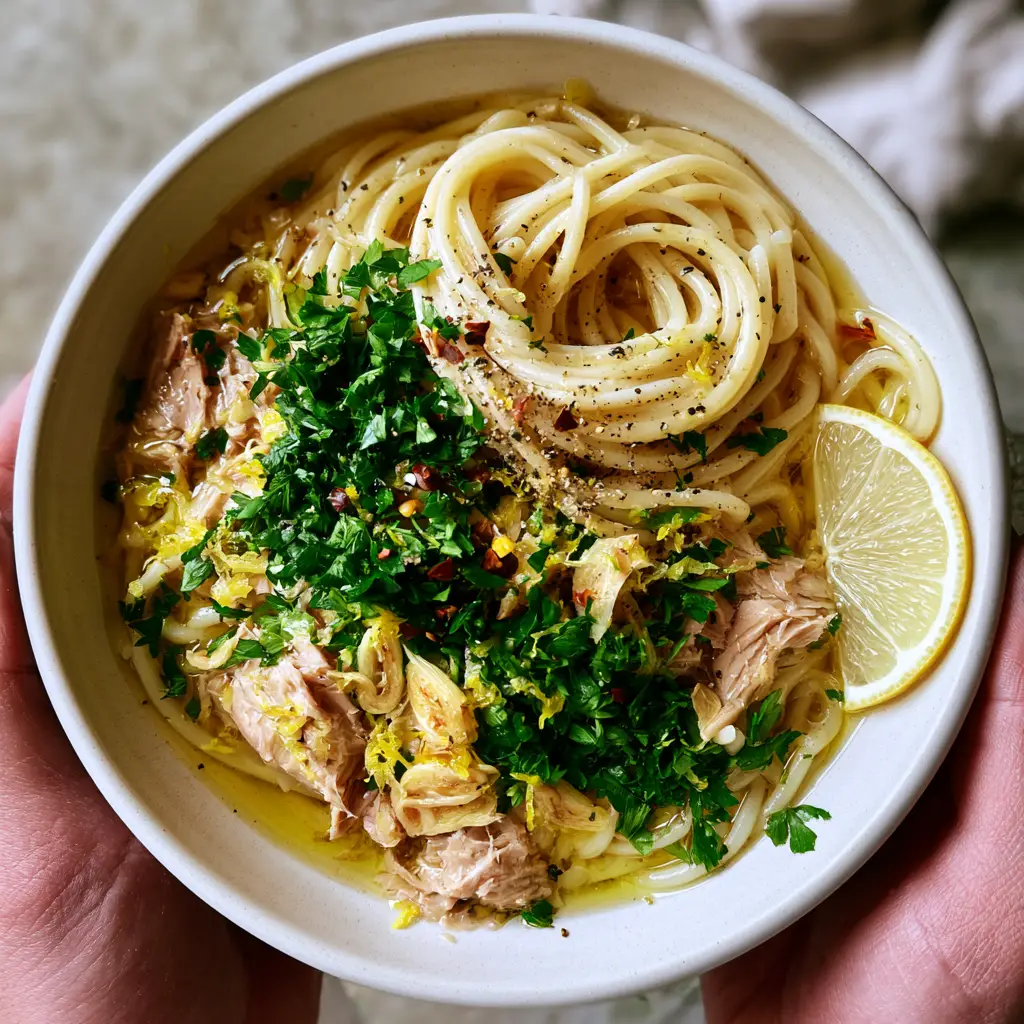
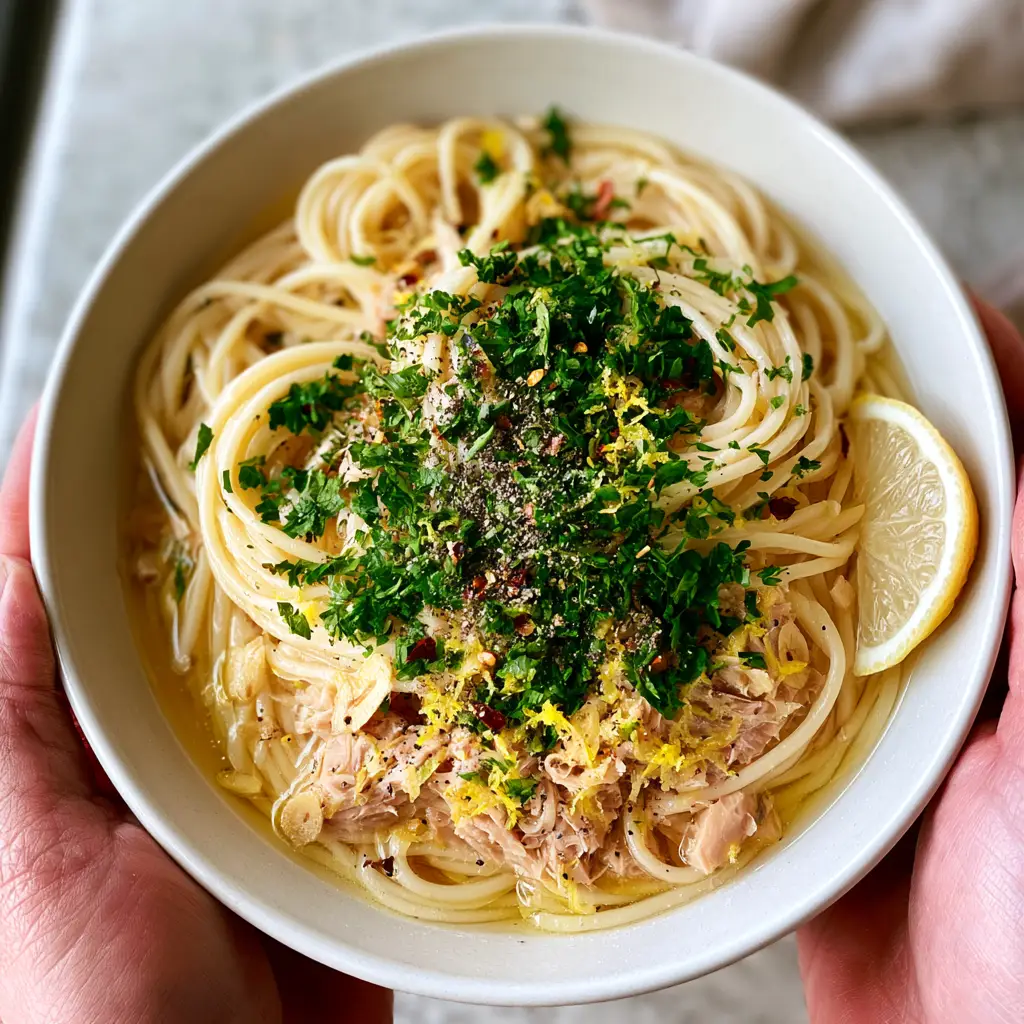
Tuna spaghetti is the ultimate transformation of humble pantry staples into a gourmet, restaurant-quality meal that looks as stunning as it tastes. Imagine twirling al dente pasta ribbons coated in a shimmering, translucent golden sauce of extra virgin olive oil, melted butter, and bright lemon juice. This isn’t just a quick meal; it is a sensory experience characterized by large, moist flakes of light pink tuna, thinly slivered toasted garlic, and a vibrant shower of fresh parsley.
When you hold a bowl of this pasta, the aroma of toasted garlic and citrus zest immediately hits you, promising a balance of savory depth and refreshing acidity. The visual appeal is undeniable—the slick sheen of the oil on the pasta reflects soft daylight, while the fibrous grain of the tuna provides a rustic, hearty texture. Whether you are cooking for a busy weeknight or hosting a casual lunch, this dish delivers sophisticated flavors with minimal effort.
The Culinary Allure of Gourmet Pantry Pasta
- Textural Contrast: The combination of firm, al dente spaghetti and tender, moist tuna flakes creates a satisfying mouthfeel that keeps every bite interesting.
- Golden Emulsion: A scientifically balanced sauce of butter, oil, and starchy pasta water ensures a glossy coating that clings to every strand without being greasy.
- Aromatic Depth: Thinly slivered garlic is toasted until golden, infusing the oil with a nutty sweetness that complements the zing of lemon zest.
- Visual Vibrancy: The contrast between the bright green parsley, red chili flakes, and yellow lemon slices makes this dish a centerpiece-worthy meal.
Essential Ingredients for the Perfect Tuna Spaghetti
Dried Spaghetti: Use a high-quality bronze-cut pasta if possible; the rougher surface area helps the lemon-butter emulsion cling to the noodles. You will need 1 lb (454g) of spaghetti to serve four hungry adults.
Canned Tuna in Olive Oil: For the best results, select solid light tuna or albacore packed in oil rather than water. Two 5oz (142g) cans provide those signature large, moist flakes that define the visual recipe blueprint.
Unsalted Butter: 4 tbsp (60g) of butter provides the necessary fat to create a creamy, shimmering sauce when whisked with the pasta water. It adds a luxurious mouthfeel that olive oil alone cannot achieve.
Extra Virgin Olive Oil: Use 1/4 cup (60ml) of a high-quality oil to form the base of your sauce. It carries the flavors of the garlic and chili throughout the entire dish.
Fresh Garlic: 6 large cloves (approx. 30g), thinly slivered. Slivering the garlic rather than mincing it allows it to toast into beautiful golden chips that provide a sweet, nutty crunch.
Fresh Lemons: You will need 2 large lemons—one for zesting and juicing into the sauce, and another to cut into thin half-moon slices for that final aesthetic touch. This provides the essential “acid” to cut through the richness of the fish and butter.
Fresh Italian Parsley: 1/2 cup (15g) of finely chopped parsley adds a “vibrant green” shower of color and a grassy freshness that balances the briny tuna. Do not use dried parsley here; the fresh herb is vital for the visual prompt.
Red Chili Flakes: 1 tsp (2g) of crushed red pepper provides a gentle back-end heat. It adds small pops of red color that contrast beautifully with the golden pasta.
Kosher Salt and Coarse Black Pepper: Salt is required for the pasta water (to season the noodles from within) and the sauce, while fresh cracked black pepper provides the “coarse” visual grain seen in the final dish.
Must-Have Kitchen Tools for Professional Results
To achieve the “shimmering translucent golden sauce” described in the blueprint, a large heavy-bottomed skillet or stainless steel sauté pan is essential. This allows for maximum surface area to toss the pasta and emulsify the sauce. A microplane or fine zester is required to get those delicate curls of bright yellow lemon zest without hitting the bitter white pith.
You will also need a sharp chef’s knife or a mandoline to get the garlic cloves into translucent, thin slivers. A pair of silicone-tipped tongs is the best tool for “twirling elegantly” as you plate the spaghetti into shallow white ceramic bowls. Finally, always have a liquid measuring cup handy to reserve at least 1 cup (240ml) of the starchy pasta cooking water before draining.
How to Make Zesty Lemon Tuna Spaghetti Step-by-Step
1. Boiling the Pasta to Al Dente Perfection
Bring a large pot of water to a rolling boil and add 2 tbsp (34g) of kosher salt. Add 1 lb (454g) of spaghetti and cook for 1-2 minutes less than the package directions. You are looking for a firm “bite”—the classic al dente texture. Before draining, carefully dip a measuring cup into the pot and reserve 1 cup (240ml) of the cloudy, starchy pasta water.
2. Toasting the Slivered Garlic and Infusing Oil
In your large skillet, combine 1/4 cup (60ml) of olive oil and the slivered garlic while the pan is still cold. Turn the heat to medium-low. This “cold start” method allows the garlic flavor to infuse the oil deeply without burning. Watch for the sensory cue: the garlic should begin to sizzle gently and turn a light, toasted golden brown. Add the 1 tsp (2g) of red chili flakes in the last 30 seconds of toasting.
3. Building the Lemon-Butter Emulsion
Add 4 tbsp (60g) of unsalted butter to the pan. Once melted and bubbling, whisk in 1/2 cup (120ml) of the reserved pasta water and the juice of one lemon. Stir vigorously until the liquid transforms into a shimmering, translucent golden sauce. This emulsion is the “bridge” that connects the fat of the oil/butter to the starch of the pasta.
4. Incorporating the Tuna and Pasta
Gently fold in the two 5oz (142g) cans of drained tuna. Use a fork to break them into large flakes, being careful not to overwork them into a mush; you want to see the “fibrous grain” of the fish. Transfer the cooked spaghetti directly into the skillet. Toss the pasta constantly for 60 seconds over medium heat, adding more pasta water if the sauce looks too thick.
5. The Final Flourish of Zest and Herbs
Remove the pan from the heat. This is crucial to keep the herbs vibrant green. Add 1/2 cup (15g) of fresh chopped parsley, the zest of one lemon, and a generous crack of coarse black pepper. The residual heat will wake up the oils in the lemon zest and parsley without wilting them into a dull color.
Pro-Level Secrets for a Glossy Pasta Finish
- The Starch Secret: Never skip reserving the pasta water. The starch acts as a natural thickener that creates a “slick sheen” on the pasta, preventing the oil from just puddling at the bottom of the bowl.
- Tuna Timing: Always add the tuna at the very end. Since canned tuna is already cooked, it only needs to be warmed through. Keeping the flakes large ensures a premium visual presentation.
- Balanced Acidity: If the dish tastes “flat,” add a tiny pinch more salt or another squeeze of lemon. Acid and salt are the two levers that make the garlic and tuna flavors pop.
- Temperature Control: If the butter breaks and the sauce looks greasy rather than creamy, add a splash of cold pasta water and whisk vigorously off the heat to bring the emulsion back together.
Storing, Reheating, and Make-Ahead Advice
Tuna spaghetti is best served immediately to appreciate the textures of the toasted garlic and fresh herbs. However, leftovers can be stored in an airtight container in the refrigerator for up to 2 days. When reheating, the pasta will have absorbed much of the sauce, so it may appear dry.
To revive the dish, add a splash of water or a small knob of butter to a pan over low heat. Toss the pasta gently until warmed through. Do not microwave on high power, as this can cause the tuna to become rubbery and the olive oil to separate. We do not recommend freezing this dish, as the delicate lemon-butter sauce and pasta texture will degrade significantly upon thawing.
What to Serve With Your Mediterranean Pasta
This vibrant tuna spaghetti is a complete meal on its own, but it pairs beautifully with light, vegetable-forward sides. For a crisp contrast, consider a refreshing cucumber and onion salad which mirrors the acidity of the lemon sauce. If you want something warm, a side of roasted sheet pan asparagus adds a nice earthy crunch to the meal.
If you find yourself with extra pantry staples, you might also enjoy exploring a creamy tuna pasta salad for your next picnic. For those who prefer fresh fish over tinned, our guide to pan-seared tuna steaks offers a different way to enjoy this heart-healthy protein. Finally, if you’re looking for a low-carb accompaniment, a cheesy zucchini casserole is a fantastic way to round out the dinner table.
Answering Your Burning Pasta Questions
Yes, linguine or fettuccine are excellent substitutes. Short shapes like penne work too, though the ‘twirled’ aesthetic of the dish will change.
While water-packed tuna works, oil-packed tuna is preferred for its richer flavor and moister texture, which better complements the lemon-butter sauce.
Start the slivered garlic in a cold pan with olive oil and heat them together slowly. Remove from heat as soon as they reach a light golden brown color.
This dish is high in lean protein and healthy fats from olive oil and tuna, making it a balanced Mediterranean-style meal.
The secret is emulsifying starchy pasta water with fats (butter and oil). This creates a shimmering coating that clings to the spaghetti.
The Ultimate 20-Minute Tuna Spaghetti Recipe
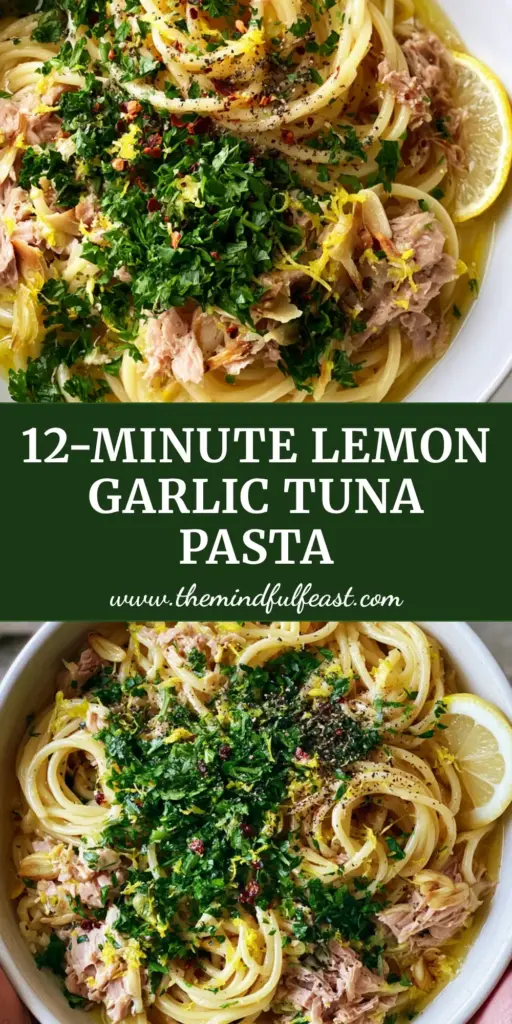
Tuna Spaghetti with Lemon, Garlic, and Butter Sauce
Ingredients
Equipment
Method
- Cook spaghetti in salted boiling water until al dente. Reserve 1 cup (240ml) of pasta water before draining.
- In a large skillet, combine olive oil and slivered garlic. Heat over medium-low until garlic is toasted golden brown. Add chili flakes.
- Add butter, lemon juice, and 1/2 cup (120ml) reserved pasta water. Whisk until a shimmering golden sauce forms.
- Add tuna flakes and cooked spaghetti to the pan. Toss for 1 minute to coat. Add more pasta water if needed for a glossy finish.
- Remove from heat. Fold in parsley, lemon zest, and black pepper. Plate in bowls with a lemon slice garnish.
Notes
Always finish the pasta in the sauce with a splash of starchy water for the professional glossy look.
Final Thoughts on This Pantry Powerhouse
Mastering this tuna spaghetti recipe means you are always 20 minutes away from a sophisticated, flavorful meal. The combination of toasted garlic, bright citrus, and hearty tuna creates a dish that is far greater than the sum of its parts. It proves that with the right technique—like building a proper emulsion and toasting garlic correctly—canned goods can become a culinary masterpiece.
If you enjoyed this recipe, we would love to hear your thoughts in the comments below! Don’t forget to sign up for our newsletter for more pantry-friendly gourmet ideas. For more visual inspiration and to save this recipe for later, follow us and share this post to Pinterest.