There is a specific, soul-satisfying magic that happens when an overripe plantain meets the intense heat of a shimmering oil bath. This plantain balls recipe, known traditionally in Nigeria as Mosa, transforms humble, blackened fruit into sophisticated, golden-brown spheres of pure culinary art.
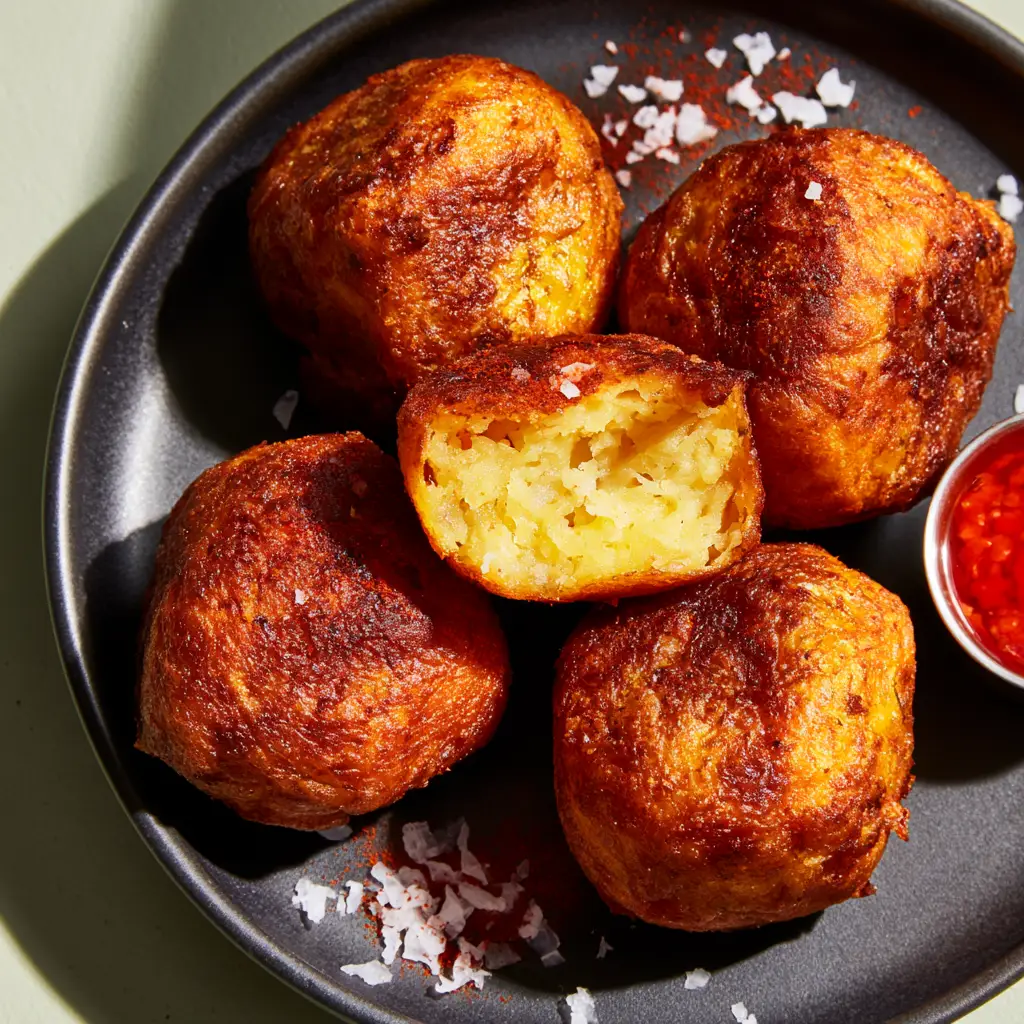
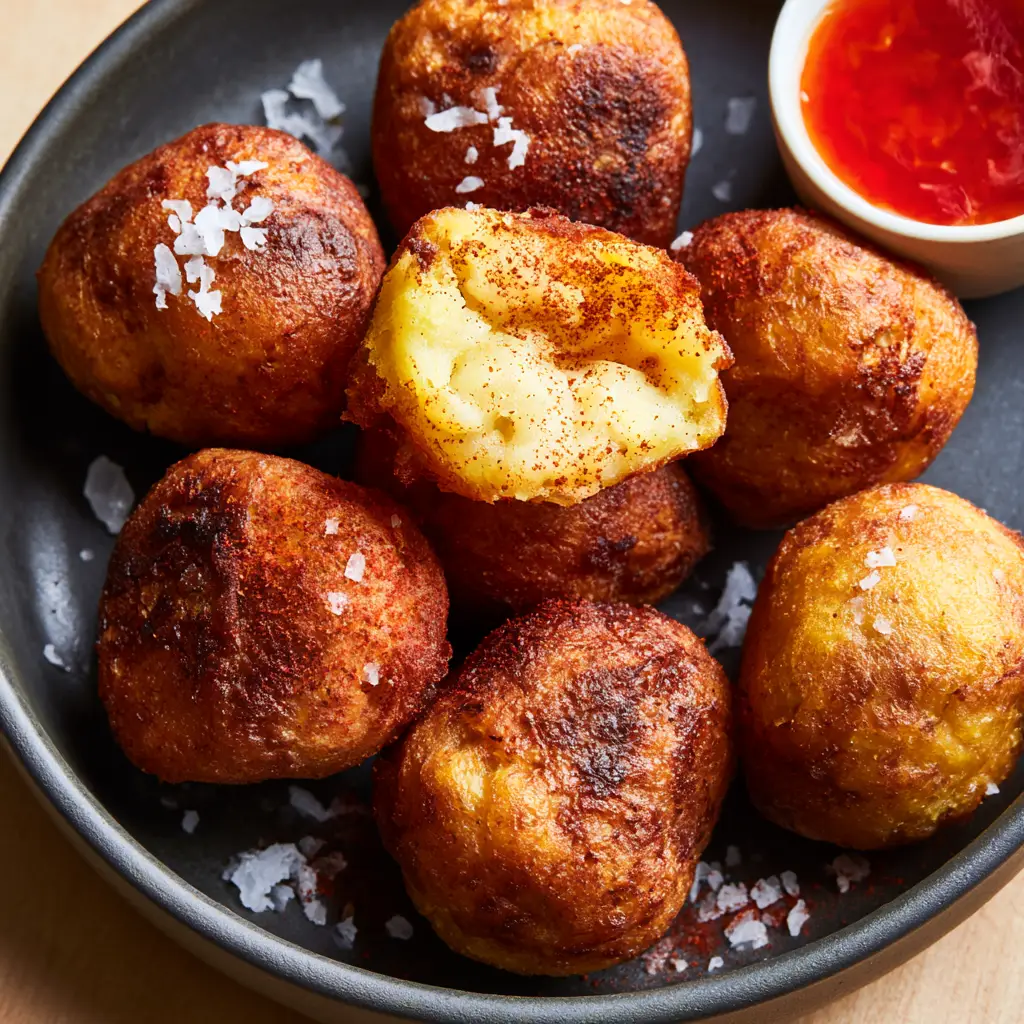
Imagine a texture so complex it rivals the finest patisserie: a deeply crinkled, crispy exterior punctuated by dark spots of caramelized natural sugars. When you pull one apart, the crust gives way to a steaming, soft, and creamy pale yellow center that carries the concentrated essence of tropical sweetness.
To elevate this street-food classic for your next dinner party, we serve these spheres on a matte charcoal ceramic plate. A final dusting of smoked paprika and a scattering of coarse flaky sea salt creates a visual and flavor contrast that is simply irresistible, especially when paired with a vibrant red chili dipping sauce.
Why This Is the Only Plantain Balls Recipe You Need
- Textural Masterclass: We achieve a specific “crinkled” exterior by utilizing a yeasted batter technique that creates microscopic air pockets during the fry.
- Visual Sophistication: The contrast between the dark charcoal plate and the golden-brown spheres makes this a high-end appetizer that looks as good as it tastes.
- Balanced Flavor Profile: The natural sweetness of the overripe plantains is perfectly offset by the sharp heat of the red chili sauce and the earthy depth of smoked paprika.
- Scientific Accuracy: Our method ensures the interior remains “pale yellow” and creamy rather than oily or dense, using precise temperature controls.
Essential Components for Perfect Plantain Spheres
Every ingredient in this plantain balls recipe serves a structural and visual purpose. To achieve the hero-shot results seen in professional culinary photography, high-quality ingredients are non-negotiable.
Overripe Plantains (3 large / approx. 900g): You must use plantains with skin that is almost entirely black. This ensures the high sugar content required for those signature caramelized spots and the creamy interior texture.
Active Dry Yeast (2 1/4 tsp / 7g): This is the “secret” to the crinkled exterior. The yeast creates a light fermentation that allows the dough to puff slightly, creating a delicate, flaky crust rather than a heavy, solid mass.
All-Purpose Flour (1 cup / 125g): Flour provides the structural scaffolding for the mash. It binds the wet plantain together so the balls hold their perfectly spherical shape in the hot oil.
Warm Water (1/4 cup / 60ml): Used to bloom the yeast. It must be between 105°F and 115°F (40°C-46°C) to activate the fermentation without killing the yeast cells.
Granulated Sugar (1 tbsp / 12g): While the plantains are sweet, a touch of added sugar speeds up the Maillard reaction. This helps achieve the “deeply textured” look with caramelized highlights.
Fine Sea Salt (1/2 tsp / 3g): A foundational seasoning that enhances the natural tropical flavor of the fruit. This is separate from the flaky salt used for the final garnish.
Smoked Paprika: For the final dusting. This provides the vibrant red-orange flecks that pop against the golden-brown crust and adds a subtle hint of wood-smoke aroma.
Flaky Sea Salt (Maldon style): These large crystals provide a crunch and a burst of salinity that cuts through the richness of the fried dough.
Vegetable Oil (for frying): Use a high-smoke point oil like canola or peanut oil. This allows you to reach the 350°F (175°C) required for a rapid sear without the oil breaking down or smoking.
Red Chili Dipping Sauce: A blend of red bird’s eye chilies, vinegar, and a touch of honey. This provides the “vibrant red” visual and a sharp acidic counterpoint to the sweet dough.
The Professional Toolkit for Mosa Success
To recreate the “extreme close-up” quality of our hero shot, you need the right tools. Precision is the difference between a soggy fritter and a world-class appetizer.
A heavy-bottomed stainless steel pot is essential for maintaining a steady oil temperature. Thin pots lose heat too quickly when the cold batter is added, leading to greasy results.
You will also need a digital deep-fry thermometer. Achieving that “deeply textured, crispy exterior” requires an exact temperature of 350°F (175°C).
A potato masher or a sturdy fork is required to achieve the “soft mashed plantain center.” The goal is a smooth consistency with no large lumps, ensuring a uniform pale yellow interior.
Finally, for the presentation, a matte charcoal ceramic dish is vital. The dark, non-reflective surface makes the golden-brown tones of the plantains appear more saturated and appetizing.
Step-by-Step Guide to the Ultimate Plantain Balls Recipe
1. Activating the Fermentation Engine
In a small bowl, combine the warm water (60ml) and a pinch of the sugar. Sprinkle the active dry yeast over the top and let it sit for 5-10 minutes until it becomes foamy and fragrant.
This step is critical for the “crinkled” texture. If your yeast doesn’t foam, it is likely dead, and your plantain balls will be dense and heavy rather than light and airy.
2. Preparing the Plantain Mash
Peel your overripe plantains and slice them into chunks. Place them in a large mixing bowl and mash them thoroughly until they form a smooth, thick paste.
If you find the plantains are difficult to mash, you can briefly steam them for 2 minutes. However, very ripe plantains should yield easily to a fork, maintaining that “creamy pale yellow” color.
3. Incorporating the Dry Ingredients
Add the flour, remaining sugar, and sea salt to the plantain mash. Pour in the bloomed yeast mixture and stir with a wooden spoon until a thick, tacky batter forms.
Cover the bowl with a warm, damp cloth and let it rest in a draft-free spot for 30 minutes. This “mini-proof” allows the flour to hydrate and the yeast to produce tiny bubbles, which create the “textured, slightly crinkled” surface during frying.
4. The Precision Frying Process
Fill your pot with at least 3 inches of oil. Heat it over medium-high heat until it reaches exactly 350°F (175°C).
Using a small cookie scoop or two spoons, carefully drop spherical mounds of batter into the oil. Do not overcrowd the pot; work in batches of 4-5 to ensure the temperature doesn’t drop.
5. Monitoring Visual and Sensory Cues
Fry the balls for 3-4 minutes, turning them occasionally with a slotted spoon. Look for the “caramelized sugar spots” to appear—these are dark, mahogany-colored patches that signal the sugars are browning perfectly.
The exterior should sound hollow when tapped with a spoon and feel noticeably crispy. Once they reach a “deeply textured, golden-brown” hue, remove them and drain on a wire rack.
Expert Tips for Visual and Culinary Perfection
- The Ripeness Rule: If your plantains still have yellow patches on the skin, they aren’t ready. Wait until they are ugly and black; this is when the starch has fully converted to sugar.
- Oil Temperature Management: If the oil is too hot, the outside will burn before the “pale yellow interior” is cooked. If it’s too cool, they will absorb oil and become soggy.
- The “Split” Test: To check for doneness, split one ball open. You should see “steaming, soft” flesh that is fully opaque and creamy, never translucent or wet.
- Garnish Timing: Apply the smoked paprika and flaky salt immediately after the balls come out of the oil. The residual surface heat helps the crystals and powder adhere to the crinkled surface.
Serving and Pairing Suggestions
This plantain balls recipe is incredibly versatile and can be served as a sophisticated appetizer or a playful side dish. To create a full spread of global flavors, consider the following pairings.
For a refreshing contrast to the fried dough, serve these alongside hearts of palm salad. The bright, acidic dressing cleanses the palate between bites of sweet plantain.
If you are hosting a larger gathering, these spheres pair beautifully with crispy Greek potatoes. The combination of different starches with varied seasoning profiles—one sweet and spicy, one lemony and herbal—is always a crowd-pleaser.
For those who enjoy a fusion approach, the sweetness of the Mosa complements the savory depth of a pesto chicken recipe. The basil and garlic in the pesto provide a herbal bridge to the caramelized plantain.
And if you find yourself with extra plantains, why not pivot to a sweet brunch the next day? Follow this up with a German pancake recipe for a weekend feast that spans continents.
Storage, Reheating, and Make-Ahead Advice
While this plantain balls recipe is best enjoyed “steaming” and fresh, you can store leftovers in an airtight container in the refrigerator for up to 3 days.
To maintain the “crispy golden-brown” exterior, avoid the microwave. Instead, reheat the balls in an oven or air fryer at 350°F (175°C) for 5-7 minutes. This will crisp the skin back up without drying out the creamy center.
You can also freeze the fried balls. Place them on a baking sheet to freeze individually, then transfer them to a freezer bag. They will keep for up to 2 months and can be reheated directly from frozen.
Frequently Asked Questions
While possible, the air fryer won’t produce the same caramelized sugar spots or deeply crinkled texture. If using an air fryer, spray heavily with oil and cook at 375°F for 12 minutes.
For this specific plantain balls recipe, black-skinned plantains are required. Yellow plantains are too starchy and won’t provide the creamy interior or caramelized spots.
The crinkled texture comes from the yeast fermentation. Allowing the batter to rest for 30 minutes creates the air bubbles necessary for that light, textured crust.
This specific version uses all-purpose flour for structure. To make it gluten-free, you can substitute with a 1:1 gluten-free flour blend or rice flour.
Mosa is a traditional Nigerian snack made from overripe plantains mashed into a yeasted batter and deep-fried until crispy and golden-brown.
The Master Recipe: Crispy Nigerian Mosa
Plantain Balls Recipe: Crispy Nigerian Mosa with Red Chili Sauce
Ingredients
Equipment
Method
- Combine warm water, a pinch of sugar, and yeast. Let sit for 10 minutes until foamy.
- Mash the overripe plantains until smooth and creamy. Ensure no large lumps remain.
- Stir in flour, remaining sugar, salt, and yeast mixture. Cover and let rest for 30 minutes in a warm place.
- Heat vegetable oil in a pot to 350°F (175°C).
- Drop scoops of batter into oil. Fry for 3-4 minutes until golden-brown with caramelized spots.
- Place on a charcoal plate. Dust with paprika and flaky salt. Serve with chili sauce.
Notes
Keep oil at a steady 350°F to prevent sogginess.

Join The Mindful Feast Community
We hope this plantain balls recipe brings a touch of Nigerian street-food elegance to your kitchen. There is nothing quite like the contrast of a salty, smoky exterior and a sweet, creamy heart.
If you made these, we want to see your results! Did you achieve those perfect caramelized spots? Did the red chili sauce provide that vibrant pop of color?
Leave a comment below, sign up for our newsletter for more globally-inspired recipes, and be sure to share your creations on Pinterest. Happy cooking!