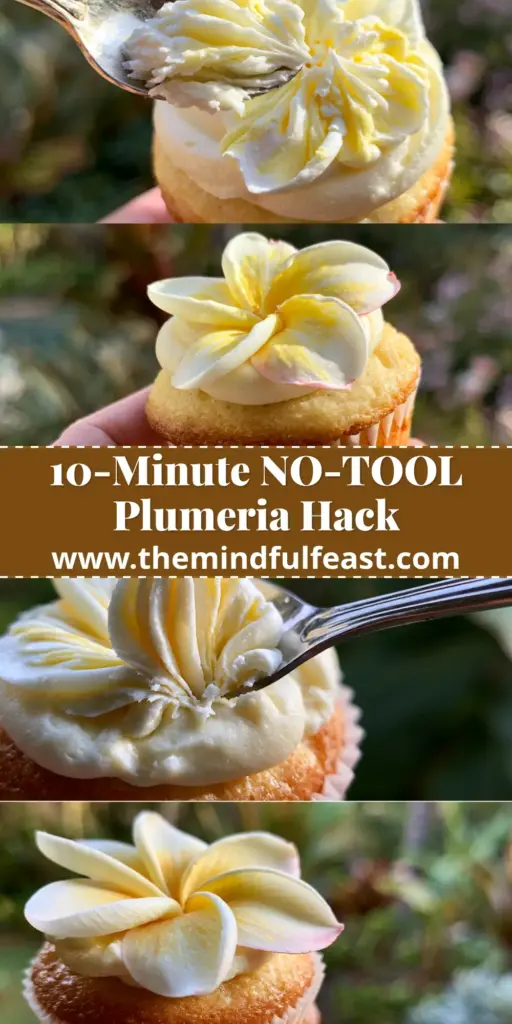
Transport your kitchen to a sun-drenched Hawaiian shore with these breathtaking plumeria cupcakes. These aren’t just your standard bakery treats; they are a culinary tribute to the iconic Frangipani flower, known for its intoxicating scent and velvety petals. By combining a classic golden vanilla sponge with a unique “spoon-pressed” buttercream technique, you can create professional-grade floral designs without needing years of pastry school experience.
The magic of the plumeria cupcakes lies in the interplay between the warm, golden-brown cake base and the soft, matte finish of the tropical petals. We move beyond simple piping to a more artisanal approach, using a common kitchen utensil to mimic the natural curves of a real blossom. Whether you are hosting a summer garden party or simply craving a taste of the islands, this recipe delivers both visual high-art and nostalgic, buttery flavor.
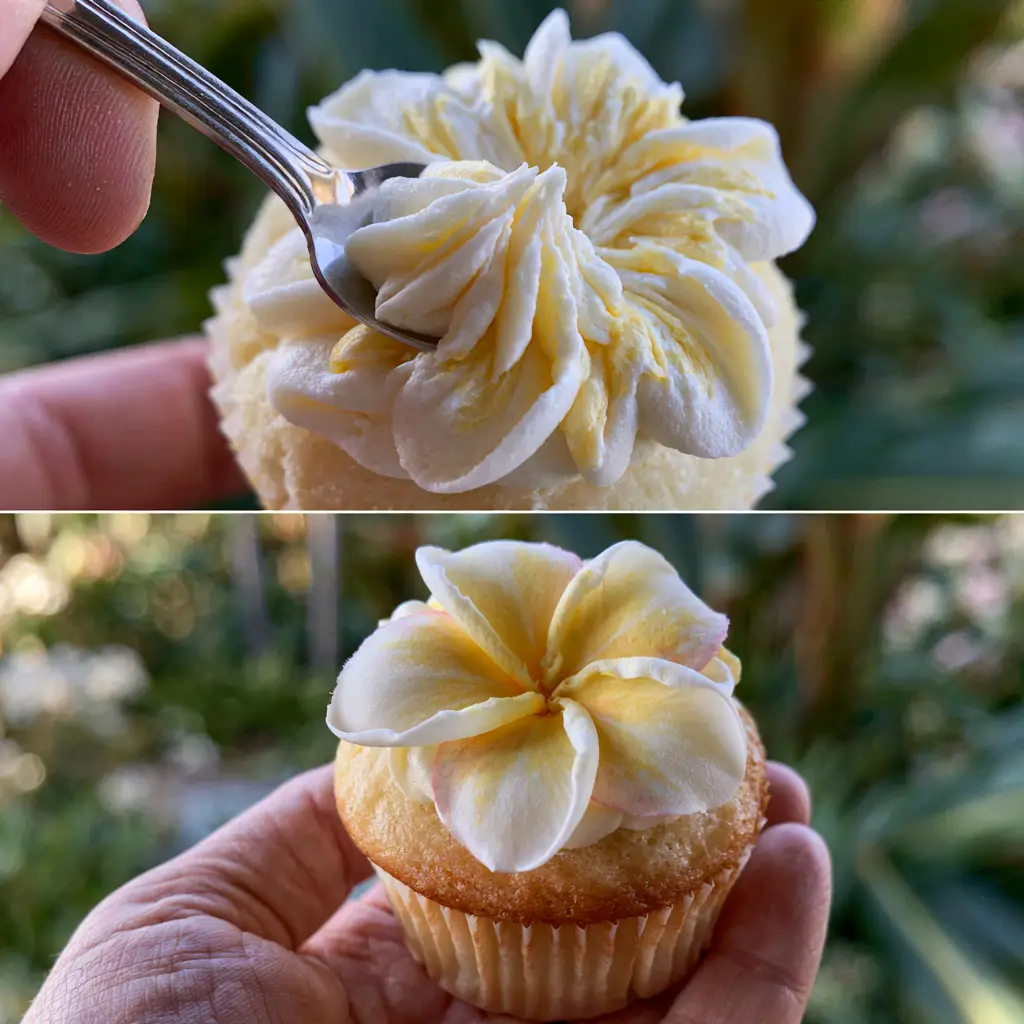
Why This Plumeria Cupcake Recipe Is a Tropical Game-Changer
- Visual Precision: Every petal features a vibrant sun-kissed yellow center that softly bleeds into a creamy white, finished with a whisper of tropical pink on the very edges.
- The “Velvet” Texture: We utilize a specific buttercream ratio to achieve a soft matte frosting texture that looks realistic rather than greasy or overly shiny.
- Accessible Artistry: The “spoon-press” method allows home cooks to achieve organic, teardrop-shaped petals that look far more natural than traditional star-tip piping.
- Golden Sponge Foundation: A specialized golden vanilla sponge provides the structural integrity to hold the floral crown while offering a moist, tender crumb.
The Anatomy of a Perfect Golden Vanilla Sponge
A plumeria cupcake is only as good as the cake beneath the flower. For this recipe, we are aiming for a “Golden Vanilla” profile, which relies on high-quality fats and specific leavening techniques to achieve that sun-kissed interior.
Unsalted Butter (1 cup / 225g): We use softened, room-temperature butter to create a stable emulsion with the sugar. This trap of air bubbles is what creates the “lift” in our golden sponge.
Granulated Sugar (1.5 cups / 300g): Sugar does more than sweeten; it tenderizes the gluten and helps the cake achieve that characteristic golden-brown crust through the Maillard reaction.
Large Eggs (3 units): Eggs provide the protein structure needed to support the height of the cupcake. Ensure they are at room temperature to prevent the batter from curdling.
All-Purpose Flour (2.5 cups / 315g): This provides the necessary “bite.” We sift it twice to ensure the crumb is fine and airy, reflecting the light texture of a tropical dessert.
Whole Milk (1 cup / 240ml): The fat content in whole milk ensures the cake remains moist for days. You can also use coconut milk if you want to lean further into the tropical theme, much like we do with our lavender cupcakes for a floral twist.
Pure Vanilla Bean Paste (2 tsp / 10ml): Unlike extract, paste includes the tiny black flecks of the vanilla pod, which look beautiful against the golden sponge and provide a deeper, more resonant aroma.
Baking Powder (2.5 tsp / 12g) and Salt (0.5 tsp / 3g): These are our “invisible” workhorses. The baking powder provides the rise, while the salt balances the sweetness and enhances the vanilla notes.
Essential Tools for the Spoon-Pressed Petal Technique
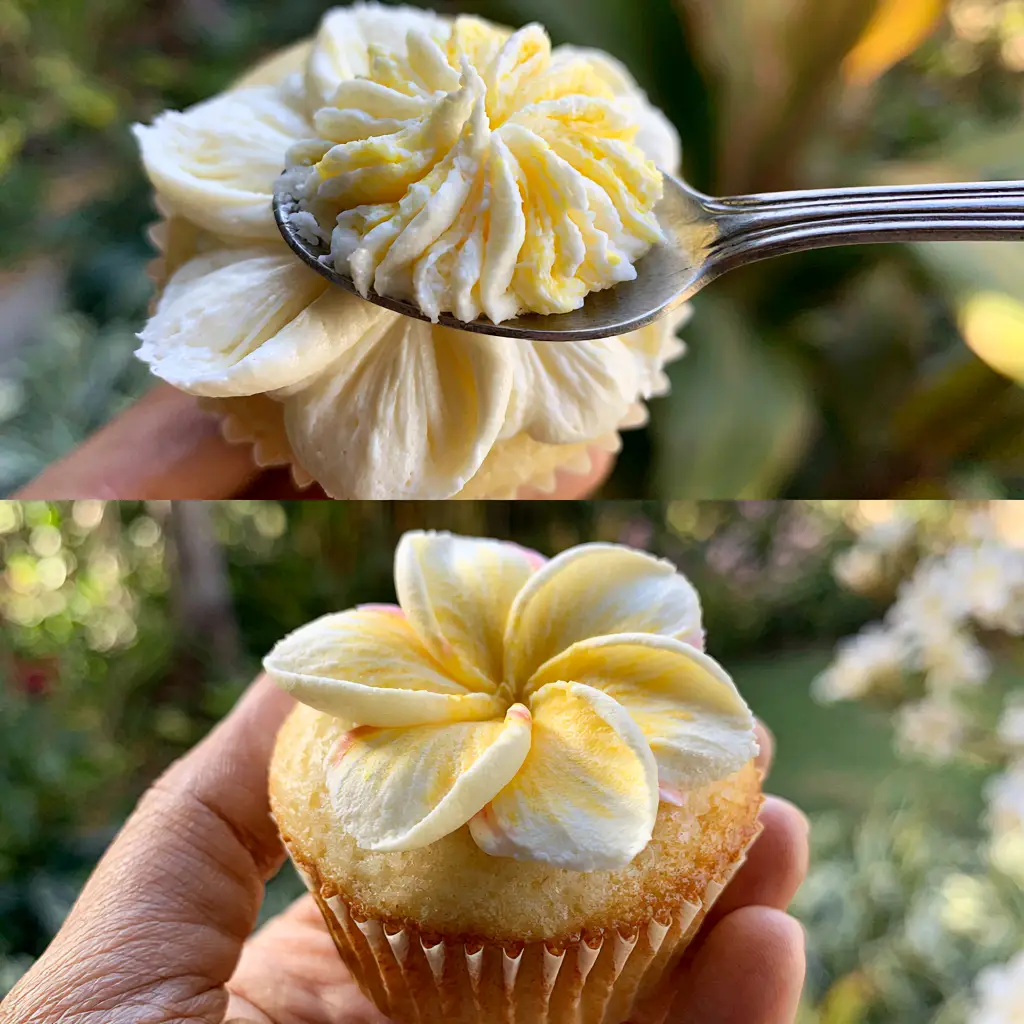
To achieve the look of the plumeria cupcakes seen in our visual blueprint, you don’t need a massive kit of piping tips. You likely already have the most important tool in your silverware drawer.
The Kitchen Spoon: A small, narrow teaspoon with a tapered edge is best. This will be used to press and drag the buttercream dollops into the signature plumeria petal shape.
Piping Bags: You will need three bags. One for the white buttercream base, one for the yellow centers, and a small one (or a brush) for the pink accents.
Offset Spatula: This is used to create a flat “canvas” of white frosting on the cupcake before you begin the floral assembly.
Gel Food Coloring: Use “Lemon Yellow” and a very diluted “Electric Pink.” Gel is superior to liquid color as it doesn’t change the consistency of your matte buttercream.
Achieving the Signature Matte Finish Buttercream
The visual prompt emphasizes a “soft matte frosting texture.” To get this, we avoid high-gloss Swiss Meringue and instead use a “Crusting American Buttercream” with a slightly higher ratio of powdered sugar to butter.
Powdered Sugar (4 cups / 500g): Sifted to ensure no lumps interfere with the spoon-pressing process. This high sugar content creates a “crust” that gives the petals a velvet-matte appearance once set.
Unsalted Butter (1 cup / 225g): It must be cool but pliable. If the butter is too warm, the petals will look shiny and “melted” rather than soft and matte.
Heavy Cream (2 tbsp / 30ml): Just enough to provide a creamy mouthfeel without making the frosting too fluid to hold its shape.
Step-by-Step: Crafting the Plumeria Cupcakes
1. Baking the Golden Vanilla Foundation
Preheat your oven to 350°F (175°C). Line a standard muffin tin with parchment liners. In a large bowl, cream the butter and sugar for at least 5 minutes until the mixture is pale and incredibly fluffy.
Add the eggs one at a time, beating well after each addition. Incorporate the vanilla bean paste. In a separate bowl, whisk your dry ingredients. Alternate adding the flour mixture and the milk to the butter, starting and ending with the flour.
Fill the liners 2/3 full. Bake for 18-22 minutes. You are looking for a visual cue: the edges should be a deep golden brown, and the centers should spring back when lightly touched. Let them cool completely; decorating a warm cupcake will result in “melting petals.”
2. Preparing the Multi-Tone Color Palette
Divide your buttercream. Leave 70% of it white. Color 25% a bright, vibrant yellow. The remaining 5% should be tinted a very soft, tropical pink. This pink will be used sparingly for the “faint pink petal tips” mentioned in the blueprint.
3. The Base Coat
Spread a thin, flat layer of white buttercream over the top of each cooled golden cupcake. This acts as the “glue” for your petals and ensures no golden cake peeks through the floral design.
4. The Spoon-Press Petal Method
This is the core technique to master. Pipe five large dollops of white buttercream in a circle around the edge of the cupcake. Use a smaller piping bag to add a small “dot” of bright yellow at the base of each white dollop (toward the center of the cupcake).
Take your kitchen spoon. Place the back of the spoon at the center of a white dollop. Gently press down and drag the spoon toward the center of the cupcake. The pressure flattens the white frosting into a petal shape while simultaneously dragging the yellow frosting into a “sun-kissed” gradient center.
Repeat this for all five dollops. The petals should slightly overlap, just like a real plumeria blossom. The matte texture will begin to set as you work.
5. Adding the Tropical Pink Detail
Using a very small detail brush or a toothpick, lightly feather a tiny amount of the pink buttercream onto the outer edges of each petal. The goal is a “faint touch,” not a solid line. This adds the final layer of realism to your plumeria cupcakes.
Expert Tips for Floral Perfection
- Control the Temperature: If your hands are warm, the spoon will start to stick to the buttercream. Dip the spoon in ice water and wipe it dry between petals to keep the edges crisp.
- The Gradient Secret: To get that “soft, blended” look, make sure your yellow buttercream is slightly softer than your white buttercream. This helps it “bleed” naturally when pressed.
- Consistent Pressure: The “velvety matte” finish comes from the even distribution of sugar crystals. Apply steady, even pressure with the spoon to avoid ridges.
Pairing Your Tropical Treats
These plumeria cupcakes are the perfect centerpiece for a summer luncheon. Consider serving them alongside light, refreshing dishes like a crisp cucumber salad or as a sweet finish to a meal of zesty chicken fajitas.
If you are planning an outdoor gathering, these cupcakes fit perfectly into adult lunchable boxes for a sophisticated picnic. Their sturdy golden sponge ensures they travel well, even in warmer weather.
Frequently Asked Questions
While you can use a large petal tip (like Wilton 125), the spoon-press method creates a more organic, slightly cupped shape that better mimics the natural look of a real plumeria flower.
Vanilla bean paste is recommended for the visual appeal of the tiny black specks and a more intense flavor, but you can substitute it with an equal amount of high-quality pure vanilla extract.
Place a small dot of yellow buttercream at the base of your white frosting dollop before pressing. As you drag the spoon, the colors naturally smear together, creating a soft, sun-kissed gradient.
The matte finish is achieved by using a crusting American buttercream with a higher powdered sugar-to-butter ratio. Once the sugar sets in the air, it loses its shine and takes on a velvety, realistic floral appearance.
This is usually due to the butter being too warm. Chill your buttercream for 10-15 minutes before piping, and ensure your kitchen is cool. Using gel food coloring instead of liquid also helps maintain a stiff, pipeable consistency.
The Ultimate Plumeria Cupcake Recipe Card
Plumeria Cupcakes: How to Craft Realistic Tropical Buttercream Flowers
Ingredients
Equipment
Method
- Cream butter and sugar for 5 minutes until pale and fluffy. Add eggs one at a time, followed by vanilla paste.
- Alternate adding dry ingredients and milk to the butter mixture, starting and ending with flour.
- Bake at 350°F (175°C) for 18-22 minutes until golden brown. Cool completely.
- Tint 25% of buttercream bright yellow and 5% a very pale pink. Keep the rest white.
- Pipe 5 white dollops with yellow bases. Use the back of a spoon to press and drag each dollop toward the center to create a petal shape.
- Lightly brush the edges of the petals with a touch of pink buttercream for a realistic tropical finish.
Notes
Use gel colors to maintain the matte frosting texture.
Final Thoughts on Tropical Baking
Mastering the plumeria cupcakes is a rewarding journey into the world of “forensic” baking—where we look at nature and try to replicate its beauty with sugar and flour. The golden sponge provides a comforting, classic flavor that allows the intricate buttercream work to take center stage. We hope you feel the tropical breeze with every bite!
If you enjoyed this floral tutorial, please leave a comment below and share your creations on Pinterest. Don’t forget to check out our Disney-inspired food collection for more magical baking ideas!