There is nothing quite like the sensory symphony of a steak with mashed potatoes dinner. Imagine the aggressive sizzle of cubed ribeye hitting a screaming-hot cast iron skillet, followed by the aroma of smashed garlic and woody rosemary blooming in golden butter. This isn’t just a meal; it’s a masterclass in texture—where charred, mahogany-crusted beef meets a mountain of velvet-smooth, silk-fold potatoes.
When you look at the deep-brown crust of a perfectly seared steak bite against the stark, creamy white of a potato purée, you understand the visual power of this dish. We aren’t just making dinner; we are building a reservoir of translucent garlic-herb butter right in the center of those potatoes. It is high-contrast food photography brought to life on your dinner table.
Whether you are looking for a weekend indulgence or a high-protein weeknight luxury, this recipe delivers on every professional culinary promise. We are focusing on the “Maillard reaction” for the beef and the perfect starch-to-fat ratio for the potatoes. Let’s dive into the science of the perfect steak with mashed potatoes.
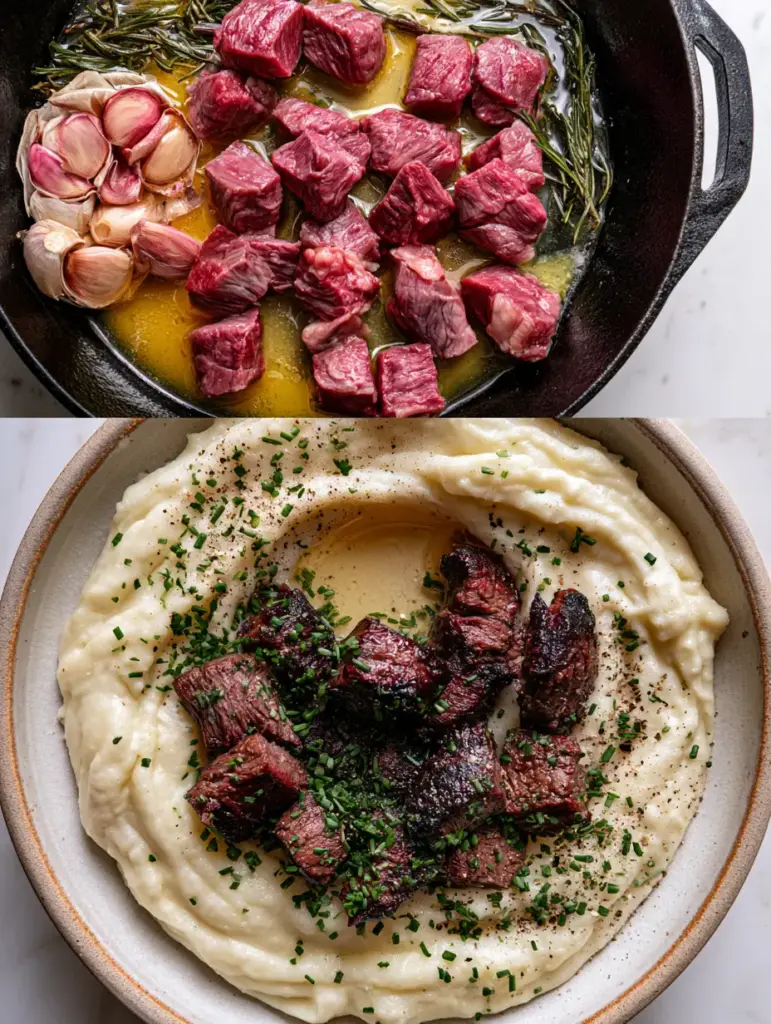
Why This Steak with Mashed Potatoes Recipe Redefines Comfort Food
- The High-Heat Sear: By cubing the ribeye into 1-inch (2.5cm) bites, we maximize the surface area for charring, ensuring every mouthful has that smoky, dark-brown crust.
- The Velvet Fold Texture: We utilize specific mashing techniques to ensure the potatoes have zero lumps, resulting in a silken, professional-grade purée.
- Aromatic Infusion: Smashed garlic and fresh rosemary sprigs don’t just garnish the plate; they infuse the cooking fat to create a pan-sauce that acts as liquid gold.
- The Butter Well: A deep indentation in the potatoes holds a pool of herb-infused butter, allowing you to dip each steak bite into a concentrated flavor bath.
The Essential Pantry Items for Garlic Butter Steak Bites
To achieve the visual and flavorful results of a high-end steakhouse, you need the right components. Every ingredient serves a structural or chemical purpose in this steak with mashed potatoes build.
2 lbs (900g) Ribeye Steak: Ribeye is the gold standard here due to its high intramuscular fat (marbling), which renders down to keep the steak bites juicy even at high heat.
2.5 lbs (1.1kg) Yukon Gold Potatoes: These are naturally buttery and have a mid-range starch content that creates a much smoother, “velvet” texture than starchy Russets.
1/2 cup (115g) High-Fat European Butter: Using butter with a higher butterfat content ensures your herb-infused sauce is translucent and rich rather than watery.
6-8 Large Garlic Cloves: We use the “smashed” technique to release essential oils while preventing the garlic from burning during the high-heat sear.
Fresh Rosemary Sprigs: Fresh herbs are non-negotiable for that piney, aromatic finish that cuts through the richness of the ribeye fat.
1/2 cup (120ml) Heavy Cream: Warmed cream is the secret to emulsifying the potato starches without making them gummy or “gluey.”
Fresh Chives and Cracked Black Pepper: These provide the final visual “heavy dusting” and a sharp, piquant contrast to the creamy base.
Neutral High-Smoke Point Oil: 2 tbsp (30ml) of avocado or grapeseed oil is required for the initial sear, as butter alone would burn at the temperatures needed for charring.
The Pro-Grade Tools for a Perfect Sear
You cannot achieve a dark-brown charred crust in a non-stick pan. For this steak with mashed potatoes, a heavy black cast iron skillet is your best friend. The heat retention of cast iron ensures that when the cold meat hits the pan, the temperature doesn’t drop, allowing for an immediate sear.
You will also need a potato ricer or a food mill. If you want that “mountain of ultra-smooth” potato look, a standard masher won’t cut it. A ricer breaks the potato down into tiny grains, which then absorb the cream and butter into a silken fold.
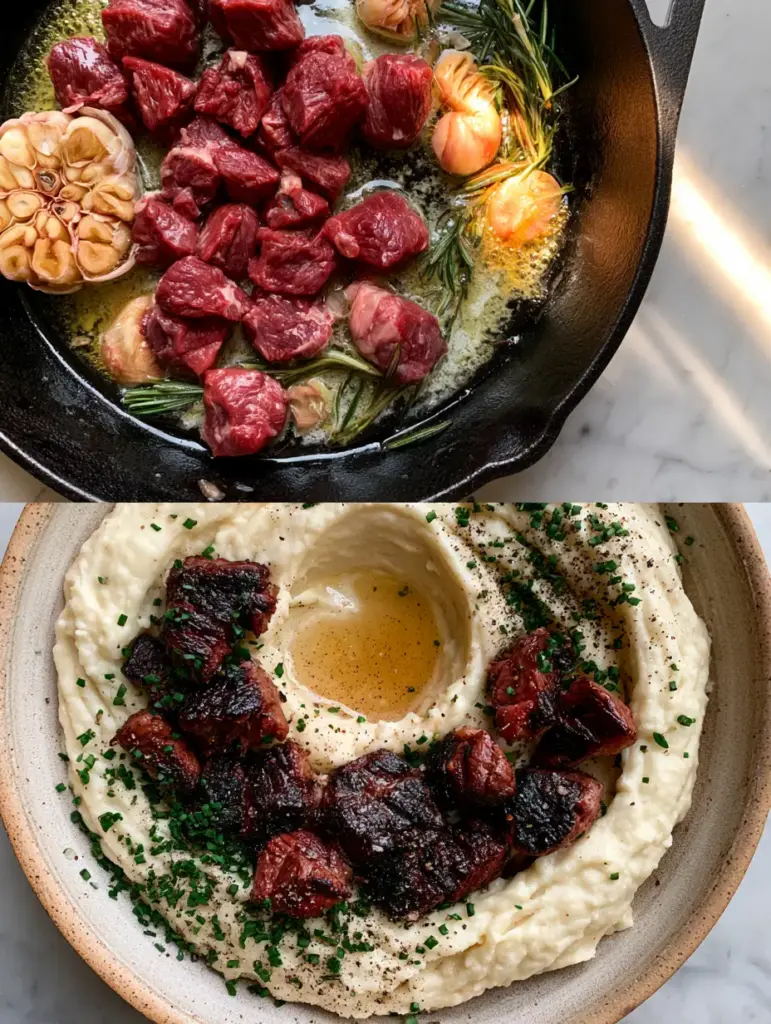
Mastering the Art of Searing Ribeye Bites
The secret to the “dark-brown charred” look is moisture control. Pat your cubed ribeye steak bites completely dry with paper towels before seasoning. If the meat is wet, it will steam rather than sear, and you’ll lose that high-contrast texture we are aiming for.
Heat your cast iron skillet until a drop of water flicked onto the surface dances and evaporates instantly. Add your high-smoke point oil. Place the steak bites in a single layer—do not crowd the pan! Work in batches if necessary to maintain that high-heat environment.
Once the steak bites have formed a deep crust (about 2-3 minutes), toss in your smashed garlic and rosemary. Finally, add the butter. As it melts and foams, spoon it over the steak bites. This is “basting,” and it’s how you get that shimmering, golden finish seen in the blueprint.
Achieving That Signature Velvet-Smooth Potato Fold
For the potatoes, start by boiling them in salted water until they are tender enough to be easily pierced by a paring knife. Drain them thoroughly and then—this is the pro tip—put them back in the hot pot for 1 minute to “steam dry.” Removing excess moisture is the only way to make room for the cream and butter.
Pass the potatoes through your ricer into a ceramic bowl. Gently fold in your warmed cream and half of your butter using a spatula. Do not overmix! Overworking potatoes releases too much starch, turning your velvet folds into a sticky paste. Aim for a “mountain” shape with soft, billowing peaks.
While mastering this base, you might find yourself exploring other starch-heavy favorites like a classic roasted potatoes recipe for a different textural experience, but for this specific dish, smoothness is king.
The Garlic-Herb Butter Infusion Secret
The “translucent garlic-herb butter” mentioned in our visual prompt is more than just melted butter. It is a concentrated pan sauce. After you remove the steak bites from the skillet, the remaining butter in the pan is filled with beef “fond” (the brown bits) and rosemary essence.
Strain this liquid through a fine-mesh sieve to remove the charred bits of garlic and rosemary leaves. What remains is a crystal-clear, deep-gold oil that tastes intensely of roasted garlic and herbs. This is what you will pour into the well of your mashed potatoes.
Chef Secrets for the Ultimate Golden Crust
- Salt Timing: Season your steak bites with kosher salt immediately before they hit the pan. If you salt them 10 minutes early, moisture will be drawn to the surface, ruining your sear.
- Smashed, Not Minced: Leave the garlic cloves whole but smashed. Minced garlic will burn at 400°F (204°C), leaving a bitter taste on your beautiful ribeye.
- Cold Butter vs. Warm Cream: Use cold butter for the final basting to control the temperature of the pan, but always use warm cream for the potatoes to keep the starches relaxed.
- Cast Iron Seasoning: Ensure your skillet is well-seasoned. A dry skillet will cause the delicate rosemary leaves to stick and char unpleasantly.
Make-Ahead Prep and Proper Reheating
While steak with mashed potatoes is best served fresh, you can prep the components. You can peel and chop the potatoes ahead of time, keeping them submerged in cold water in the fridge for up to 12 hours. This prevents oxidation and browning.
To reheat leftovers, avoid the microwave for the steak. It will turn your medium-rare ribeye into rubber. Instead, gently warm the steak bites in a pan with a splash of beef broth. For the potatoes, add a tablespoon of milk and whisk over low heat until the velvet texture returns.
What to Serve Alongside These Decadent Steak Bowls
This is a rich, heavy dish that benefits from a bright, acidic side. A crisp easy cucumber salad or a vinegar-based refrigerator pickle provides the necessary palate cleanser between bites of buttery potato.
If you’re looking for more inspiration for protein-heavy dinners, you might enjoy comparing this to a garlic butter Brazilian steak or even a lighter lemon herb chicken for your weekly meal rotation. For those who love the “bowl” concept, our Korean BBQ steak bowls offer a similar charred-beef satisfaction with a different flavor profile.
Common Culinary Curiosities
It is not recommended. Non-stick pans cannot handle or retain the high heat necessary to create the mahogany-colored charred crust that defines this dish. Use cast iron or stainless steel.
After searing the steak, strain the pan butter through a fine-mesh sieve. This removes the charred herb bits and milk solids, leaving a clear, herb-infused liquid gold.
Use a potato ricer instead of a masher to eliminate lumps, steam-dry the potatoes after boiling, and fold in warmed cream and butter gently to avoid overworking the starch.
Ribeye is the best choice because its high fat content (marbling) ensures the bites stay tender and juicy during the high-heat searing process required for a dark-brown crust.
Smashed garlic cloves infuse the butter with flavor without burning. Minced garlic has a high surface area and will burn quickly at the temperatures needed to sear steak, resulting in bitterness.
Steak with Mashed Potatoes: The Full Recipe Card
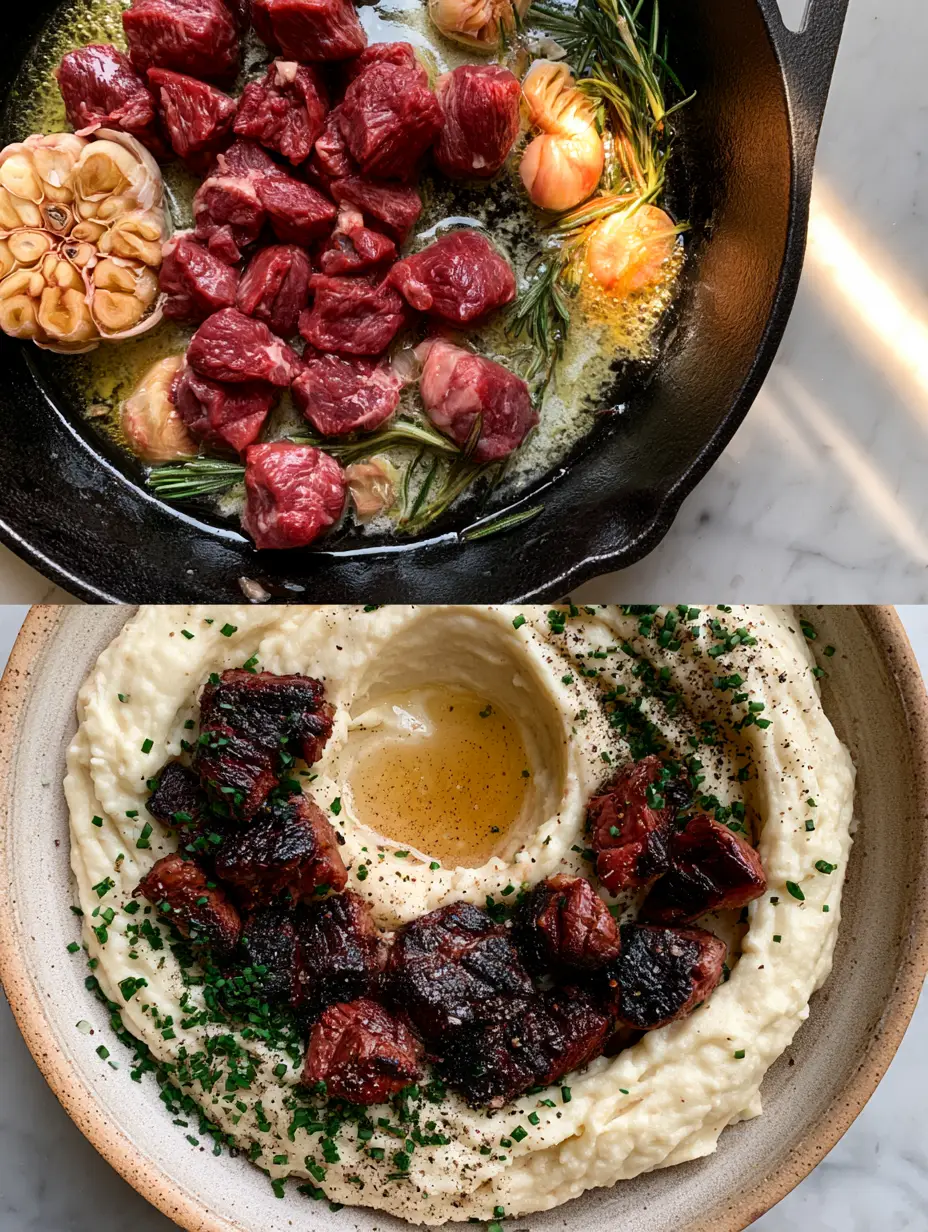
Steak with Mashed Potatoes: The Ultimate Garlic Butter Ribeye Experience
Ingredients
Equipment
Method
- Place potatoes in a large pot of salted water. Bring to a boil and cook for 15-20 minutes until fork-tender.
- Drain potatoes and return to the hot pot for 1 minute to steam dry. Pass through a ricer into a ceramic bowl.
- Fold in warmed heavy cream and 4 tbsp (60g) of butter until velvet-smooth. Season with salt to taste.
- Heat oil in a cast iron skillet over high heat until shimmering. Pat steak bites dry and season with salt.
- Add steak bites in a single layer. Sear for 2-3 minutes without moving until a dark-brown charred crust forms.
- Add remaining butter, smashed garlic, and rosemary. Baste the foaming butter over the meat for 1-2 minutes.
- Create a mountain of potatoes in a bowl. Use a spoon to make a well in the center. Fill with steak bites and the translucent garlic-herb butter sauce.
- Top with a heavy dusting of chopped chives and cracked black pepper.
Notes
Use a ricer for the potatoes to avoid a gummy texture.
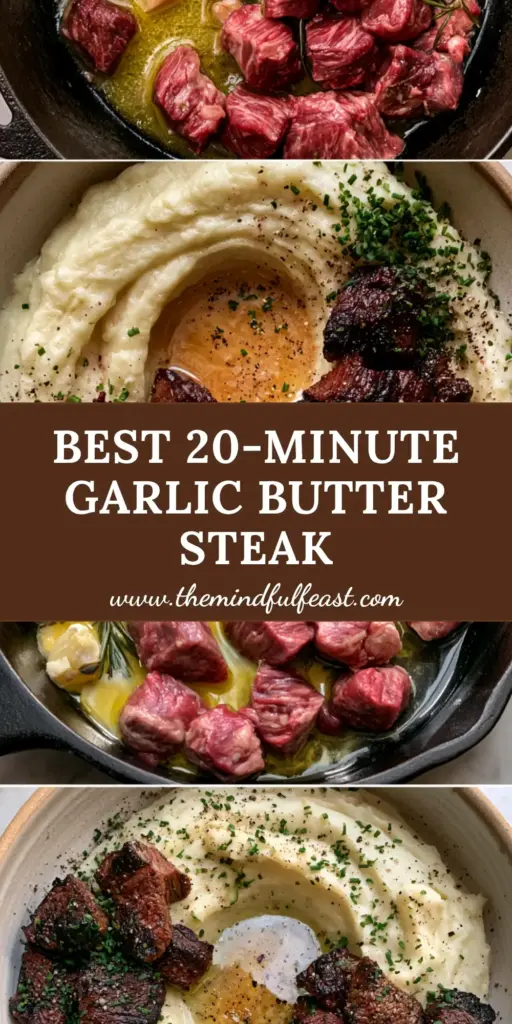
Final Thoughts and Your Kitchen Creations
Creating a restaurant-quality steak with mashed potatoes is about respecting the temperature of the pan and the texture of the potato. When you bring that skillet to the table, the visual of the shimmering meat and the velvet-smooth purée is guaranteed to impress. It’s a dish that feels like a celebration, even on a Tuesday night.
I would love to see your results! Did you get that deep-brown char on your ribeye? Is your garlic butter translucent and glowing? Leave a comment below or share your photos on Pinterest to join our community of home cooks. Don’t forget to sign up for our newsletter for more deep-dives into culinary science!