There is nothing quite as captivating as the first bite of a perfectly crafted Strawberry Mochi. As you bite through the pillowy, elastic layer of baby-pink dough, you are met with the velvety sweetness of dark red bean paste and the explosive, juicy tartness of a whole fresh strawberry. This Japanese confection, traditionally known as Ichigo Daifuku, is a masterclass in textural contrast and visual elegance.
In this guide, we are recreating the exact macro-level perfection seen in high-end Tokyo boutiques. Imagine a translucent, soft dough dusted with a whisper-thin layer of fine cornstarch, resting gracefully on a minimalist matte white ceramic plate. Whether you are a seasoned wagashi enthusiast or a curious home cook, this recipe will yield professional results that look exactly like a handheld smartphone photo from a modern sun-drenched kitchen.
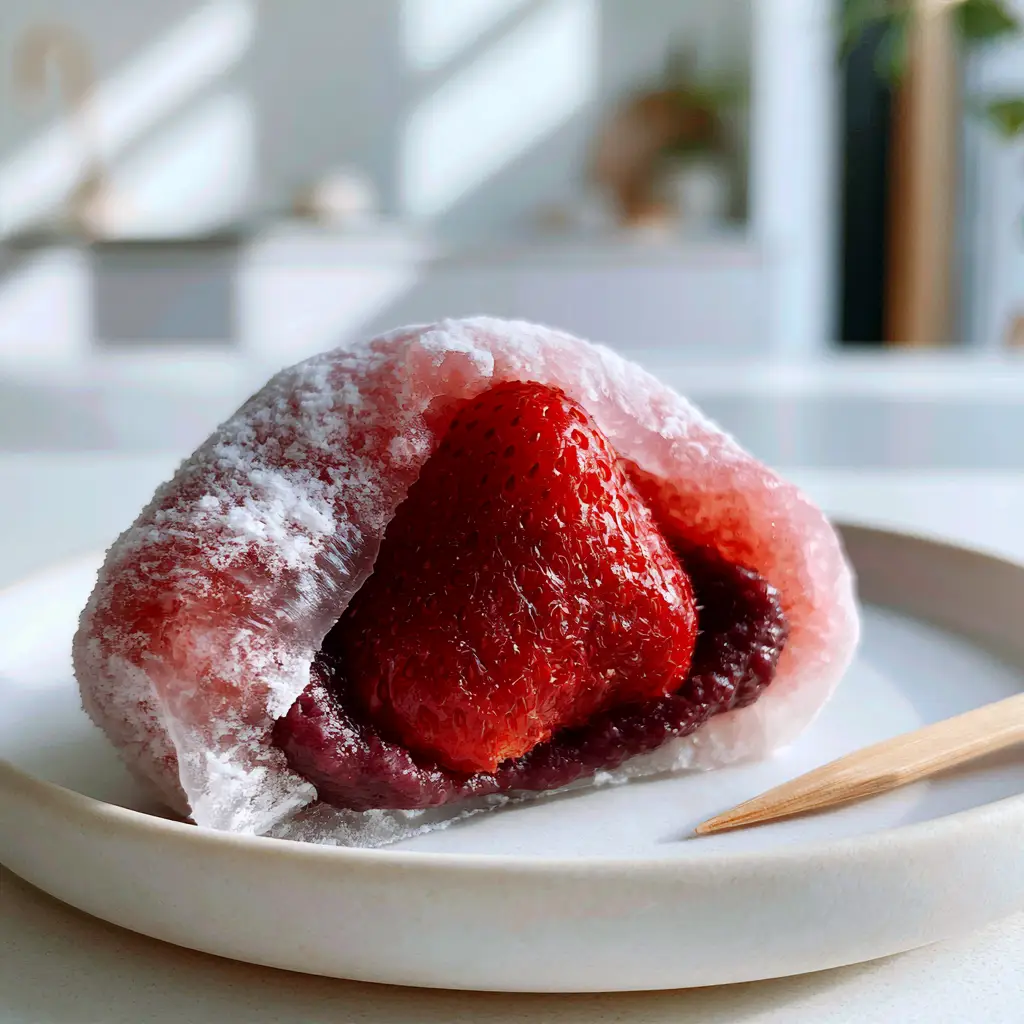
The Anatomy of an Iconic Strawberry Mochi: Why This Recipe Works
- Forensic Texture Alignment: We use specific steaming techniques to ensure the glutinous rice dough is incredibly elastic and pillowy, never wet or sticky, just like the visual blueprint suggests.
- The “Golden Ratio” Filling: A thin, even layer of smooth dark maroon red bean paste ensures the whole fresh red strawberry remains the star of the show without being overwhelmed by sweetness.
- Visual Transparency: By balancing the ratio of water to shiratamako, we achieve that coveted translucent pink finish that allows the vibrant red core to glow faintly through the dough.
- Professional Dusting: We provide techniques for an ultra-fine dusting of white cornstarch to achieve that matte, sophisticated finish seen on a clean wooden pick presentation.
The Essential Components for Authentic Ichigo Daifuku
To achieve the specific sensory cues of our visual prompt—a juicy, deep-red center and a soft, baby-pink exterior—you must select high-quality ingredients. Here is what you will need for your Strawberry Mochi journey.
Fresh Whole Strawberries: Choose medium-sized, conical strawberries that are deep red throughout. Their natural acidity is required to balance the sugar in the dough and the density of the bean paste.
Shiratamako (Glutinous Rice Flour): This specific type of Japanese rice flour is processed into coarse granules. It is the secret to achieving a dough that is elastic, translucent, and incredibly smooth once steamed.
Smooth Red Bean Paste (Koshian): For the dark maroon layer described in our blueprint, you must use “Koshian,” which is the fine, skinless version of sweetened azuki bean paste. Its velvety texture is crucial for a thin, even coating.
Granulated Sugar: Beyond sweetness, sugar acts as a softener for the rice starch. It keeps the mochi supple and prevents it from hardening too quickly at room temperature.
Red Food Coloring or Beet Juice: A single drop is all that is needed to transform the translucent dough into that delicate baby-pink hue confirmed in our visual guide.
Cornstarch (or Potato Starch): Used exclusively for dusting, this prevents the elastic dough from sticking to your hands or the matte white ceramic plate. You want a “whisper-thin” layer for a professional appearance.
Must-Have Tools for Mochi Mastery
While the ingredients build the flavor, the equipment ensures the visual accuracy of a single, perfect strawberry daifuku mochi. You will need a heat-proof glass bowl and a sturdy silicone spatula to handle the incredibly sticky dough during the steaming process. A microwave or a traditional bamboo steamer is essential for gelatinizing the starches until the dough becomes translucent.
For assembly, a small scale helps ensure each mochi is uniform in size. Finally, to replicate the minimalist presentation, prepare a clean wooden pick and a matte white ceramic plate to showcase the macro-level textures of the cross-section.
Step-by-Step Instructions: Crafting the Perfect Pink Mochi
Phase 1: Preparing the Strawberry Core
Wash 6 medium strawberries (approx. 150g) and pat them completely dry with a paper towel. It is vital that no moisture remains on the surface, or the red bean paste will slide off. Carefully hull the strawberries, removing only the green leafy top while keeping the conical shape intact.
Take approximately 1 tbsp (20g) of the smooth dark red bean paste and flatten it into a small disc in your palm. Place the strawberry in the center and gently wrap the paste upward, leaving just the very tip of the strawberry exposed if you prefer, or covering it completely for a hidden surprise. Set these prepared cores aside on a tray.
Phase 2: Steaming the Baby-Pink Dough
In a microwave-safe glass bowl, whisk together 1 cup (100g) of shiratamako and 1/4 cup (50g) of granulated sugar. Slowly pour in 3/4 cup (180ml) of water and one tiny drop of red food coloring. Whisk until the mixture is the consistency of thick milk and the color is a uniform baby-pink.
Cover the bowl loosely with plastic wrap and microwave on high for 1 minute. Remove and stir vigorously with a wet silicone spatula. The dough will look patchy at first. Microwave for another 45 seconds. The dough is ready when it has changed from opaque to translucent and becomes extremely thick, elastic, and difficult to stir.

Phase 3: The Stretching and Dusting Process
Generously dust a clean work surface with 1/2 cup (60g) of cornstarch. Turn the hot dough out onto the starch. Using a dusted bench scraper, divide the dough into 6 equal portions. Do not touch the dough directly with bare, undusted skin, as it will stick instantly.
Flatten one piece of pink dough into a 3-inch (7.5cm) circle. Place a bean-paste-wrapped strawberry in the center, pointed side down. Gently pull the edges of the dough up and over the base of the strawberry, pinching the dough together to seal. The dough should feel pillowy and soft, not wet.
Expert Tips for a Professional Finish
- Temperature Control: Wrap the mochi while the dough is still warm. Once the dough cools completely, it loses its elasticity, making it harder to get that smooth, even layer around the strawberry.
- The Thin Layer Secret: If your bean paste layer is too thick, the Strawberry Mochi will be overly sweet. Aim for a 2mm thickness to ensure the strawberry remains the focal point of the cross-section.
- Avoid Starch Overload: While you need starch to handle the dough, use a soft pastry brush to whisk away excess cornstarch before serving. You want a “whisper-thin” layer for that elegant matte look.
- Freshness is Key: Because this recipe uses fresh fruit, it is best enjoyed within 24 hours. The juices from the strawberry will eventually begin to soften the bean paste and dough.
Creative Pairings and Serving Suggestions
To truly appreciate the delicate flavors of this dessert, serve it with a hot cup of ceremonial grade matcha or toasted hojicha. The bitterness of the tea perfectly offsets the sweetness of the red bean paste.
If you are planning a themed dessert platter, consider featuring this alongside a vibrant Mango Mochi or a refreshing Watermelon Mochi for a stunning array of colors. For a full Japanese-inspired lunch, start with a light Cucumber Salad followed by a savory Chicken Salad before ending on this sweet note.
Frequently Asked Questions
No, frozen strawberries will release too much moisture as they thaw, making the dough wet and soggy. Always use fresh, firm, whole strawberries.
Strawberry Mochi is best eaten the day it is made. You can store it at room temperature for up to 24 hours. Do not refrigerate, as the dough will become hard.
Yes, glutinous rice flour (despite the name) is gluten-free. As long as your red bean paste and cornstarch are certified gluten-free, this is a safe treat.
Shiratamako is preferred for its ability to produce a more elastic, translucent, and smooth dough. Mochiko can be used but results in a slightly denser, more opaque texture.
Mochi dough is naturally very sticky. The key is to use plenty of cornstarch on your hands and work surface, and ensure the dough is properly cooked until translucent.
The Final Strawberry Mochi Recipe

Strawberry Mochi (Ichigo Daifuku): The Ultimate Guide to Perfect Pink Rice Cakes
Ingredients
Equipment
Method
- Ensure strawberries are completely dry after washing. Hull them carefully.
- Divide red bean paste into 6 portions. Flatten and wrap each strawberry in a thin, even layer of paste.
- Whisk shiratamako, sugar, water, and food coloring in a glass bowl until smooth.
- Microwave for 1 minute, stir with a wet spatula, then microwave for another 45-60 seconds until translucent and elastic.
- Turn dough onto a cornstarch-dusted surface. Divide into 6 pieces. Flatten dough, place strawberry in center, and pinch to seal.
- Dust off excess starch and serve on a matte white plate with a wooden pick.
Notes
Use a wet spatula to prevent the dough from sticking during the mixing phase.

Closing & Call to Action
Mastering the Strawberry Mochi is a rewarding experience that brings a piece of Japanese culinary art into your kitchen. The combination of the pillowy pink dough and the juicy red strawberry is a sensory delight that never fails to impress. We would love to see your creations! Share your photos on social media and be sure to pin this recipe to your favorite dessert boards on Pinterest. Don’t forget to leave a comment below with your favorite mochi fillings!