Thai basil chicken, or Pad Krapow, is the undisputed king of Thai street food for a reason. This dish captures the perfect balance of salty, sweet, and spicy, all anchored by the peppery punch of fresh Thai basil. When you pull this together in your own kitchen, the goal is to replicate that gourmet bowl experience: steaming jasmine rice topped with deeply caramelized chicken and a glossy, savory sauce.
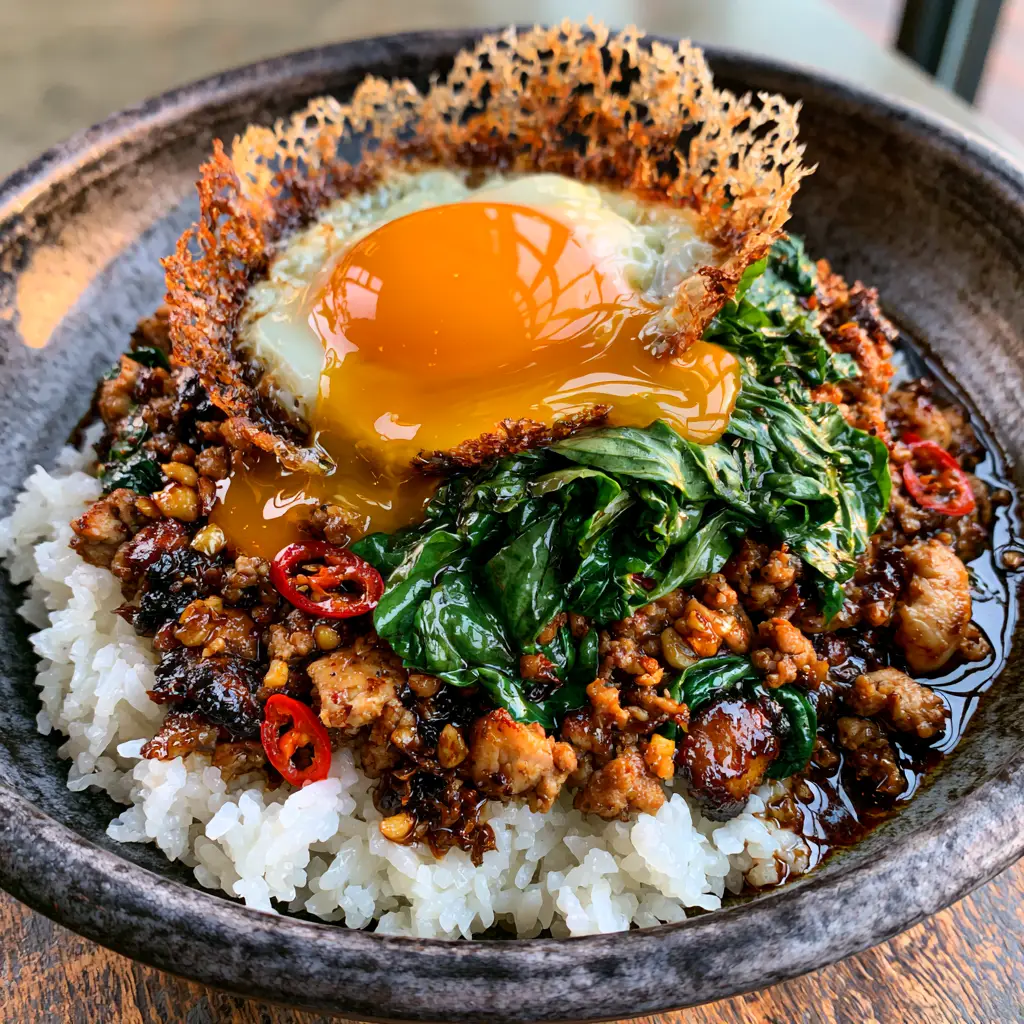
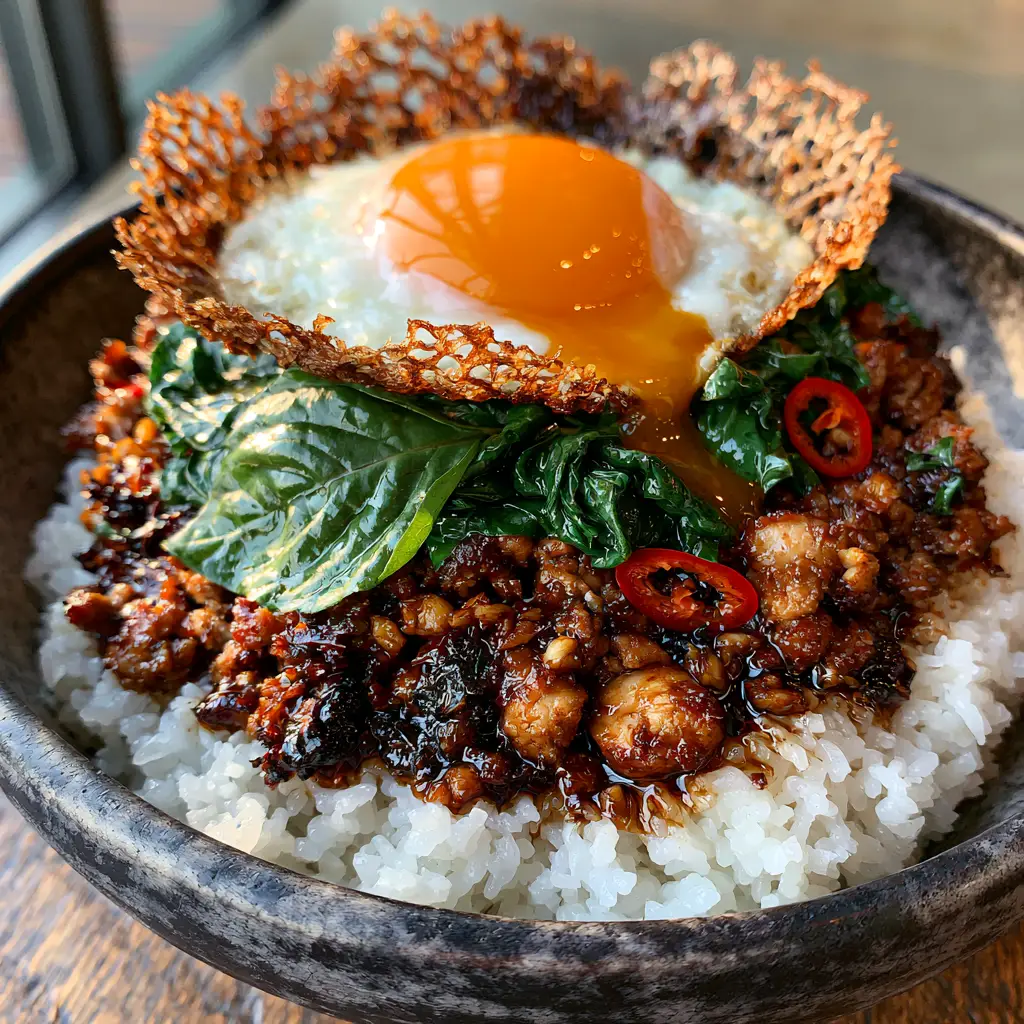
The visual centerpiece of a true Thai basil chicken is the contrast between the dark, umami-rich meat and the vibrant green of the wilted herbs. To finish, a crispy wok-fried egg with lacy, golden-brown edges sits on top, its runny orange yolk ready to spill over the chicken and create a rich, natural sauce. Every bite is a masterclass in texture and flavor layering.
Why You’ll Crave This 15-Minute Thai Basil Chicken Every Night
- Caramelized Perfection: We use high heat to ensure the ground chicken develops a deep, golden-brown crust rather than just steaming in the pan.
- Lacy Fried Egg: The “Kai Dao” style egg provides a crunchy exterior and a velvety, runny yolk that balances the heat of the chilies.
- Aromatic Umami Bomb: The combination of minced garlic and sliced red bird’s eye chilies creates a fragrant base that defines the dish’s soul.
- Quick & Professional: From the rustic charcoal bowl presentation to the glossy finish of the sauce, this recipe delivers restaurant-quality results in under 20 minutes.
The Umami Blueprint: Essential Ingredients for Authentic Thai Basil Chicken
Ground Chicken: 1 lb (450g) of ground chicken is the canvas here. Ensure it has a bit of fat content to allow for that crucial caramelization and searing process.
Thai Basil Leaves: 2 cups (60g) of fresh Thai basil. These leaves provide a distinct anise-like flavor and should be added at the very end to maintain their vibrant green color.
Red Bird’s Eye Chilies: 3-5 (15-25g) sliced chilies. These provide the signature heat; you can adjust the quantity based on your spice tolerance, but they are essential for authenticity.
Garlic: 5 cloves (25g), finely minced. Garlic acts as the aromatic backbone, infusing the oil before the chicken hits the wok.
Dark Soy Sauce: 1 tbsp (15ml). This provides the deep, dark color and a subtle molasses sweetness that coats the chicken beautifully.
Oyster Sauce: 2 tbsp (30ml). This thick, savory sauce adds the primary umami layer and helps create that glistening, glossy texture seen in gourmet photography.
Fish Sauce: 1 tbsp (15ml). The secret to Thai depth; it adds a salty, fermented funk that rounds out the sweeter notes of the sauce.
Sugar: 1 tsp (5g) of brown sugar or palm sugar. A tiny amount is required to balance the salt and help the chicken achieve a dark sear.
Vegetable Oil: 3 tbsp (45ml). You need a high-smoke-point oil to fry the egg until crispy and to sear the chicken at maximum temperature.
Large Egg: 1 per serving. The egg must be fried in hot oil to achieve those signature lacy, “wok-fried” edges while keeping the yolk bright orange and fluid.
Jasmine Rice: 2 cups (400g) cooked. Steaming white jasmine rice is the essential base, acting as a fluffy sponge for the savory sauce.
The Wok Essentials: Tools for That Signature Sear
To achieve the “Wok Hei” or “breath of the wok” associated with Thai basil chicken, a carbon steel wok is ideal, though a heavy cast-iron skillet is a great alternative. You will also need a sharp chef’s knife to finely slice the bird’s eye chilies and mince the garlic into a near-paste to release their essential oils. A slotted metal spatula is helpful for basting the egg with hot oil to ensure the whites set while the yolk remains perfectly runny.
Mastering the Wok: Step-by-Step Instructions
The Secret to the Perfect Crispy Fried Egg
Heat 2 tablespoons (30ml) of oil in your wok over medium-high heat until it begins to shimmer and slightly smoke. Carefully crack the egg into the oil; it should sizzle violently and immediately form bubbles around the edges.
Use your spatula to splash hot oil over the egg whites but avoid the yolk to keep it runny. Once the edges are lacy and deep golden-brown, remove the egg and set it aside. This provides the textural crown for your Thai basil chicken.
Caramelizing the Chicken for Maximum Flavor
Remove all but one tablespoon of oil from the wok and crank the heat to high. Add the minced garlic and sliced red bird’s eye chilies, stirring constantly for about 30 seconds until the aroma fills the room and the garlic turns a light golden hue.
Add the ground chicken to the wok, breaking it up with your spatula. Let it sit undisturbed for 60-90 seconds to develop a deep, dark sear. Stir-fry the chicken until it is fully cooked and starts to look caramelized and crispy on the edges.
Folding in the Freshness
Pour in the oyster sauce, dark soy sauce, fish sauce, and sugar. Toss the chicken rapidly to coat every piece in the dark, glistening sauce. You should see a beautiful glossy sheen develop as the sugar melts and the sauces emulsify.
Turn off the heat and throw in the fresh Thai basil leaves. Fold them gently into the hot chicken; the residual heat will wilt them into a vibrant green silkiness without turning them bitter or brown. This preserves the aromatic oils that make Thai basil chicken so special.
Expert Tips for Success
- Cold Rice vs. Fresh Rice: While fried rice requires day-old grains, Thai basil chicken is best served over fresh, steaming jasmine rice to better soak up the sauce.
- The Basil Rule: Never chop Thai basil; the bruising from hand-tearing or tossing whole leaves into the wok releases more flavor.
- Don’t Crowd the Pan: If you are doubling the recipe, cook the chicken in batches. Too much meat in the pan will cause it to boil in its own juices rather than sear.
- Yolk Management: If you prefer a less runny yolk, continue basting with oil for an extra 30 seconds, but the classic “Pad Krapow” experience relies on that orange spill.
Storage, Reheating & Freezing
Thai basil chicken stores exceptionally well in an airtight container in the refrigerator for up to 3 days. When reheating, use a splash of water or chicken broth in a skillet to loosen the sauce and restore its glossy texture.
While the chicken can be frozen for up to 2 months, we do not recommend freezing the fried egg or the basil. For the best experience, fry a fresh egg and add a handful of fresh basil after reheating the frozen chicken to bring the flavors back to life.
What to Serve With Thai Basil Chicken
This dish is a complete meal on its own, but it pairs beautifully with other vibrant textures. If you enjoy the contrast of spicy and cool, try serving this alongside a crunchy Asian chicken salad.
For those looking to expand their global chicken repertoire, this savory profile is a great stepping stone to the bold flavors of savory suya chicken or even the comforting notes of Moroccan chicken and rice. If you have leftover jasmine rice, it’s the perfect foundation for a sweet and sour chicken recipe the following night.
Frequently Asked Questions
While you can, the flavor will be significantly different. Thai basil has a peppery, anise-like (licorice) flavor that holds up to heat, whereas Italian basil is sweeter and more delicate. If you can’t find Thai basil, look for Holy basil for the most authentic experience.
Yes, you can use thinly sliced chicken breast or thigh. However, ground chicken is traditional for this dish because its higher surface area allows for more caramelization and better absorption of the savory sauce.
The secret is hot oil and enough of it. You need to essentially shallow-fry the egg. Use high heat and wait for the oil to shimmer before cracking the egg. Do not move it until the edges have turned deep brown and crispy.
As written, it has a moderate-to-high heat level due to the bird’s eye chilies. You can control the heat by removing the seeds from the chilies or reducing the number of chilies used. However, a little kick is essential for the authentic Pad Krapow profile.
Steamed white jasmine rice is the standard. Its floral aroma and fluffy texture perfectly complement the bold, salty, and spicy flavors of the chicken.
Thai Basil Chicken (Pad Krapow) Recipe Card
Thai Basil Chicken: The Ultimate Authentic Pad Krapow Recipe
Ingredients
Equipment
Method
- Heat 2 tbsp (30ml) oil in a wok until shimmering. Crack the egg into the center.
- Baste the whites with hot oil until the edges are golden-brown and lacy, but the yolk is still runny. Remove and set aside.
- In the remaining oil, sauté garlic and chilies over high heat for 30 seconds until fragrant.
- Add ground chicken, spreading it flat. Let sear undisturbed for 90 seconds until caramelized, then break apart and cook through.
- Add oyster sauce, dark soy sauce, fish sauce, and sugar. Toss to glaze. Turn off heat and fold in Thai basil until wilted.
Notes
Thai basil is essential; Italian basil will not provide the same peppery finish.
The Final Word on Thai Street Food
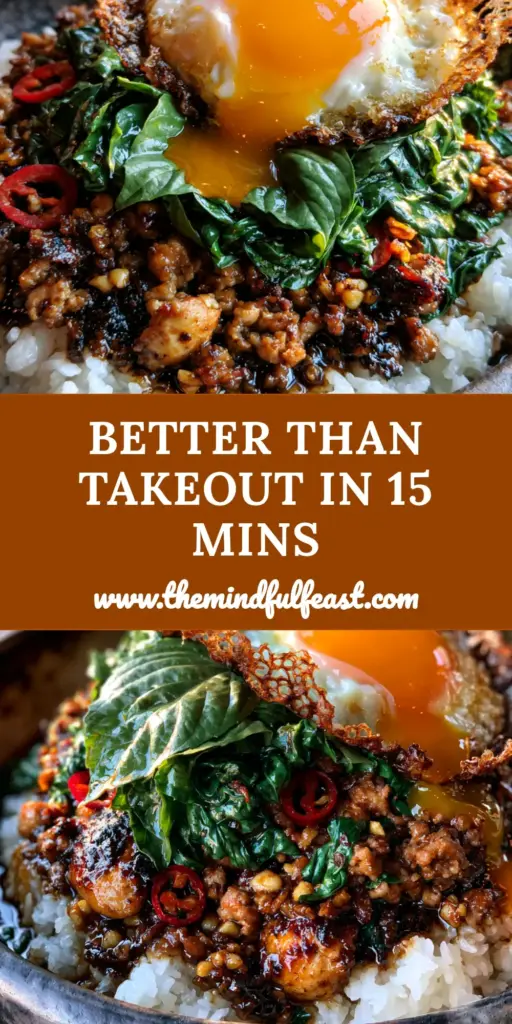
Mastering Thai basil chicken is about embracing high heat and bold aromatics. The combination of the deeply seared chicken and the velvety runny yolk creates a gourmet experience that is as visually stunning as it is delicious. We would love to see your results—tag us in your photos and share this recipe to your favorite food boards on Pinterest!