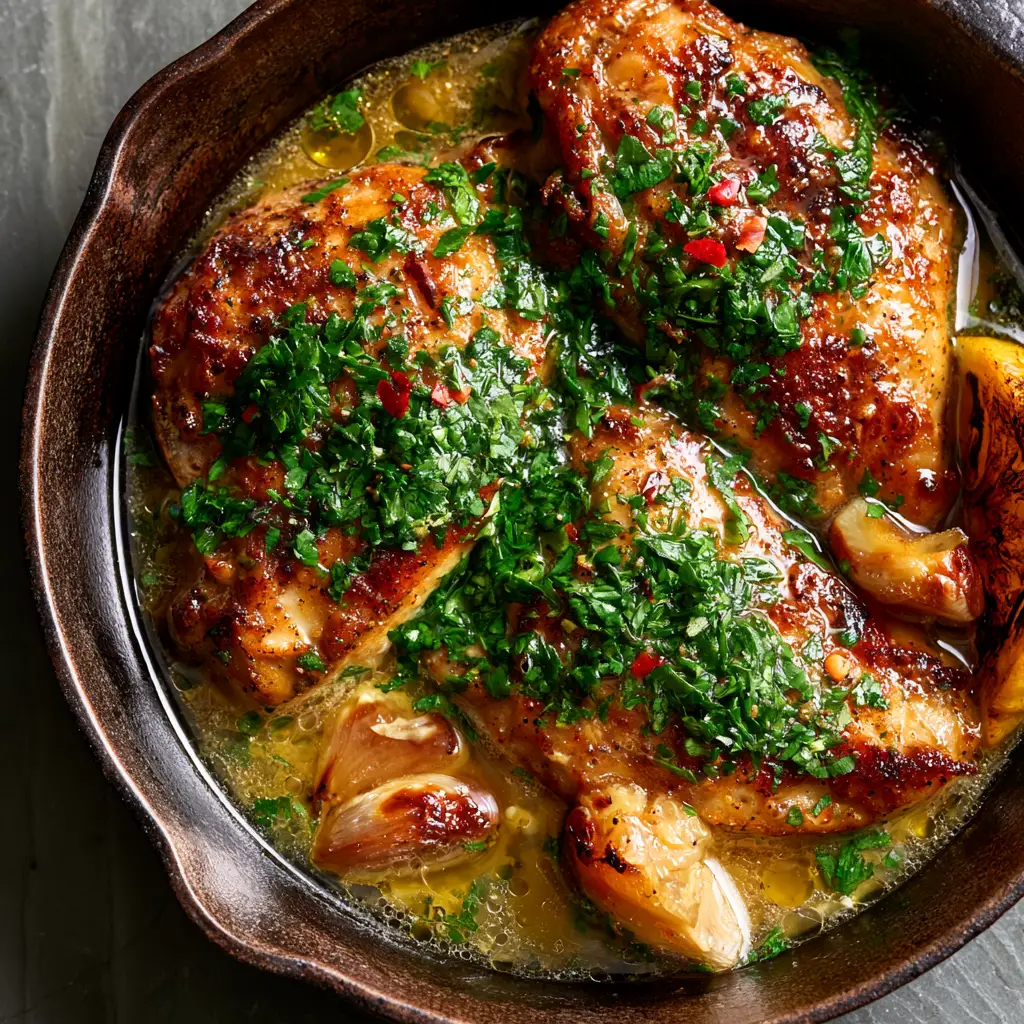
There is a specific kind of magic that happens when a heavy cast iron skillet meets a well-seasoned chicken breast. This Chicken dish isn’t just a meal; it’s a masterclass in texture, combining a deeply caramelized, crispy exterior with an interior so succulent it practically melts. The secret lies in the shimmering, translucent garlic butter sauce that pools around the meat, creating tiny bubbles of browned butter that carry the heat of red pepper flakes and the brightness of fresh herbs.
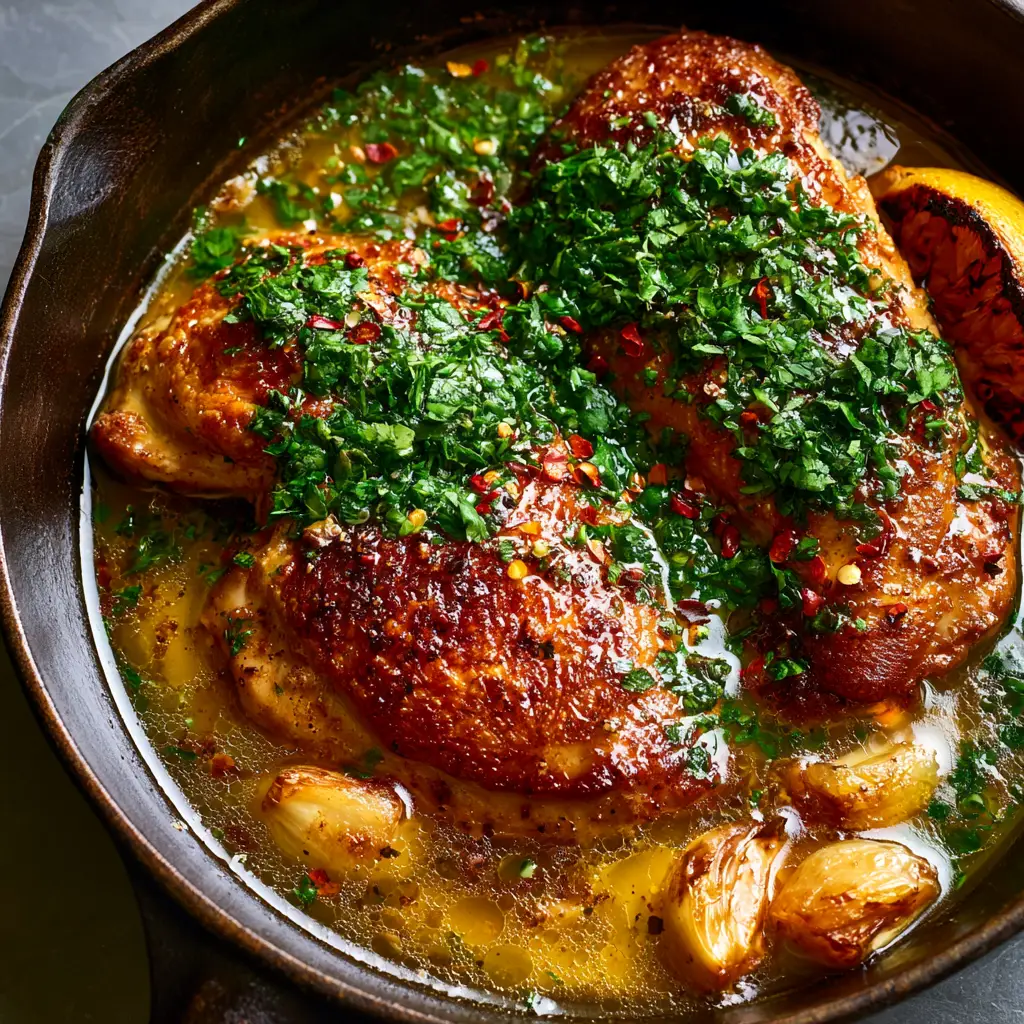
When you look at this Chicken dish, your eyes are immediately drawn to the golden-seared surface of the poultry, contrasted against the dark, rustic iron of the pan. We aren’t just cooking; we are building layers of flavor, from the mellow sweetness of softened, whole garlic cloves to the acidic punch of a charred lemon wedge. Every element in the skillet serves a purpose, ensuring that every bite is a perfect balance of fat, acid, heat, and salt.
Whether you are looking for a sophisticated centerpiece for a date night or a high-protein weeknight chicken dinner that feels like a five-star restaurant meal, this recipe delivers. The aroma alone—a heady mix of toasted garlic and sizzling butter—is enough to bring everyone to the kitchen before the timer even goes off. Let’s dive into the forensic details of how to achieve this visual and culinary masterpiece.
The Visual and Textural Appeal of a Professional Sear
- Crispy Maillard Crust: Achieve a deep, mahogany caramelization on the chicken skin or flesh that provides a structural crunch.
- Aromatics in Abundance: Whole, softened garlic cloves that spread like butter and add a rich, earthy sweetness to the sauce.
- Vibrant Herb Finish: A heavy scatter of finely minced flat-leaf parsley that cuts through the richness of the shimmering butter.
- The Charred Element: A lemon wedge, seared until blackened, which releases a smoky, concentrated citrus juice over the final Chicken dish.
- Visual Depth: A dark cast iron skillet that retains heat and provides a stunning, rustic backdrop for the golden tones of the meat.
Foundational Ingredients for the Ultimate Pan-Seared Result
Chicken Breasts (approx. 1 lb / 450g): High-quality, air-chilled chicken breasts are preferred for this Chicken dish to ensure minimal water release during the searing process. This allows the meat to brown effectively rather than steaming in its own juices.
Unsalted Butter (4 tbsp / 60g): Butter provides the glossy, shimmering base for our sauce and facilitates the “arrosé” (basting) technique. Using unsalted butter allows you to control the exact sodium levels of the final pan sauce.
Neutral High-Smoke Point Oil (1 tbsp / 15ml): A small amount of avocado or grapeseed oil is used for the initial sear. This prevents the butter from burning during the high-heat phase of the recipe.
Whole Garlic Cloves (10-12 cloves): We leave the cloves whole to allow them to confit in the butter sauce, becoming sweet and spreadable. They provide a visual rusticity and a mellow garlic flavor that isn’t overpowering.
Fresh Flat-Leaf Parsley (1/4 cup / 10g): Finely minced parsley adds a necessary “green” note and a pop of color. It balances the heavy fats of the garlic butter with its clean, peppery finish.
Dried Red Pepper Flakes (1/2 tsp): These tiny red jewels provide a subtle background heat. They toast in the bubbling butter, infusing the entire Chicken dish with a gentle warmth.
Fresh Lemon (1 large): One half is cut into wedges for charring in the skillet. The intense heat of the cast iron concentrates the sugars in the lemon, resulting in a more complex acidity.
Kosher Salt and Coarse Black Pepper: Essential for drawing out moisture and building the initial crust on the chicken. Always season more aggressively than you think, as some seasoning stays in the pan.
Essential Equipment for a Successful Sear
To replicate the succulent results seen in professional food photography, the right tools are non-negotiable. A 12-inch rustic cast iron skillet is the star of the show here. Its superior heat retention ensures that the temperature doesn’t drop when the meat hits the pan, which is crucial for achieving that deep crispy caramelization.
You will also need a sturdy set of stainless steel tongs for flipping the chicken and a large metal spoon for basting. Basting is the secret “pro move” that creates the shimmering, translucent coating on the meat. Finally, an instant-read meat thermometer is vital to ensure the chicken reaches exactly 165°F (74°C) without becoming dry or rubbery.
Step-by-Step Evolution of the Perfect Chicken Dish
Preparing the Canvas
Start by patting the chicken breasts extremely dry with paper towels. Any surface moisture will create steam, which is the enemy of a golden-brown crust. Season both sides generously with salt and pepper, pressing the spices into the meat to ensure they adhere during the sear.
The High-Heat Initial Sear
Place your cast iron skillet over medium-high heat and add the neutral oil. Wait until the oil is shimmering and just starting to wisps of smoke—this is your sensory cue that the pan is ready. Carefully lay the chicken breasts away from you in the skillet. Do not move them for at least 5-6 minutes; you are waiting for the Maillard reaction to naturally release the meat from the pan surface.
Building the Garlic Butter Emulsion
Once flipped, and a deep crust is visible, reduce the heat to medium. Add the 4 tbsp (60g) of butter and the whole garlic cloves to the empty spaces in the skillet. As the butter melts, it will begin to foam and then transition into tiny bubbles of browned butter. This is the moment to add your dried red pepper flakes, allowing them to bloom in the fat.
The Art of Basting (Arrosé)
Tilt the skillet slightly so the garlic butter pools at the bottom. Use your large spoon to continuously scoop the hot, shimmering fat over the chicken breasts. You will hear a gentle sizzling sound and smell the toasted garlic. Continue this for 3-4 minutes until the chicken reaches an internal temperature of 160°F (71°C); it will rise to 165°F (74°C) while resting.
Charring the Lemon and Finishing
Push the chicken to one side and place the lemon wedges flesh-side down in the hot butter. Let them sit until the surface is blackened and charred. This adds a smoky dimension to the juice. Remove the pan from the heat and immediately shower the Chicken dish with the finely chopped parsley, ensuring it sticks to the glossy butter coating.
Expert Tips for Success
- The “No-Touch” Rule: When you first put the chicken in the pan, resist the urge to peek. If the meat is sticking, the crust hasn’t formed yet. It will self-release when it’s ready.
- Garlic Management: If the whole garlic cloves are browning too quickly, move them on top of the chicken breasts to protect them from the direct heat of the skillet.
- Butter Temperatures: If the butter stops bubbling and starts to smoke excessively, add a teaspoon of cold oil or a small splash of water to immediately drop the temperature.
- Resting Period: Always let the chicken rest in the skillet (off the heat) for at least 5 minutes before slicing. This allows the juices to redistribute, ensuring the meat stays succulent.
Storage, Reheating, and Freezing
This Chicken dish is best served immediately to enjoy the crispness of the sear. However, leftovers can be stored in an airtight container in the refrigerator for up to 3 days. To reheat, avoid the microwave as it will make the chicken rubbery. Instead, place the chicken back in a skillet with a splash of water or broth, cover, and warm over low heat until heated through.
Freezing is not recommended for this specific preparation, as the delicate garlic butter sauce will separate upon thawing, and the crispy texture of the chicken surface will be lost. If you must freeze, do so without the sauce and prepare a fresh batch of garlic butter when serving.
What to Serve with this Savory Skillet
To balance the richness of the garlic butter, consider serving this Chicken dish alongside a bright, acidic salad. A Greek-inspired side with cucumbers and feta works beautifully. If you want to keep the meal hearty, it pairs excellently with a side of fragrant rice or a simple pasta that can soak up the extra shimmering butter sauce.
For a lighter option, a street corn salad provides a smoky sweetness that complements the charred lemon. If you have leftovers, they are incredible when sliced cold and added to a roasted chicken salad for lunch the following day.
Frequently Asked Questions
While you can, whole cloves confit in the butter, creating a sweet, mellow flavor and rustic visual that powder cannot replicate. Powder also risks burning at high temperatures.
Yes, though cooking times will increase. Thighs are more forgiving due to their higher fat content, but breasts provide the classic ‘restaurant’ look for this specific dish.
The chicken will naturally release from the pan when a proper crust has formed. If it is sticking, wait another minute before attempting to flip.
Charring the lemon concentrates its sugars and adds a smoky depth to the acidity, which cuts through the richness of the shimmering garlic butter sauce.
Cast iron provides superior heat retention, which is essential for creating the deep crispy caramelization (Maillard reaction) seen in the photos without the pan’s temperature dropping.
The Ultimate Pan-Seared Chicken Recipe
Chicken Dish with Pan-Seared Garlic Butter and Caramelized Whole Cloves
Ingredients
Equipment
Method
- Pat the chicken breasts extremely dry with paper towels. Season both sides generously with kosher salt and coarse black pepper.
- Heat oil in a cast iron skillet over medium-high heat. Once shimmering, add chicken and sear for 5-6 minutes until a deep golden-brown crust forms. Flip.
- Reduce heat to medium. Add butter, whole garlic cloves, and red pepper flakes. Once butter is foaming, use a spoon to baste the chicken continuously with the hot garlic butter.
- Place lemon wedges in the skillet and cook until charred. Continue basting chicken until internal temp is 160°F. Remove from heat, garnish with parsley, and rest for 5 minutes.
Notes
Use a spoon to baste the butter over the chicken for that professional glossy finish.
Closing and Call to Action
Mastering this Chicken dish is a gateway to professional-level home cooking. The combination of high-heat searing and butter basting creates a sensory experience that far exceeds the simplicity of the ingredients. Once you’ve tasted the combination of succulent meat and caramelized garlic, this will surely become a staple in your culinary rotation.
If you enjoyed this recipe, please leave a comment below and let us know how your sear turned out! Don’t forget to sign up for our newsletter for more deep-dives into culinary science. For more visual inspiration, follow us on Pinterest and share your creations with our community!