There is a specific kind of culinary magic that happens when high-quality balsamic vinegar meets a screaming hot skillet. The result is a balsamic chicken orzo that looks like it stepped straight out of a professional food photography studio.
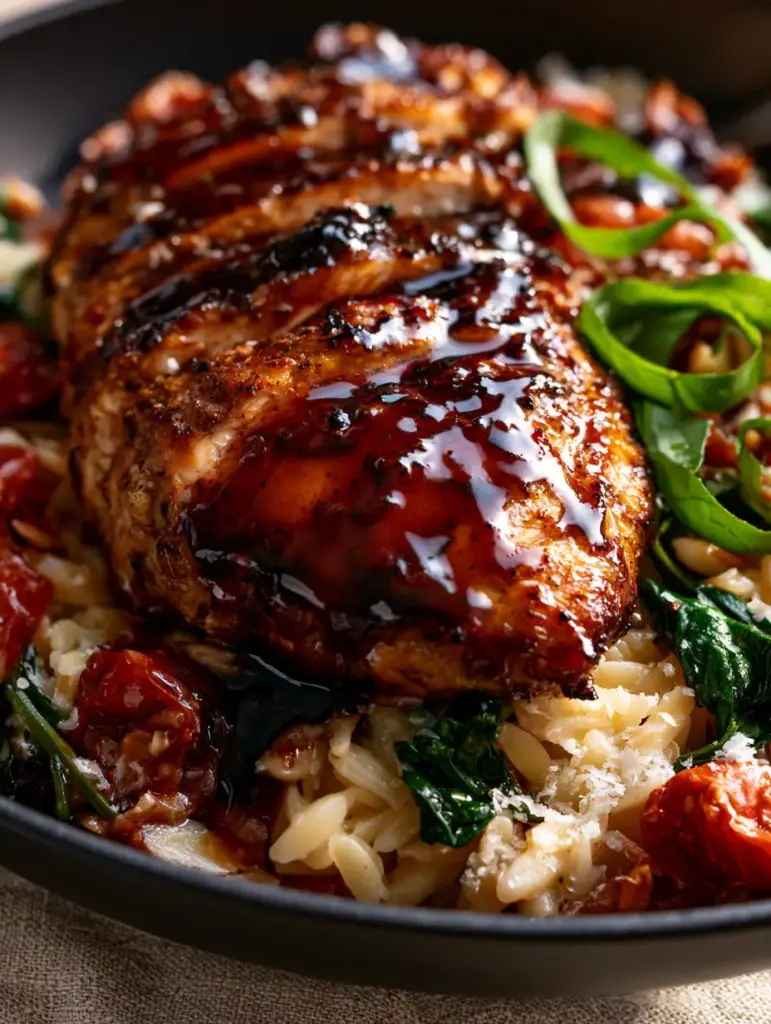
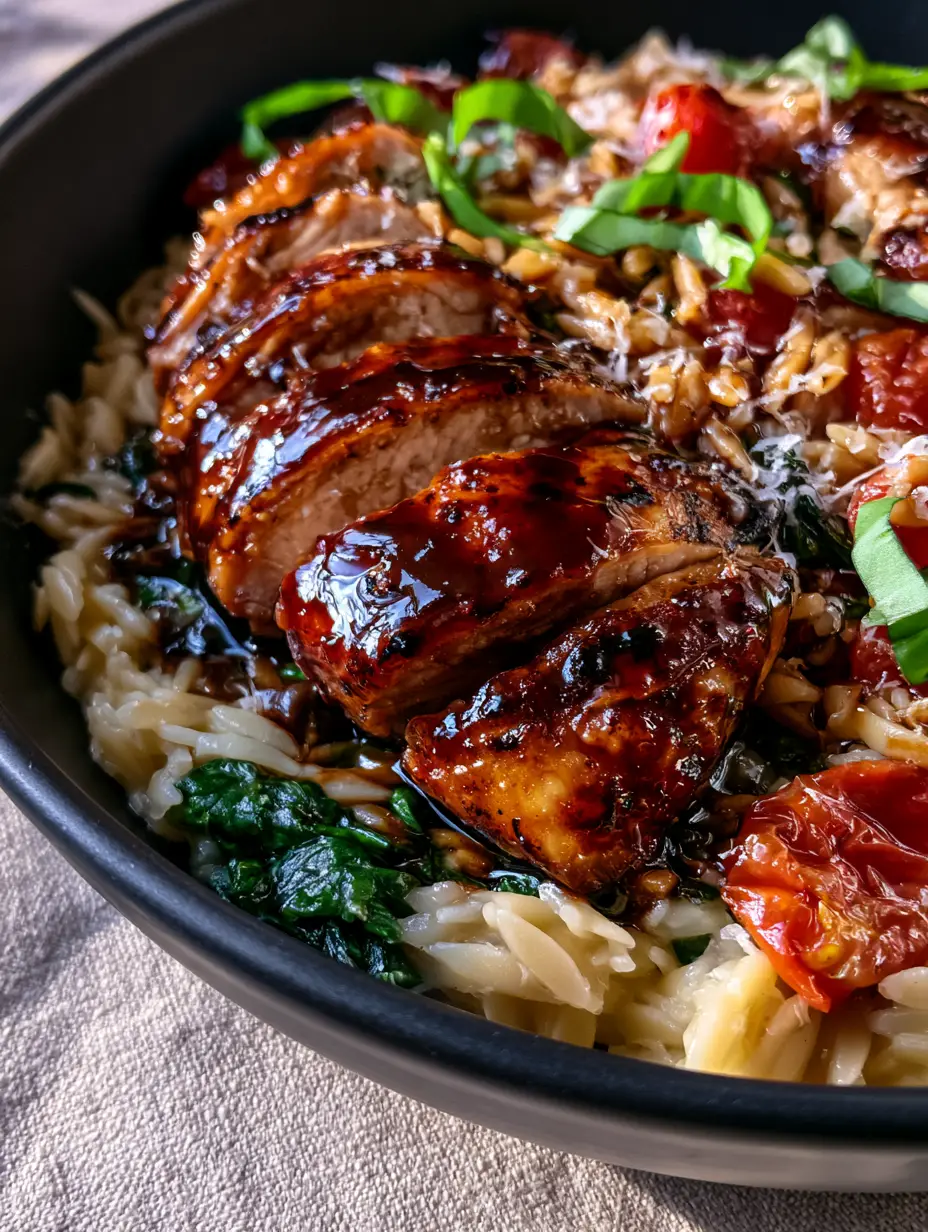
Imagine tender, juicy chicken breasts coated in a thick, glossy mahogany glaze that catches the light. Beneath them lies a bed of velvety, creamy orzo pasta studded with bright, burst cherry tomatoes and ribbons of wilted spinach.
This dish isn’t just a meal; it’s a sensory experience designed for those who appreciate the fine balance of acidity, creaminess, and savory depth. Whether you are hosting a dinner party or elevating a Wednesday night, this recipe delivers restaurant-quality results in a single pan.
Why This Balsamic Chicken Orzo Recipe Works
- The Mahogany Glaze: We utilize a specific reduction technique to achieve that deep, mirror-like finish seen in elite culinary presentations.
- Textural Contrast: The snap of the burst cherry tomatoes perfectly offsets the silkiness of the tender orzo.
- One-Pan Efficiency: By deglazing the pan where the chicken seared, we capture every ounce of fond (those delicious brown bits) to flavor the pasta.
- Visual Appeal: The contrast of dark green spinach and bright red tomatoes against the matte black pan creates a visually stunning plate.
Essential Ingredients for the Ultimate Flavor Profile
To achieve the visual and flavorful depth required for this balsamic chicken orzo, each ingredient serves a specific structural purpose. We are not just cooking; we are building layers of taste.
Chicken Breast: 1.5 lbs (680g) of boneless, skinless breasts provide the lean protein base that carries the heavy glaze. We recommend slicing them into even cutlets to ensure a rapid, high-heat sear without drying out the interior.
Balsamic Vinegar & Honey: 1/2 cup (120ml) of balsamic paired with 2 tbsp (42g) of honey creates the foundation for our mahogany glaze. The sugar in the honey facilitates the caramelization process, turning the liquid into a thick syrup.
Orzo Pasta: 1.5 cups (300g) of dry orzo is the ideal vessel for this dish. Unlike larger pasta shapes, orzo releases just enough starch to create a natural creaminess that mimics risotto without the constant stirring.
Chicken Stock: 3 cups (720ml) of high-quality stock is essential for simmering the pasta. Using stock instead of water ensures the creamy parmesan orzo has flavor infused into every grain.
Cherry Tomatoes: 1 cup (150g) of tomatoes provides the “burst” element. As they hit the hot pan, the skin blisters and the internal juices release, creating a natural sauce that cuts through the richness of the glaze.
Baby Spinach: 2 cups (60g) of fresh baby spinach added at the very end provides a pop of dark green color and essential nutrients. It wilts almost instantly from the residual heat of the pasta.
Parmesan Cheese: 1/2 cup (50g) of micro-planed parmesan is the secret to the creamy finish. Micro-planing the cheese allows it to melt instantly into the sauce, preventing clumps and creating a professional sheen.
Fresh Basil: A handful of fresh basil, cut into a fine chiffonade, provides the aromatic top note. The bright green ribbons are the final visual touch that signals freshness.
Necessary Kitchen Tools for Professional Results
Having the right tools is the difference between a good home meal and a professional-grade balsamic chicken orzo. Here is what you need to achieve the “macro shot” look.
Matte Black Shallow Pan: A heavy-bottomed cast iron or enameled pan is preferred. It retains heat exceptionally well, which is crucial for achieving that deep brown sear on the chicken.
Micro-plane Grater: This is essential for the cheese. A standard box grater produces shreds that are too thick; the micro-plane creates a “snow” of cheese that integrates perfectly.
Sharp Chef’s Knife: You will need this for the basil chiffonade. A dull knife will bruise the basil, turning the edges black instead of keeping them a vibrant, bright green.
Step-by-Step Instructions: The Path to Culinary Perfection
Phase 1: Searing the Chicken and Developing the Fond
Pat the chicken breasts dry with a paper towel. This is a non-negotiable step to ensure a proper sear rather than steaming the meat. Season generously with salt and cracked black pepper.
Heat 2 tbsp (30ml) of extra virgin olive oil in your rustic matte black pan over medium-high heat. Once the oil shimmers, add the chicken. Look for the “sizzle cue”—if it doesn’t hiss immediately, the pan isn’t hot enough.
Sear for 5-6 minutes per side until a deep, golden-brown crust forms. This is the pan-seared chicken technique that provides the base for our glaze. Remove the chicken and set it aside on a plate.
Phase 2: Creating the Mahogany Balsamic Glaze
Lower the heat to medium. To the same pan, add the balsamic vinegar, honey, and a clove of minced garlic. Use a wooden spoon to scrape the bottom of the pan, incorporating the browned chicken bits into the liquid.
Simmer the mixture for 3-4 minutes. You are looking for a specific visual change: the liquid should reduce by half and become thick enough to coat the back of a spoon. It should look like liquid mahogany.
Return the chicken to the pan briefly, tossing it in the glaze until every inch is coated in a glossy, dark sheen. Remove the chicken once more and rest it on a cutting board.
Phase 3: Simmering the Creamy Orzo
In the same pan (don’t wash it!), add the dry orzo. Toast the pasta for 1 minute in the leftover glaze and oil. Pour in the chicken stock and bring to a gentle boil.
Reduce the heat to low and cover. Let the orzo simmer for 8-10 minutes. Halfway through, stir in the cherry tomatoes. You want them to soften and eventually “burst,” releasing their sweet acidity into the pasta.
Phase 4: The Final Assembly and Garnish
Once the orzo has absorbed most of the liquid and reached an al dente texture, stir in the heavy cream (optional for extra richness) and the micro-planed parmesan. The pasta should look glossy and feel velvety.
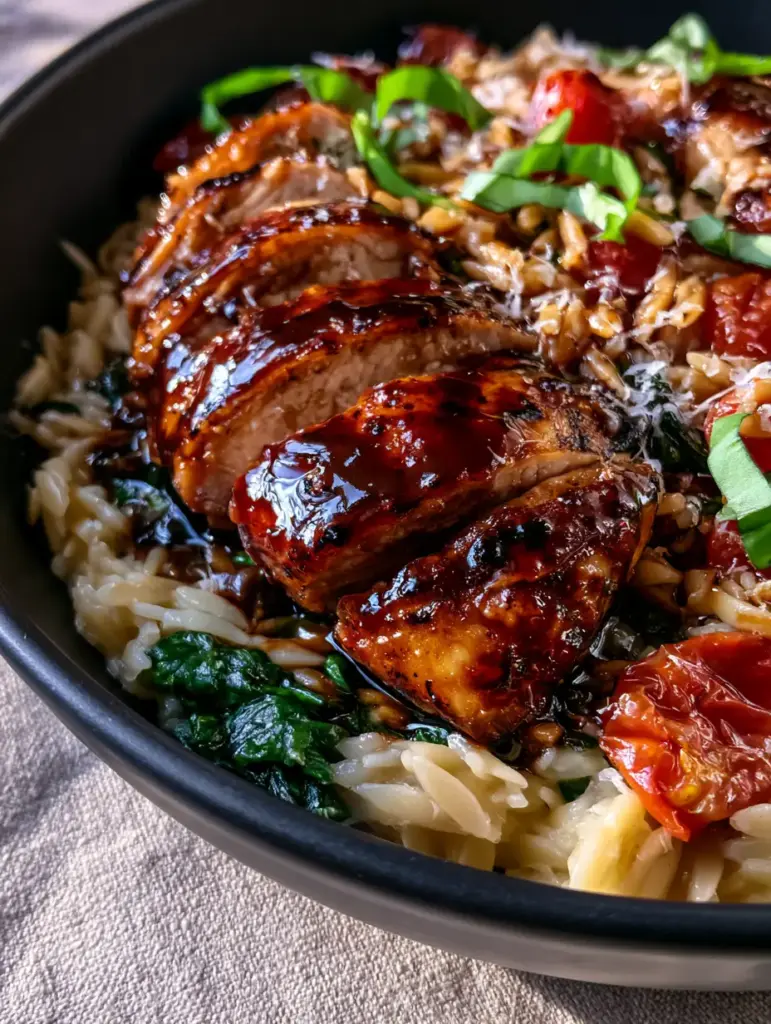
Fold in the baby spinach. The dark green leaves will wilt within 30 seconds. Slice your glazed chicken into thick strips, revealing the juicy interior against the dark mahogany exterior.
Place the chicken slices atop the bed of creamy orzo. Garnish with the fresh basil chiffonade and an extra dusting of micro-planed parmesan cheese to match the professional visual blueprint.
Expert Tips for Success
- Control the Heat: If your glaze starts to smell burnt, add a tablespoon of water immediately to slow the caramelization.
- Orzo Hydration: If the orzo looks too dry before it is fully cooked, add an extra 1/4 cup (60ml) of stock. It should be “flowy,” not a solid block.
- The Resting Period: Let the glazed chicken rest for at least 5 minutes before slicing. This keeps the juices inside and ensures the glaze sets into that mirror finish.
- Tomato Timing: Adding the tomatoes halfway through ensures they roasted tomatoes texture—blistered but not disintegrated.
How to Store and Reheat Your Leftovers
This balsamic chicken orzo is best served fresh, but it does keep well in the refrigerator for up to 3 days. Store it in an airtight glass container to preserve the flavors.
When reheating, the orzo will likely have absorbed the remaining moisture. Add a splash of stock or water before microwaving or reheating on the stovetop to restore that signature creaminess.
We do not recommend freezing this dish, as the texture of the cooked spinach and the cream-based pasta sauce can become grainy upon thawing.
What to Serve With This One-Pan Meal
Because this dish is quite rich and savory, it pairs beautifully with light, acidic sides. A crisp cucumber feta salad offers a refreshing crunch that cleanses the palate between bites of the balsamic glaze.
If you want to keep the meal purely Italian-inspired, a side of zucchini fritters can add a nice textural variety to the soft orzo. For those who love a bit of heat, serving some air fryer banana peppers on the side provides a spicy kick that cuts through the honey-balsamic sweetness.
Frequently Asked Questions
Yes, chicken thighs work beautifully and are more forgiving. They may require 2-3 extra minutes of cook time per side to ensure they reach an internal temperature of 165°F (74°C).
While fresh baby spinach is preferred for its delicate texture, you can use frozen. Just ensure you squeeze out all the excess moisture before adding it to the orzo, or the pasta will become watery.
The secret is the reduction time and the addition of a sweetener like honey. Simmer the balsamic vinegar until it reduces by half; the sugars will caramelize, creating that signature deep brown, glossy finish.
You don’t need an expensive traditional balsamic, but avoid ‘balsamic vinaigrette.’ A standard Balsamic Vinegar of Modena works perfectly as it has the right acidity to balance the honey.
Orzo becomes creamy through the release of starches and the addition of parmesan. If it’s dry, add a splash more chicken stock or a tablespoon of butter to help emulsify the sauce.
The Ultimate Balsamic Chicken Orzo Recipe Card
Balsamic Chicken Orzo: A Creamy One-Pan Masterpiece with Mahogany Glaze
Ingredients
Equipment
Method
- Heat oil in pan. Sear seasoned chicken breasts for 5-6 minutes per side until a mahogany crust forms. Remove.
- Add balsamic and honey to the pan. Simmer until thick and glossy. Coat chicken in glaze and remove.
- Toast orzo in the remaining glaze. Add stock and simmer. Add tomatoes halfway through until they burst.
- Stir in parmesan and spinach until wilted. Top with sliced chicken, basil, and extra cheese.
Notes
Don't over-reduce the glaze or it will turn into candy.
Closing & Call to Action
Mastering the balsamic chicken orzo is a rite of passage for any home cook looking to bridge the gap between “tasty” and “visually stunning.” The combination of the mahogany glaze and the creamy pasta creates a balanced, sophisticated profile that never fails to impress.
If you enjoyed this recipe, please leave a comment below and let us know how your glaze turned out! Don’t forget to follow us and share your creations on Pinterest.