There is something inherently comforting about a bowl of perfectly cooked orzo. This recipe transforms humble pasta grains into a high-end culinary experience, mimicking the velvety, glossy pale gold texture seen in the finest Italian trattorias.
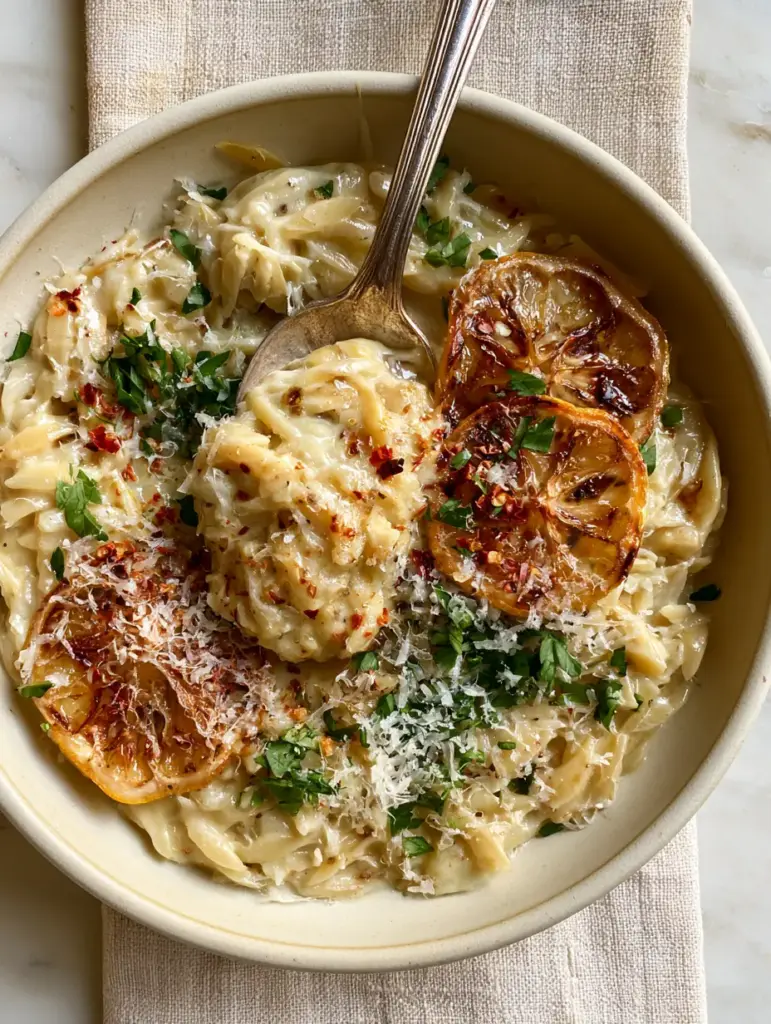
Imagine a shallow matte cream ceramic bowl filled to the brim with pasta so creamy it glistens under the light. Every grain of orzo is enveloped in a thick parmesan cream sauce, finished with a melted butter glaze that captures the essence of luxury in every bite.
To cut through the richness, we introduce charred lemon wheels and a vibrant dusting of fresh parsley. This dish isn’t just about taste; it is a sensory journey involving the “dripping consistency” of a heavy cream emulsion and the aromatic brightness of citrus oils released over high heat.
Why This Creamy Orzo Recipe Redefines Comfort Food
- Unmatched Texture: We use a specific liquid-to-pasta ratio to ensure the orzo remains al dente while creating a self-thickening sauce.
- Complex Flavor Profile: The combination of micro-planed parmesan cheese and charred lemons provides a sophisticated balance of salt, fat, and acid.
- Visually Stunning: With vibrant red chili flakes and dark green flat-leaf parsley, this dish looks exactly like a professional food photograph.
- Speed and Simplicity: Despite its gourmet appearance, this meal comes together in under 25 minutes, making it perfect for enthusiastic home cooks.
The Essential Ingredients for a Glossy Pale Gold Sauce
Dried Orzo Pasta: You will need 1.5 cups (300g) of high-quality durum wheat pasta. This shape is essential for capturing the “velvety” mouthfeel described in our visual blueprint.
Heavy Cream: Use 1 cup (240ml) of full-fat heavy cream. This is the foundation of the thick parmesan cream sauce and provides that iconic dripping consistency.
Parmesan Cheese: Select a block of Parmigiano Reggiano to micro-plane fresh. You will need 1 cup (90g) for the sauce and extra for the heavy dusting on top.
Unsalted Butter: 2 tbsp (30g) will be divided between the sauce and the final melted butter glaze. Butter adds a glossy sheen that oil alone cannot achieve.
Fresh Lemons: Two medium lemons are required—one for juice and one to be sliced into thin wheels for charring. The caramelization of the sugars in the lemon provides a deep, smoky citrus note.
Extra Virgin Olive Oil: A high-quality oil for the final drizzle. This adds a peppery finish and enhances the glistening texture of the grains.
Fresh Flat-Leaf Parsley: 1/4 cup (10g) finely chopped. This provides the “vibrant” green contrast against the pale gold sauce.
Seasonings: Cracked black pepper, red chili flakes, and kosher salt. These foundational elements bridge the gap between simple cream and a complex, tiered flavor profile.
Tools Required for Professional Pasta Presentation
To achieve the look of our “Visual Recipe Blueprint,” a few specific tools are necessary. A micro-plane is non-negotiable for achieving that cloud-like dusting of parmesan cheese. You will also need a heavy-bottomed stainless steel or cast-iron skillet to properly char the lemon slices without them sticking. Finally, serving in a shallow matte cream ceramic bowl will highlight the “glossy pale gold” hues of the finished orzo.

Mastering the Technique: How to Make the Perfect Orzo
Achieving the Ideal Al Dente Texture
Bring a large pot of salted water to a rolling boil. Add your orzo and cook for exactly 2 minutes less than the package directions suggest. This “under-cooking” is vital because the pasta will finish absorbing liquid in the cream sauce, ensuring it stays firm and doesn’t become mushy.
Emulsifying the Thick Parmesan Cream Sauce
In a large skillet over medium heat, melt 1 tbsp (15g) of butter. Pour in the 1 cup (240ml) of heavy cream and bring to a gentle simmer. Slowly whisk in the micro-planed parmesan cheese in small handfuls, stirring constantly until the sauce is thick, glossy, and pale gold. If the sauce appears too thick, add a splash of reserved pasta water to reach that perfect dripping consistency.
How to Properly Char Lemon Slices for Depth
Heat a separate small skillet over high heat with a tiny drop of oil. Place the thin lemon wheels in the pan and do not move them for 60-90 seconds. You are looking for deep brown, caramelized edges. Flip once, char the other side, and set aside. These will be the focal point of your orzo presentation.
The Final Glaze and Garnish
Toss the cooked pasta into the cream sauce, adding the remaining 1 tbsp (15g) of butter for the final glaze. Stir until the grains are coated and glistening. Plate immediately into your ceramic bowls. Top with the charred lemon wheels, a heavy dusting of extra parmesan, finely chopped parsley, cracked black pepper, and a pinch of vibrant red chili flakes. Finish with a delicate olive oil drizzle.
Pro-Level Culinary Secrets for Success
- Temper Your Cheese: Never add cold parmesan to boiling cream. Let the cheese sit at room temperature for 15 minutes to prevent the sauce from breaking or becoming grainy.
- The Pasta Water Hack: Always reserve 1/2 cup (120ml) of starchy pasta water. This is your “liquid gold” for adjusting the sauce’s viscosity.
- Searing the Lemons: Ensure the lemon slices are patted dry with a paper towel before charring. Excess moisture will cause them to steam rather than caramelize.
- Freshness Matters: Only use flat-leaf (Italian) parsley. Curly parsley lacks the necessary oil content to provide the aromatic punch this orzo requires.
Maintaining Freshness: Storage and Reheating Tips
This orzo is best enjoyed immediately to preserve the “velvety” texture. However, if you have leftovers, store them in an airtight container in the refrigerator for up to 3 days.
To reheat, do not use the microwave as it will cause the butter and cream to separate. Instead, place the orzo in a small saucepan over low heat and add a tablespoon of milk or water. Stir gently until the sauce regains its glossy, dripping consistency.
Perfect Pairings: What to Serve with Creamy Orzo
This dish is incredibly versatile. For a complete Mediterranean feast, serve it alongside our Balsamic Chicken or a portion of Lemon Garlic Shrimp.
If you prefer a vegetable-forward meal, it pairs beautifully with a Cucumber Feta Salad or a side of Crispy Zucchini Fritters. For those who love a bit of crunch, try it with our Crispy Parmesan Chicken to double down on the umami flavors.
Frequently Asked Questions about Cooking Orzo
To achieve the ‘thick, dripping consistency’ shown in the photos, heavy cream is required. Milk is too thin and will not emulsify with the parmesan to create the same velvety glaze.
The key is to cook the orzo in boiling water for 2 minutes less than the package instructions. It will finish cooking in the cream sauce, reaching a perfect al dente texture.
No, orzo is a small, rice-shaped pasta made from durum wheat. It has a much silkier texture than rice and is designed to be cooked al dente.
Use a micro-plane to create light, airy shavings of parmesan. This allows the cheese to melt instantly into the sauce without clumping, ensuring a smooth, glossy finish.
Charring lemons caramelizes their natural sugars, reducing bitterness and adding a smoky, concentrated citrus flavor that cuts through the rich parmesan sauce.
The Ultimate Creamy Orzo Recipe
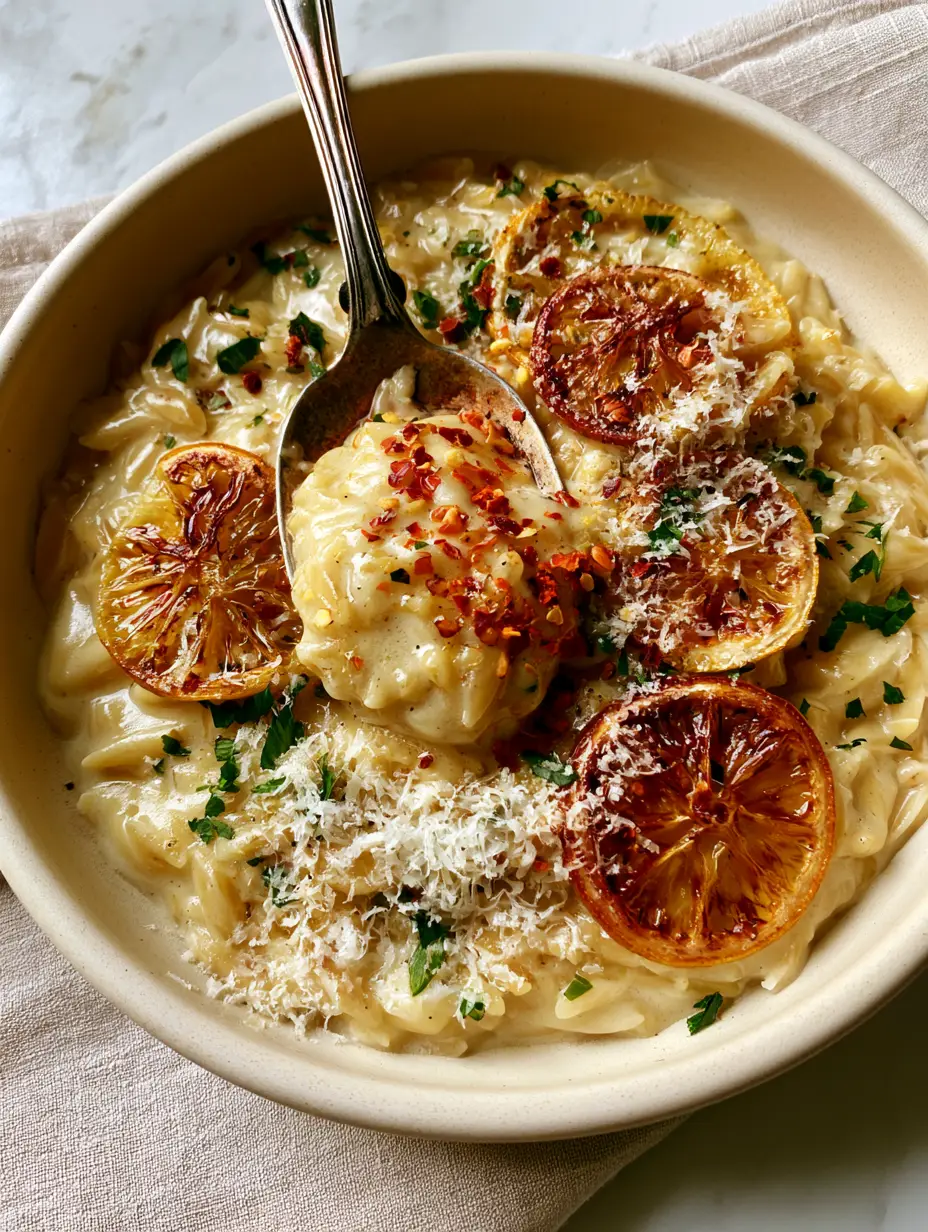
Orzo with Velvet Parmesan Cream and Charred Lemon
Ingredients
Equipment
Method
- Cook the orzo in salted boiling water for 2 minutes less than the package directions until al dente.
- Simmer heavy cream and 1 tbsp butter in a skillet. Whisk in micro-planed parmesan until a thick, pale gold sauce forms.
- In a hot skillet, sear lemon slices until deeply caramelized and charred on both sides.
- Toss the orzo into the sauce with the remaining butter. Stir until glossy and coated in a dripping consistency.
- Plate in bowls and top with charred lemons, parsley, chili flakes, pepper, and an olive oil drizzle.
Notes
Tip 2: Ensure the skillet is very hot before adding lemon wheels to get a perfect char.
Closing & Call to Action
Creating this orzo with its thick parmesan cream sauce and charred lemon highlights is a surefire way to impress any guest. The balance of the glossy pale gold sauce and the vibrant garnishes makes it a true “visual blueprint” of culinary success.
If you enjoyed this recipe, please leave a comment below and tell us how your charred lemons turned out! Don’t forget to follow us on Pinterest and save this recipe to your favorite boards for later.