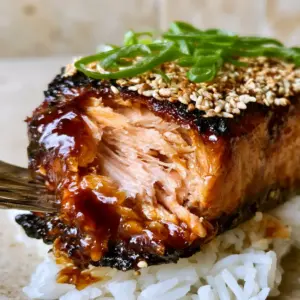
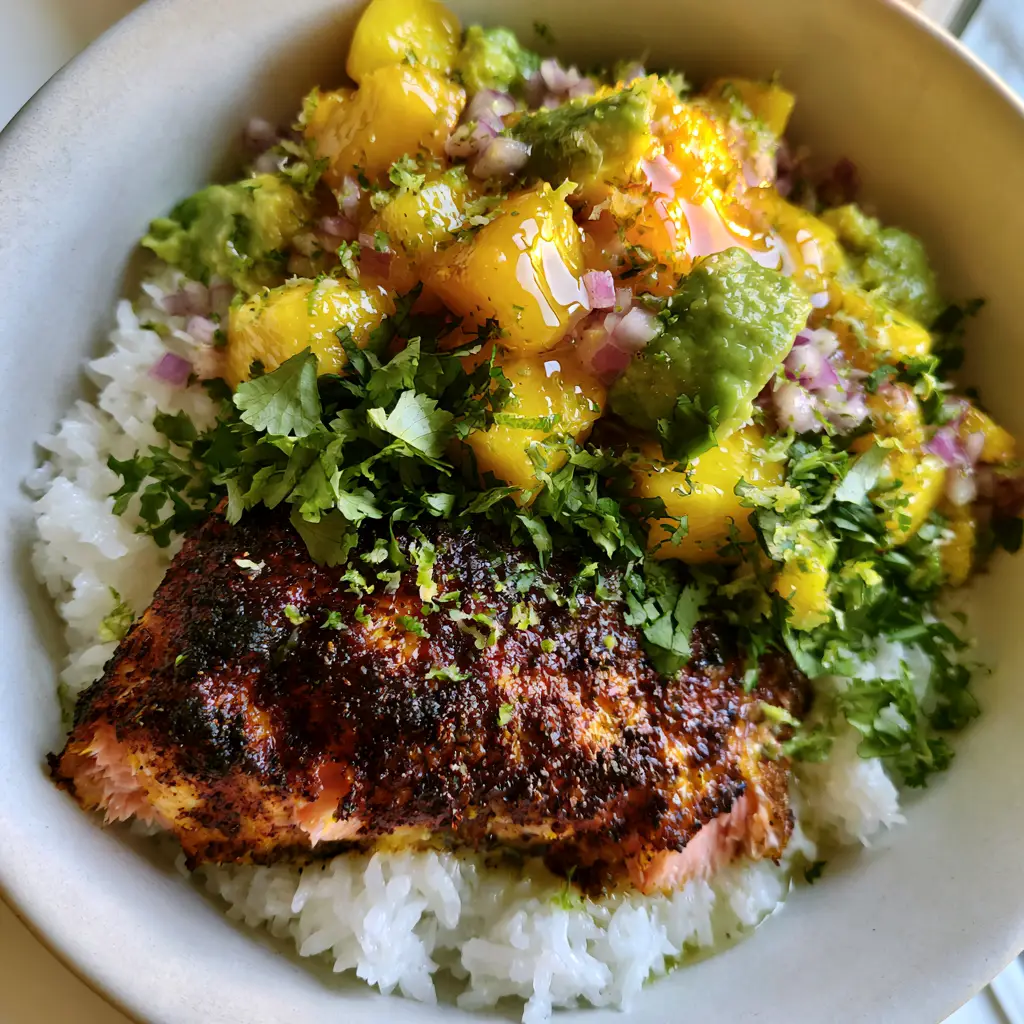
There is a specific culinary magic that happens when the smoky, intense heat of a blackened crust meets the cooling, buttery sweetness of tropical fruit. This salmon with mango salsa isn’t just a meal; it is a masterclass in flavor contrast and textural harmony. Imagine a thick, center-cut salmon fillet, its exterior transformed into a dark mahogany caramelized crust that shatters slightly under your fork to reveal a moist, coral-pink interior.
Every bite of this salmon with mango salsa is balanced by a fluffy bed of steaming white jasmine rice that absorbs the glistening, translucent lime-honey drizzle. We are moving beyond the basic weeknight dinner and into the realm of gourmet grain bowls that look as though they were plucked straight from a high-end coastal bistro. The vibrant colors of glossy mango cubes and bright green avocado make this dish a visual powerhouse.
If you have ever struggled to achieve that professional-level sear or wondered how to keep your fruit salsa from becoming soggy, this guide is for you. We will dive deep into the science of the Maillard reaction and the structural importance of choosing the right aromatics. Whether you are looking for last minute dinners or a centerpiece for a weekend gathering, this recipe delivers on every sensory promise.
Why This Tropical Salmon Bowl Works
- Textural Contrast: The crunch of the mahogany spice rub against the creamy avocado chunks creates a sophisticated mouthfeel.
- Balanced Acidity: The micro-planed lime zest and fresh lime juice cut through the rich fats of the salmon and avocado.
- Aromatic Foundation: Steamed jasmine rice provides a fragrant, neutral base that allows the minced red onion and fresh cilantro to pop.
- Visual Appeal: The contrast between the dark salmon and the vibrant fruit salsa creates a “smartphone-ready” aesthetic every single time.
The Anatomy of Flavor: Essential Ingredients
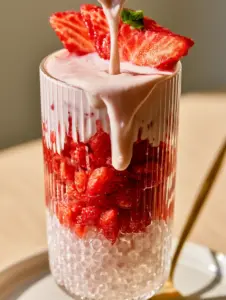
To achieve the specific results seen in our visual blueprint, each ingredient serves a scientific and aesthetic purpose. We are not just tossing things in a bowl; we are building layers of flavor. If you enjoy this flavor profile, you might also love exploring our mango boba recipe for a sweet, tropical finish to your meal.
The Protein and The Rub
Salmon Fillets: Choose center-cut fillets of approximately 6 oz (170g) each. The uniform thickness ensures that the interior remains coral-pink while the exterior develops that iconic mahogany crust.
Blackened Spice Blend: A mixture of smoked paprika, garlic powder, onion powder, and a touch of cayenne. This creates the dark, caramelized exterior without burning the delicate fish flesh.
Avocado Oil: 2 tbsp (30ml) of a high-smoke point oil is non-negotiable. Using butter or olive oil at the temperatures required for blackening will result in acrid smoke rather than a clean sear.
The Tropical Salsa Components
Fresh Mango: 1 large (approx. 300g) ripe mango, cubed. The sugars in the mango provide the necessary sweetness to balance the heat of the blackened spices.
Creamy Avocado: 1 medium (150g) avocado. The healthy fats provide a luxurious coating for the rice and salmon, acting almost like a built-in sauce.
Red Onion: 1/4 cup (40g) finely minced. This provides a sharp, sulfurous bite that prevents the salsa from being one-dimensionally sweet.
Fresh Cilantro: 1/2 cup (15g) torn leaves. Cilantro adds a citrusy, herbal top note that lightens the entire grain bowl.
The Glaze and Garnish
Honey: 1 tbsp (21g) of high-quality liquid honey. This acts as the thickener for our translucent drizzle, giving the fruit a glossy, jewel-like appearance.
Fresh Lime: You will need both the juice and the micro-planed zest. The zest contains essential oils that provide a much deeper lime aroma than the juice alone.
Must-Have Tools for Gourmet Results
Achieving the perfect salmon with mango salsa requires a few specific tools to ensure the textures match our visual prompt. A heavy-bottomed cast iron or stainless steel skillet is essential for the salmon’s crust. Unlike non-stick pans, these materials allow for the intense heat needed for caramelization.
For the salsa, a very sharp chef’s knife is required to create clean, glossy cubes of mango and avocado rather than mashing them. Finally, a microplane zester is the only way to achieve the fine, wispy lime zest that garnishes the final dish without including the bitter white pith.
Mastering the Mahogany Sear: Step-by-Step Instructions
The secret to a world-class salmon with mango salsa lies in the temperature control and the patience of the cook. Follow these steps to ensure your salmon flakes perfectly every time.
Step 1: Preparing the Aromatic Rice Base
Rinse 1.5 cups (300g) of jasmine rice under cold water until the water runs clear. This removes excess surface starch, ensuring the rice is fluffy and individual rather than gummy. Combine with 2.25 cups (540ml) of water and a pinch of salt. Bring to a boil, then reduce to a low simmer, covered, for 15 minutes. Let it stand for 5 minutes before fluffing with a fork.
Step 2: Crafting the Vibrant Mango Salsa
In a minimalist white ceramic bowl, combine your cubed mango, avocado chunks, and minced red onion. Gently fold in the torn cilantro leaves. The key is to avoid over-mixing, which can cause the avocado to oxidize and turn the salsa muddy. The colors should remain distinct and vibrant.
Step 3: Achieving the Blackened Mahogany Crust
Pat the salmon fillets bone-dry with paper towels. This is the most important step for a good sear; moisture is the enemy of caramelization. Dredge the flesh side of the salmon heavily in your spice rub. Heat your oil in the skillet over medium-high heat until it just begins to shimmer.
Place the salmon fillets flesh-side down. Do not move them for at least 3-4 minutes. You are looking for a deep, dark mahogany color to develop. Flip the fillets and cook for another 2-3 minutes for a medium-rare to medium finish. The interior should be moist and coral-pink.
Step 4: The Translucent Honey-Lime Drizzle
In a small bowl, whisk together 1 tbsp (15ml) of fresh lime juice with 1 tbsp (21g) of liquid honey. If the honey is too thick, microwave it for 5 seconds. This creates a glistening, translucent glaze that will be drizzled over the entire bowl just before serving.
Pro-Tips for Success
- Room Temperature Protein: Take your salmon out of the fridge 15-20 minutes before cooking. This ensures the center warms through without overcooking the exterior.
- Mango Ripeness: Use a mango that gives slightly to pressure but isn’t mushy. If it’s too ripe, you won’t get those clean, glossy cubes.
- The Zest Factor: Always zest your lime before juicing it. It is nearly impossible to zest a spent, squeezed lime half.
- Internal Temperature: Use an instant-read thermometer. Pull the salmon at 125°F (52°C) for a perfect medium-rare that will carry over to 130°F (54°C).
Storing and Reheating Your Grain Bowl
While this salmon with mango salsa is best served fresh to maintain the temperature contrast between the hot fish and cold salsa, you can store components separately. The salmon will stay fresh in an airtight container for up to 2 days. To reheat, use a low oven (300°F/150°C) to prevent the fish from drying out.
The mango salsa is best eaten within 24 hours. The lime juice will help preserve the avocado’s color, but eventually, the acid will begin to break down the fruit’s texture. If you are looking for other seafood inspiration that stores well, check out our lemon pepper grilled cod recipe.
What to Serve with Salmon and Mango Salsa
This dish is a complete meal on its own, but you can elevate the experience with strategic pairings. If you want to keep the meal light, a simple cucumber salad or a side of Moroccan couscous can add extra volume without competing with the bold flavors of the salmon.
For those who love a salmon-focused diet, alternating this recipe with a savory teriyaki salmon provides a great balance between tropical and umami-forward profiles. If you have leftover salmon, flaking it into creamy salmon and orzo the next day is a brilliant way to reduce food waste while enjoying a completely different flavor profile.
Frequently Asked Questions
While possible, frozen mango often becomes mushy when thawed. For the glossy cubes seen in the blueprint, fresh, slightly firm mango is highly recommended.
The mahogany color comes from the smoked paprika and sugars in the spice rub caramelizing. Use medium-high heat and a high-smoke point oil like avocado oil, and avoid moving the fish once it hits the pan.
The citric acid in the lime juice and lime zest acts as a natural preservative. Coat the avocado chunks gently in the lime-honey drizzle immediately after cutting.
Use an instant-read thermometer. For a moist, coral-pink interior, pull the salmon at 125°F (52°C). The fish will continue to cook slightly while resting.
The Complete Salmon with Mango Salsa Recipe
Salmon with Mango Salsa: The Ultimate Pan-Seared Tropical Grain Bowl
Ingredients
Equipment
Method
- Rinse jasmine rice until water is clear. Cook with 2.25 cups water for 15 minutes, then fluff.
- Gently toss cubed mango, avocado, red onion, and cilantro in a bowl. Do not overmix.
- Press spice rub into dry salmon fillets. Sear in hot oil flesh-side down for 4 minutes until a mahogany crust forms.
- Flip fillets and cook 2-3 more minutes until interior is coral-pink and moist.
- Whisk honey and lime juice. Drizzle over the bowl and top with micro-planed lime zest.
Notes
Always zest the lime before juicing for maximum aroma.
Closing & Call to Action
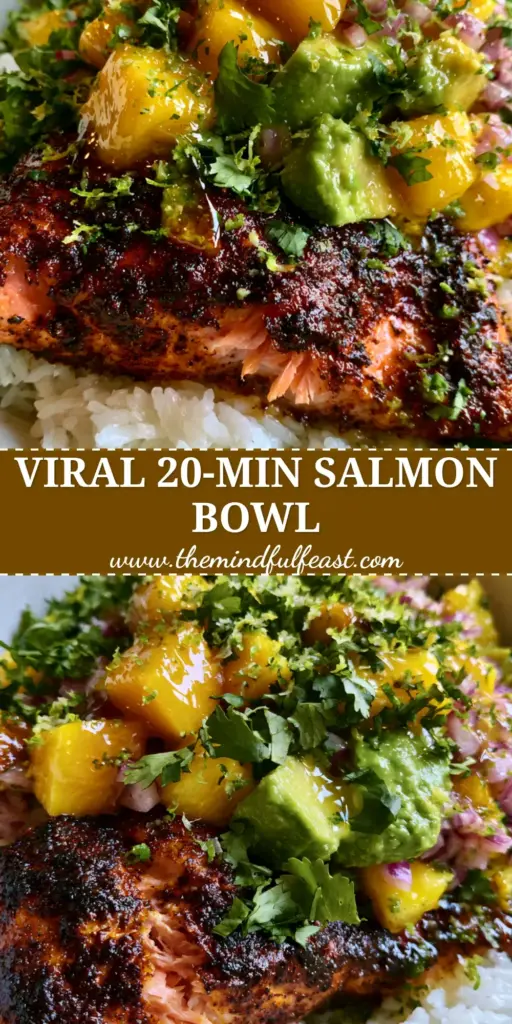
This salmon with mango salsa represents the perfect intersection of health-conscious eating and gourmet execution. The combination of the mahogany blackened crust and the glistening lime-honey drizzle creates a dish that is as satisfying to eat as it is beautiful to look at. We hope this becomes a staple in your kitchen for those nights when you want something truly special without hours of labor.
If you enjoyed this recipe, please leave a comment below and let us know how your mahogany sear turned out! Don’t forget to share your creations and follow us on Pinterest for more culinary inspiration. Happy cooking!