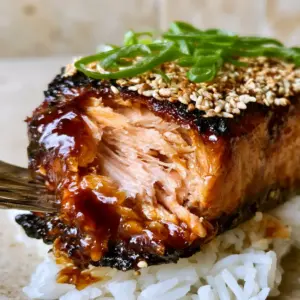
There is nothing quite like the first pull of a fork through a perfectly executed Teriyaki Salmon fillet. As the tines break through the deeply caramelized, bubbling dark amber glaze, they reveal the moist, flaky, pale pink interior layers that define a chef-quality seafood dish. This recipe isn’t just about flavor; it is about the structural integrity of a glaze that reflects light and a salmon crust that offers a satisfying, charred crunch.
When you prepare Teriyaki Salmon at home, the goal is to replicate that high-end Japanese bistro aesthetic. We are looking for that specific morning-light glisten on the surface, where small droplets of clear oil and glaze mingle on the charred edges of the fish. This dish is served on a minimal bed of fluffy, individual grains of steamed white jasmine rice to ensure every drop of that umami-rich sauce is captured and enjoyed.
By focusing on the science of the Maillard reaction and the reduction of sugars, we can achieve a result that looks exactly like a professional food photograph. Whether you are a seasoned home cook or a beginner, following these sensory cues—from the sound of the sizzle to the smell of toasted sesame—will guide you to the ultimate Teriyaki Salmon experience.
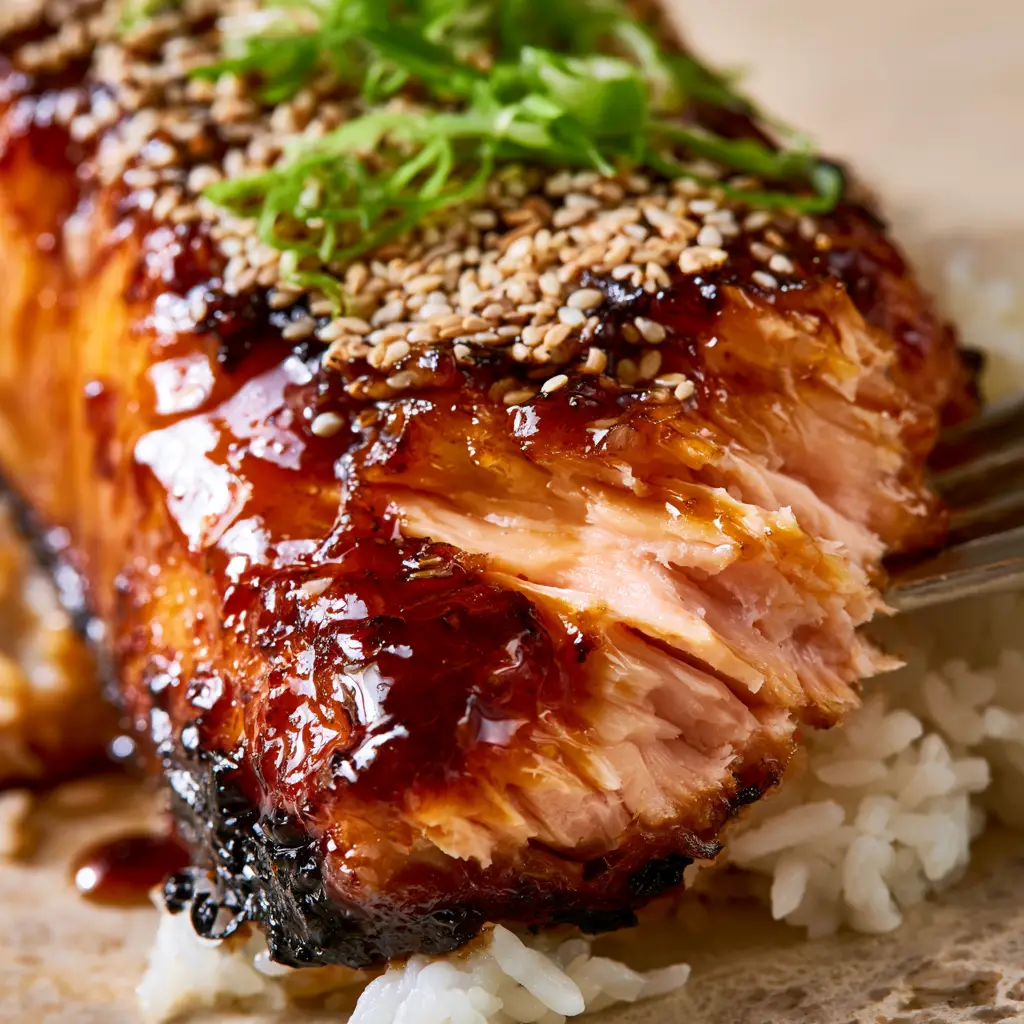
The Secrets Behind This Ultra-Flaky Teriyaki Salmon
- The “Glass-Like” Glaze: A multi-stage reduction process creates a thick, dark amber coating that clings to the fish without running off.
- Textural Contrast: We achieve a moist, pale pink interior protected by a high-heat sear that produces caramelized crispy edges.
- Aromatic Garnishes: A heavy dusting of toasted white sesame seeds and paper-thin green scallion rings adds both visual vibrance and essential crunch.
- Precision Flaking: By monitoring internal temperatures, we ensure the salmon pulls apart into clean, moist layers rather than crumbling.
Essential Components for the Perfect Umami Balance
Fresh Salmon Fillets (6 oz / 170g each): Look for thick-cut center fillets. A thicker fillet allows for a deep exterior sear while keeping the interior moist and pale pink.
Low-Sodium Soy Sauce (1/2 cup / 120ml): This provides the foundational salty-umami base. Using low-sodium allows us to reduce the sauce into a thick glaze without it becoming overly salty.
Dark Brown Sugar (1/4 cup / 50g): The molasses content in dark brown sugar is critical for achieving that deep, dark amber color and the bubbling viscosity seen in the blueprint.
Mirin (2 tbsp / 30ml): This Japanese rice wine adds a subtle acidity and a distinct luster to the finished glaze, giving it that reflective, glistening quality.
Fresh Ginger and Garlic (1 tbsp / 15g each): Grating these aromatics directly into the sauce ensures their oils infuse the glaze, providing a sharp contrast to the sweet sugar.
Toasted White Sesame Seeds (2 tsp / 10g): These provide the “heavy dusting” required for the visual blueprint and a nutty finish that complements the charred fish.
Fresh Green Scallions (2 stalks): Only the bright green hollow tops are used, sliced into very thin rings to provide a pop of color against the dark sauce.
Jasmine Rice (1 cup / 185g): We use jasmine for its floral aroma and ability to remain as individual, fluffy grains when steamed correctly.
Avocado Oil (1 tbsp / 15ml): A high-smoke point oil is essential foundational science for searing salmon without burning the delicate fats.
Professional Tools for Superior Searing
To achieve the specific “charred edges” and “bubbling glaze” mentioned in the visual prompt, a heavy-bottomed stainless steel or cast-iron skillet is preferred. These pans retain heat more effectively than thin aluminum, allowing for the Maillard reaction to occur rapidly. You will also need a fish spatula—a thin, flexible metal tool—to flip the fillets without damaging the delicate, flaky layers. A microplane is recommended for grating the ginger and garlic into a fine paste, ensuring a smooth, grit-free glaze.
Mastering the Teriyaki Salmon Step-by-Step
1. Preparing the Aromatic Jasmine Base
Rinse 1 cup (185g) of jasmine rice under cold water until the water runs clear. This removes excess surface starch, ensuring the rice finishes as individual grains rather than a sticky mass. Combine with 1.5 cups (350ml) of water and a pinch of salt. Bring to a boil, then reduce to a low simmer, cover, and cook for 15 minutes. Let it rest, covered, for 5 minutes before fluffing with a fork.
2. Crafting the Dark Amber Reduction
In a small saucepan, combine the soy sauce, dark brown sugar, mirin, grated ginger, and garlic. Bring the mixture to a gentle simmer over medium heat. You are looking for the sauce to reduce by about half, until it reaches a “nappe” consistency—meaning it coats the back of a spoon. It should be thick, dark, and look like liquid amber. If you want a similar bold profile in a different protein, you might enjoy our expertly seared steak.
3. Achieving the Perfect Sear
Pat the salmon fillets extremely dry with paper towels. Season lightly with salt, but remember the glaze is salty. Heat the avocado oil in your skillet over medium-high heat until it begins to shimmer. Place the salmon in the pan. Press down lightly with your spatula for 10 seconds to ensure even contact. Sear for 3-4 minutes until a deep golden-brown, caramelized crust forms on the bottom.
4. The Glazing and Caramelization Phase
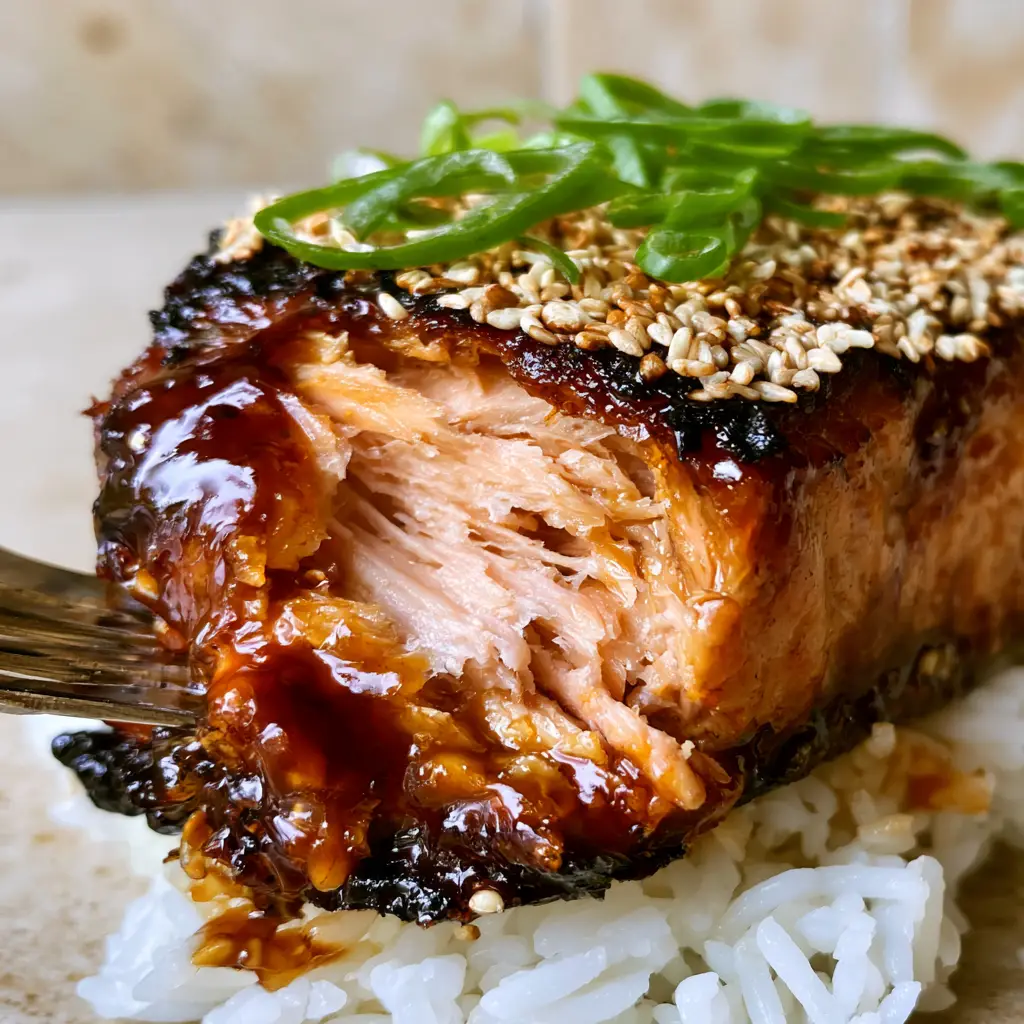
Flip the salmon carefully. The interior should still be pale pink and undercooked. Pour the reduced teriyaki glaze into the pan. As the glaze hits the hot metal, it will begin to bubble vigorously. Use a spoon to continuously baste the salmon with the bubbling sauce. This creates the “thick, bubbling, dark amber glaze” described in our blueprint. Cook for another 2-3 minutes until the salmon reaches an internal temperature of 125°F (52°C) for medium-rare.
5. The Final Visual Flourish
Transfer the salmon to the bed of jasmine rice. Immediately apply a heavy dusting of toasted white sesame seeds while the glaze is still tacky. Follow with a generous sprinkle of the thinly sliced green scallion rings. The heat from the fish will slightly soften the scallions, releasing their aroma without losing their bright green color. For another vibrant dish, consider serving this alongside a crispy beet and cucumber salad.
Expert Tips for Culinary Success
- Room Temperature Salmon: Take your fish out of the fridge 15 minutes before cooking. This ensures the center warms up perfectly while the exterior chars, preventing a cold, raw middle.
- Don’t Move the Fish: Once the salmon hits the pan, leave it alone. Moving it prevents the formation of those coveted caramelized crispy edges.
- Glaze Management: If the glaze becomes too thick in the pan, add a teaspoon of water to loosen it. It should be viscous and reflective, not sticky or burnt.
- Check the Flake: Use a fork to gently pull at the thickest part of the fillet. If it separates into moist, translucent layers, it is ready.
Optimal Storage and Reheating Methods
Teriyaki Salmon is best enjoyed immediately to preserve the contrast between the crispy edges and the moist interior. However, leftovers can be stored in an airtight container in the refrigerator for up to 2 days. To reheat, avoid the microwave as it will toughen the proteins. Instead, place the salmon in a covered skillet over low heat with a splash of water or extra glaze until just warmed through. If you enjoy leftovers, you might also like our creamy garlic beef pasta.
What to Serve with Teriyaki Salmon
To balance the rich, sweet, and salty notes of the salmon, serve it with something bright and acidic. A simple steamed bok choy or a vinegar-based slaw works wonders. For those who enjoy a variety of textures in their meal, a side of chilled strawberry sago provides a refreshing, sweet finish to an umami-heavy dinner. If you are looking for more pasta-based comfort, our chorizo pasta offers a different kind of savory depth.
Frequently Asked Questions
While possible, bottled sauces often lack the viscosity and deep amber color of a homemade reduction. For the visual result shown, a homemade blend of soy, dark brown sugar, and mirin is superior.
The key is reduction and the use of mirin. Simmering the soy sauce and brown sugar until it reaches a nappe consistency, then basting it over the salmon in a hot pan, creates that bubbling, glossy finish.
Ensure the pan and oil are shimmering hot before adding the fish, and pat the salmon completely dry with paper towels to prevent steam from forming between the fish and the pan.
Jasmine rice is ideal because its individual, fluffy grains provide a clean, aromatic base that absorbs the glaze without becoming mushy like shorter-grain varieties.
If the salmon is overcooked, the proteins tighten and dry out. Aim for an internal temperature of 125°F (52°C) to ensure the interior remains moist, pale pink, and easily separable by a fork.
The H1 Title From The Article
Teriyaki Salmon with a Thick Amber Glaze and Crispy Edges
Ingredients
Equipment
Method
- Cook rinsed jasmine rice in 1.5 cups (350ml) water until fluffy and individual grains are separated.
- Simmer soy sauce, sugar, mirin, ginger, and garlic in a saucepan until reduced by half into a dark amber glaze.
- Sear salmon in a hot skillet with oil for 3-4 minutes per side until charred edges form and interior is pale pink.
- Pour the glaze over the salmon in the pan, basting until bubbling and thick. Top with sesame seeds and scallions.
Notes
Ensure the salmon is patted dry before searing to achieve maximum crispiness.
Bring the Bistro to Your Kitchen
This Teriyaki Salmon recipe proves that with the right technique, you can achieve restaurant-quality results at home. The combination of a thick, dark amber glaze and the moist, flaky texture of the salmon creates a sensory experience that is as beautiful as it is delicious. We invite you to share your results and tag us in your photos! Don’t forget to follow us on Pinterest for more visually stunning recipe inspiration.