There is a specific, almost magical moment in the kitchen when a lid is lifted, and a cloud of fragrant, spice-scented steam billows upward, revealing a landscape of golden grains. This Moroccan Couscous isn’t just a side dish; it is a masterclass in texture and aromatics, designed to be as visually stunning as it is delicious.
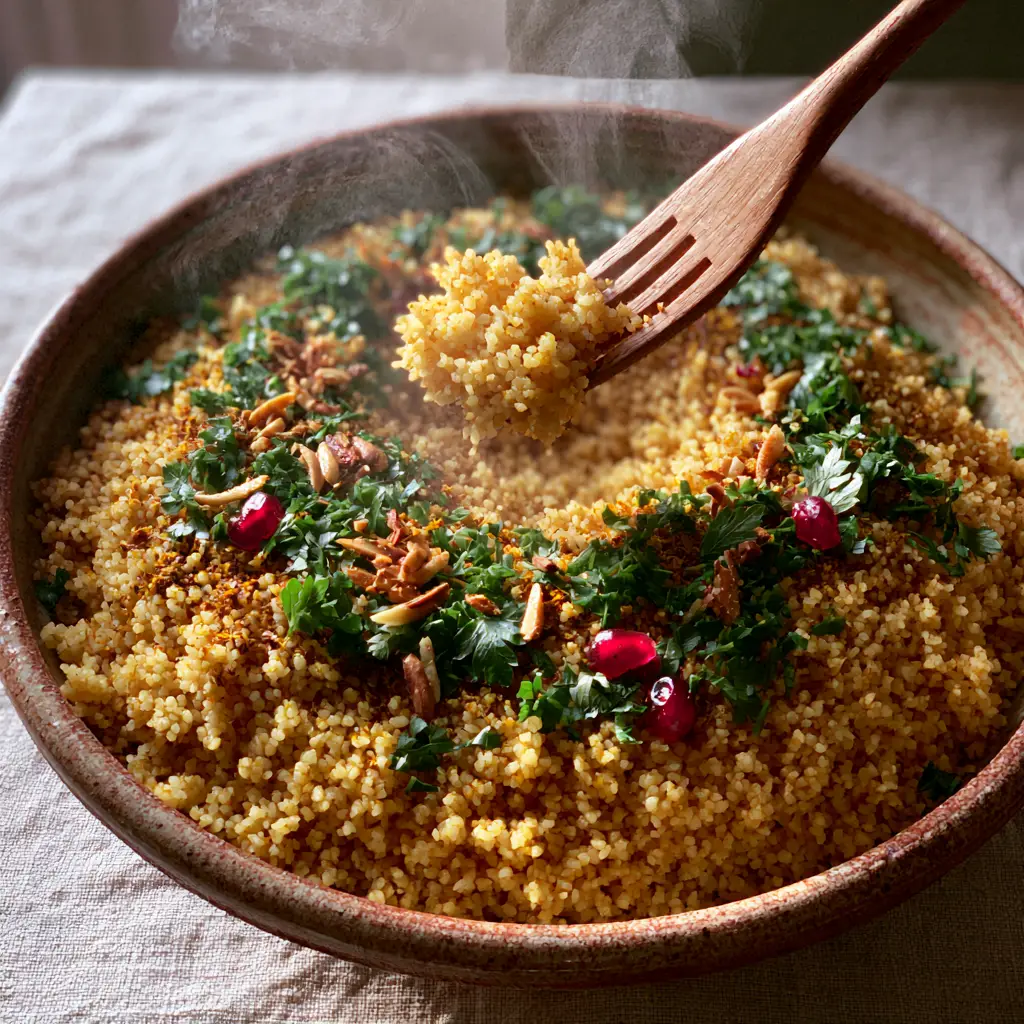
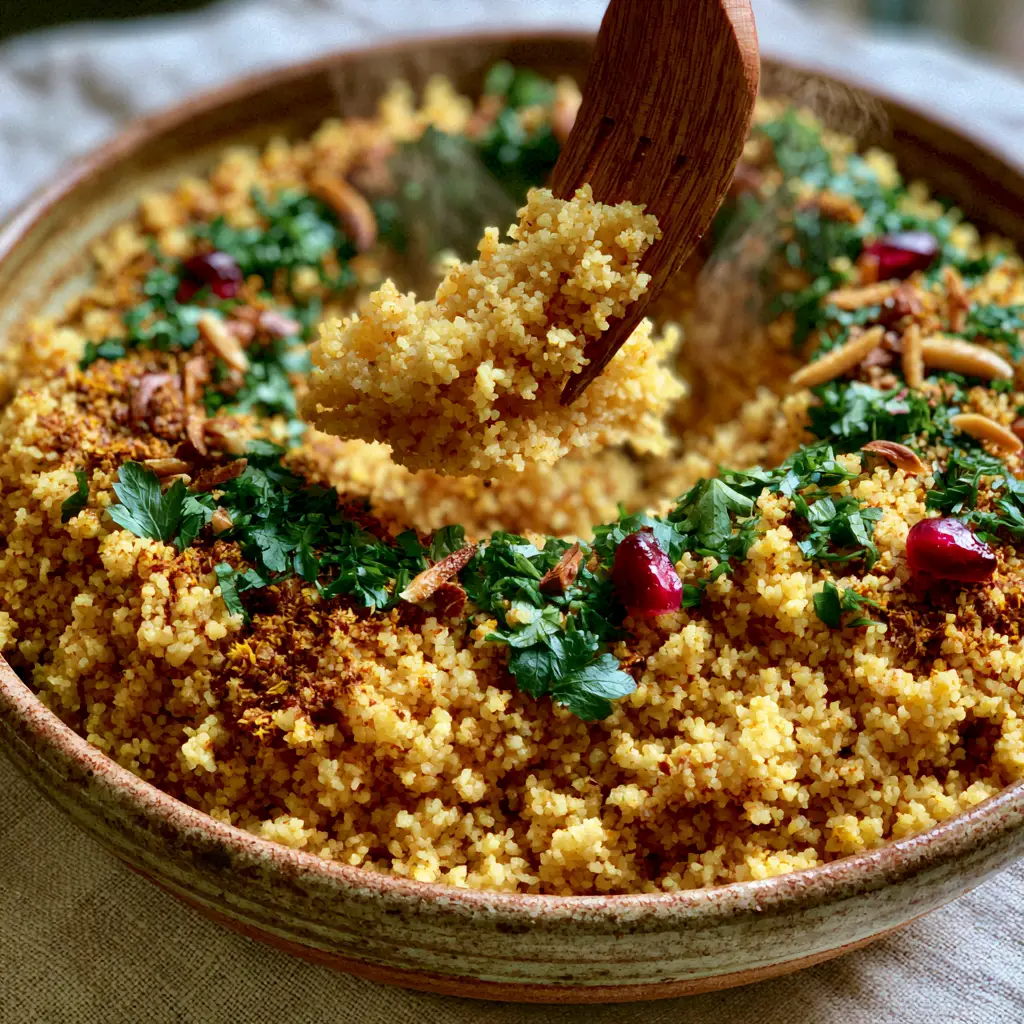
Imagine individual semolina grains, each one perfectly separated and glowing with the amber hue of authentic Ras el Hanout. The visual contrast is striking: the deep emerald of freshly chopped parsley, the ivory crunch of toasted slivered almonds, and the glistening, ruby-red pop of pomegranate arils scattered across a rustic ceramic bowl.
Whether you are looking for the perfect accompaniment to authentic Moroccan Harira soup or a vibrant base for a festive meal, this recipe delivers professional-grade results. We are moving beyond mushy, clumped grains and into the realm of light, airy perfection that practically floats off a wooden fork.
The Visual Allure of Perfectly Fluffed Moroccan Couscous
To achieve the “handheld smartphone photo” quality seen in high-end food photography, every element of this dish must serve a dual purpose of flavor and aesthetic brilliance. The golden color isn’t just for show—it represents a deep saturation of North African spices that wake up the palate.
- Individual Grain Definition: Each grain of semolina remains distinct and airy, never clumping into a dense mass.
- Aromatic Amber Glow: The Ras el Hanout provides a rich, warm color palette that suggests earthy heat and complexity.
- Textural Contrast: The crunch of toasted almonds meets the juicy burst of pomegranate, creating a multi-sensory experience.
- Fresh Herb Finish: Finely chopped parsley adds a “high-definition” green pop that cuts through the warmth of the spices.
The Aromatic Components: Ingredients for Success
Creating the ultimate Moroccan Couscous requires a balance of high-quality semolina and foundational fats that ensure the grains don’t stick. The quality of your spice blend is the difference between a flat dish and one that transports you to the souks of Marrakech.
Dried Instant Semolina Couscous: 1 ½ cups (250g) of medium-grain semolina. This is the structural heart of the dish, prized for its ability to absorb liquid rapidly while maintaining a tender bite.
Boiling Vegetable Broth or Water: 1 ½ cups (355ml) of liquid. Using a high-quality broth adds an invisible layer of umami that water alone cannot provide.
Extra Virgin Olive Oil: 2 tbsp (30ml) of robust oil. This is a foundational “invisible” ingredient; coating the dry grains in oil before adding liquid prevents the starches from bonding and clumping.
Ras el Hanout Spice Blend: 1 ½ tsp (4g) of this “top of the shop” spice mix. Look for blends containing cinnamon, cumin, coriander, and turmeric to achieve that signature amber glow.
Toasted Slivered Almonds: ¼ cup (35g) of almonds, toasted until golden-brown. These provide the essential crunch and nutty undertone required for the visual recipe blueprint.
Fresh Pomegranate Arils: ¼ cup (45g) of ruby-red seeds. These provide a necessary acidity and a vibrant color contrast against the golden semolina.
Fresh Flat-Leaf Parsley: 3 tbsp (10g) finely chopped. The parsley must be chopped just before serving to maintain its bright green hue and volatile oils.
Fine Sea Salt: ½ tsp (3g) or to taste. Salt is the scientific catalyst that opens up the floral notes of the Ras el Hanout.
Essential Kitchen Tools for Flawless Texture
While the ingredients are paramount, the tools you use dictate the final “cloud-like” texture. You don’t need a traditional steamer (couscoussier) for this modern adaptation, but you do need precision.
A heavy-bottomed saucepan with a tight-fitting lid is non-negotiable for the steeping process. The lid traps the rising steam, ensuring every grain hydrates evenly from the core outward.
A stainless steel or wooden fork is your most important tool for the “fluffing” stage. Avoid using a spoon, which tends to mash the delicate grains together; a fork mimics the traditional hand-rubbing technique used by Moroccan experts.
Finally, a wide, rustic ceramic bowl is ideal for serving. The wide surface area allows the steam to rise softly without condensing back into the grains, preserving that airy, non-clumpy texture.
A Step-by-Step Guide to the Fluffiest Grains
Following these steps ensures your Moroccan Couscous looks exactly like the professional visual prompt: individual grains, rising steam, and vibrant garnishes.
Step 1: The Flavor Infusion and Oil Coating
In your rustic ceramic bowl or a small pot, combine the dry semolina couscous, Ras el Hanout, and sea salt. Drizzle the extra virgin olive oil over the dry mixture and use your fingers or a fork to rub the oil into the grains.
This “coating” step is the professional secret to separation. By surrounding each grain with a microscopic layer of fat, you ensure they cannot stick together once the boiling liquid is introduced.
Step 2: The Steeping Process
Bring your vegetable broth or water to a rolling boil. Pour the 1 ½ cups (355ml) of boiling liquid directly over the prepared semolina and immediately cover the bowl tightly with plastic wrap or a heavy lid.
Let the mixture sit undisturbed for exactly 5 to 7 minutes. During this time, the grains undergo a controlled hydration process; the heat softens the semolina while the Ras el Hanout blooms, tinting the liquid and the grains an amber gold.
Step 3: Toasting the Garnish
While the couscous steeps, place the slivered almonds in a dry skillet over medium heat. Shake the pan constantly until the almonds turn a light tan and release a nutty aroma—usually about 3-4 minutes.
Remove them from the heat immediately, as they can burn in seconds. Finely chop your parsley and de-seed your pomegranate during this window to ensure maximum freshness for the final assembly.
Step 4: The Aeration (Fluffing)
Remove the lid and witness the rising steam. Using a wooden fork, gently rake the surface of the couscous, breaking up any large clusters with a light, lifting motion.
Continue fluffing until the grains appear light, airy, and completely separated. You should be able to lift a “cloud” of grains with the fork, just like in the visual recipe blueprint.
Pro-Level Secrets for Culinary Excellence
To elevate this dish from a simple side to a centerpiece, pay attention to the sensory cues. The steam should smell of warm cinnamon and earthy cumin, and the grains should feel tender but not mushy between your teeth.
- Temperature Control: Never boil the couscous *in* the water like pasta; this results in a gummy texture. Steeping is the only way to achieve individual grain definition.
- The Resting Phase: If the grains feel a bit firm, cover them for another 2 minutes. The residual heat is your best friend.
- Vibrant Colors: If your pomegranate arils look dull, pat them dry with a paper towel before garnishing. This prevents the red juice from bleeding into the golden grains.
- Citrus Brightness: For an extra layer of flavor, a tiny squeeze of lemon juice just before serving can heighten the Ras el Hanout’s complexity.
Optimal Preservation and Reheating Techniques
Moroccan Couscous is an excellent candidate for last minute dinners because it stores remarkably well. To store, allow the couscous to cool completely at room temperature before transferring it to an airtight container.
It will stay fresh in the refrigerator for up to 4 days. When reheating, avoid the microwave if possible, as it can dry out the semolina. Instead, place the grains in a steamer basket for 2 minutes or sauté them briefly in a pan with a teaspoon of water and a lid to re-introduce moisture.
Freezing is possible for up to 3 months. To defrost, let it sit in the fridge overnight and fluff it vigorously with a fork before serving to restore the airy texture.
Elegant Pairings for a Complete Feast
This fragrant couscous acts as a versatile canvas for a variety of bold, global flavors. Its ability to absorb sauces makes it the perfect partner for saucy stews and grilled proteins.
For a tropical twist, serve it alongside spicy Brazilian coconut chicken or a hearty Caribbean coconut chicken stew. The sweetness of the coconut milk beautifully balances the earthy Ras el Hanout spices.
If you prefer grilled options, the couscous provides a light base for lemon pepper grilled cod, where the citrus notes of the fish complement the pomegranate arils. It also works wonderfully as a bed for roasted vegetables in a vegetarian feast.
Common Culinary Inquiries (FAQ)
Yes! You can prepare it up to 4 days in advance. Store it in an airtight container and fluff it with a fork again before serving. It can be eaten cold in salads or reheated gently.
The secret is two-fold: first, coat the dry grains in olive oil before adding liquid to create a barrier. Second, always use a fork to fluff the grains, as a spoon will mash them together.
Standard couscous is made from semolina wheat, so it contains gluten. For a gluten-free version, you can apply these same spice and garnish techniques to fonio or quinoa.
No, instant couscous should never be boiled. It is actually a tiny pasta that needs to be steeped in boiling liquid off the heat to maintain its delicate, airy texture.
Ras el Hanout is a complex Moroccan blend that typically includes cinnamon, cumin, coriander, turmeric, ginger, and cardamom. It gives the couscous its signature amber color and warm flavor.
The Ultimate Moroccan Couscous Recipe
Moroccan Couscous with Fragrant Ras el Hanout, Toasted Almonds, and Pomegranate
Ingredients
Equipment
Method
- In a rustic ceramic bowl, combine dry couscous, Ras el Hanout, and sea salt. Drizzle with olive oil and rub together until every grain is coated.
- Pour the boiling vegetable broth over the couscous. Cover tightly with a lid or plastic wrap and let sit for 5-7 minutes until liquid is fully absorbed.
- While couscous steeps, toast slivered almonds in a dry skillet over medium heat until golden brown and fragrant. Finely chop the parsley.
- Remove the cover. Using a wooden fork, gently fluff the grains until light and airy. Top with toasted almonds, pomegranate arils, and chopped parsley. Serve while steam is still rising.
Notes
Always fluff with a fork rather than a spoon to maintain individual grain definition.
Final Thoughts and Culinary Inspiration
Mastering the art of Moroccan Couscous is a gateway to exploring the rich culinary traditions of North Africa. The combination of fluffy semolina, warm spices, and vibrant garnishes creates a dish that is as satisfying to cook as it is to eat. The “visual recipe blueprint” we followed ensures that your final result isn’t just a meal, but a work of art.
We invite you to share your creations and tag us! For more visual inspiration and recipe ideas, be sure to follow themindfulfeast on Pinterest. If you enjoyed this recipe, leave a comment below and let us know your favorite way to serve these golden grains!